
Underplanting Citrus Trees in Pots: Unlock Your Tree’s Full Potential
That beautiful potted lemon or lime tree on your patio is a source of joy, but look down at its base. If you see a wide expanse of bare soil, you’re looking at a huge missed opportunity. This isn’t just about aesthetics; that exposed soil can lead to rapid water evaporation, compacted earth, and a sterile environment that does little to help your prized citrus tree.
Turning that bare space into a vibrant, living ecosystem is the secret to a healthier, more productive, and visually stunning container garden. This practice, known as underplanting or companion planting, transforms your pot from a solitary confinement for one plant into a thriving community. It’s a simple change that offers profound benefits.
You'll Learn About
Why Underplanting Your Potted Citrus is a Game-Changer
Covering the soil at the base of your citrus tree is more than just decoration; it’s a strategic move to create a self-sustaining miniature ecosystem. This “living mulch” provides a cascade of benefits that far outweigh the minimal effort required to plant a few companions.
The primary advantage is moisture retention. A layer of living plants shields the soil from the harsh sun and drying winds, dramatically reducing water evaporation. This means you’ll water less often, and your citrus tree will have a more consistent supply of moisture, preventing stress from wild swings between wet and dry soil. This covering also helps regulate soil temperature, keeping the roots cooler in summer and warmer during brief cold snaps.
A United Front Against Pests and Problems
Many popular companion plants are masters of natural pest control. Aromatic herbs like rosemary and thyme can confuse and deter common citrus pests such as aphids and spider mites. Flowers like marigolds are famous for repelling harmful nematodes in the soil, protecting the delicate root system of your tree.
Furthermore, flowering companions are a powerful magnet for pollinators like bees and beneficial insects such as ladybugs and lacewings. Attracting these helpful allies is crucial for fruit production and for creating a natural defense force that preys on harmful pests. This turns your pot into a bustling hub of beneficial activity, strengthening the entire planting.
Choosing the Perfect Companions: What to Look For
Not just any plant will do. Selecting the right partners for your potted citrus is critical to success and hinges on one primary rule: do not create competition for the citrus tree. The goal is to form a supportive community, not a battle for resources in a confined space.
The most important characteristic of a good companion plant is a shallow root system. Citrus trees have their own network of feeder roots near the surface, and deep-rooted companions will compete directly for water and nutrients, stressing your tree. Always choose plants known for having non-aggressive, shallow roots.
Matching Lifestyles for a Harmonious Pot
Your chosen companions must thrive in the same conditions as your citrus tree. This means they need to love full sun and, crucially, well-draining soil. Citrus trees detest “wet feet” and are prone to root rot in soggy conditions, so pairing them with water-loving plants is a recipe for disaster.
Look for plants with a low, spreading, or creeping growth habit. You want a groundcover, not a tall, bushy plant that will block sunlight from reaching the lower trunk of the citrus tree or restrict air circulation. Good airflow around the base of the tree is essential for preventing fungal diseases.
The Best Plants for Underplanting Citrus Trees in Pots
With the right criteria in mind, you can choose from a wonderful variety of herbs, flowers, and even some edibles to create a beautiful and functional planting. These plants have proven to be excellent companions for potted citrus, offering a range of benefits without competing for resources.
Herbs are a fantastic choice, as many originate from the Mediterranean and share a love for sun and well-drained soil. Low-growing flowers can add a splash of color and attract beneficial insects. Even some quick-growing leafy greens can work, enjoying the dappled shade cast by the citrus canopy.
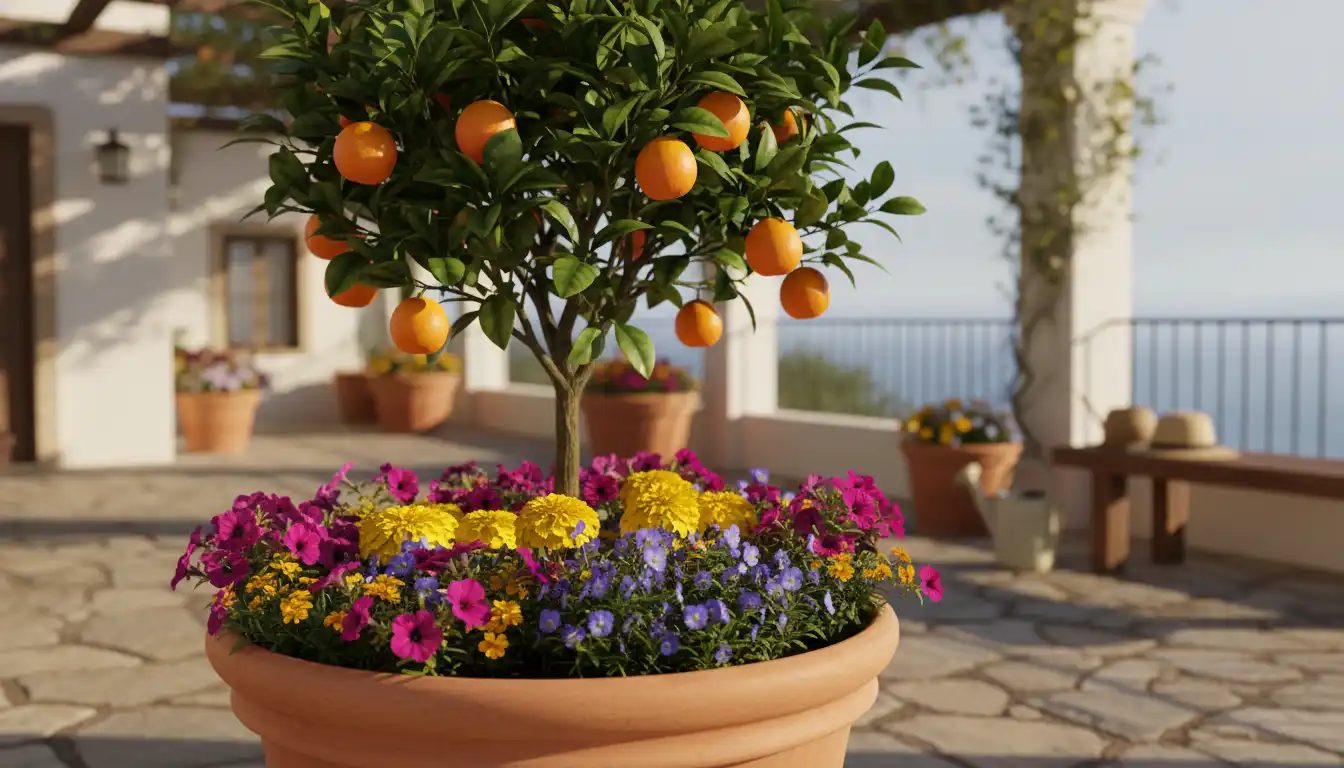
To simplify your choices, here is a breakdown of some of the best companion plants for your potted citrus tree, highlighting their key benefits and growth habits.
Companion Plant Selection Table
This table provides a quick reference for selecting the ideal companions. Prioritize plants that offer multiple benefits, such as pest deterrence and pollinator attraction, to maximize the health of your container ecosystem.
| Plant Name | Key Benefit | Growth Habit | Care Level |
|---|---|---|---|
| Creeping Thyme | Deters pests, acts as living mulch | Low-growing, spreading | Very Low |
| Sweet Alyssum | Attracts pollinators and beneficial insects | Low mound, trailing | Low |
| Marigold | Repels nematodes and other pests | Upright, bushy | Low |
| Nasturtium | Acts as a “trap crop” for aphids, edible flowers | Trailing or mounding | Low |
| Parsley | Attracts beneficial predatory wasps | Upright, clumping | Medium |
| Oregano | Hardy groundcover, deters some pests | Spreading, low | Very Low |
| Leaf Lettuce | Quick edible harvest, shallow roots | Low, leafy | Medium |
| Petunia | Adds vibrant color, repels some pests | Mounding, trailing | Medium |
Step-by-Step Guide to Underplanting Your Citrus Container
Properly introducing companion plants to your citrus pot is a straightforward process. The best time to do this is in the spring, ideally when you are initially planting or repotting your citrus tree. This minimizes root disturbance for all plants involved.
If you are adding plants to an already established citrus tree, work carefully around the pot’s outer edge to avoid damaging the tree’s sensitive surface roots. A gentle touch is key to ensuring a stress-free transition for your citrus.
Planting Your Polyculture Pot
First, ensure your container is large enough to comfortably house the citrus tree and its new companions. A pot that is too small will lead to overcrowding and competition. Use a high-quality, well-draining potting mix specifically formulated for citrus or cacti.
Position your citrus tree in the center of the pot, making sure the top of its root ball is slightly above the soil line. Arrange your chosen companion plants around the perimeter, at least a few inches away from the citrus trunk. Gently firm the soil around all the plants and water thoroughly to settle everything in.
Common Mistakes to Avoid When Underplanting Potted Citrus
While underplanting is highly beneficial, a few common mistakes can undermine your efforts and potentially harm your citrus tree. Avoiding these pitfalls is essential for creating a healthy, thriving container garden.
The most damaging mistake is choosing plants with deep or aggressive roots. This creates direct competition for the citrus tree, leading to nutrient deficiencies and water stress. Always research the root systems of potential companions before planting.
The Dangers of Overcrowding and Mismatched Care
Another frequent error is overcrowding the pot. While you want to cover the soil, stuffing too many plants into the container will lead to poor air circulation, which can promote fungal diseases like collar rot on the citrus trunk. It also creates unnecessary competition for limited resources.
Finally, avoid pairing plants with mismatched needs. Planting a moisture-loving fern with a drought-tolerant citrus tree will mean one of the plants is always suffering. Stick to companions that enjoy the same light, water, and soil conditions as your citrus to ensure harmony in the pot.
Advanced Tips for a Thriving Polyculture Pot
Once you’ve mastered the basics, you can elevate your container garden by creating a more complex and synergistic ecosystem. This involves thinking beyond simple pest control and aesthetics to foster a truly self-supporting environment.
Incorporate a nitrogen-fixing plant into your mix, such as clover or sweet peas. These plants have the unique ability to draw nitrogen from the air and store it in their roots. When these plants die back or are trimmed, this nitrogen is released into the soil, providing a natural fertilizer boost for your nutrient-hungry citrus tree.
Building a Living Soil Web
A diverse array of plant roots in a single container can encourage the development of beneficial mycorrhizal fungi. These microscopic fungi form a symbiotic relationship with plant roots, creating a vast underground network that dramatically improves the uptake of water and essential nutrients for all plants in the pot.
You can also practice succession planting. Start with cool-season companions like lettuce or spinach in the spring. Once harvested, replace them with heat-loving herbs like basil for the summer. This keeps the “living mulch” layer active and productive throughout the growing season. When harvesting your herbs, a quality knife makes all the difference; understanding the nuances between brands in a Miyabi vs Wusthof comparison can extend from the kitchen to your garden prep.
Long-Term Care and Maintenance
When fertilizing, focus on the needs of the citrus tree. Use a slow-release citrus fertilizer and apply it around the tree’s dripline, away from the companions. This ensures the tree gets the primary nutrients without overwhelming the smaller plants.
Trim your companion plants regularly to keep them from becoming overgrown and to encourage bushier, healthier growth. When setting up your beautiful container on a patio, especially with features like accent lighting, safety is paramount. Always be mindful of your home’s electrical system, as dealing with an old house with no ground wire requires special precautions for any outdoor wiring.
By transforming the bare soil under your potted citrus into a vibrant carpet of companion plants, you do more than just beautify a container. You create a resilient, self-regulating ecosystem that conserves water, fights pests, and improves soil health. It is the single most effective step you can take to unlock the full potential of your potted citrus tree.
Final Word
underplanting your container citrus is a sophisticated way to balance beauty with biological efficiency. By selecting the right companions—like shallow-rooted herbs or low-growing flowers—you create a living mulch that stabilizes soil temperature and keeps roots cool. This vibrant “green carpet” prevents the soil from crusting over, ensuring that every drop of water is absorbed and utilized rather than lost to evaporation. Beyond the practical benefits, a multi-layered pot provides a lush, professional aesthetic that turns a single tree into a complete garden feature. When you embrace the synergy of companion planting, you aren’t just filling space; you are fostering a resilient micro-environment that rewards you with healthier trees and a more bountiful, fragrant harvest for years to come.
