
Two Different Tiles in Adjoining Rooms? Avoid a Design Disaster
The open-concept floor plan is a hallmark of modern living, but it presents a unique design challenge. How do you define separate spaces, like a kitchen and a living room, without walls? Using two different tiles in adjoining rooms is a powerful and practical solution.
Yet, this choice comes with a risk. Done poorly, it can make your home feel disjointed, chaotic, and visually jarring. The key isn’t to avoid mixing tiles, but to do it with a clear strategy that creates harmony and flow.
You'll Learn About
The Strategic Advantage: Why Use Different Tiles in Connecting Rooms?
Choosing to use different tiles isn’t just about aesthetics; it’s a smart design decision rooted in functionality and purpose. Understanding the “why” behind this choice is the first step toward a successful execution.
Creating “Zones” in Open-Concept Living
In a home without walls, flooring becomes a critical tool for creating visual cues and defining functional areas. A classic example is the kitchen-to-living-room transition.
A durable, water-resistant porcelain tile in the kitchen clearly marks the cooking and prep space. A warmer, more decorative ceramic or stone-look tile in the adjoining living area signals a shift to a zone of relaxation and comfort.
Function First: Matching Tile to Room Purpose
Different rooms have different demands. A high-traffic entryway or a moisture-prone bathroom requires a tile that is tough, non-porous, and easy to clean. Think porcelain or glazed ceramic.
An adjoining formal dining room, however, might be the perfect place for a more delicate and visually striking material like a patterned cement tile or a polished marble. Matching the tile to the room’s function ensures longevity and simplifies maintenance.
Budgeting and High-Impact Accents
Let’s be practical: some tiles are significantly more expensive than others. You might love the look of a high-end mosaic or a luxurious natural stone, but covering an entire great room with it can be cost-prohibitive.
Using two different tiles allows you to splurge strategically. Use the expensive, high-impact tile in a smaller, more visible area and pair it with a more budget-friendly, complementary tile for the larger, adjoining space.
The Unbreakable Rules for Combining Different Tiles
To ensure your two tile choices look intentional and sophisticated, not accidental and chaotic, you must follow a few core design principles. Success lies in creating connections between the two different surfaces.
Rule #1: Create a Cohesive Color Story
The most important element that ties two different floors together is color. You don’t need to match colors exactly, but they must relate to each other in a clear and pleasing way.
Focus on the undertones of the tiles. A tile with a warm, creamy undertone will clash with one that has a cool, blue-gray undertone. Hold samples next to each other in the room’s natural light to see how they interact.
A foolproof method is to find a tile that contains flecks or veining of the same color as the primary color of the other tile. This creates an immediate and obvious visual link.
Rule #2: Balance Scale, Pattern, and Texture
When you have two different tiles, only one can be the “star” of the show. If you choose a busy, intricate pattern for one room, the adjoining tile should be simple and subtle.
Avoid pairing two bold, competing patterns. A good rule of thumb is to combine a large-format, simple tile with a smaller, more complex one. The difference in scale creates interest without overwhelming the senses.
Texture plays a similar role. A rough, slate-look tile next to a highly polished, smooth tile can create a beautiful contrast, as long as their colors and patterns are in harmony.
Rule #3: The Secret Unifier Your Grout Color
This is the single most overlooked element in creating a seamless transition, yet it is one of the most powerful. When possible, use the exact same grout color for both tiled floors.
This simple trick forces the eye to see the entire floor as one continuous, planned surface. Even if the tiles are different shapes, sizes, and colors, the consistent grid of grout lines provides a subconscious unifying framework that ties everything together.
Mastering the Transition: How to Flawlessly Connect Two Different Tiles
The physical point where the two tiles meet is the most critical part of the entire installation. A well-executed transition is elegant and professional; a poorly planned one becomes a constant eyesore.
How you handle this junction depends on the types of tiles you’ve chosen and the specific needs of the space.
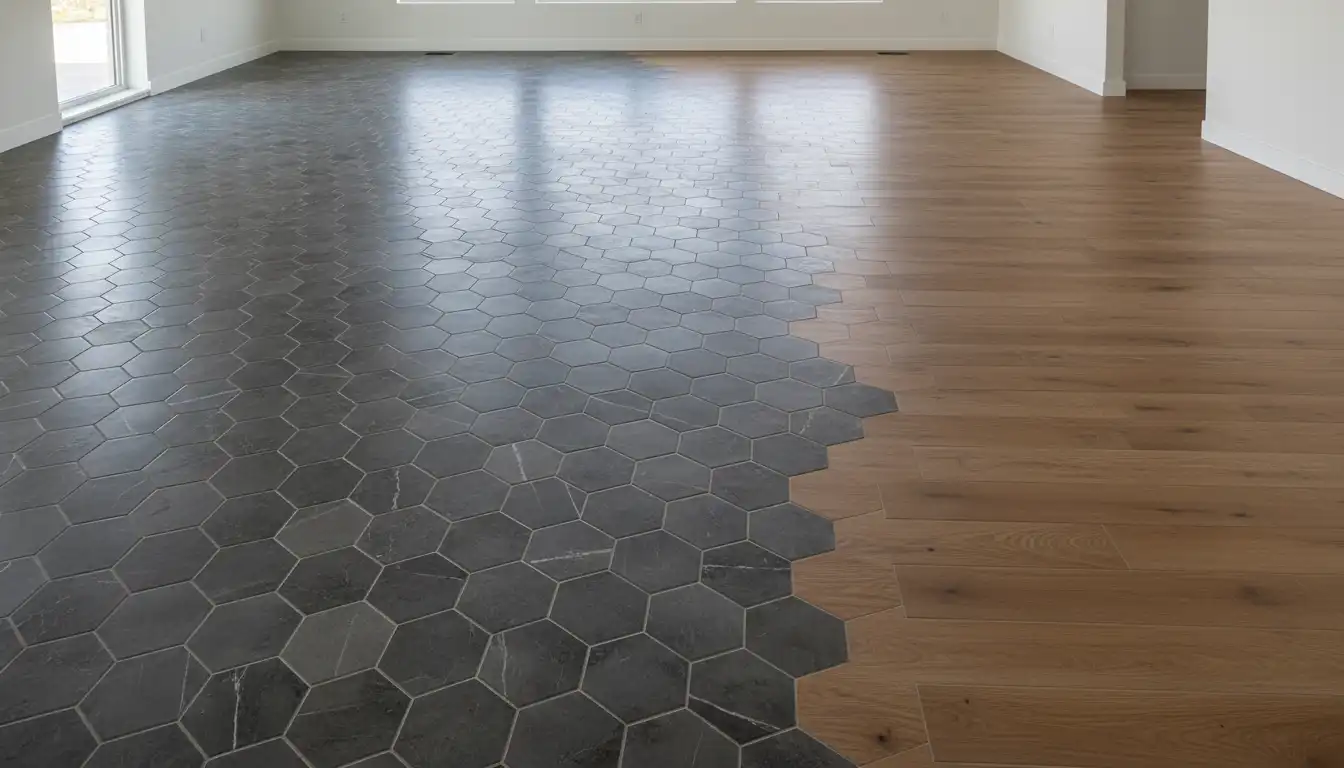
The Invisible Line: A Grout-Only Transition
The cleanest and most modern look is a simple grout line separating the two different tiles. This method is ideal when both tiles are the exact same thickness, allowing for a perfectly flat, seamless surface.
This approach requires a highly skilled installer who can make precise cuts. The two tiles can meet in a straight line, often at a doorway, or in a more creative, interlocking pattern for a custom look in an open-concept space.
The Necessary Bridge: Choosing the Right Transition Strip
Sometimes, a transition strip (or threshold) is unavoidable, especially if there is a height difference between the two tiles. A transition strip safely manages this change in level, preventing a trip hazard and protecting the edges of the tiles from chipping.
The material you choose for the strip is crucial. It should complement both tile floors. A metal strip in a finish like satin nickel or oil-rubbed bronze often works well, as does a stone threshold that matches the countertop or another feature in the room.
| Transition Material | Pros | Cons | Best For |
|---|---|---|---|
| Marble/Stone | Elegant, durable, high-end look. Can be cut to custom widths. | Expensive, can be thick and bulky. | Doorways into bathrooms or formal entryways. |
| Metal (Aluminum/Brass) | Sleek, low profile, wide range of finishes. Very durable. | Can look too industrial if the finish doesn’t match the decor. | Modern and contemporary spaces with tiles of different heights. |
| Wood | Warm, traditional look. Can be stained to match other wood elements. | Susceptible to water damage and scratches; not ideal for wet areas. | Transitions from a tiled area (like a kitchen) to a hardwood floor. |
| Composite/Vinyl | Affordable, waterproof, available in many colors and finishes. | Can look less premium than natural materials. | High-traffic areas, laundry rooms, and budget-conscious projects. |
The Design Feature: Using a Tile Border or Inlay
Instead of trying to hide the transition, turn it into a deliberate design element. Use a third tile—often a simple mosaic or a solid-colored pencil liner—to create a decorative border between the two main floor tiles.
This technique works exceptionally well in large, open areas. It frames the two zones and makes the change in flooring feel intentional and custom-designed.
Critical Mistakes to Avoid (And How to Prevent Them)
A successful two-tile design is as much about avoiding common pitfalls as it is about following best practices. Be aware of these potential issues before you begin your project.
Ignoring Tile Thickness and Subfloor Height
You cannot simply place two tiles of different thicknesses next to each other. This will create an uneven surface and a dangerous trip hazard. Proper subfloor preparation is essential to ensure the finished surfaces are perfectly flush.
If there’s a significant difference, your installer may need to add a layer of underlayment to the lower side. This unevenness can also create stress points, and using the right underlayment is crucial. Be sure to use the best crack isolation membrane to prevent these stress points from turning into visible cracks in your tile and grout.
Creating Directional Chaos
The direction in which your tiles are laid has a major impact on the visual flow of the space. Both tile floors should generally run in the same direction to create a sense of continuity. Deciding on the best orientation is a common question, much like the debate over whether tile should run the same direction as hardwood.
If you’re using a rectangular tile next to a square or hexagonal one, align the dominant lines of the rectangular tile with the main axis of the room to create a cohesive path for the eye to follow.
Forgetting Long-Term Maintenance
Consider the upkeep required for each tile. Pairing a porous, unsealed natural stone that requires frequent sealing with a zero-maintenance porcelain tile can create a maintenance headache. Try to choose tiles with similar cleaning and care requirements.
Different finishes can also affect how clean your floors look. A matte tile might hide smudges better, while a glossy tile can be prone to showing dust. Over time, you may even wonder why is there a white haze in my house, as airborne particles can settle differently on varying tile textures, affecting their appearance.
A Holistic Vision: Tying the Whole Space Together
The most successful flooring transitions don’t exist in a vacuum. They are supported by other design choices in the room that reinforce the idea of a unified yet distinct space.
The Power of Consistent Walls and Trim
One of the best ways to make a change in flooring feel harmonious is to keep the wall color and trim work consistent across both adjoining spaces. This creates a continuous visual frame around the rooms.
When the walls and baseboards are the same, the flooring change looks like a deliberate choice to define the floor plane, rather than a jarring shift between two completely different rooms.
Using Decor to Bridge the Divide
Your furniture and decor can act as a bridge between the two floor zones. Place an area rug in the living space that picks up on colors from both the living room tile and the adjoining kitchen tile.
Use consistent decor styles, lighting fixtures, and metal finishes (like cabinet pulls and faucets) across both areas. This repetition of elements reassures the eye that both spaces belong to the same cohesive home.
Final Checklist for a Perfect Tile Transition
Before you finalize your choices, run through this quick checklist:
- Color Harmony: Do the tiles share a common color or undertone?
- Pattern & Scale: Is there a clear primary (“star”) and secondary (“supporting”) tile?
- Grout Plan: Have you chosen a single grout color to unify both floors?
- Thickness Check: Are the tiles the same height, or do you have a plan for the transition?
- Directional Flow: Is the layout planned to create a cohesive sense of direction?
Using two different tiles in adjoining rooms is an advanced design technique that can yield stunning results. By focusing on harmony, planning the transition point carefully, and making sure the choice is supported by other elements in your home, you can create a space that is both functional and beautifully cohesive.
