
Two Console Tables Side by Side: Your #1 Designer Trick
Placing two console tables side by side is a simple yet stylish way to elevate any room. This paired arrangement not only creates a longer, more balanced surface but also adds visual interest and versatility to your décor.
Whether you’re looking to fill a wide entryway, highlight an empty wall, or design a functional display area, combining two console tables offers a modern, cohesive look with plenty of room for creativity. From complementary décor pieces to practical storage solutions, this setup blends beauty and function in a seamless, contemporary way.
You'll Learn About
The Problem: Why That Long, Awkward Wall Defies a Single Solution
That long, empty wall is a common design dilemma. It stretches across a living room, hallway, or entryway, creating a visual void that feels impossible to fill correctly.
A single console table often looks comically small, like a ship lost at sea. It fails to anchor the space, leaving the ends of the wall feeling disconnected and barren.
On the other hand, finding a single, extra-long console table that fits your dimensions and style can be an expensive and frustrating search. Custom furniture is costly, and oversized retail pieces are rare, often leaving you with no good options.
This decorating challenge can make an entire room feel unbalanced. But the solution is simpler and more stylish than you think: using two console tables side by side.
The Genius of Two: Unlocking Balance, Symmetry, and Function
Placing two consoles together is a professional designer’s secret for conquering expansive walls. This technique instantly creates a sense of purpose and intention in the space.
The dual setup provides powerful visual symmetry and balance, which is naturally pleasing to the human eye. It transforms a sparse wall into a deliberate, high-impact focal point.
This approach also offers incredible versatility. Unlike a single massive piece, two smaller tables can be separated and used in different rooms if your living situation changes in the future.
Beyond aesthetics, you gain a significant amount of functional surface area. It’s the perfect drop-zone for keys in an entryway, a serving station in a dining room, or a grand display space for decor in the living room.
Choosing Your Perfect Pair: The Ultimate Selection Guide
Selecting the right tables is the most critical step. The goal is to make the pairing look intentional, whether you choose a perfectly matched set or a more eclectic duo.
To Match or Not to Match?
Matching tables are the safest and most common choice. They create a seamless, unified look that reads as one large, substantial piece of furniture, bringing a sense of calm and order.
However, using two different but complementary tables can also be incredibly chic. For this to work, the tables must share at least one key design element, such as height, material, or color, to maintain a cohesive feel.
The Golden Rule of Measurement
Proper scale is non-negotiable. The combined length of both tables should fill a significant portion of the wall, typically leaving at least a foot of breathing room on either side to avoid a cramped look.
For a seamless appearance, the tables should be placed directly next to each other with no gap. If the tables have legs that prevent them from touching, ensure the gap is minimal and consistent.
When placing them behind a sofa, the tables should be the same height as the sofa back or slightly lower. On an empty wall, standard console height (around 30-33 inches) is ideal.
Material and Style Considerations
The material of your consoles will heavily influence the room’s atmosphere. Dark wood lends a traditional, stately feel, while metal and glass create a more modern and airy impression.
Consider your existing decor. A rustic farmhouse living room would benefit from distressed wood tables, while a minimalist space might call for sleek, lacquered consoles with clean lines.
The Art of Styling: Making Two Tables Look Like One Masterpiece
Once you have your tables in place, the styling is what truly brings the look to life. The key is to treat the two surfaces as a single canvas to create a unified composition.
The “Bridging” Technique for a Unified Look
Bridging is an advanced technique used to visually connect two separate pieces of furniture. This is achieved by placing a single, large-scale item so that it spans across the center point where the two tables meet.
A large, horizontal piece of artwork or a long, rectangular mirror are perfect for this. This one dominant element tricks the eye into seeing the two tables as a single, cohesive unit.
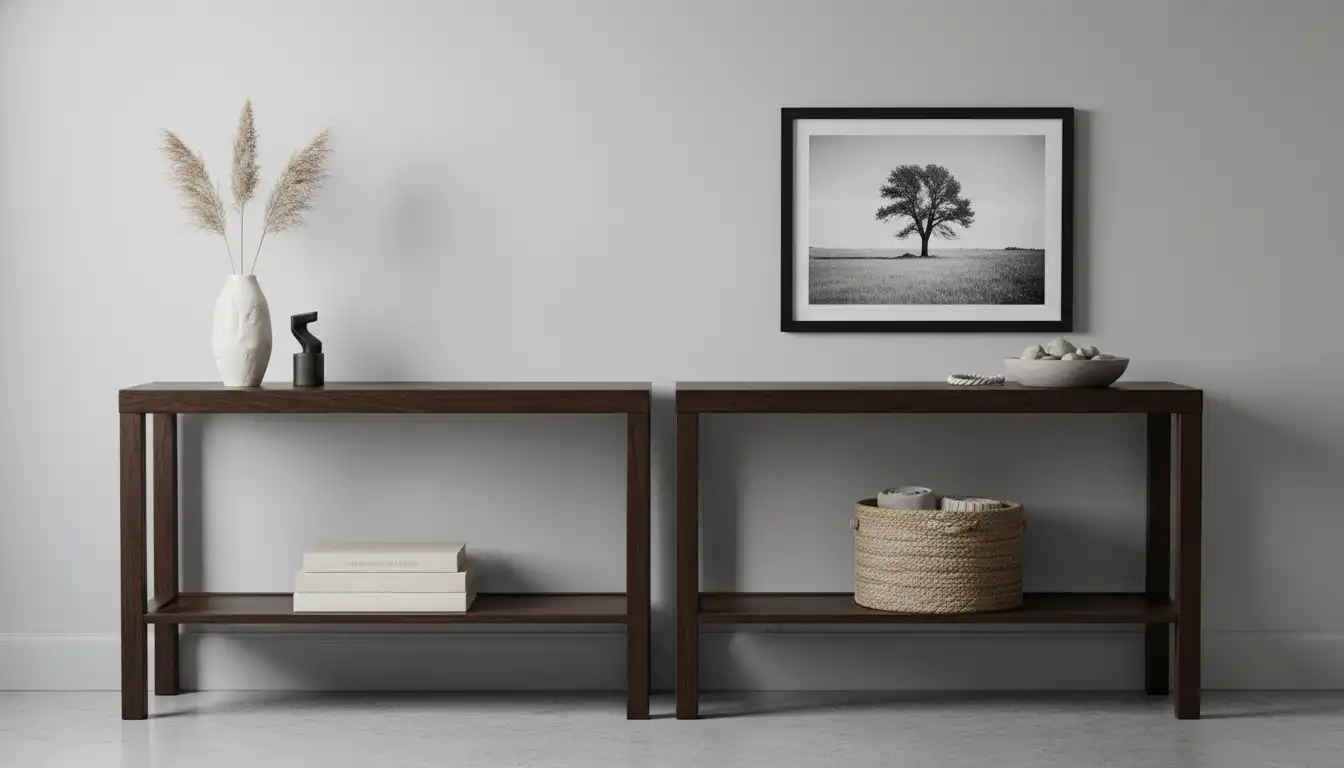
This method is especially effective for creating a strong focal point. The “bridge” element draws attention and anchors the entire arrangement, giving it a custom, high-end look.
The “Twinning” Method for Perfect Symmetry
Twinning involves creating a mirror image with your decor on both tables. This is a classic approach that reinforces the inherent symmetry of the setup for a formal and balanced aesthetic.
Place a matching lamp on the outer edge of each table. Then, add an identical stack of books, a matching vase, or a similar decorative object to the inner side of each surface for a perfectly balanced look.
Asymmetrical Styling: The Secret to Effortless Cool
If you prefer a more relaxed and modern feel, asymmetrical styling is the perfect choice. This approach focuses on achieving visual balance through weight and scale rather than perfect duplication.
Place a tall, heavy item like a lamp on one side. Balance it on the other side with a collection of smaller items, such as a short stack of books, a decorative bowl, and a small plant.
This method adds dynamic tension and interest to the display. It feels curated and personal, much like the principles used in creating compelling off-center couch wall decor.
Styling Showdown: Symmetrical vs. Asymmetrical
Choosing a styling direction depends on your personal taste and the overall feel of your room. Both methods can be equally effective when executed properly.
| Feature | Symmetrical Styling (“Twinning”) | Asymmetrical Styling (“Balanced”) |
|---|---|---|
| Overall Vibe | Formal, Traditional, Calm | Casual, Modern, Dynamic |
| Key Principle | Mirror-image decor on each table | Balanced visual weight, not identical items |
| Best For | Creating a serene and orderly focal point | Adding visual interest and personality |
| Example Setup | Matching lamps, identical floral arrangements | Tall lamp on one side, shorter sculpture on the other |
| Effort Level | Easier to execute successfully | Requires a stronger eye for balance |
Common Mistakes to Avoid (And How to Fix Them)
While this technique is powerful, a few common pitfalls can undermine the effect. Being aware of them can help you create a flawless look.
Mistake #1: Going Too Small. Using two tables that are still too small for the wall will not solve the original problem. Be bold and choose a pair that fills the space adequately.
Mistake #2: The Dreaded Gap. Leaving a noticeable gap between the tables breaks the illusion of a single piece. Push them firmly together for the most unified appearance.
Mistake #3: Over-cluttering the Surface. While you have more surface area, resist the urge to fill every inch. A curated selection of items will always look more sophisticated than a jumble of clutter.
Mistake #4: Ignoring the Space Above and Below. The tables are just one part of the equation. Use art or mirrors on the wall above and place items like baskets or ottomans below to complete the vignette.
Beyond the Living Room: Where Else Can This Trick Work?
The two-console strategy is not limited to the living room. It is a versatile solution for any area of the home that features a long, unoccupied wall.
In a long entryway, two side-by-side consoles create an elegant and functional welcome. They provide ample space for mail, keys, and decorative accents, making a stunning first impression.
This setup works beautifully in a dining room as an alternative to a traditional buffet or sideboard. It offers a generous surface for serving food and drinks during gatherings.
In a large bedroom, a pair of consoles can be placed against the wall opposite the bed or even behind a headboard to add storage and display space. They can also define spaces; for example, using them as a visual border near a step-down living room can create a stylish and safe transition.
Answering Your Top Questions
Even with a clear plan, some specific questions often arise when implementing this design. Here are the answers to the most common queries.
Should the two console tables touch?
Yes, for the best result, the tables should be pushed together to touch. This creates the most convincing illusion of a single, continuous piece of furniture and avoids a visually distracting gap.
How do I hide the seam between two console tables?
The “bridging” technique is the best way to hide the seam. Placing a large tray, a decorative runner, or a wide, low bowl directly over the center line will draw the eye away from the joint.
Can I use two different color console tables?
This is an advanced move but can be done. To succeed, the tables should have the exact same shape and dimensions. The different colors should also complement each other and the room’s overall color palette.
Your Wall’s Transformation Awaits
That long, challenging wall is not a problem; it’s an opportunity. By using two console tables side by side, you can create a feature that is both functional and beautiful.
This designer-approved strategy adds balance, storage, and a powerful focal point to any room. It is a testament to the idea that thoughtful, creative solutions can completely transform a space.
Stop seeing an awkward wall and start seeing a canvas for a stunning design moment. Your home will thank you for it.
