
TV Above Piano: The Ultimate Guide to a Flawless Setup
The modern living room faces a classic design dilemma: where do you place the two main event items, the beautiful acoustic piano and the large-screen television? For many, the only viable wall space seems to demand that one go above the other. This leads to the highly debated question: can you safely and stylishly mount a TV above a piano?
The short answer is yes, but it requires careful planning and a clear understanding of the risks. Done incorrectly, it can be a disaster for your instrument, your comfort, and your home’s aesthetic. This guide provides a comprehensive, expert-backed approach to creating a harmonious and functional entertainment space that honors both your musical investment and your love for media.
You'll Learn About
The Great Debate: Understanding the Risks and Rewards
Before drilling any holes, it’s crucial to weigh the pros and cons. The primary appeal is undeniable: it saves a significant amount of space in rooms with limited wall real estate. It can create a single, centralized entertainment and cultural hub in your living area.
However, the list of potential problems is significant and demands serious consideration. Homeowners and designers alike often express valid concerns over aesthetics, viewing comfort, and, most importantly, the piano’s health. The central conflict is between a timeless acoustic instrument and a piece of modern, heat-producing electronics.
Why Piano Experts Often Advise Against It
The primary concern voiced by piano technicians is the impact of heat. Even modern LED televisions generate a consistent level of warmth. Pianos are delicate instruments made primarily of wood, felt, and metal, all of which react to changes in temperature and humidity.
Consistent heat exposure from a television can cause the piano’s wooden components, like the soundboard and pinblock, to dry out and potentially crack over time. This leads to tuning instability, as the expansion and contraction of these parts directly affect the tension of the strings. In essence, the heat can slowly ruin the very heart of the instrument, leading to costly repairs and diminished sound quality.
The Ergonomic Nightmare of Poor Placement
Beyond the piano’s safety, there is the critical issue of human comfort. Placing a TV too high on the wall is one of the most common home design mistakes. To view a screen mounted above an upright piano, you are forced to tilt your head back into a position known as cervical spine extension.
Prolonged viewing at such an unnatural angle can lead to significant neck strain, back pain, and headaches. The ideal ergonomic position for a television is to have the center of the screen at eye level when you are seated. Achieving this is nearly impossible when an entire piano is positioned underneath it, making the “TV above piano” setup a potential health concern if not executed properly.
The Definitive Solution: A Step-by-Step Guide to a Safe Installation
Despite the risks, it is possible to create a setup that is both safe for the piano and comfortable for viewing. This requires a meticulous approach that prioritizes protection, proper mounting, and aesthetic integration. Following these steps will mitigate the dangers and result in a beautiful, functional focal point for your room.
Step 1: Master Heat Management and Ventilation
Protecting your piano from heat is the most critical step. Without proper heat mitigation, you should not proceed. The goal is to create a buffer that deflects or dissipates any warmth radiating from the television.
The most effective solution is to install a mantel or a floating shelf between the piano and the television. This structure acts as a physical heat shield, blocking the downward flow of warm air. For maximum protection, ensure the mantel is deep enough to extend at least a few inches beyond the front of the TV. A minimum vertical clearance of 8-12 inches should be maintained between the top of the piano and the bottom of the mantel to allow for adequate air circulation.
Furthermore, consider building a shallow, recessed niche for the television. This not only contains the heat but also creates a more polished, built-in look. Paired with a mantel, a niche offers a superior level of protection for the piano’s delicate internal components.
Step 2: Conquer Ergonomics with Perfect Placement and Mounts
Addressing the viewing angle problem is the next crucial challenge. While you cannot achieve a perfect eye-level placement, you can dramatically improve comfort with the right equipment and calculations. The key is to minimize the upward viewing angle as much as possible.
A high-quality, full-motion articulating TV wall mount is non-negotiable for this setup. This type of mount allows you to pull the television out from the wall and tilt it downwards, directing the screen more accurately towards your seating area. This adjustability is essential for reducing neck strain during viewing sessions. When the TV is not in use, it can be pushed back flush against the wall.
To determine the best height, use the following principle: mount the TV as low as possible while still allowing for proper heat-shielding clearance above the piano. The goal is to find the sweet spot that balances piano safety and viewer comfort. For those looking at precise construction, understanding the differences between material thicknesses, such as exploring whether 19/32 vs 5/8 plywood are they same, can be crucial when building a custom mantel or niche.
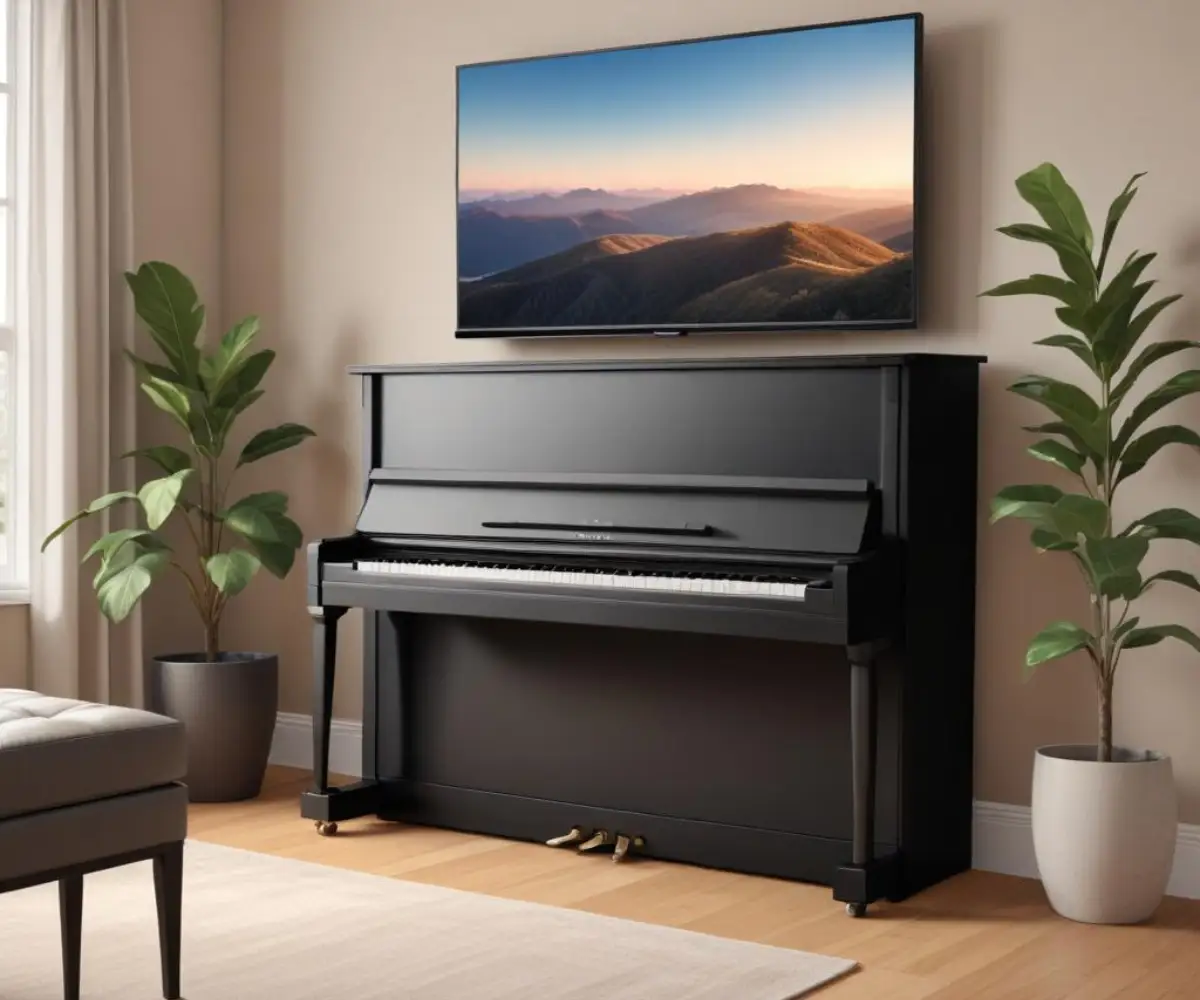
The table below provides a general guideline for viewing distances and recommended mounting heights to help you plan your space effectively.
| TV Screen Size (Diagonal) | Recommended Viewing Distance | Approximate Center-Screen Height Above Piano |
|---|---|---|
| 55 inches | 7 to 9 feet | As low as possible with a heat shield |
| 65 inches | 8 to 11 feet | As low as possible with a heat shield |
| 75 inches | 9 to 13 feet | As low as possible with a heat shield |
Step 3: Unify the Look with Smart Design Choices
With safety and ergonomics addressed, the focus shifts to aesthetics. The challenge is to make a modern black screen feel cohesive with a classic musical instrument. A disjointed look can make the entire wall feel cluttered and unintentional.
One of the most elegant solutions is to use a “Frame TV.” These televisions are designed to display artwork when not in use, effectively turning the screen into a piece of decor that complements the piano. Surrounded by an actual picture frame bezel, it can blend seamlessly into a gallery wall.
Creating a gallery wall around the television is another powerful strategy to integrate it into the room’s decor. By surrounding the screen with framed art, photos, and other decorative objects, the TV becomes just one element in a larger, curated composition rather than a stark black box. This technique draws the eye to the entire collection, softening the technological presence of the screen.
Step 4: Address Sound and Cable Management
The final touches involve managing sound and concealing wires. The built-in speakers on most televisions are rear- or down-firing, which can cause vibrations that resonate through the piano’s strings, creating an unpleasant buzzing sound. It can also be disruptive to the sensitive electronics within the TV itself.
The best practice is to bypass the TV’s internal speakers entirely. Invest in a separate soundbar mounted on the wall below the TV (but above the mantel) or a full surround-sound system. This will provide far superior audio quality and completely eliminate the issue of sound vibration interference with the piano.
Finally, nothing ruins a carefully planned design faster than a tangle of visible cables. Use an in-wall cable management kit to run all wires from the TV through the drywall to an outlet and input source located lower down. This creates a clean, professional, and cord-free look that allows the piano and the television to shine.
Smarter Alternatives to the TV-Over-Piano Layout
If the risks and complexities of mounting a TV above your piano seem too daunting, there are several excellent alternatives that can still create a functional and beautiful living space. Sometimes the best solution is to avoid the problem altogether.
Placing the TV on an Adjacent Wall
The simplest alternative is to place the TV and piano on different walls. This allows each piece to have its own dedicated space and be appreciated as a separate focal point. Arrange your furniture to accommodate both viewing the television and enjoying the piano, creating distinct “zones” within the room.
The Projector and Screen Solution
For a truly minimalist and high-tech approach, consider a ceiling-mounted projector and a retractable screen. When not in use, the screen disappears completely, leaving the wall above the piano free for artwork. This solution entirely eliminates the aesthetic and heat-related issues of a permanent television display, offering a clean look that is only present when you want it to be.
Re-evaluating the Room’s Layout
Take a fresh look at your entire room. Is there another wall that could become the media wall, even if it seems unconventional at first? Sometimes floating a sofa in the middle of the room can open up new layout possibilities that you hadn’t previously considered. Maintaining your home’s exterior appeal is also important for overall value, and tackling issues like learning how to remove sprinkler stains from fence can be part of a holistic approach to home care.
The Final Verdict: A Calculated Decision
Placing a TV above a piano is a design choice that can be executed successfully, but it is not a decision to be made lightly. It requires a commitment to doing it the right way, with no shortcuts. Prioritizing the health of your piano through meticulous heat management is paramount.
By investing in a proper heat shield, a full-motion TV mount, and smart aesthetic integration, you can create a space that is stylish, functional, and safe for your cherished instrument. If you are not prepared to take these essential steps, it is far better to choose an alternative layout that allows both your piano and your television to coexist harmoniously in your home.
