
Turn Flat Roof Into a Deck: Your Ultimate Guide
That flat, unused roof over your garage or extension is a blank canvas. Many homeowners see the potential for a stunning rooftop oasis, a private space for relaxing or entertaining. Yet, the dream is often halted by fears of catastrophic leaks, structural collapse, or navigating a maze of complex building codes.
These concerns are valid. A poorly executed flat roof deck conversion can lead to disastrous consequences for the home below. The solution isn’t to abandon the project, but to approach it with a deep understanding of the critical steps that ensure a safe, durable, and legally compliant transformation.
You'll Learn About
Is Your Roof Strong Enough? The Non-Negotiable First Step
Before any other consideration, you must determine if your roof can handle the load of a deck. A roof designed only to keep out the weather is not engineered to support the weight of people, furniture, snow, and the deck itself. This is not a DIY assessment.
You must hire a qualified structural engineer to perform a load-bearing capacity analysis. The engineer will evaluate the existing structure, including the size, spacing, and condition of the roof joists, to determine the dead loads (the weight of the structure itself) and live loads (people, furniture) it can safely support. Failing to do this is the single biggest mistake you can make. It’s a foundational step that influences every subsequent decision.
Understanding Structural Requirements
The engineer’s report will provide the essential data needed to move forward. They will specify if the current structure is adequate or if reinforcements are necessary. Common reinforcements include sistering existing joists (adding new joists alongside the old ones) or adding support posts and beams, which transfer the load down to the building’s foundation.
This assessment is fundamentally different from that for a roof deck on a pitched roof, where loads are distributed differently across angled rafters. A flat roof’s horizontal joist system requires a direct vertical load analysis, making the engineer’s calculations absolutely critical.
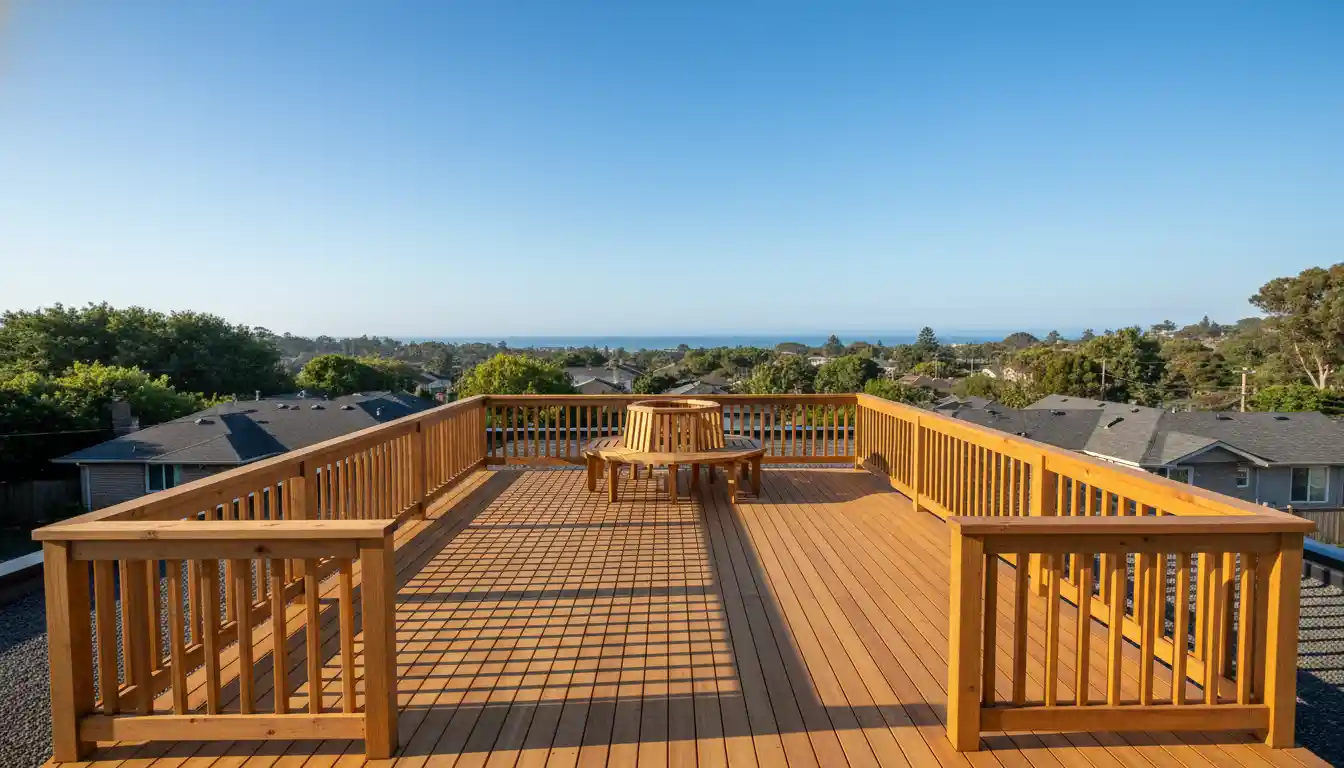
The Golden Rule: Flawless Waterproofing is Everything
Once the structure is confirmed to be sound, the next critical phase is waterproofing. An impenetrable barrier between your new deck and the room below is paramount. Modern flat roof decks are typically “floating” systems, meaning they are not physically attached to the roof’s surface, which helps protect the waterproof membrane underneath.
A new, high-quality roofing membrane should be installed before any deck construction begins. Popular choices include PVC (polyvinyl chloride), TPO (thermoplastic polyolefin), and EPDM (ethylene propylene diene monomer) rubber membranes. These single-ply systems are heat-welded or chemically adhered at the seams to create a seamless, monolithic barrier against water intrusion. Liquid-applied membranes are another excellent, seamless option.
Drainage: The Unsung Hero of Rooftop Decks
Water must be able to escape the roof efficiently. Even a “flat” roof should have a slight slope (a minimum of 1/4 inch per foot is common) built in to direct water towards drains or scuppers. A floating deck system, which elevates the walking surface, is essential for allowing water to flow freely across the membrane below to the drainage points.
Without proper drainage, you risk “ponding,” where water collects on the roof surface. Ponding water adds significant weight and dramatically increases the risk of leaks as it seeks out any tiny imperfection in the membrane over time. Efficient drainage design is a key part of a successful project.
Choosing Your Rooftop Deck System
With a certified structure and a new waterproof membrane, you can select your decking system. The most common and effective method for flat roofs is a pedestal system. These adjustable, stackable supports sit directly on the waterproof membrane, elevating the deck surface and allowing for a perfectly level finish, even on a sloped roof. They also facilitate easy access to the membrane for inspection and cleaning.
The decking material you choose will sit on top of these pedestals. The options vary significantly in weight, cost, and maintenance requirements, making it crucial to choose one that aligns with your roof’s structural capacity and your lifestyle.
Comparing Rooftop Decking Materials
The material choice impacts the final weight load, aesthetic, and long-term upkeep of your deck. Lighter materials are often preferred to minimize stress on the structure, but all options have their place depending on the engineering specifications.
| Decking Material | Average Weight (per sq. ft.) | Pros | Cons |
|---|---|---|---|
| Ipe or Hardwood Tiles | 4-6 lbs | Beautiful natural look, durable, modular for easy access. | Requires periodic oiling, can be expensive. |
| Composite Decking | 3-5 lbs | Low maintenance, resistant to rot and insects, wide color selection. | Can get hot in direct sun, higher initial cost than wood. |
| Porcelain or Concrete Pavers | 15-25 lbs | Extremely durable, excellent fire resistance, modern aesthetic. | Very heavy, requires significant structural capacity, higher cost. |
Navigating Permits and Building Codes
Converting a roof into a deck is a major construction project, and you will almost certainly need a building permit. Your local municipality has specific codes regarding rooftop decks that cover everything from railing height (typically 36 to 42 inches) and structural requirements to egress (safe exit paths).
Do not skip the permit process. Building without a permit can result in heavy fines, orders to tear down the structure, and significant problems when you try to sell your home. Your structural engineer and a reputable contractor can help you prepare and submit the necessary plans to your local building department for approval.
Common Mistakes to Avoid at All Costs
Building a deck on a flat roof is a high-stakes project. Avoiding common errors can save you from costly and dangerous outcomes.
Ignoring the Structural Engineer: This is the most critical error. An engineer’s approval is your green light, ensuring the project is fundamentally safe. The structural dynamics of a flat roof are very different from a steep 14/12 roof pitch, where loads are shed differently; on a flat surface, every ounce of weight bears down directly.
Puncturing the Waterproof Membrane: The deck must “float.” Never use fasteners that penetrate the roofing membrane. This will void the roof’s warranty and create an immediate path for water to enter your home.
Inadequate Drainage: Failing to provide a clear path for water to exit the roof is a recipe for disaster. Ensure the pedestal system allows for unobstructed flow and that drains are kept clear of debris.
Using Inferior Materials: A rooftop deck is exposed to the harshest elements. Using cheap materials for the membrane, pedestals, or decking will lead to premature failure, costing you far more in the long run.
Frequently Asked questions
Can any flat roof be turned into a deck?
Not all flat roofs can be converted into a deck. A structural engineer must first assess if the roof can handle the additional weight of the decking, furniture, and people. Many residential flat roofs are not initially designed for the load of a deck and may require reinforcement.
Do I need a permit to build a rooftop deck?
Yes, in most cases, you will need a permit to build a rooftop deck. It’s crucial to check local building codes and zoning laws before beginning any construction. Failing to obtain the necessary permits can lead to fines and may even require you to remove the deck.
What are the best materials for a rooftop deck?
Choosing the right materials is essential for the longevity of your rooftop deck, as it will have significant exposure to the elements. Materials that are durable and weather-resistant are the best choices. While wood is a natural and beautiful option, it requires sealing to prevent rot and decay.
How do you waterproof a rooftop deck?
Proper waterproofing is critical to prevent leaks and costly water damage to the structure of your home. This often involves installing a waterproof membrane system before the deck itself is built. Ensuring adequate drainage with a proper slope is also a key aspect of waterproofing a rooftop deck.
How much does it cost to convert a flat roof into a deck?
The cost of converting a flat roof into a deck can vary significantly based on factors like size, materials, and structural modifications required. Homeowners can expect to spend anywhere from $25,000 to over $75,000 for a professional installation. Additional features like an outdoor kitchen or built-in seating will also increase the overall cost.
