Troy-Bilt Tiller Tines Won’t Turn? Your Ultimate Fix-It Guide
Nothing halts a gardening project faster than a tiller that refuses to cooperate. You pull the cord, the engine roars to life, but the tines remain stubbornly still. This common frustration for Troy-Bilt tiller owners can stem from several issues, ranging from simple obstructions to more complex mechanical problems. Understanding the potential causes is the first step toward getting your machine back to churning soil.
This guide will walk you through a systematic approach to diagnose and resolve the problem of stationary tines. We will cover the most frequent culprits, from easily replaceable parts to deeper transmission concerns. By following these steps, you can confidently troubleshoot your tiller and get back to your gardening tasks without costly repair shop visits.
You'll Learn About
Safety First: Pre-Troubleshooting Checklist
Before beginning any diagnostic or repair work on your Troy-Bilt tiller, safety must be your top priority. A running engine or an accidentally engaged drive system can cause serious injury. Always perform these essential safety checks before you start.
First and foremost, disconnect the spark plug wire from the spark plug. This simple action prevents the engine from accidentally starting while you are working on the machine. Additionally, ensure the tiller is on a flat, stable surface to prevent it from rolling or tipping over as you work. Finally, consult your owner’s manual for any model-specific safety precautions.
Quick Inspection for Obvious Issues
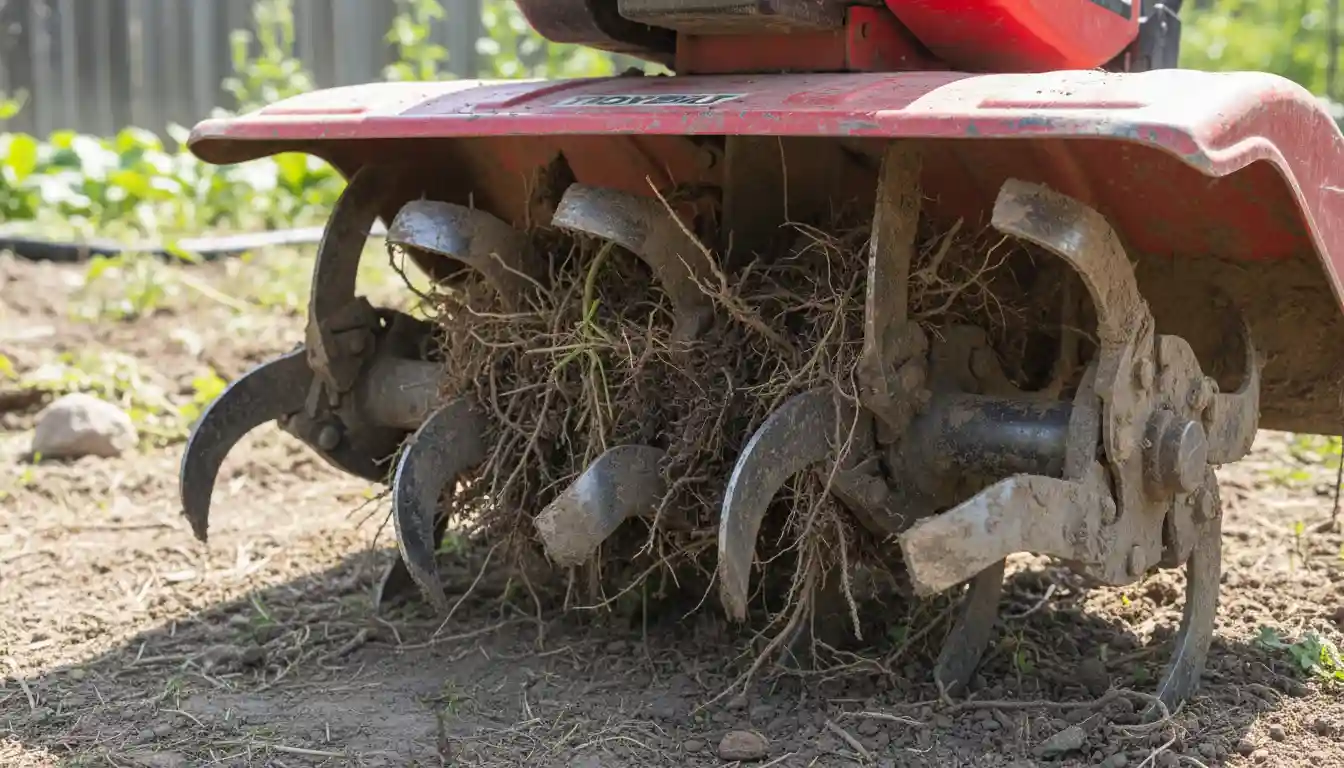
Sometimes, the simplest explanation is the correct one. Before diving into the mechanical components, take a moment to inspect the tines and the area around them thoroughly. Rocks, thick roots, or even heavy, compacted soil can physically jam the tines and prevent them from rotating.
Carefully clear any visible debris lodged in or around the tines. Check that the tine depth regulator isn’t set too deep for the soil conditions, which can overload the system. These quick checks can often save you a significant amount of time and effort.
The Most Common Culprits: Easy Fixes to Try First
When your Troy-Bilt tiller’s engine is running but the tines are not turning, the issue often lies within the power transfer system. Fortunately, the most common failure points are designed to be relatively easy to inspect and replace. Start your troubleshooting with these components.
These parts act as the link between the engine’s power and the soil-churning action of the tines. A problem with a belt or a protective pin can bring the entire operation to a standstill. Let’s examine these key parts in more detail.
Inspect the Shear Pins or Bolts
Many tillers are equipped with shear pins or a shear bolt. These small but crucial components are designed to break under excessive strain, such as when the tines hit a large rock or a thick root. This intentional failure protects the more expensive transmission and engine from catastrophic damage.
Locate the shear pins, which connect the tines to the drive shaft. If a pin is broken or sheared off, the shaft will spin, but the tines will not. Replacing a broken shear pin is a straightforward and inexpensive repair that can immediately solve the problem.
Examine the Drive Belts
The drive belts are another critical link in your tiller’s power train. A worn, stretched, or broken belt is a very common reason for the tines to stop turning. Over time, these rubber belts can crack, fray, or lose their tension, causing them to slip on the pulleys.
To inspect the belts, you will need to remove the belt guard, which is typically held in place by a couple of bolts. Look for visible signs of damage like glazing, cracks, or missing sections. If the belt appears intact, check its tension; a loose belt won’t effectively transfer power from the engine to the transmission pulley.
Digging Deeper: Intermediate Mechanical Checks
If the shear pins and drive belts appear to be in good condition, the next step is to investigate the components that control belt engagement and tension. These parts are essential for ensuring that power is correctly applied to the drive system when you engage the tiller’s controls.
Issues with the clutch mechanism, engagement cable, or the pulleys can mimic the symptoms of a broken belt. A thorough inspection of this system is necessary to rule out these possibilities before assuming a more serious transmission problem.
Check the Clutch Engagement and Cable
The engagement cable connects your handlebar controls to the idler assembly. When you engage the tines, this cable pulls on an idler pulley, which applies tension to the drive belt, causing the tines to rotate. If this cable is stretched, broken, or improperly adjusted, it cannot apply the necessary tension.
Inspect the entire length of the cable for any signs of fraying or damage. Ensure it moves smoothly when you operate the control lever. Often, a simple adjustment to the cable’s tension is all that is needed to get the tines spinning again.
Inspect the Idler Pulley Assembly
The idler pulley is the component that the engagement cable manipulates. It’s a movable pulley that presses against the drive belt. A faulty idler pulley can prevent the tines from turning even if the belt and cable are in perfect condition.
Check that the idler pulley arm moves freely and is not bent. The pulley itself should spin without wobbling or making grinding noises, which would indicate a failed bearing. A seized pulley can cause the belt to burn and break prematurely.
Advanced Diagnostics: Transmission and Gearbox Issues
If all the external components check out, the problem may lie within the tiller’s transmission. While this is less common, internal issues can and do occur, especially in older or heavily used machines. Transmission problems are typically more complex and may require more intensive repair work.
A key indicator of an internal issue is if the wheels turn but the tines do not, or vice versa on some models. Strange noises, such as grinding or clicking coming from the transmission case, are also clear warning signs of a deeper problem.
The Importance of Transmission Fluid
The gears within your tiller’s transmission rely on a specific type of gear oil or grease for lubrication and cooling. Low or contaminated fluid can lead to excessive wear and eventual failure of internal components. This is one of the most overlooked aspects of tiller maintenance.
Check your owner’s manual to determine if your model has a serviceable transmission and what the correct fluid level should be. On some Troy-Bilt Horse models, for example, you can check for a sufficient amount of lubricant by removing a plug on the side of the transmission housing. If the fluid is milky, gritty, or low, it needs to be drained and replaced.
Identifying a Failed Worm Gear
A common failure point inside some Troy-Bilt tiller transmissions is the bronze worm gear. This gear is designed to be softer than the steel gears it meshes with, making it a sacrificial component in the event of a severe jam that the shear pins didn’t prevent. When this gear strips, the engine’s power can no longer reach the tine shaft.
Diagnosing a stripped worm gear usually involves draining the transmission oil and looking for fine brass or bronze shavings in the fluid. This is a definitive sign of gear failure. Replacing this gear is a significant undertaking that requires complete disassembly of the transmission case.
Troubleshooting Summary Table
To assist in your diagnosis, the table below outlines the potential problems, their common symptoms, and the recommended course of action. Start with the easiest and most common issues first before moving on to more complex repairs.
| Symptom | Potential Cause | Solution |
|---|---|---|
| Engine runs, no tine movement, loud snap was heard. | Broken Shear Pin/Bolt | Inspect and replace the sheared pin or bolt. |
| Engine runs, tines don’t turn, possible burning smell. | Worn or Broken Drive Belt | Remove the belt guard, inspect the belt for damage, and replace if necessary. |
| Tines engage weakly or not at all, belt seems loose. | Improper Cable Tension / Stretched Cable | Adjust the engagement cable tension or replace the cable if it is damaged. |
| Belt is in good condition, but tines still won’t engage. | Seized or Damaged Idler Pulley | Check the idler arm for free movement and inspect the pulley bearing for failure. |
| Wheels turn but tines do not, possible grinding noise. | Internal Transmission Damage (e.g., worm gear) | Check transmission fluid for metal shavings. This repair may require professional service. |
| Tines are physically blocked from moving. | Obstruction (Rock, Root, etc.) | Safely disconnect the spark plug and clear any debris from the tines. |
Step-by-Step Guide to Replacing a Troy-Bilt Drive Belt
Replacing a drive belt is one of the most common repairs you will perform on your tiller. With the right tools and a little patience, it’s a manageable task. Always use a genuine replacement belt to ensure proper fit and performance.
First, ensure the spark plug wire is disconnected. Next, use a socket wrench to remove the bolts securing the belt cover. With the cover removed, you will have a clear view of the pulleys and the old belt. Note the path the belt takes around the pulleys before you remove it; taking a photo with your phone can be a helpful reminder.
To release tension, you may need to move the idler pulley or manually work the old belt off the engine pulley first, then the transmission pulley. Once the old belt is off, compare it to the new one to confirm you have the correct size. Install the new belt by routing it around the transmission pulley first, then carefully work it onto the engine pulley. Ensure the belt is properly seated in the grooves of both pulleys and correctly routed around the idler pulley. Finally, reinstall the belt cover before reattaching the spark plug wire.
Preventive Maintenance: Keep Your Tines Turning
The best way to deal with a tiller that won’t work is to prevent the problem from happening in the first place. Regular maintenance not only extends the life of your machine but also ensures it’s ready to go when you need it. A few simple habits can save you from future headaches.
Consistent care is the key to a reliable tiller. While some aspects of maintenance are brand-specific, the core principles of cleanliness and regular inspection apply to all tillers, a concept we also touch upon in our Gardenway tiller troubleshooting guide.
Regular Cleaning and Inspection
After every use, take the time to clean dirt, grass, and plant debris from the tines and the engine. Caked-on mud can hide potential problems and cause components to rust or seize. While cleaning, perform a quick visual inspection of the belts, pins, and cables for any early signs of wear.
Keeping your whole property in good order can prevent unexpected issues. A well-maintained yard is less likely to harbor pests that can cause other types of damage. For instance, if you’re battling pests on your property, you might find our guide on how to handle Florida snails on your house to be a useful resource.
Proper Storage and Fluid Checks
At the end of the gardening season, prepare your tiller for storage. This includes stabilizing the fuel, changing the engine oil, and storing it in a dry, protected area. This is also the perfect time to check the transmission fluid level and condition, replacing it according to the manufacturer’s schedule.
Once your outdoor work is done, you might turn your attention to indoor projects. A clean workspace is essential, and having functional plumbing makes cleanup much easier. If you find yourself struggling with a weak stream in the utility sink, our guide to fixing Kohler kitchen faucet low pressure could provide the solution you need.
Getting Your Garden Back on Track
A Troy-Bilt tiller with tines that won’t turn can be a major disruption, but it is often a fixable problem. By systematically working through the potential causes, from simple shear pins to worn drive belts and finally to the transmission itself, you can accurately diagnose the issue. With a clear understanding of the problem, you can perform the necessary repairs and get your tiller back to preparing your garden soil.
Remember to always prioritize safety by disconnecting the spark plug before any repair. Regular maintenance is your best defense against unexpected breakdowns. With the knowledge from this guide, you are now better equipped to handle this common tiller issue and keep your gardening projects moving forward.