Triple Pane vs Laminated Windows: The Ultimate Showdown for Your Home
Choosing new windows feels overwhelming. You’re bombarded with terms like U-factor, SHGC, argon gas, and countless acronyms. Two options that frequently cause confusion are triple pane and laminated windows, each promising a quieter, more comfortable home. But which one truly delivers on the promises that matter most to you?
Many homeowners invest thousands in new windows hoping for peace and lower energy bills, only to find the results underwhelming. The core problem isn’t the quality of the windows themselves, but a mismatch between the window’s strengths and the homeowner’s primary needs. You need to decide what you’re solving for: is it the roar of traffic, the bitter winter cold, home security, or something else entirely?
This guide will demystify the technical jargon and pit these two window technologies against each other. We will explore their construction, performance, and ideal applications, empowering you to make an informed investment that enhances your home and quality of life for years to come.
You'll Learn About
Deconstructing the Contenders: What Are You Really Buying?
Before comparing performance, it’s essential to understand the fundamental structural differences between triple pane and laminated windows. Their unique construction methods are precisely what give them their distinct advantages.
Inside a Triple Pane Window: The Thermal Powerhouse
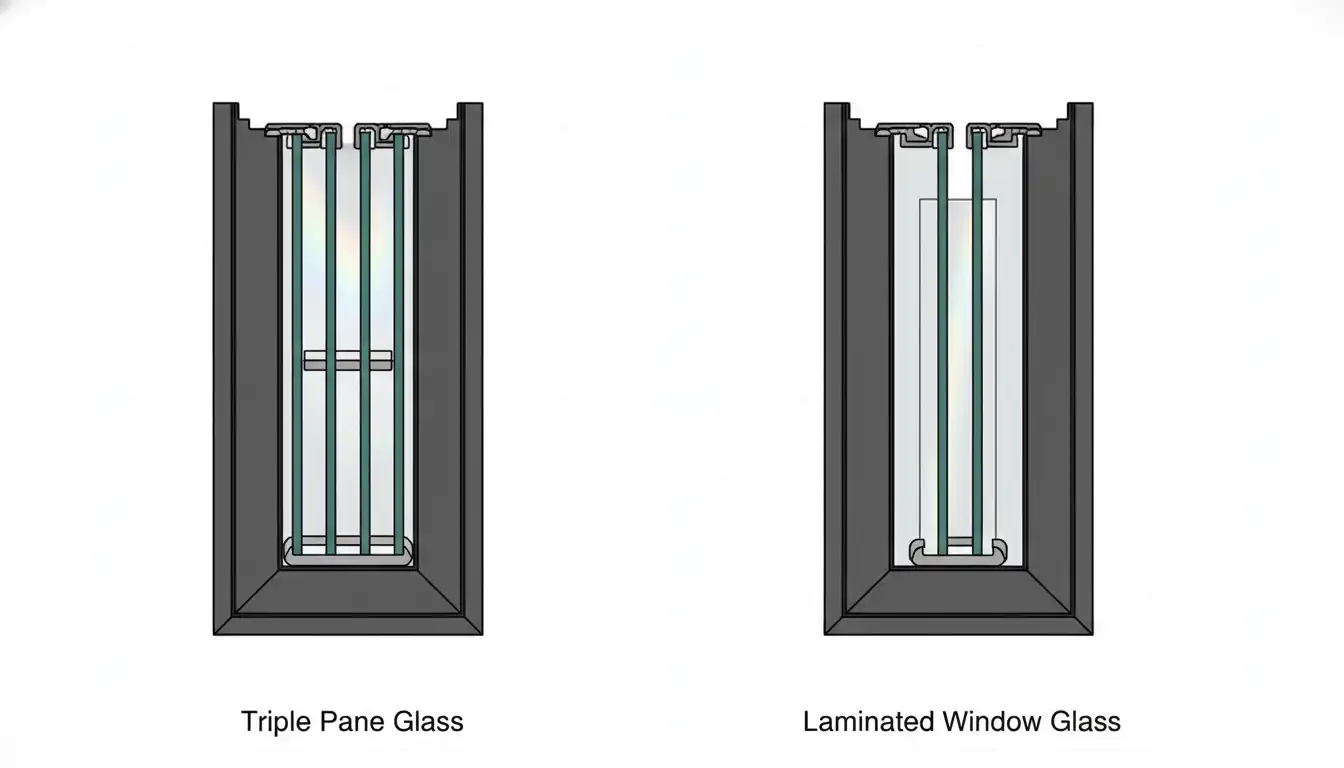
As the name suggests, a triple pane window is an insulated glass unit (IGU) constructed with three separate panes of glass. These panes are set parallel to each other, creating two sealed airspaces in between. To maximize insulation, these spaces are typically filled with a dense, inert gas like argon or krypton, which is a better insulator than regular air.
The primary function of this multi-layered design is to create a powerful thermal barrier. It excels at slowing the transfer of heat, keeping your home warmer in the winter and cooler in the summer. This superior thermal performance is what makes triple pane windows a leading choice for homeowners focused on maximizing energy efficiency and reducing utility bills.
The Anatomy of a Laminated Window: The Guardian of Quiet and Safety
A laminated window features a different kind of layering. It consists of two panes of glass that are permanently bonded together with a flexible interlayer, most commonly made of Polyvinyl Butyral (PVB). This interlayer is the secret to its unique properties.
Instead of separating the panes with an air gap, the PVB layer is fused between them through a process of heat and pressure. This construction doesn’t shatter like regular glass; when struck with force, the glass may crack, but the fragments adhere strongly to the interlayer. This is the same technology used in car windshields, making laminated windows a superior choice for security and safety.
The Core Battlegrounds: Where Does Each Window Excel?
Now that we understand their construction, let’s analyze how triple pane and laminated windows perform in the key areas that matter to homeowners: energy efficiency, noise reduction, security, and UV protection.
The Fight for Energy Efficiency: Who Keeps Your Bills Low?
When it comes to pure thermal insulation, triple pane windows are the undisputed champion. The two gas-filled chambers create a robust barrier that significantly reduces heat transfer. This performance is measured by the U-factor; the lower the U-factor, the better the window insulates.
Triple pane windows consistently achieve some of the lowest U-factors on the market, making them the superior choice for climates with extreme hot or cold temperatures. Laminated glass offers some insulating properties due to its thickness, but it cannot compete with the dedicated thermal design of a triple pane unit. For homeowners looking to slash energy bills, exploring options from brands known for efficiency, like those in an Energy King Windows review, can be a great starting point.
The War on Noise: Your Sanctuary From the Outside World
For homeowners living near busy streets, airports, or in noisy urban environments, sound reduction is paramount. This is where laminated windows have a distinct advantage. The soft PVB interlayer is incredibly effective at dampening sound vibrations as they attempt to pass through the glass.
Sound reduction is measured by a Sound Transmission Class (STC) rating; a higher STC rating means better noise insulation. While triple pane windows offer decent sound reduction simply due to their mass, the multiple panes can sometimes allow certain frequencies to resonate. The vibration-absorbing quality of laminated glass consistently yields a higher STC rating, making it the clear winner for creating a peaceful indoor environment.
Fortifying Your Home: Security and Impact Resistance
Your home’s security is a top priority, and windows are often the most vulnerable entry points. In this category, laminated glass provides unparalleled protection. The tough, flexible PVB interlayer holds the glass together even when it’s broken, making forced entry extremely difficult. It can withstand repeated blows from heavy objects, acting as a powerful deterrent to intruders.
Triple pane windows, while thick, are still composed of standard glass panes that will shatter upon impact. While three panes are harder to break than one, they do not offer the shatter-proof security of a laminated window. For homeowners seeking maximum peace of mind, laminated windows are the superior choice.
The Unseen Enemy: UV Ray Protection
Sunlight can brighten your home, but it also carries harmful ultraviolet (UV) rays that can fade your furniture, flooring, and artwork over time. Here again, laminated glass offers a significant, often-overlooked benefit. The PVB interlayer naturally filters out over 99% of damaging UV radiation.
While modern triple pane windows can be ordered with special Low-E coatings that block a significant amount of UV rays, the protection is inherent in the structure of laminated glass. This built-in feature ensures your home’s interior is protected without requiring additional coatings or treatments.
Cost vs. Long-Term Value: A Financial Breakdown
An investment in new windows involves both an upfront cost and long-term value. Both triple pane and laminated windows are premium products that cost more than standard double-pane units, but their return on investment is realized in different ways.
Upfront Investment and Key Performance Metrics
Generally, triple pane windows carry a higher initial cost, often 10-15% more than high-quality double-pane windows. Laminated glass options typically fall within a similar premium price range. The final price depends heavily on the manufacturer, window style, and frame material.
The table below offers a head-to-head comparison of the key attributes to help clarify where each window type excels.
| Feature | Triple Pane Windows | Laminated Windows |
|---|---|---|
| Primary Benefit | Energy Efficiency | Noise Reduction & Security |
| Thermal Insulation (U-Factor) | Excellent (Lowest values) | Good |
| Noise Reduction (STC Rating) | Good (STC 28-35) | Excellent (STC 35-40+) |
| Security/Impact Resistance | Moderate | Excellent (Shatter-resistant) |
| UV Protection | Good (with Low-E coatings) | Excellent (Blocks >99%) |
| Weight | Very Heavy | Heavy |
| Cost | Premium | Premium |
Calculating Your Return on Investment (ROI)
The ROI for triple pane windows is primarily financial and calculated through energy savings. In harsh climates, the reduction in heating and cooling costs can offset the higher initial price over several years. This makes it a quantifiable, long-term investment in your home’s efficiency.
The ROI for laminated windows is more immediate and focused on quality of life. The value comes from the instant peace of a quieter home, the enhanced security, and the protection of your interior furnishings. While these benefits don’t appear on a utility bill, their contribution to your comfort and peace of mind is invaluable.
Making the Right Choice for YOUR Home: A Practical Guide
The “best” window is not a one-size-fits-all solution. Your ideal choice depends entirely on your location, your home’s specific challenges, and your personal priorities.
The Urban Dweller’s Dilemma: For City Homes and Busy Streets
If you live in a bustling urban area where the noise from traffic, sirens, and neighbors is a constant intrusion, laminated windows are the clear choice. The superior sound-dampening capabilities will transform your home into a tranquil retreat. The added security is also a significant bonus in densely populated areas.
The Climate Warrior’s Choice: For Extreme Hot or Cold Regions
For homeowners in regions with brutal winters or scorching summers, the primary goal is insulation. In this scenario, triple pane windows are the most effective solution. Their exceptional thermal performance will provide noticeable comfort and deliver significant long-term savings on energy costs.
The Best of Both Worlds? The Rise of Hybrid Windows
For those who refuse to compromise, a hybrid solution exists. It is possible to order a triple pane window where one or more of the panes are made from laminated glass. This combination offers the ultimate in performance: the supreme energy efficiency of triple pane construction combined with the outstanding noise reduction and security of laminated glass. While this is the most expensive option, it provides an unparalleled level of comfort and protection.
Special Cases: Sunrooms and Older Homes
Specific areas of your home may have unique needs. For a sunroom, controlling heat gain and protecting furniture from UV rays is critical, making laminated glass an excellent option. When considering sunroom replacement panels, prioritizing UV protection can extend the life of your space.
For older houses, such as those from the 70s, any modern window will be a major upgrade. When replacing 1970s windows, the key is to match the window technology to your biggest complaint, whether it’s drafts (triple pane) or noise (laminated).
Final Verdict: Your Home, Your Perfect Window
The debate between triple pane and laminated windows is not about which is universally superior, but which is specifically right for you. By identifying your primary problem—be it high energy bills, invasive noise, or security concerns—you can confidently choose the window that offers the perfect solution.
If your goal is to create the most energy-efficient home possible and reduce your carbon footprint, choose triple pane windows. If your priority is to create a quiet, safe sanctuary protected from the outside world, choose laminated windows.
By investing in the right technology for your needs, you’re not just buying windows; you’re investing in a more comfortable, secure, and enjoyable home environment for decades to come.