
Tree With Green Fuzzy Fruit? Your Garden Mystery Solved
You walk into your backyard and notice something peculiar on one of your trees—small, green, fuzzy orbs hanging from the branches. You don’t remember planting anything that fits this description. This discovery often leads to a cascade of questions for many home gardeners. What is this tree, is the fruit edible, and most importantly, how do you care for it?
This common garden mystery can be both exciting and perplexing. Identifying an unknown plant is the first step toward understanding its needs and potential problems. Without proper identification, you risk improper care, which can lead to disease, pest infestations, or a complete lack of fruit. Don’t let your green fuzzy fruit tree remain a beautiful enigma; it’s time to unlock its secrets for a thriving garden.
You'll Learn About
Decoding the Green Fuzzy Fruit: Prime Suspects
When you find a tree with green fuzzy fruit, you’re likely looking at one of a few common culprits. Each has its own distinct characteristics, and recognizing them is key to providing the right care. These trees are often more common than you might think, sometimes appearing as volunteers dropped by birds or squirrels.
The Most Common Case: The Unripe Peach
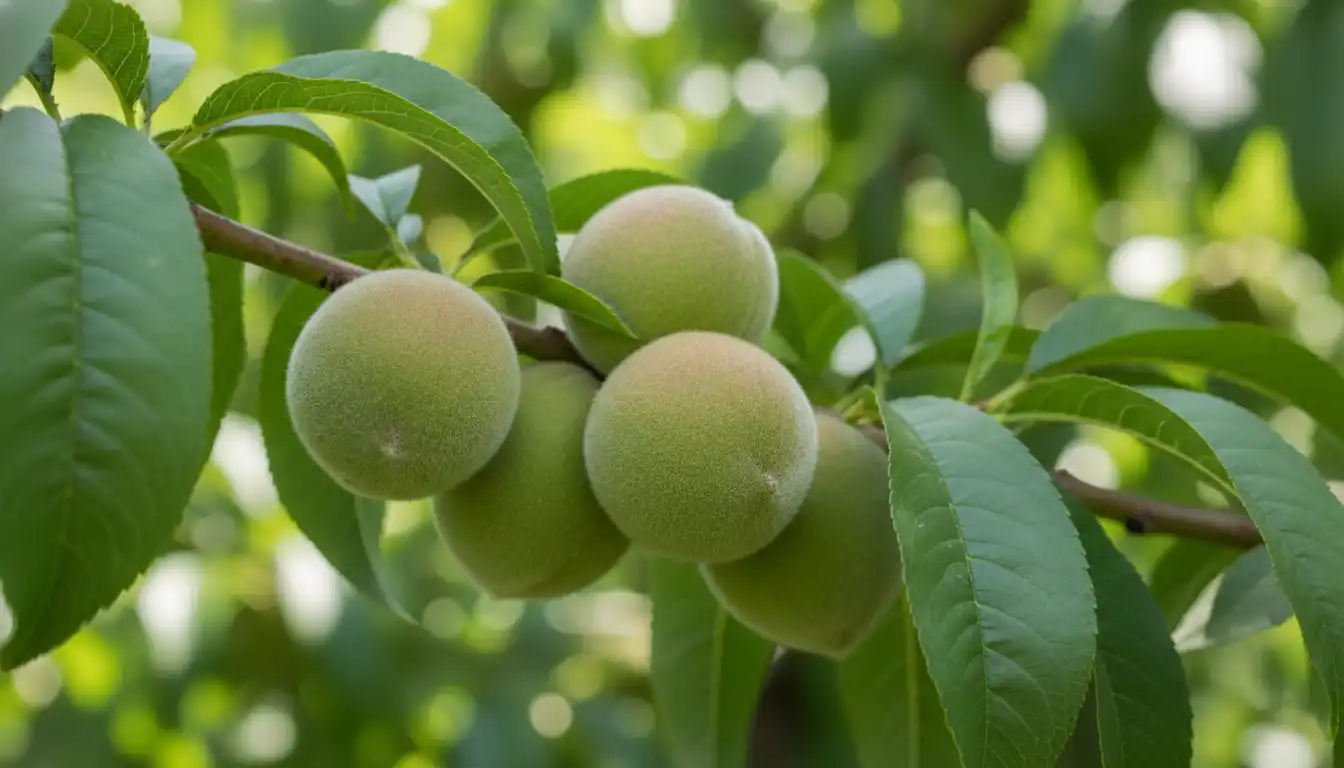
Before you start thinking you’ve discovered a new exotic species, consider the most probable answer: you have a peach tree (Prunus persica). Unripe peaches are characteristically green and covered in a fine, downy fuzz. These fruits will be hard to the touch and will remain on the tree for much of the summer, slowly developing their signature blush and sweetness. Many new homeowners inherit unidentified fruit trees, and the peach is a frequent surprise.
The confusion arises because we are accustomed to seeing peaches in their ripe, golden-orange state at the grocery store. Witnessing their entire life cycle in your own yard can be a revelation. The fuzzy skin on a peach serves a purpose, protecting the delicate fruit from excessive moisture and some pests.
The Native Treasure: The Pawpaw Tree
Another strong contender is the Pawpaw (Asimina triloba), North America’s largest native fruit. While the skin of a pawpaw is not distinctly fuzzy like a peach, young, developing fruits can have a velvety texture that appears fuzzy from a distance. The fruit is oblong and greenish-yellow, often growing in clusters.
Pawpaw trees have large, tropical-looking leaves that can make them stand out in a temperate garden. They thrive in moist, well-drained soils and often grow as understory trees in the wild. For fruit to develop, you typically need at least two genetically different trees for cross-pollination. This is a critical piece of information for anyone hoping to harvest the tree’s unique, custard-like fruit.
The Old-World Classic: The Quince Tree
The Quince (Cydonia oblonga) is an ancient fruit, related to apples and pears, known for its lumpy, pear-shaped fruit. When young, quince fruits are green and covered in a dense, soft, greyish-white fuzz. As the fruit matures, this fuzz gradually disappears, and the skin turns a brilliant golden-yellow.
Quince trees are quite adaptable and can grow in a range of climates, but they need a period of winter chill to produce fruit. The fruit itself is incredibly aromatic but is rarely eaten raw due to its hard, astringent flesh. Cooking transforms it, turning the flesh pink and unlocking a wonderfully complex flavor perfect for jellies, pastes, and baking.
The Vining Impostor: The Hardy Kiwi
While not technically a tree, the Hardy Kiwi (Actinidia arguta) is a vigorous vine that can easily climb up and engulf nearby structures or even trees, giving the appearance of a fruiting tree. Its fruits are small, grape-sized, and can have a slightly fuzzy skin, though much less so than the common fuzzy kiwi (Actinidia deliciosa) found in stores.
These vines require a sturdy support structure to grow on and, like pawpaws, need both male and female plants for pollination and fruit production. Identifying a kiwi vine is a great first step, but understanding its pollination needs is what ultimately leads to a successful harvest. Problems with fruit set are often linked to a lack of a male pollinator, an issue that can be as frustrating as dealing with pumpkin flower buds dropping before they set fruit.
Common Problems Plaguing Your Fuzzy Fruit Tree
Identifying your tree is only half the battle. Many gardeners then face a series of frustrating problems, from fruit that never ripens to mysterious diseases and pests that seem drawn to that fuzzy coating. Understanding these challenges is the key to solving them effectively.
The Eternal Question: “Why Won’t My Fruit Ripen?”
One of the most common complaints is fruit that remains small, green, and hard all season long, only to drop from the tree without ever becoming edible. For peaches, this can be a result of a few factors. Overcropping is a primary cause; a tree will produce more fruit than it can support, leading to none of it ripening properly. Another issue could be that the tree has grown from the rootstock of a previously grafted tree, and this rootstock is not bred for quality fruit production.
For quince, a lack of sufficient summer heat can prevent the fruit from ripening fully. They require a long, warm growing season to develop their sugars and characteristic aroma. If your climate is too cool or the season is unusually short, you may be left with hard, green fruit at the end of the year.
The Fuzzy Coat Conundrum: A Welcome Mat for Pests and Disease?
That fuzzy or velvety coating on fruits like peaches and quince can unfortunately create a microenvironment that traps moisture, making it an ideal breeding ground for fungal diseases. Brown rot and powdery mildew are common fungal issues that thrive in these conditions. Brown rot will cause fruit to develop soft, brown spots that quickly spread, while powdery mildew appears as white, patchy spots on the fruit and leaves.
The fuzz can also make it more difficult for topical treatments to reach the skin of the fruit. This textural feature requires a more thoughtful approach to disease management, focusing heavily on prevention through proper air circulation and proactive, organic treatments.
The Heartbreak of Fruit Drop
It’s incredibly disheartening to watch your tree set a promising crop of young fruit, only to see it all drop to the ground prematurely. This can happen for several reasons. A late frost can damage the young flowers or fruitlets, causing them to abort. Inconsistent watering, especially during dry spells, can stress the tree and lead to fruit drop.
Poor pollination is another major factor. If a tree isn’t adequately pollinated, it may form small fruits that the tree cannot sustain, eventually dropping them. This highlights the importance of having the correct pollinators, whether it’s another variety of the same tree or ensuring there are enough bees and other pollinating insects in your garden.
Your Action Plan: From Mystery to Mastery
Now that you’ve identified the potential culprits and the common problems, it’s time for solutions. With the right knowledge and techniques, you can turn your mystery tree into a productive and healthy centerpiece of your garden. This requires a holistic approach that considers everything from the soil up.
The Ultimate Identification Guide
The first step to providing proper care is a positive identification. Use the table below to compare the key characteristics of the most common trees with green fuzzy fruit. Pay close attention to the leaves, bark, and growth habit, as these are often more reliable identifiers than the fruit alone.
| Feature | Peach (Unripe) | Pawpaw | Quince | Hardy Kiwi (Vine) |
|---|---|---|---|---|
| Fruit Appearance | Round, distinctly fuzzy, green, hard. | Oblong, slightly velvety, greenish-yellow, often in clusters. | Pear-shaped or round, lumpy, covered in dense grey fuzz when young. | Grape-sized, smooth to slightly fuzzy, green. |
| Leaf Shape | Long, narrow, lance-shaped with pointed tips. | Large, drooping, tropical-looking, oval-shaped. | Oval to oblong, with a smooth top and fuzzy underside. | Heart-shaped with a pointed tip and serrated edges. |
| Bark | Smooth and dark on young trees, becoming more rugged with age. | Smooth, dark brown bark with light splotches. | Thin, smooth, and mottled, flaking off in patches on older trees. | Shreddy, reddish-brown bark on the main vine. |
| Growth Habit | A small to medium-sized tree with a rounded crown. | A small, slender tree, often forming thickets from root suckers. | A small, often multi-stemmed, gnarled tree with a spreading habit. | A vigorous, climbing woody vine. |
Mastering the Harvest: When to Pick Your Fuzzy Fruit
Knowing when to harvest is crucial for enjoying the best flavor and texture. For peaches, don’t just rely on color. A ripe peach will have a slight give when gently pressed near the stem and will have a sweet, fragrant aroma. If a peach is still green, it was picked too early and will likely not ripen properly off the tree.
Quince is ready to harvest when it has turned from green to a deep golden yellow and is highly fragrant. The fuzz should also rub off easily. Pawpaws are ready when they are soft to the touch, similar to a ripe avocado, and easily detach from the stem. They have a very short window of ripeness and should be checked daily.
Cultivation Secrets for Abundant Fruit
Proper cultivation is the foundation of a healthy, productive tree. Most fruit trees, including peaches and quince, require full sun—at least six hours of direct sunlight per day—to produce high-quality fruit. Pawpaws and kiwi vines, while fruit-bearing in full sun, can tolerate and even prefer some partial shade, especially when young.
All of these plants prefer well-drained, fertile soil. A key to success that is often overlooked is the health of your soil’s microbiome. Encouraging beneficial mycorrhizal fungi in your soil can dramatically improve a tree’s ability to uptake water and nutrients. You can promote this by avoiding synthetic fertilizers, using organic compost, and applying a thick layer of wood chip mulch around the base of the tree. This mulch also helps retain soil moisture and regulate temperature.
Pruning for Health and Productivity
Pruning is not just about shaping your tree; it’s one of the most effective ways to prevent disease and encourage better fruit production. The primary goal of pruning is to open up the canopy to improve air circulation and sunlight penetration. This helps the leaves and fruit dry out more quickly after rain, significantly reducing the risk of fungal diseases like brown rot and powdery mildew.
For peach trees, an open-center or “vase” shape is ideal. This involves removing the central leader and encouraging three to five main scaffold branches to grow outwards. For quince and pawpaw, minimal pruning is needed; simply remove any dead, damaged, or crossing branches in the late winter to maintain a healthy structure.
An Ounce of Prevention: Organic Pest and Disease Control
A proactive, organic approach is the best way to manage pests and diseases on your fruit trees. Start by cleaning up all fallen fruit and leaves at the end of the season to remove overwintering pests and disease spores. Encouraging beneficial insects like ladybugs and lacewings by planting a diversity of flowers nearby can help control pests like aphids naturally.
For fungal diseases on fuzzy fruit, a dormant oil spray applied in late winter can help smother overwintering spores. During the growing season, an innovative and highly effective organic strategy is to use kaolin clay. This natural mineral can be mixed with water and sprayed on the tree, forming a fine, powdery white barrier on the fruit and leaves. This barrier irritates insects and creates a dry, inhospitable surface for fungal spores, offering excellent protection without synthetic chemicals.
