
Towel Bar Inside Shower: Your Genius Hack or a Huge Mistake?
That cold, wet dash from the shower to the towel rack is a universal experience. It’s a moment of vulnerability, a frantic grab for warmth while dripping water all over the bathroom floor. This daily inconvenience is precisely why the idea of a towel bar inside the shower emerges as a seemingly brilliant solution.
The logic is undeniable: keep your towel dry, warm, and within arm’s reach. But is this popular bathroom hack a true stroke of genius, or does it invite a host of problems you haven’t considered? Before you start drilling into your pristine shower tile, a deeper look is warranted.
You'll Learn About
The Great Debate: Convenience vs. Complications
Placing a towel bar inside the shower enclosure offers unmatched convenience. Imagine finishing your shower and simply reaching over to a perfectly dry towel, eliminating chilly drafts and slippery puddles on the floor. In smaller bathrooms where wall space is a premium, it can also seem like a clever space-saving maneuver.
However, the shower is the most humid environment in your home. Constant exposure to moisture, steam, and soap scum creates a challenging environment for any fixture. The primary concerns are rust, mold, and mildew, not just on the bar itself but also on the towel that hangs there.
Can a Towel Stay Dry Inside a Shower?
The effectiveness of an in-shower towel bar hinges on its placement. To work, it must be installed in a location that is shielded from the direct spray of the showerhead. This typically means placing it on the wall opposite the shower fixtures or on the back of a hinged shower door in a sufficiently large enclosure.
Even with careful placement, ambient steam and humidity are unavoidable. A towel hung inside the shower will not dry as quickly or as thoroughly as one hung in a well-ventilated bathroom. This slower drying time is the perfect breeding ground for mildew and unpleasant odors.
Choosing a Waterproof and Rust-Proof Towel Bar
If you’re committed to the idea, selecting the right material is the single most important decision. Standard towel bars are not designed for direct, prolonged water exposure. You must choose a material specifically known for its corrosion resistance to avoid a rusty mess.
Material choice directly impacts durability, maintenance, and cost. Opting for the cheapest option will almost certainly lead to rust and replacement sooner rather than later. Making an informed decision here is crucial for the longevity and appearance of your installation.
Material Matters: A Head-to-Head Comparison
Understanding the properties of different metals is key to preventing rust and ensuring your investment lasts. Some materials are naturally better suited for the high-humidity, direct-water environment of a shower interior. Here’s how the top contenders stack up.
| Material | Rust Resistance | Best For | Maintenance |
|---|---|---|---|
| Stainless Steel (304 Grade) | Excellent | Modern, high-use showers | Low; wipe clean to prevent water spots |
| Solid Brass (Chrome-Plated) | Very Good | Traditional or luxury designs | Moderate; plating can be damaged by harsh cleaners |
| Anodized Aluminum | Good | Budget-conscious or temporary solutions | Low; but less durable and can scratch easily |
| Standard Chrome-Plated Steel/Zinc | Poor | Not recommended for inside showers | High; will rust quickly once plating is breached |
Installation Masterclass: Putting Your Bar in the Right Place
Proper installation is about more than just attaching a bar to the wall; it’s about preserving the integrity of your shower’s waterproofing. Drilling into shower walls or glass doors is a high-stakes task. One mistake can compromise your waterproofing membrane, leading to hidden leaks and costly water damage down the line.
Before you begin, carefully assess your shower’s construction. The correct installation method depends entirely on whether you are mounting to tile, fiberglass, or a glass shower door. Each surface requires specific tools and techniques to ensure a secure and, most importantly, waterproof seal.
Mounting on Tiled Walls
Drilling through tile requires precision and patience. The biggest risk is cracking the tile or damaging the waterproofing membrane behind it. Always use a glass-and-tile drill bit, which is designed to cut cleanly through ceramic or porcelain without shattering it.
Start by marking your drill locations with a grease pencil. To prevent the drill bit from wandering on the slick tile surface, create a small indentation with a center punch or apply masking tape over the mark. Drill slowly and steadily, applying gentle pressure. Once through the tile, switch to a standard bit if you need to drill into a stud behind the backer board.
Waterproofing the screw holes is non-negotiable. Before inserting wall anchors or screws, inject each hole with a generous amount of 100% silicone sealant. This creates a waterproof gasket around the screw, preventing any moisture from seeping into the wall cavity. This step is the most critical part of the entire installation.
Mounting on a Glass Shower Door
Installing a towel bar on a glass door is often a simpler, drill-free option. Most shower doors that accommodate a towel bar come with pre-drilled holes from the manufacturer. These bars are designed as a handle-towel bar combination, with one piece on the outside and one on the inside, bolting through the glass.
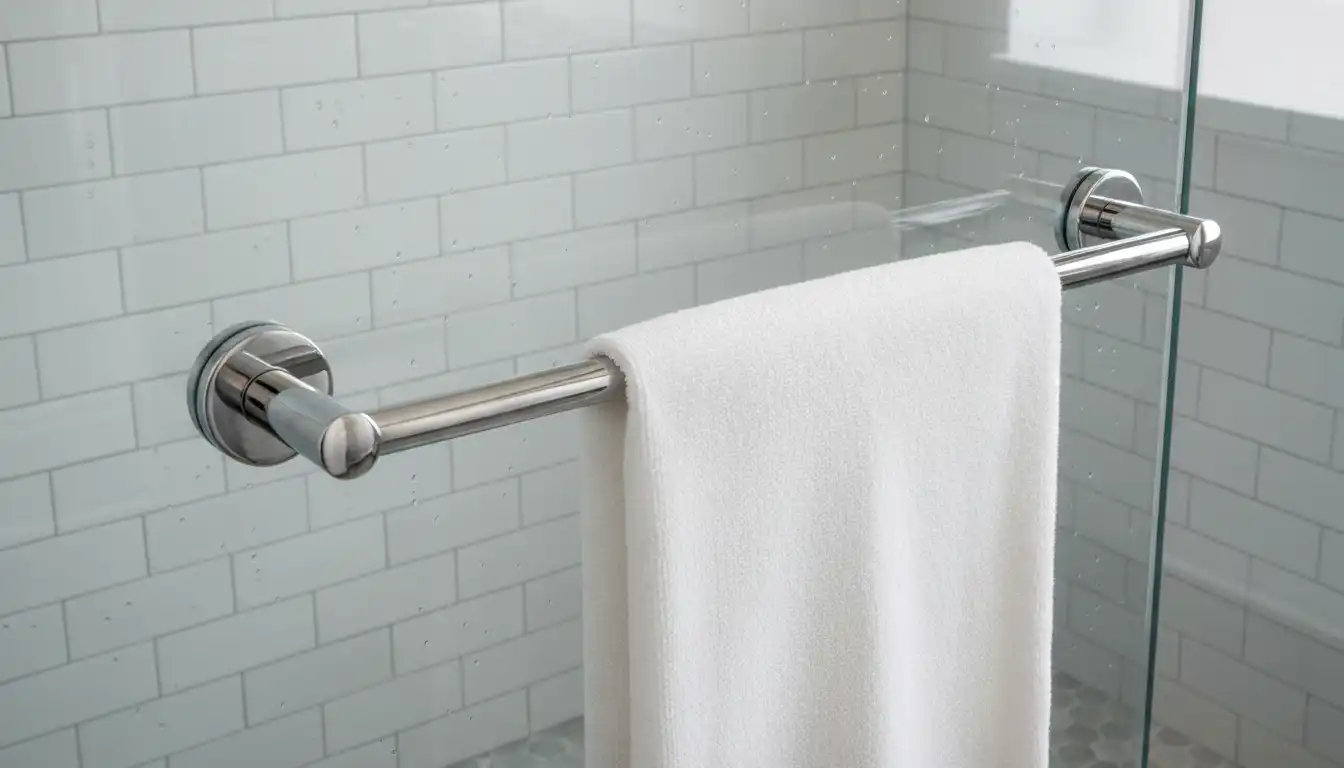
If your door, such as a Cardinal 10 model, wasn’t ordered with these holes, you cannot drill them yourself. Shower door glass is tempered for safety, and attempting to drill it will cause it to shatter into thousands of pieces. Instead, opt for a high-quality suction cup or an over-the-door style bar designed specifically for glass doors.
When installing a through-glass bar, ensure the protective plastic or rubber gaskets are placed between the metal fixture and the glass on both sides. These gaskets prevent the metal from damaging the glass and help create a watertight seal. Hand-tighten the screws evenly to avoid putting undue stress on the glass, which could cause a leak similar to when a frameless shower door leaks at the hinge.
Smarter Alternatives for Towel Accessibility
If the risks of an in-shower towel bar seem to outweigh the rewards, don’t despair. There are several excellent alternatives that provide convenient access to your towel without compromising your shower’s integrity or leaving you with a perpetually damp towel.
The goal is to minimize the distance between your warm shower and your dry towel. Often, the best solution is placing a hook or bar immediately outside the shower door. This keeps the towel fully dry and eliminates the need to drill into a wet area.
The Rise of Hooks and Valet Knobs
Towel hooks are a fantastic, space-saving solution. A stylish robe hook placed just outside the shower entrance is often all that’s needed. For a detailed comparison, exploring bathroom hooks instead of a towel bar can provide more insight into why this simple alternative is often superior.
For glass showers, a valet knob or hook that mounts through a pre-drilled hole in the glass is a sleek and modern option. This provides a dedicated spot to hang your towel or robe, keeping it within easy reach. Freestanding towel ladders or racks placed near the shower also offer a flexible, no-installation-required solution that adds a spa-like touch to the bathroom.
Frequently Asked Questions
Is it a good idea to put a towel bar inside the shower?
Yes, installing a towel bar inside a large walk-in shower can be a practical and luxurious addition. It allows for easy access to your towel, keeping you warmer as you dry off within the steamy enclosure. However, it is generally only recommended for larger showers where the towel can be kept dry.
Where is the best place to install a towel bar inside a shower?
The ideal placement for a towel bar inside the shower is on a wall away from the showerhead to prevent the towel from getting wet. Often, this is the wall opposite the showerhead. This positioning ensures your towel remains dry and ready for use after you’re done showering.
What is the best material for a towel bar that will be inside the shower?
Stainless steel is a highly recommended material for a towel bar inside a shower due to its excellent rust resistance in humid environments. Other good options that are resistant to rust and corrosion include solid brass and aluminum. It is best to avoid materials that can easily rust or get damaged by moisture.
What is the standard height for installing a towel bar?
The standard height for a towel bar is typically between 40 to 48 inches from the floor. This height is comfortable for most adults to reach. However, the height can be adjusted based on the specific needs of the users, such as in a children’s bathroom.
Will a towel actually stay dry on a bar inside the shower?
A towel can stay dry on a bar inside the shower if the shower is spacious enough and the bar is positioned correctly. Placing the towel bar on a wall that is not in the direct path of the water spray is key. Proper bathroom ventilation is also important to help the towel dry between uses and prevent mold growth.
Can a towel bar in the shower also be used as a grab bar?
It is not recommended to use a standard towel bar as a grab bar for safety. Towel bars are not designed to support a person’s weight. If you need support in the shower, it is much safer to install a dedicated grab bar which can also be used to hang a towel.
