
Top Down Bottom Up Shades for Sliding Glass Doors: The Genius Solution You’re Missing
Sliding glass doors are a fantastic feature in any home, flooding rooms with natural light and offering expansive views. But they present a significant challenge: how do you cover them for privacy and light control without resorting to clunky, outdated options? Many homeowners feel stuck with traditional vertical blinds that clatter in the breeze and offer an all-or-nothing approach to privacy.
This common decorating problem leaves you compromising between a beautiful view and your personal privacy. Fortunately, there’s a modern, elegant, and highly functional solution that perfectly addresses this dilemma. Top-down bottom-up shades offer unparalleled flexibility, transforming your sliding glass door from a privacy concern into a versatile feature of your home.
You'll Learn About
The Modern Answer to the Sliding Door Problem
Why have top-down bottom-up shades become the go-to choice for savvy homeowners? It’s simple: they solve the core problems that other window treatments can’t. Unlike traditional shades that only open from the bottom up, this innovative design allows you to lower the shade from the top as well.
This dual-action control means you can let natural light stream in through the top portion of your door while keeping the bottom half covered for complete privacy. It’s the perfect way to enjoy daylight and a view of the sky without exposing your living space to the outside world. This adaptability makes them a game-changer for ground-floor rooms, bedrooms with balconies, and any space where you want both light and seclusion.
Beyond Flexibility: The Core Benefits of TDBU Shades
The advantages of installing top-down bottom-up shades on your sliding glass doors extend far beyond their unique operational style. They bring a host of benefits that enhance comfort, style, and even your home’s energy efficiency.
Key advantages include:
- Superior Light and Privacy Control: Maintain privacy from street level while enjoying natural sunlight from above. This feature is ideal for homes where neighbors are close or for doors facing public areas.
- Enhanced Energy Efficiency: Many top-down bottom-up shades come in a cellular or honeycomb style. These shades feature air pockets that trap air, creating an insulating barrier against heat and cold, which is especially beneficial for large glass surfaces.
- Sleek, Modern Aesthetics: Say goodbye to the noisy, swaying slats of vertical blinds. Top-down bottom-up shades provide a clean, streamlined look that complements contemporary home decor.
- Child and Pet Safety: With the prevalence of cordless designs, these shades eliminate the danger of dangling cords, making them a safer choice for families with young children and pets.
Choosing the Perfect Top-Down Bottom-Up Shade for Your Patio Door
Selecting the right shade involves more than just picking a color. To get the most out of your investment, you need to consider the material, light control options, and—most importantly—the configuration for a large opening like a sliding glass door.
Material Matters: Cellular, Woven, or Pleated?
The material of your shade impacts its appearance, durability, and insulating properties. Cellular shades are the most popular choice for sliding glass doors due to their exceptional energy efficiency. The honeycomb structure is a powerful insulator, helping to regulate your home’s temperature. If you’re wondering, “are honeycomb shades outdated?”, the answer is a definitive no; their classic design and functional benefits keep them in high demand.
Woven wood shades offer a natural, organic texture that adds warmth and character to a room, while pleated shades provide a crisp, clean look. For a high-end comparison of leading brands, you might find a guide on Hunter Douglas vs Alta helpful in seeing how material quality differs.
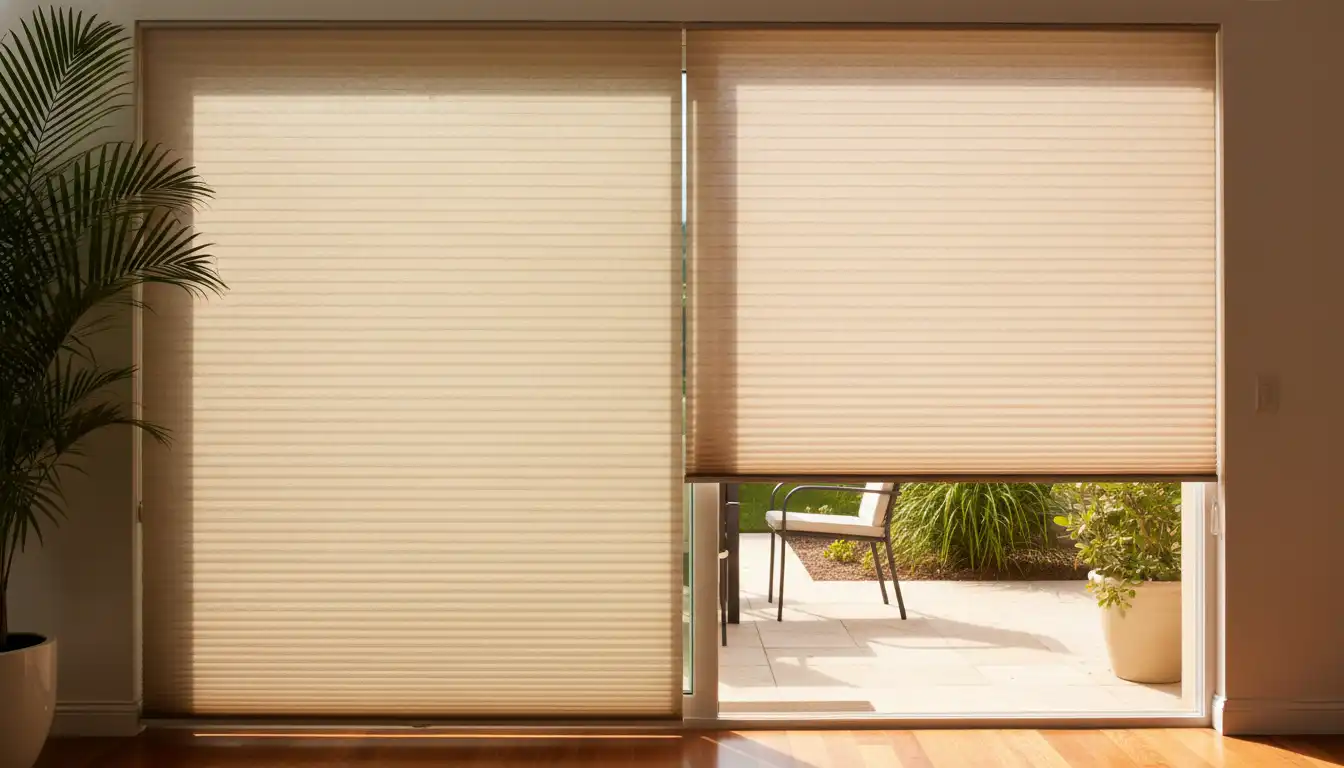
The Ultimate Debate: One Large Shade or Two?
Here is where many homeowners get stuck, and it’s a critical decision for functionality. While you can order one very wide top-down bottom-up shade to cover the entire door, this is often not the most practical solution. A single large shade can be heavy and difficult to operate smoothly.
The superior approach is to treat your sliding glass door as two separate windows. Install two individual top-down bottom-up shades, one over the stationary glass panel and one over the operable door. This two-shade system offers far more flexibility. You can raise the shade on the operable side completely for access while leaving the other shade in a top-down position for privacy and light.
This configuration also reduces strain on the lifting mechanisms and makes daily operation significantly easier. It’s a professional design secret that transforms a good solution into a great one, providing a custom feel and unmatched convenience.
Light Filtering vs. Blackout: What’s Right for Your Space?
Consider how you use the room. For living rooms and kitchens, light-filtering shades are an excellent choice. They soften incoming light, reduce glare, and protect your furniture from UV damage while maintaining a bright, airy feel.
For bedrooms or media rooms with a sliding door, blackout shades provide the ultimate in light control and privacy. They are designed to block nearly all incoming light, creating a perfect environment for sleeping or watching movies. Some shades even offer a dual-fabric option, combining a light-filtering sheer with a blackout shade on one headrail for maximum versatility.
Comparing Your Sliding Glass Door Options
To truly understand the value of top-down bottom-up shades, it helps to see how they stack up against other common window treatments for sliding glass doors. Their balance of features often makes them the most well-rounded choice.
| Feature | Vertical Blinds | Curtains/Drapes | Top-Down Bottom-Up Shades |
|---|---|---|---|
| Light Control Flexibility | Limited (Open, closed, or angled) | Good (Can be sheer or blackout) | Excellent (Opens from top, bottom, or both) |
| Privacy Options | Fair (Gaps between slats) | Excellent (Full coverage) | Excellent (Bottom-up privacy with top light) |
| Energy Efficiency | Poor | Good (with thermal lining) | Excellent (Especially cellular styles) |
| Aesthetics | Often dated and noisy | Can be bulky; timeless | Modern, clean, and minimalist |
| Child/Pet Safety | Poor (Long cords/chains) | Fair (Can be pulled down) | Excellent (Cordless options available) |
Answering Your Top Questions
Even with all their benefits, you might still have some practical questions about living with these shades. Let’s address the most common concerns to ensure you feel confident in your decision.
“Are they difficult to operate on a large door?”
Not if you choose the right system. For large shades, a continuous cord loop makes lifting easier by using a pulley system. However, cordless operation is the most popular choice for its clean look and safety. You simply push the bottom rail or pull the top rail to your desired position. For the ultimate in convenience, motorized options allow you to operate your shades with a remote or even a smart home app.
“How do I clean and maintain them?”
Maintenance is surprisingly simple. For most fabric shades, regular dusting with a feather duster or using the brush attachment on your vacuum is all that’s needed. For small spots or stains, you can typically spot-clean with a damp cloth and a mild detergent. Always check the manufacturer’s instructions first, as some materials may have specific cleaning requirements.
“Can I install them myself?”
For those with DIY experience, installing top-down bottom-up shades is a manageable project. Most shades come with all the necessary hardware and instructions. However, because sliding glass doors are so wide, the process is much easier with a second person to help hold the headrail in place. If you’re not comfortable with tools or measurements, or if you simply want a perfect fit, professional installation is always a reliable option. For those who enjoy a DIY challenge, guides like this one on how to cut roller shades can provide some transferable skills.
The Final Verdict
Sliding glass doors no longer have to be a source of frustration in your home. By moving beyond outdated vertical blinds and embracing the flexibility of top-down bottom-up shades, you can achieve the perfect balance of natural light, privacy, and modern style. Their superior functionality, combined with energy-saving properties and a sleek appearance, makes them an intelligent investment for any homeowner.
Whether you opt for a single wide shade or the highly recommended two-shade system, this versatile window treatment will fundamentally change how you interact with your space. It’s time to reclaim your view without sacrificing your privacy and give your sliding glass doors the smart, stylish solution they deserve.
