
Too Many Lights on Christmas Tree? Avoid This #1 Holiday Hazard
The allure of a brightly lit Christmas tree is undeniable. Each added strand promises more sparkle, more magic, and a grander holiday statement. But there is a fine line between a breathtaking glow and a chaotic, hazardous glare.
Many well-intentioned decorators fall into the “more is better” trap, unaware that overloading a tree with lights can create significant risks. This goes beyond simple aesthetics; it’s a critical safety issue that demands attention. Understanding the dangers and mastering the right techniques can transform your tree from a potential liability into the stunning centerpiece it was meant to be.
You'll Learn About
The Hidden Dangers of an Overloaded Christmas Tree
While the goal is a festive glow, piling on too many lights introduces serious risks that can turn a holiday celebration into a disaster. Recognizing these dangers is the first step toward a safer and more beautiful holiday setup.
Fire Hazard: More Than Just a Myth
The most severe risk of using too many lights is fire. Electrical distribution or lighting equipment is involved in more than two out of five home Christmas tree fires. When multiple light strands are connected, especially older incandescent types, the electrical load can overwhelm your home’s circuits. This leads to overheating wires, which, when combined with a dry tree, creates a highly flammable situation.
Each year, fire departments respond to numerous home fires that start with Christmas trees. These incidents are often traced back to electrical failures or placing heat sources too close to the tree. Never underestimate the heat generated by dozens, or even hundreds, of tiny bulbs packed closely together.
Damaging Your Tree (Real and Artificial)
The intense, concentrated heat from excessive lights is detrimental to both real and artificial trees. For a natural evergreen, this heat accelerates the drying process, causing it to become brittle and drop its needles prematurely. A dry tree is not only less attractive but also significantly more flammable.
Artificial trees are not immune to damage. The PVC or PE materials used to make the needles can warp, melt, or become discolored when exposed to the constant heat from overloaded light strands. This can permanently ruin the appearance of your investment and release harmful fumes.
The Aesthetic Catastrophe: When ‘More’ Is Just Messy
Beyond the safety concerns, overloading a tree with lights is an aesthetic misstep. Instead of an even, magical glow, you create harsh “hot spots” of blinding light. This intense glare washes out the natural beauty of the tree and makes it impossible to see your cherished ornaments.
A well-lit tree should have depth and dimension, with lights twinkling from within the branches, not just sitting on the surface. Piling on too many strands often results in a tangled web of visible wires that looks cluttered and chaotic rather than festive and elegant.
Finding the “Goldilocks Zone”: How Many Lights Are Just Right?
Achieving a perfectly lit tree is a science as much as an art. The goal is to find the right balance—not too sparse, not too overwhelming. Fortunately, professional decorators have developed simple guidelines to help you determine the ideal number of lights for your specific tree.
The “right” amount depends on the tree’s height and your desired look, from a subtle sparkle to a full, radiant display. Before you begin, consult the table below to get a reliable starting point for your lighting project.
| Tree Height | Minimalist Glow (Approx. 50 lights/ft) | Classic Radiance (Approx. 100 lights/ft) | Showstopper Sparkle (Approx. 150-200 lights/ft) |
|---|---|---|---|
| 6 ft (1.8 m) | 300 lights | 600 lights | 900-1200 lights |
| 7.5 ft (2.3 m) | 400 lights | 750 lights | 1100-1500 lights |
| 9 ft (2.7 m) | 500 lights | 900 lights | 1300-1800 lights |
| 10 ft (3 m) | 600 lights | 1000 lights | 1500-2000 lights |
| 12 ft (3.7 m) | 800 lights | 1200 lights | 1800-2400 lights |
Understanding Light Types and Spacing
The type of bulb you choose significantly impacts the final look and the number of lights required. LED lights are the superior choice for safety and efficiency; they consume far less energy and run much cooler than traditional incandescent bulbs, drastically reducing fire risk.
Bulb size and spacing also play a role. Mini-lights are the most common and versatile option. Larger bulbs, like C7 or C9, create a bold, retro look but require fewer lights overall. Pay attention to the spacing between bulbs on the strand to ensure even coverage without creating unintentional dark spots.
The ‘Rule of 100’: A Simple Starting Point
A widely accepted guideline is the “Rule of 100,” which suggests using 100 lights for every vertical foot of your tree. This is a solid baseline for achieving a classic, full look. However, for very dense trees or for those who prefer an exceptionally bright display, increasing this to 150 or even 200 lights per foot might be necessary.
Conversely, if you prefer a more subtle, minimalist aesthetic, you can reduce the count to around 50 lights per foot. This rule is a flexible guide, not a strict requirement. Use it as a starting point and adjust based on your personal preference and the unique shape of your tree.
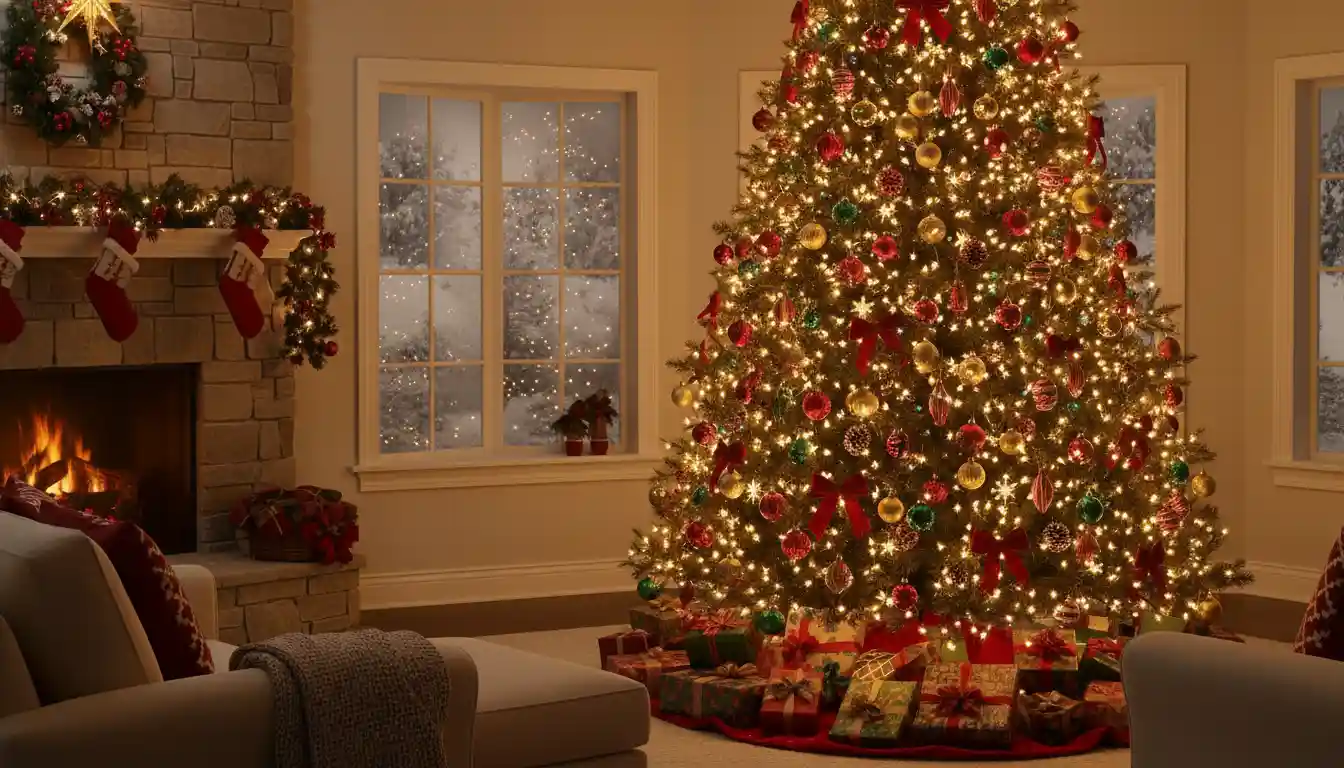
The Expert’s Guide to Perfectly Lighting Your Tree
Once you have determined the right number of lights, the application technique is what separates an amateur look from a professional display. Following a structured approach ensures even coverage, depth, and safety.
Step 1: Always Test Your Lights First
This simple, yet often overlooked, step can save you immense frustration. Before a single light goes on the tree, plug in every strand to ensure all bulbs are working. It is far easier to replace a faulty bulb or an entire strand on the floor than it is when it’s already woven deep into the branches.
While testing, also inspect the wires for any signs of damage, such as fraying, cracking, or bare spots. Damaged cords are a serious fire hazard and should be discarded immediately. Never take a chance with faulty wiring.
Step 2: The Weaving Technique for Flawless Coverage
For a look that radiates from the inside out, avoid simply wrapping the lights around the outer edges of the tree. Instead, use a weaving technique. Start near the trunk and weave the light strand out toward the tip of a branch, and then back in toward the trunk.
Continue this in-and-out pattern on adjacent branches, working your way around the tree. This method ensures that lights are distributed evenly throughout the foliage, creating a beautiful sense of depth and dimension that makes the entire tree glow.
Step 3: Layering for Depth and Dimension
To achieve a truly sophisticated, designer-level look, consider layering different types of lights. This technique adds unparalleled visual interest and depth. For instance, start with a base layer of steady, warm white lights wrapped deep within the tree, close to the trunk.
Then, add a second layer of twinkling lights or lights of a slightly different shape or color to the middle and outer branches. This creates a dynamic, multi-dimensional effect that is both subtle and stunning. It’s a small detail that makes a significant impact.
Step 4: Power Management and Safety Checks
Proper power management is non-negotiable. Never connect more light strands end-to-end than the manufacturer recommends. Overloading strands is a primary cause of overheating and electrical fires. Instead, use a surge-protected power strip at the base of the tree and run extension cords up the trunk for different sections.
This approach is essential for large trees and is just as crucial for indoor setups as it is when you must determine how to hang Christmas lights outside without an outlet. Always use extension cords that are rated for the wattage of the lights you are using and keep all connections away from the tree’s water basin.
Recognizing the Red Flags: Is Your Tree Overloaded?
Even with careful planning, it’s possible to go overboard. Knowing the warning signs of an overloaded tree is crucial for both safety and aesthetics. Step back and critically assess your tree for these common red flags.
Visual Cues
A properly lit tree should be enchanting, not blinding. If you see glaring “hot spots” where the light is too intense, it’s a clear sign of too many bulbs in one area. Another telltale sign is when the lights completely overpower your ornaments, making them difficult to see.
You should also check for a messy web of visible wires. While some wires will always be visible, an excessive, tangled mess indicates a rushed or overloaded application. The goal is to see the glow, not the grid that produces it.
Physical Warnings
Physical warnings are far more serious and require immediate attention. If any part of the tree feels warm to the touch, unplug the lights immediately. This is a direct indication that the bulbs are generating too much heat, posing a significant fire risk.
Other critical red flags include a faint smell of burning plastic or ozone, which can signal melting wires or an overloaded circuit. Furthermore, if your lights cause your home’s circuit breaker to trip repeatedly, it’s a definitive sign that the electrical load is dangerously high.
Beyond the Tree: A Holistic Approach to Holiday Lighting
A truly stunning holiday display considers the entire room, not just the tree. An overly bright tree can disrupt the ambiance of your living space, creating an unbalanced and jarring effect. Striving for harmony between your tree and its surroundings is the final touch of a professional.
Balancing a Bright Tree with Ambient Room Lighting
Your Christmas tree should be the focal point, but not an overwhelming one. If your tree is intensely bright, it can make the rest of the room feel dim and cavernous by comparison. To counteract this, use other sources of soft, ambient light in the room, such as table lamps, floor lamps, or candles (placed safely away from flammable materials).
This creates a layered, cohesive lighting scheme that feels warm and inviting. The goal is a gentle glow that fills the space, with the tree serving as the radiant centerpiece rather than a solitary beacon.
Reflective Surfaces and Glare
Consider the impact of your tree’s light on reflective surfaces in the room. An excessively bright tree can create harsh glare on television screens, making them difficult to watch. It can also cause distracting reflections in windows or on high-gloss surfaces.
This is particularly true in rooms with modern finishes. The intense glare from an overloaded tree can create distracting reflections on windows or even highlight imperfections you might have been planning to fix with a ceiling resurfacing project. Similarly, the constant, close-range heat from too many incandescent lights can be detrimental to your Christmas tree’s health, much like excessive direct sun can harm a delicate Halloween cactus plant.
Conclusion: A Bright and Safe Holiday Season
Lighting a Christmas tree is a beloved tradition that sets the stage for the holiday season. While the temptation to create the brightest tree on the block is strong, a mindful approach is essential. By understanding the fine balance between beauty and safety, you can create a display that is both breathtaking and secure.
Remember to prioritize safety by choosing the right number and type of lights, inspecting your equipment, and managing your electrical load carefully. Combine this with expert techniques for application and a holistic view of your room’s ambiance, and you will achieve a professional, magical, and—most importantly—safe holiday centerpiece that your family can enjoy all season long.
