
Tiny Black Eggs on House? The Shocking Culprit & How to Fix It
You step outside, ready to enjoy a sunny day, and then you see it. Your home’s beautiful, clean siding is speckled with hundreds of tiny black eggs. Your mind immediately races: What pest is this? Is my house infested? How do I get rid of them before they hatch?
This alarming discovery is a common pain point for homeowners, leading to frantic searches for answers. The truth behind these mysterious black dots is often not what you expect, and knowing the real cause is the first step toward reclaiming your home’s exterior.
This guide will unmask the true identity of those “tiny black eggs,” provide a step-by-step plan to remove them, and share the ultimate prevention strategies to ensure they never return.
You'll Learn About
Unmasking the Mystery: What Are These Black Specks, Really?
Before you can treat the problem, you need a correct diagnosis. While several things can cause black spots on your house, one culprit is responsible for the vast majority of these “egg” sightings. It’s not a bug, and it’s not dirt.
The #1 Culprit You’ve Never Heard Of: Artillery Fungus
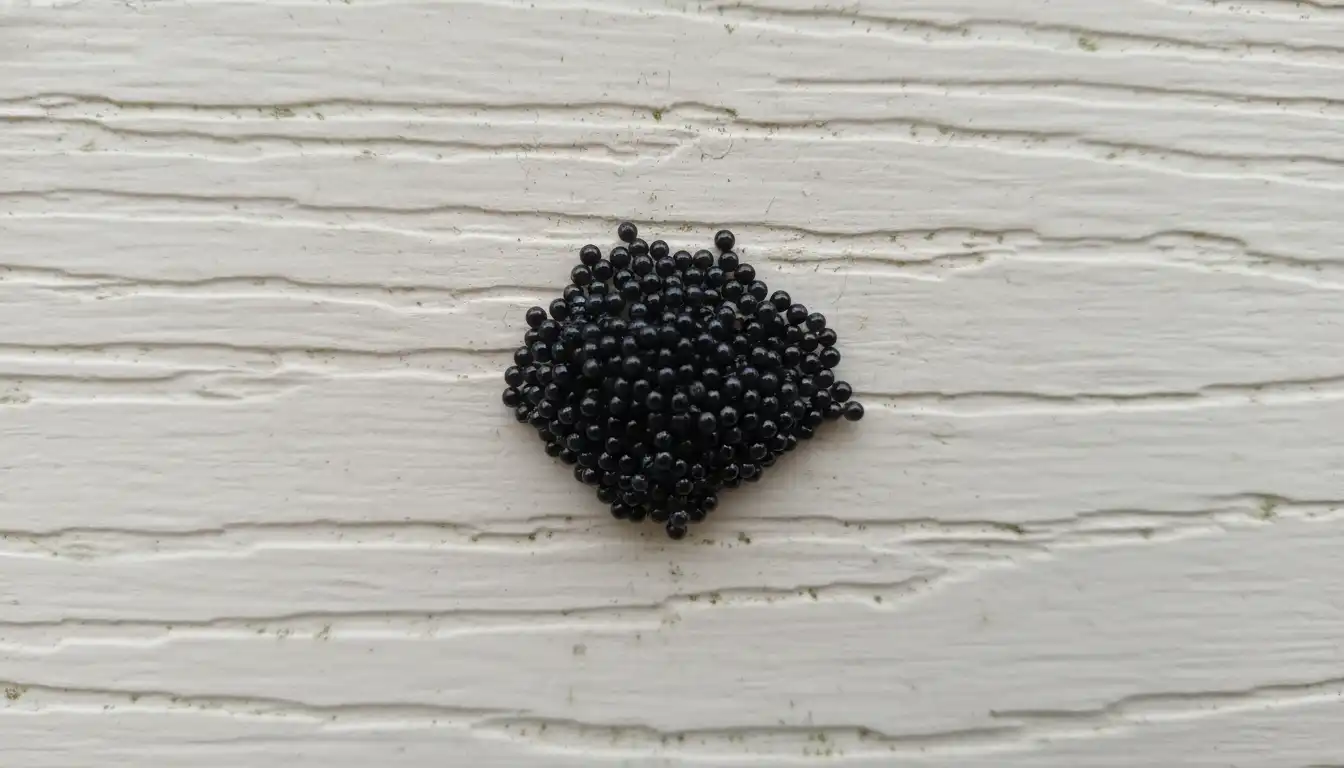
The most common cause of these hard, black, tar-like dots is a fungus called Sphaerobolus, more commonly known as artillery fungus or shotgun fungus. These “eggs” are actually mature spore sacs that the fungus actively shoots toward light-colored surfaces. It’s a natural phenomenon, but a frustrating one for homeowners.
Artillery fungus grows in damp, decaying organic matter, with its favorite home being wood-based landscape mulch. The fungus produces tiny cups that hold the spore sacs. When the conditions are right, these cups fill with water, build pressure, and launch the black, sticky spore sacs up to 20 feet in the air, where they glue themselves to your siding, car, windows, and anything else nearby.
Could It Be Insects? Differentiating Pest Evidence
While fungus is the leading suspect, it’s wise to rule out insect activity. Insect evidence typically looks different. Fly specks, for example, are small and dark but are usually found clustered around doorways, window sills, and light fixtures, and they can be smeared. Spider droppings often appear as small, dark, drippy splatters, usually located directly below webs under eaves and around porch lights.
Unlike artillery fungus, which is incredibly hard and almost feels like a tiny piece of gravel glued to the surface, insect droppings can typically be wiped away with a bit of effort. True insect eggs are rarely laid out in the open, scattered across siding, as this leaves them vulnerable to predators.
What About Mold or Environmental Grime?
It’s also important to distinguish these spots from mold or mildew. Black mold tends to grow in blotches or patches, looking more like a stain that has soaked into the surface rather than distinct, raised dots. It thrives in shady, damp areas and lacks the uniform, circular shape of artillery fungus spores.
Sometimes, what looks like a biological problem is actually an environmental one. Black dust can accumulate from various sources, and understanding its origin is key. While you’re tackling the exterior, it’s worth knowing about other household grime; for instance, discovering black dust on a toilet seat often points to different culprits entirely, such as mold or deteriorating plumbing parts inside the tank.
The Definitive Identification Guide: Fungus vs. Pests
Making the right identification is crucial because the removal and prevention methods are completely different. Use this table to compare the usual suspects and determine what you’re dealing with.
| Feature | Artillery Fungus (Sphaerobolus) | Spider Droppings | Fly Specks |
|---|---|---|---|
| Appearance | Tiny (1-2mm), round, dark brown or black, raised dots. Looks like a speck of tar. | Small, dark, often vertical drips, streaks, or splatters. Can vary in color from black to brown or even white. | Very small, dark, round dots, often in clusters. Can look like finely ground pepper. |
| Texture | Extremely hard and smooth. Cannot be smeared or squashed. Feels like a tiny, solid sphere glued to the surface. | Can be slightly raised but will smear if wet. May have a slight texture but is not hard like a rock. | Relatively flat. Can be smeared with a wet cloth or finger, often leaving a small streak. |
| Common Locations | Most common on light-colored surfaces like white, beige, or yellow vinyl siding, cars, and windows. Usually concentrated on the lower portions of the house. | Found directly below spider webs. Common under eaves, around porch lights, window frames, and on outdoor furniture. | Clustered in areas where flies rest, such as near windows, doors, trash cans, and outdoor lighting. |
| Primary Source | Decaying hardwood mulch. It shoots its spores from the mulch onto nearby surfaces. | Spiders. The droppings are a direct result of a nearby spider population. | Flies. The specks are fly feces, deposited wherever they land and rest. |
| Removal Difficulty | Very Difficult. The spores contain a glue-like substance that bonds aggressively to surfaces and can leave a permanent stain. | Moderate. Can usually be scrubbed off with soap and water, though some staining may occur on porous surfaces. | Easy to Moderate. Can typically be cleaned with standard household cleaners and some light scrubbing. |
How to Safely and Effectively Remove the Black Specks
You’ve identified the culprit, and it’s most likely artillery fungus. Now comes the hard part: removal. The key to success is acting quickly and using the right techniques to avoid damaging your home’s siding.
Step 1: The Sooner, The Better!
This cannot be overstated. Freshly launched artillery fungus spores are significantly easier to remove than ones that have been baked on by the sun for weeks or months. The dark pigment in the spore sac can permanently stain vinyl siding, so a rapid response is your best defense against lasting damage.
Make it a habit to inspect your siding regularly, especially during damp spring and fall weather when the fungus is most active.
Step 2: Gentle Cleaning Methods First
Always start with the least aggressive method to protect your siding. For fresh spots, a simple solution of warm water mixed with dish soap or a mild household cleaner may be enough. Use a soft cloth or a non-abrasive sponge to gently scrub the spots in a circular motion.
Do not use steel wool, abrasive powders, or hard-bristled brushes, as these will scratch and permanently damage your siding. If this gentle approach works, you’re lucky. For most established fungus spots, you’ll need to move on to the next step.
Step 3: When Gentle Isn’t Enough (The Stubborn Spots)
Since artillery fungus is essentially glued on, mechanical removal is often required. The goal is to pop the hard spore cap off the surface. Use a plastic scraper, an old credit card, or even your fingernail to carefully get under the edge of the black dot and pry it off.
Be warned: even after you pop the black cap off, a small, brownish stain will likely remain. This is the “glue” that has bonded with the siding. To tackle these residual stains, you can try using a magic-style eraser sponge, but be sure to test it on an inconspicuous area first, as it can dull the finish of some siding materials. Some homeowners have also reported success with oil-based cleaners or even mouthwash containing peroxide, but again, always spot test first.
A Word of Caution on Power Washing
Many people assume a power washer will blast the spots away, but this is often ineffective against artillery fungus and can cause serious damage. The high pressure can force water up under your siding, leading to moisture issues and mold growth. It can also crack or gouge the siding itself.
If you do use a power washer, use it on the lowest possible pressure setting (look for a white or green nozzle tip) and at a wide angle. It’s best used as a tool to apply a cleaner and rinse the area, not as a high-pressure blasting solution.
The Ultimate Prevention Strategy: Stop Them Before They Start
Removing artillery fungus is a difficult, time-consuming chore. The best approach is to prevent it from ever reaching your house in the first place. Prevention almost always comes down to one thing: your landscaping choices.
Re-evaluate Your Mulch: The #1 Priority
Since artillery fungus grows and thrives in wood-based mulch, this is the first and most important area to address. If you have those tiny black eggs on your house, your mulch is almost certainly the source. Stop using hardwood mulch immediately.
Create a mulch-free zone of at least 2-3 feet around your home’s foundation. In this zone, use inorganic materials that do not support fungal growth. Excellent alternatives include:
- River Rock or Pea Gravel: These are permanent, attractive, and will not harbor fungus.
- Rubber Mulch: Made from recycled tires, this is an inert material that lasts for years.
- Pine Bark Nuggets or Cedar Mulch: While still wood, several university studies have shown that these types of mulch are highly resistant to artillery fungus growth.
Manage Moisture and Pests
A damp environment encourages all types of unwanted growth, from fungus to mold. Ensure your gutters are clean and that downspouts direct water far away from your foundation. Also, fix any leaky outdoor faucets or pipes.
General pest control is also a part of holistic home maintenance. Sealing cracks and crevices can reduce entry points for all manner of critters. A well-maintained property is less attractive to pests, which is important even in hidden areas; for example, taking proactive steps to keep bugs out of your sump pump can prevent larger infestations from establishing a foothold in your home’s crucial systems.
Consider Your Landscaping Choices
The health of your garden can impact the rest of your property. Pests and fungi often start in the garden bed before moving toward the house. Using the right materials and techniques for your plants is a key preventative measure.
For container gardens, addressing pests like fungus gnats is crucial. A simple but highly effective technique is topping potted plants with sand, which creates a dry barrier that prevents the gnats from laying their eggs in the moist soil. Similarly, the foundation of a healthy, pest-free garden starts with the right soil. Choosing a quality medium is one of the most common debates among gardeners, and understanding the differences in a Sta-Green Potting Mix vs Miracle-Gro comparison can help you select a blend less prone to harboring fungus and pests from the start.
A Spotless Home is Within Reach
Discovering tiny black eggs on your house can be alarming, but it’s a problem with a clear solution. By correctly identifying the issue—most likely artillery fungus—you can stop wasting time on ineffective cleaning methods and focus on what works.
Remember the core principles: remove the spots carefully without damaging your siding, and address the source by replacing your hardwood mulch with a fungus-resistant alternative. With this knowledge, you are now equipped to not only clean your home’s exterior but also to create a long-term prevention plan that keeps your siding spotless for years to come.
