
Timeless Door Hardware: Your Ultimate Guide to Lasting Style
You’ve spent weeks, maybe even months, perfecting your home’s interior. The paint is flawless, the furniture is arranged just so, but something feels off. Every time you open a door, you’re greeted by a handle that feels cheap, looks dated, or clashes with your home’s otherwise carefully curated aesthetic.
This is a common frustration. Homeowners often overlook door hardware, opting for trendy, budget-friendly options that quickly fall out of style or fail under daily use. This small detail can undermine your entire design, forcing an expensive and annoying replacement sooner than you think.
The solution is to invest in timeless door hardware. Choosing classic designs made from high-quality materials not only enhances your home’s beauty but also adds lasting value and functionality. This guide will walk you through everything you need to know to select hardware you’ll love for decades.
You'll Learn About
What Exactly Makes Door Hardware “Timeless”?
Timeless door hardware isn’t about being old-fashioned; it’s about enduring design principles that transcend fleeting trends. These pieces feel appropriate in a wide range of architectural styles, from historic to contemporary. Their longevity comes from a combination of classic materials, simple forms, and superior construction.
Key characteristics include clean lines, understated elegance, and materials like solid brass, bronze, and nickel. Timeless hardware avoids overly ornate details or trendy colors that can date a home. Instead, it relies on the inherent beauty and durability of the materials themselves to make a statement.
A unique aspect of many timeless metals, such as unlacquered brass and bronze, is their ability to develop a “living finish.” This means the hardware naturally patinas over time, developing a unique character and depth that reflects its use and environment. This graceful aging process adds a layer of authenticity that newly manufactured, trend-driven hardware simply cannot replicate.
The Best Materials for an Enduring Appeal
The material you choose is the foundation of timeless door hardware. High-quality materials not only look and feel substantial but are also built to withstand years of daily use. They resist corrosion, feel solid in your hand, and age gracefully.
Solid Brass: The Gold Standard
For centuries, solid brass has been a top choice for high-quality hardware, and for good reason. It is exceptionally durable, naturally resistant to corrosion, and even possesses antimicrobial properties. The substantial weight of solid brass provides a satisfying tactile experience every time you open a door.
Brass is available in several classic finishes. Polished brass offers a bright, reflective look, while satin brass provides a more muted, modern feel. For a truly classic aesthetic, unlacquered brass is left to develop a natural patina, evolving from a bright gold to a deep, rich brown over time.
Bronze: Richness and Warmth
Bronze offers a deeper, warmer tone compared to brass, making it an excellent choice for rustic, traditional, and craftsman-style homes. Like brass, it is incredibly durable and develops a beautiful patina. Its darker hues are also effective at hiding fingerprints and minor wear.
The most popular finish is oil-rubbed bronze, which has a deep, dark brown color with subtle copper highlights. This finish evokes a sense of history and provides a handsome contrast against both light and dark doors, adding character and warmth to any space.
Wrought Iron and Black Finishes: Rustic and Enduring
With roots in rustic, farmhouse, and Spanish architectural styles, wrought iron hardware offers a bold, handcrafted look. Its strength and substantial presence make it ideal for large, heavy doors. Today, this classic look has been reinterpreted in modern matte black finishes.
Matte black has quickly become a modern classic. Its versatility allows it to work in nearly any design scheme, from industrial lofts to minimalist modern homes. It creates a striking contrast against white or light-colored doors and offers a sophisticated, understated elegance.
Nickel and Chrome: Sleek and Versatile
For a cooler, silvery tone, nickel and chrome are timeless choices that bridge traditional and contemporary styles. Polished nickel has a slightly warmer, more golden undertone than chrome, giving it a classic, vintage feel. Satin nickel, with its soft, brushed finish, is a versatile and popular choice for modern homes.
Polished chrome delivers a bright, mirror-like finish that is often associated with Art Deco and Mid-Century Modern designs. When choosing any of these finishes, it’s crucial to select hardware with high-quality plating to prevent chipping and ensure longevity.
| Material | Durability | Common Styles | Maintenance | Aging Potential |
|---|---|---|---|---|
| Solid Brass | Excellent | Traditional, Colonial, Modern | Requires occasional polishing to maintain shine (if lacquered) | Develops a rich, natural patina (if unlacquered) |
| Bronze | Excellent | Rustic, Craftsman, Mediterranean | Low; finish is designed to age | Ages gracefully into a deep, varied patina |
| Matte Black | Very Good | Modern, Farmhouse, Industrial | Low; hides fingerprints and smudges well | Stable finish; does not patina |
| Nickel/Chrome | Good to Excellent | Contemporary, Transitional, Art Deco | Wipe clean; polished finishes show fingerprints | Stable finish; high-quality plating resists tarnishing |
Iconic Door Hardware Styles That Never Fade
Beyond material, the shape and style of your hardware are critical for achieving a timeless look. Simple, elegant forms with clean lines are always a safe bet. These designs prioritize ergonomics and classic proportions over flashy, decorative elements that can quickly become dated.
The Classic Knob: Simplicity and Elegance
The simple doorknob is perhaps the most classic hardware choice. Its symmetrical, rounded shape is intuitive and comfortable to use. Classic shapes like the simple round, elegant oval, or comfortable egg knob have remained popular for generations due to their universal appeal.
For a vintage touch, consider knobs made from materials like faceted crystal or white porcelain. Paired with a brass or nickel rosette, these materials add a layer of texture and historical charm that complements traditional and transitional homes beautifully.
The Graceful Lever: Functionality Meets Form
Lever handles offer a significant ergonomic advantage over knobs, as they can be opened with an elbow or full hand, making them more accessible. From a design perspective, a simple, straight, or gently curved lever can bring a touch of modern sophistication to a space without feeling trendy.
The key to a timeless lever is simplicity. Avoid overly ornate or twisted designs and opt for clean, minimalist shapes. Levers are an excellent choice for creating a cohesive look that feels both classic and current.
The Enduring Escutcheon (Backplate)
The backplate, or escutcheon, is the plate that sits behind the knob or lever. It’s a crucial but often overlooked element that anchors the hardware to the door. The shape of the backplate plays a major role in defining the hardware’s overall style.
For a timeless look, choose simple shapes like a rectangular, square, or arched backplate. These clean, geometric forms complement a wide range of handle styles and add a sense of substance and intention to the design. Long, rectangular backplates, in particular, can create a dramatic, elegant statement.
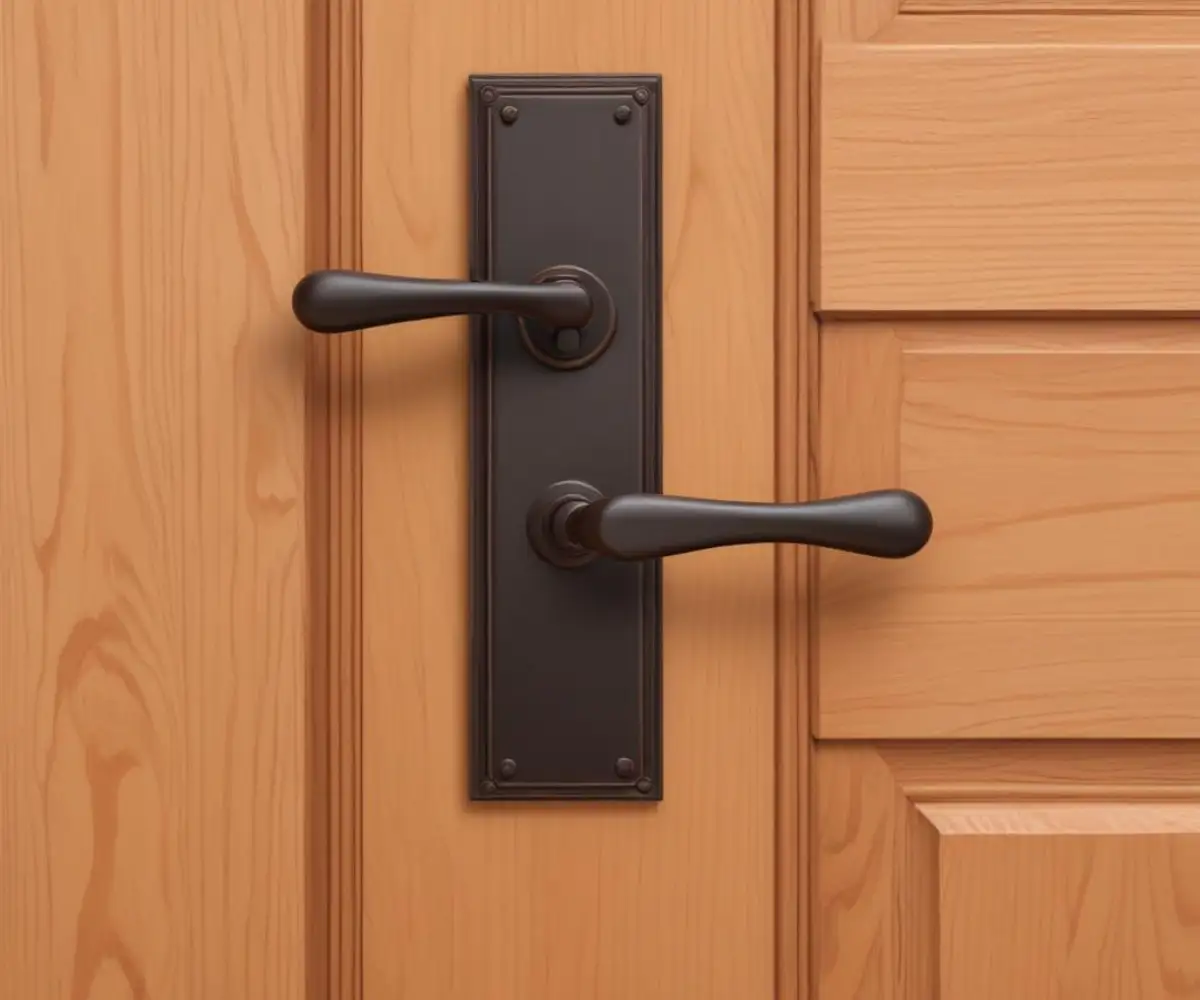
How to Choose the Right Timeless Hardware for Your Home
Selecting the perfect hardware involves more than just picking a style you like. To create a truly cohesive and polished look, you need to consider your home’s architecture, the doors themselves, and the overall design aesthetic you want to achieve.
Match Your Home’s Architectural Style
Your door hardware should feel like a natural extension of your home’s architecture. For a Colonial or traditional home, polished or antique brass knobs with classic rosettes are a perfect fit. A modern farmhouse might call for matte black levers, while a Mid-Century Modern home would be complemented by sleek polished chrome or satin brass hardware.
Look at the existing elements in your home—window frames, lighting fixtures, and cabinetry—to guide your decision. Consistency in style and finish will create a harmonious and intentional design that feels thoughtfully curated.
Consider Your Door’s Design and Finish
The hardware should complement the door it’s on, not compete with it. A heavy, rustic wrought iron handle set looks appropriate on a solid, distressed wood door but would feel out of place on a sleek, minimalist interior door. When choosing between different door brands, such as in a Jeld-Wen vs Masonite exterior doors comparison, consider how your hardware choice will pair with each brand’s styles.
Pay attention to scale. Large, tall doors demand more substantial hardware to feel balanced. Conversely, smaller, lighter doors will be overwhelmed by oversized knobs or levers. The goal is to achieve a pleasing proportion between the door and its hardware.
Unify Your Home’s Aesthetic
While you don’t need to use the exact same hardware in every room, establishing a consistent finish or style throughout your home creates a sense of flow and cohesion. Choose a dominant metal, like satin nickel or oil-rubbed bronze, for most of your doors. You can then introduce a complementary accent metal in specific areas, like a powder room or study.
Mixing metals can be done successfully, but it’s best to follow a few guidelines. Stick to two, or at most three, different finishes. Ensure there’s a clear contrast between them, like matte black and satin brass, rather than two similar finishes like polished chrome and polished nickel, which can look like a mistake.
Common Mistakes to Avoid When Upgrading Hardware
Choosing the wrong door hardware can be a costly mistake, both aesthetically and functionally. It can disrupt your home’s design flow and lead to practical issues like doors that don’t latch properly. Being aware of common pitfalls can help you make a confident and lasting choice.
Mistake 1: Ignoring Scale and Proportion
One of the most frequent errors is choosing hardware that is too small or too large for the door. A tiny knob on a grand entryway door will look comical, while a massive handle will overwhelm a small closet door. Always consider the visual weight of the hardware in relation to the door’s size and thickness.
Before purchasing, it can be helpful to cut out a paper template of the hardware and tape it to your door. This simple step allows you to visualize the scale and ensure it feels balanced and appropriate for the space.
Mistake 2: Prioritizing Looks Over Function
While aesthetics are important, door hardware is a highly tactile element that you interact with every day. A handle that looks beautiful but feels awkward or uncomfortable to use will quickly become a source of frustration. Test the ergonomics of a knob or lever before committing to it for your entire house.
Function also extends to security, especially for exterior doors. Ensure your chosen handleset includes a high-quality, durable lock mechanism. For interior doors, consider whether a passage set (no lock), privacy set (with a simple lock), or dummy set (for closets) is needed for each location.
Mistake 3: Forgetting About Door Mechanics
Before you fall in love with a particular design, you must check its compatibility with your existing doors. Key measurements include the backset (the distance from the edge of the door to the center of the knob), the bore hole diameter, and the door’s thickness. Not all hardware is universal.
If you encounter issues during installation, it might not be the hardware’s fault. Sometimes, problems like a latch not catching are symptoms of a misaligned door. If you find your 2 hinged doors not closing right, addressing the alignment first will ensure your new hardware functions perfectly.
Mistake 4: Falling for “Timeless” Trends
Be wary of finishes and styles that are marketed as timeless but are actually just current trends. For example, rose gold and highly ornate “Tuscan” bronze were extremely popular for a short period but now can make a home feel dated. Even entire door types can fall out of favor, raising questions like “are sliding glass doors out of style?”
True timelessness lies in simplicity and quality. Stick to classic finishes like brass, bronze, nickel, and black in simple, elegant shapes. These have proven their enduring appeal across many decades and design movements.
Investing in Quality: Why It Pays Off
It can be tempting to opt for cheaper, plated hardware from big-box stores, but this is often a false economy. High-quality, solid metal hardware is an investment that provides significant returns in durability, functionality, and overall satisfaction. You feel the difference every time you grasp a solid, weighty handle versus a hollow, lightweight one.
Solid hardware is built to last. It resists the wear and tear of daily use, and its finishes are far less likely to chip, flake, or tarnish over time. This durability means you won’t have to deal with the cost and hassle of replacing your hardware every few years.
Ultimately, quality door hardware enhances your daily life and adds tangible value to your property. It’s a finishing touch that speaks to a home’s overall quality and attention to detail. By choosing wisely, you are investing in a feature that is both beautiful and built to endure.
Your Home’s Enduring First Impression
Door hardware is more than just a functional mechanism; it is the handshake of your home. It’s one of the first and last things you and your guests touch, setting the tone for your entire space. Choosing timeless designs is a commitment to lasting style and quality over fleeting trends.
By focusing on classic materials like solid brass and bronze, simple and elegant forms, and high-quality construction, you can select hardware that will not only look beautiful today but will continue to add character and value for years to come. Make the confident choice to invest in hardware that is truly built to last.
