
A Tile Floor Throughout Your House? The Unvarnished Truth
The dream of a single, continuous floor flowing seamlessly from room to room is a powerful one in modern home design. It creates an expansive, unified look that feels both luxurious and clean. Many homeowners wonder: could a tile floor throughout house achieve this stunning aesthetic without creating a cold, sterile environment?
This decision is a major one, involving significant investment and commitment. Homeowners often grapple with fears of the floor feeling too hard, being cold underfoot, or the endless grout lines becoming a cleaning nightmare. This guide confronts these problems head-on, providing expert solutions to help you decide if a whole-house tile floor is the right choice for your lifestyle and home.
You'll Learn About
Why a Continuous Tile Floor is a Game-Changer for Modern Homes
Opting for a single flooring material is one of the most effective ways to enhance an open-concept layout. A continuous tile floor acts as a unifying canvas, making interconnected spaces like the kitchen, living, and dining areas feel larger and more cohesive. This seamless flow is not just about aesthetics; it brings a host of practical benefits that stand up to the rigors of daily life.
The Unbeatable Durability Factor
When it comes to longevity, few materials can rival porcelain or ceramic tile. These surfaces are exceptionally resilient, standing up to heavy foot traffic, furniture, and the daily activities of a busy household. They are inherently resistant to scratches from pet claws, dents from dropped objects, and damage from water or spills, making them ideal for every room from the entryway to the kitchen.
With proper installation, a high-quality tile floor can last for decades, often outliving other flooring types like carpet or vinyl many times over. This durability makes tile a wise long-term investment, retaining its beauty and function for years with minimal fuss.
A Seamless, Open-Concept Dream
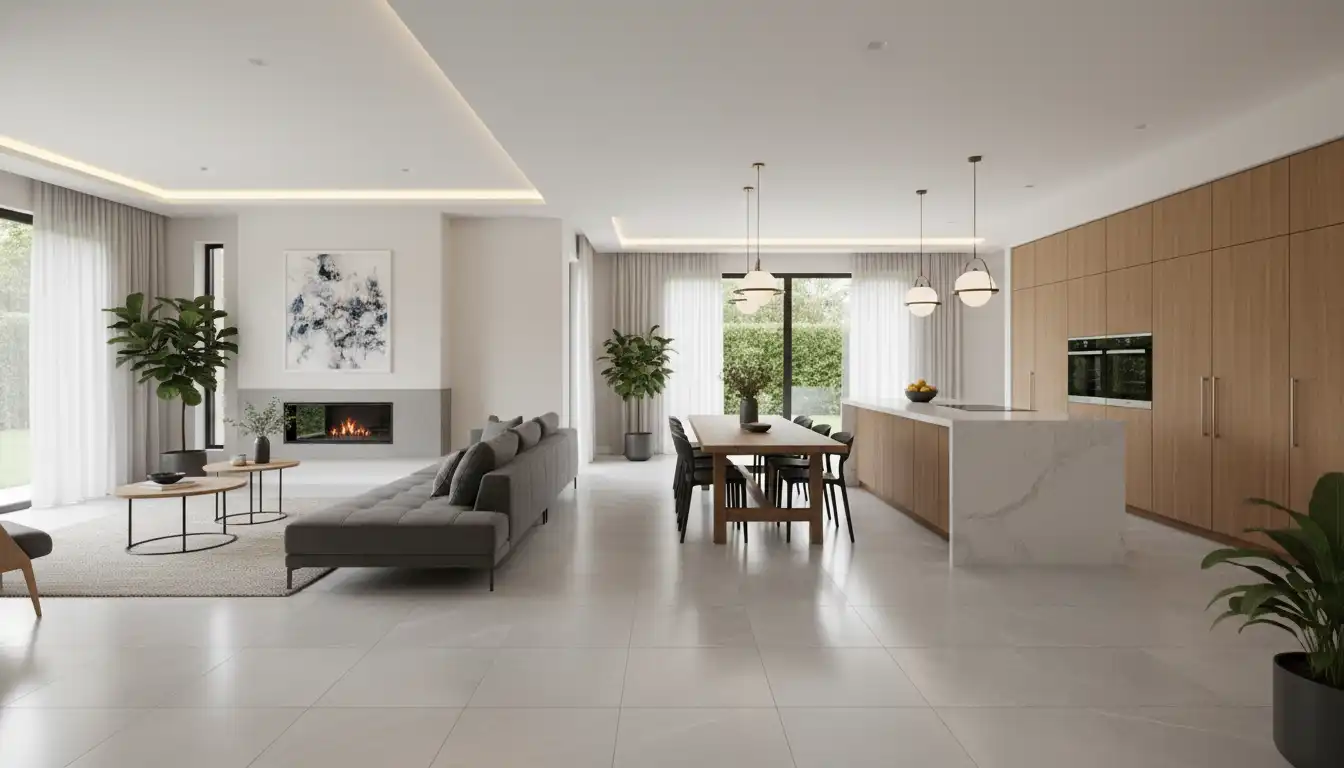
In homes with open floor plans, transitions between different flooring materials can visually clutter the space and make it feel smaller. A tile floor throughout house eliminates these jarring breaks, creating a harmonious and expansive feel. The unbroken lines draw the eye across the space, enhancing natural light and contributing to a clean, minimalist aesthetic.
This visual continuity is especially powerful when using large format tiles, which reduce the number of grout lines and amplify the sense of spaciousness. The result is a sophisticated backdrop that allows your furniture and decor to take center stage.
The Ultimate Low-Maintenance Surface
For busy families, allergy sufferers, or anyone who values a clean home, tile flooring is a superior choice. Unlike carpet, tile does not harbor dust mites, pet dander, or other allergens. Its hard, non-porous surface is also incredibly easy to clean; regular sweeping and occasional mopping are all that’s needed to keep it looking pristine.
Spills from drinks, food, or mud are easily wiped away without the risk of permanent staining. This makes tile an incredibly practical option for kitchens, bathrooms, and entryways, and extending it to living areas and bedrooms means you get that same easy-care benefit everywhere.
The Hard Truths About Tiling Your Entire House
While the benefits are compelling, ignoring the potential downsides of a whole-house tile installation would be a mistake. Addressing these common problems with smart solutions is the key to a successful project. Homeowners’ primary concerns often revolve around comfort, maintenance, and acoustics.
The Comfort Question: Hardness and Cold Underfoot
There’s no denying that tile is a hard surface. Standing for long periods on a tile floor, such as in the kitchen, can be fatiguing. This hardness can also be a concern for households with toddlers who are prone to tumbles or for anyone who prefers a softer feel underfoot.
Additionally, tile does not retain heat well and can feel chilly, especially during colder months or in the morning. This is a major drawback for spaces meant for comfort and relaxation, like bedrooms and living rooms.
The Grout Grime Reality
While the tiles themselves are easy to clean, the grout lines between them are another story. Grout is porous and can easily absorb dirt, grime, and spills, leading to discoloration over time. Light-colored grout is particularly notorious for showing dirt, and keeping it clean over an entire house can feel like a never-ending chore.
The Echo Effect: Will Your Home Sound Hollow?
Hard surfaces like tile reflect sound, which can lead to increased echo and noise levels within the home. In a house with continuous tile flooring, sounds from conversations, televisions, and footsteps can travel and amplify, creating a less-than-peaceful acoustic environment. This can be especially noticeable in large, open-concept spaces with high ceilings.
The Risk of Cracks and Complex Repairs
While durable, tile is also brittle. A heavy object dropped on a tile can cause it to crack or chip. Furthermore, shifts in the subfloor or foundation can create stress that leads to cracking. Repairing a single damaged tile in the middle of a large, continuous floor can be a complex and dusty job.
The Smart Homeowner’s Guide to Whole-House Tiling
Fortunately, every potential problem with a full-house tile floor has a practical, effective solution. With careful planning and the right material choices, you can mitigate the drawbacks and enjoy all the benefits of a seamless, durable, and beautiful floor.
Choosing the Right Tile: Your Foundation for Success
The single most important decision is the tile itself. Selecting a tile that is rated for the demands of every room is crucial. Look for a tile with a PEI rating of at least 3 or 4, which indicates it’s suitable for all residential and light commercial traffic.
Porcelain tile is generally a better choice than ceramic for a whole-house application. It is fired at a higher temperature, making it denser, less porous, and more resistant to water and damage. For a modern, seamless look, opt for large format tiles (such as 24×24 or 24×48 inches) to minimize grout lines. A matte or textured finish can also provide better slip resistance than a highly polished surface.
| Feature | Porcelain Tile | Ceramic Tile | Natural Stone Tile |
|---|---|---|---|
| Durability (PEI Rating) | Excellent (Typically 3-5) | Good (Typically 2-4) | Varies (Requires Sealing) |
| Water Resistance | Very High (Impervious) | High (Less Dense) | Porous (Requires Sealing) |
| Cost | Moderate to High | Low to Moderate | High |
| Maintenance | Low | Low | High (Needs Regular Sealing) |
| Best Use for Whole House | Ideal choice due to durability and low porosity. | Good budget option for low-moisture areas. | Best for luxury look where maintenance is not a concern. |
Solving the Comfort Problem: Warmth and Softness
You can directly combat the coldness of tile by installing an in-floor radiant heating system. These systems circulate warm water through tubes or use electric coils beneath the tiles, turning your entire floor into a gentle, efficient radiator. This is a luxurious solution that adds significant comfort and value to your home.
For a simpler and more flexible solution, use area rugs. Large, plush rugs in living rooms and bedrooms can add the necessary softness and warmth underfoot, define different zones within an open-concept space, and help absorb sound.
Winning the War on Grout
The best defense against dirty grout is choosing the right kind from the start. Epoxy grout is a superior alternative to traditional cement-based grout. It is non-porous, waterproof, and highly resistant to stains, cracking, and chemicals, making it incredibly durable and easy to clean. Although it has a higher upfront cost and is more challenging to install, its low-maintenance benefits are invaluable for a whole-house application.
If you opt for traditional grout, choose a darker color that will better hide dirt in high-traffic areas and ensure it is properly sealed after installation to protect it from moisture and stains.
Mastering Acoustics: Banishing the Echo
Controlling noise in a tiled home is all about adding soft surfaces to absorb sound. In addition to area rugs, you can incorporate heavy curtains or drapes, upholstered furniture, and even acoustic wall panels or tapestries. These elements will absorb sound waves, reducing echo and creating a more comfortable and quieter living environment.
Laying the Groundwork: Subfloor is Everything
One of the biggest secrets to a long-lasting, crack-free tile floor lies beneath the surface. The subfloor must be perfectly level, clean, and structurally sound. Any movement or deflection in the subfloor is a primary cause of cracked tiles and grout.
For ultimate protection, insist that your installer use an uncoupling membrane. This is a specialty underlayment installed between the subfloor and the tile that absorbs movement from the substrate, effectively isolating the tile from shifts and preventing cracks from transferring through to the surface. This step is a non-negotiable for ensuring the longevity of a tile floor throughout your house.
Design & Installation: Tying It All Together
With the practical challenges solved, the final step is ensuring the design and installation create the cohesive, high-end look you envisioned. The details of the installation will have a major impact on the final result.
One Direction to Rule Them All?
The direction in which you lay the tile can influence the perception of the space. Laying long, rectangular tiles parallel to the longest wall can make a room feel longer. When flooring flows through multiple rooms, a consistent direction is key. As a design consideration, you may ask yourself, should tile run the same direction as hardwood would if it were part of the design? Generally, running the tile in one continuous direction throughout the home will enhance the seamless effect.
Transitioning to Other Spaces
While the goal is continuity, certain rooms might demand a different flooring choice for stylistic or practical reasons. For example, a cozy den with wood paneling may feel more appropriate with a warmer flooring material. Considering the right flooring for cedar walls can create a beautiful, intentional contrast without disrupting the home’s overall flow, provided the transition is handled elegantly with a quality threshold.
Is a Tile Floor Throughout Your House the Right Move?
A continuous tile floor is a bold and beautiful design choice that offers unparalleled durability and ease of maintenance. While potential issues like coldness, hardness, and noise are valid concerns, they are entirely manageable with modern solutions like radiant heating, epoxy grout, and proper underlayment.
By making informed choices about materials and investing in a high-quality installation, you can create a stunningly cohesive and practical foundation for your home that will stand the test of time. A tile floor throughout house is not just a practical decision; it is an investment in a timeless, elegant, and effortlessly clean living space.
