
Thick Island Countertop: The #1 Secret to a Luxury Kitchen?
The kitchen island has evolved from a simple workspace to the undisputed heart of the modern home. It’s where meals are prepped, homework is done, and guests gather. A key element that defines its presence is the countertop, and a growing trend is making a bold statement: the thick island countertop.
This design choice instantly elevates a kitchen from standard to stunning, creating a powerful focal point. But achieving this high-end look involves more than just picking a slab; it requires careful consideration of materials, construction, and crucial structural support.
You'll Learn About
Why Thicker Is Better: The Allure of a Substantial Countertop
A thick countertop conveys a sense of permanence and luxury. Its substantial profile anchors the room, giving the island a furniture-like quality that feels both custom and deliberate.
This visual weight translates into perceived value and durability. It’s a design signal that communicates quality craftsmanship and an investment in the home’s most important space.
How Thick is “Thick”? Decoding Countertop Measurements
Standard countertops are typically 2 cm (about 3/4 inch) or 3 cm (about 1 1/4 inches) thick. While 3 cm is a popular and solid choice, a “thick” countertop pushes beyond this, usually starting at 4 cm (1 1/2 inches) and going up to 6 cm or more.
Achieving this impressive thickness is typically done in one of two ways. You can source a rare and heavy solid slab, or you can opt for a more common and cost-effective method using a built-up edge.
Solid Slab vs. Mitered Edge: The Great Thickness Debate
A solid, monolithic slab of stone is the purist’s choice, offering unmatched authenticity. However, these slabs are exceptionally heavy, difficult to source, and come with a prohibitive price tag.
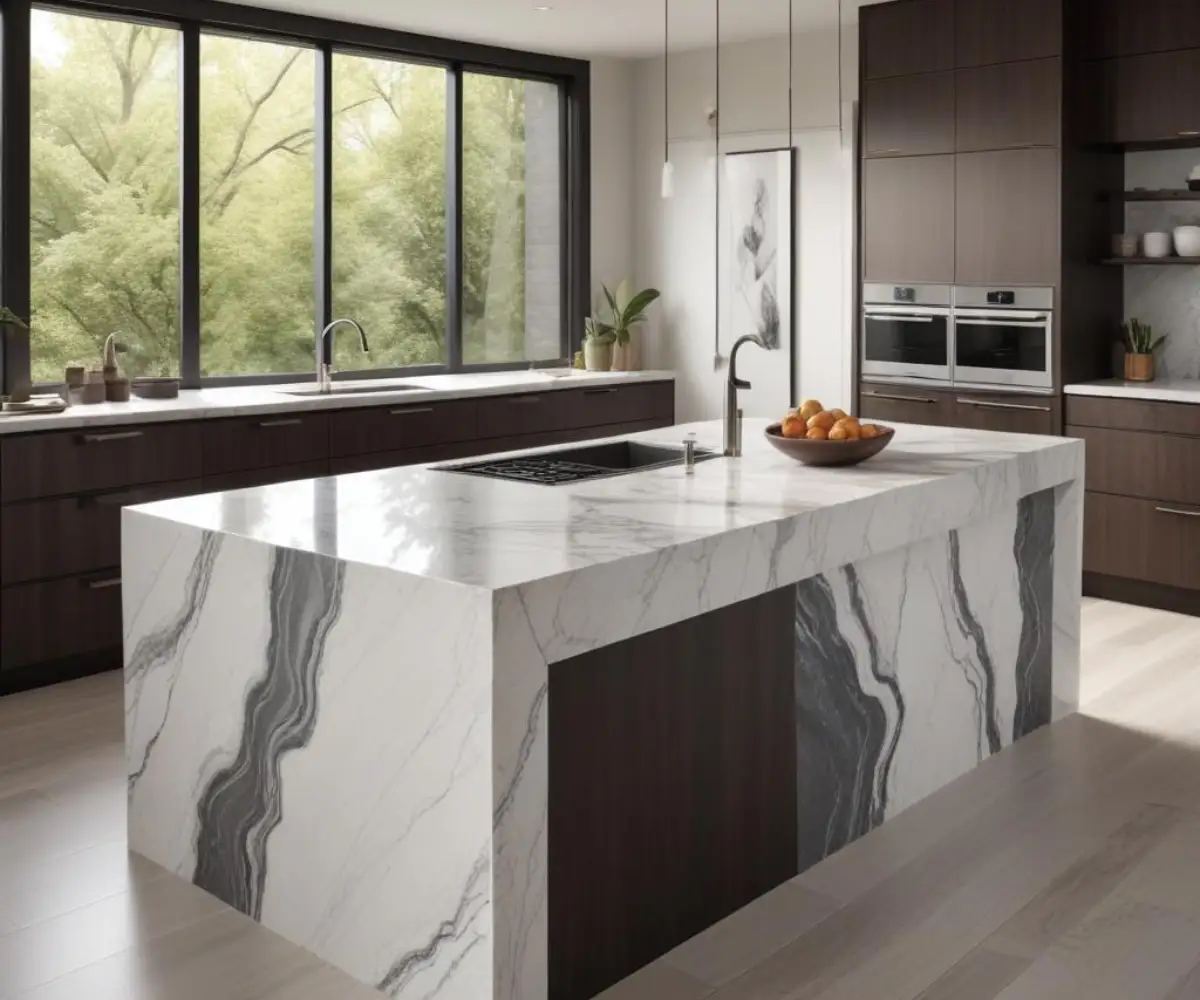
The far more common and practical solution is the mitered edge. A skilled fabricator takes a standard 2 cm or 3 cm slab and cuts a separate piece for the edge. The two pieces are then joined at a 45-degree angle, creating a seamless seam that gives the illusion of a single, thick piece.
When done correctly by an expert, the seam is virtually invisible. This technique makes the coveted thick look accessible without the extreme weight and cost of a solid slab.
Top Material Choices for Your Thick Island Countertop
The material you choose will define the look, feel, and durability of your island. Several popular options lend themselves beautifully to a thicker profile.
Quartz is a leading contender for its incredible durability and consistent patterns. A 6 cm quartz countertop, for example, can be fabricated with a flawless mitered edge to create a stunning, modern centerpiece that resists stains and scratches.
Natural stones like granite and quartzite offer one-of-a-kind beauty. Granite brings earthy patterns and robust performance, while quartzite provides the luxurious look of marble with superior hardness.
For those considering natural stone on a budget, exploring options for used granite countertops can sometimes yield thicker, high-character slabs from previous high-end installations.
| Material | Typical Built-Up Thickness | Pros | Cons |
|---|---|---|---|
| Quartz | 4 cm – 10 cm+ | Extremely durable, non-porous, consistent patterns, low maintenance. | Can be sensitive to extreme heat, higher initial cost than some granites. |
| Granite | 4 cm – 8 cm | Highly durable, heat resistant, unique natural patterns. | Porous and requires sealing, can be prone to chipping. |
| Quartzite | 4 cm – 8 cm | Looks like marble but is much harder and more durable, UV resistant. | Can be expensive, requires sealing, prone to scratching from sharp objects. |
| Marble | 4 cm – 6 cm | Unmatched elegance and classic beauty, develops a patina over time. | Very porous, easily stains and scratches, requires significant maintenance. |
| Wood (Butcher Block) | 4 cm – 12 cm | Warm and inviting aesthetic, can be sanded and refinished. | Requires regular oiling/sealing, can be damaged by water and heat. |
The Hidden Danger: Why Support is Non-Negotiable
Here is a critical point that is often overlooked: a thick countertop is incredibly heavy. A standard 3 cm slab of granite can weigh 15-20 pounds per square foot; doubling that thickness with a mitered edge adds significant weight that standard cabinets are not built to handle.
Without proper reinforcement, the sheer mass can cause cabinets to bow, crack, or even collapse over time. The solution is a dedicated support system. This often involves reinforcing the cabinet boxes with extra wood blocking or, more commonly, installing hidden steel support brackets or a full sub-top made of plywood.
This is not a step to be skipped or an area to cut costs. Proper support is absolutely essential for the safety and longevity of your investment.
Design Details That Elevate Your Thick Countertop
A thick profile opens the door to dramatic design features. A waterfall edge, where the countertop material flows vertically down the sides of the island to the floor, is a popular choice that magnificently showcases the slab’s thickness and pattern.
Large overhangs for seating also benefit from a thick profile, creating a substantial and inviting dining spot. Just remember that any overhang extending more than 10-12 inches requires robust, visible or hidden supports like corbels or steel plates.
The structural demands become even more complex when integrating major appliances. For instance, the decision to place a washer dryer in kitchen island requires not only specialized plumbing and venting but also a reinforced cabinet structure capable of supporting a heavy countertop while managing appliance vibrations.
Budgeting for Bulk: What Does a Thick Countertop Really Cost?
A thick countertop is a premium feature with a corresponding price tag. The final cost is influenced by several factors beyond just the material itself. Fabrication is a major component; creating a perfect mitered edge is a time-consuming skill that adds to labor costs.
Installation also costs more. The increased weight requires a larger crew and specialized equipment to maneuver and set the slab safely. Finally, you must factor in the cost of the necessary structural supports.
While a standard 3 cm countertop might be a baseline, you can generally expect a well-crafted thick countertop to cost 25% to 50% more, depending on the material and complexity of the design.
Is a Thick Island Countertop Right for Your Kitchen?
A thick island countertop can be a transformative element in your kitchen design. It delivers a powerful visual punch and a luxurious feel that is hard to replicate.
However, it represents a significant investment and a technical challenge. The decision should be balanced against your budget, the scale of your kitchen, and your willingness to invest in the essential structural support it demands.
If you have the space and budget, and you work with a highly skilled fabricator and installer, a thick island countertop is more than just a surface. It is a defining statement piece that will anchor your kitchen with timeless style and substance.
Frequently Asked Questions
What is considered a thick island countertop?
While standard kitchen countertops are often around 1.25 inches (3cm) thick, a thick island countertop typically ranges from 1.5 to 2.5 inches or even more. This added thickness can create a substantial, luxurious focal point in the kitchen. The ideal thickness often depends on the overall size of the kitchen and the desired aesthetic impact.
What are the pros and cons of a thick island countertop?
Thick countertops offer enhanced durability and a luxurious, high-end aesthetic. They provide a strong visual anchor in the kitchen and can be more resistant to chipping or cracking. However, they are generally more expensive due to the increased material and potentially more complex installation requiring reinforced cabinetry to support the extra weight.
What are the best materials for a thick island countertop?
Durable materials like granite, quartz, and quartzite are excellent choices for thick island countertops as they are resistant to heat and scratches. Wood, particularly butcher block, is another popular option that can be made in various thicknesses and adds warmth to the kitchen. The best material depends on your lifestyle, maintenance preference, and overall kitchen design.
Are thick countertops out of style?
While there is a growing trend towards thinner, more minimalist countertop profiles, thick countertops are not entirely out of style. A thick countertop can still create a powerful and luxurious statement, especially in traditional or large kitchens. Ultimately, the choice between a thick or thin countertop depends on personal preference and the overall design aesthetic of the kitchen.
How do you style a thick island countertop?
To style a thick island countertop, it’s best to keep decorations minimal to avoid a cluttered look. A simple bowl of fruit, a vase of fresh flowers, or a small plant can add a touch of color and life without overwhelming the space. Consider functional decor like a stylish tray to group smaller items.
Final word
The thick island countertop is more than a fleeting trend; it’s a fundamental design shift that grounds the kitchen, transforming the island from a mere utility surface into a piece of architectural furniture. By demanding careful planning around material density, aesthetic edge profiles, and robust structural support, this feature ensures the island can handle the demands of a busy household while making an unforgettable style statement. Ultimately, investing in a thick countertop is investing in the enduring style and functional dominance of your modern kitchen’s true centerpiece.
