
Taller Kitchen Cabinets: Your #1 Guide to a Sky-High Style
Is your kitchen drowning in clutter? Countertops disappearing under appliances, drawers overflowing, and finding that one specific pot feels like an archaeological dig. This common frustration stems from a fundamental design flaw in many kitchens: wasted vertical space.
That awkward, empty gap between the top of your cabinets and the ceiling isn’t just a dust trap; it’s a black hole of missed storage potential. It makes kitchens feel smaller, unfinished, and ultimately, less functional. The solution is simpler and more transformative than you might think: looking up.
You'll Learn About
Why Standard Cabinets Are Secretly Shrinking Your Kitchen
For decades, 30- or 36-inch upper cabinets were the standard. This often left a significant, useless space, sometimes boxed in with a soffit. This dated design choice not only collects grease and dust but visually shortens the room, making your ceilings feel lower than they actually are.
This underutilization of space is a primary cause of kitchen clutter. When you lack sufficient storage, countertops become the default home for everything from the toaster to mail. By rethinking your vertical real estate, you can reclaim your prep surfaces and create a more serene, organized environment.
The Vertical Revolution: Embracing Taller Kitchen Cabinets
Taller kitchen cabinets are exactly what they sound like—cabinets that extend higher up the wall, often reaching the ceiling. They typically come in heights of 42 inches, 48 inches, or even as floor-to-ceiling pantry units. This design choice instantly creates a more custom, high-end, and seamless look.
By drawing the eye upward, these cabinets make the entire kitchen feel larger, grander, and more open. It’s a powerful design trick that leverages height to create an illusion of more expansive space, even in compact layouts.
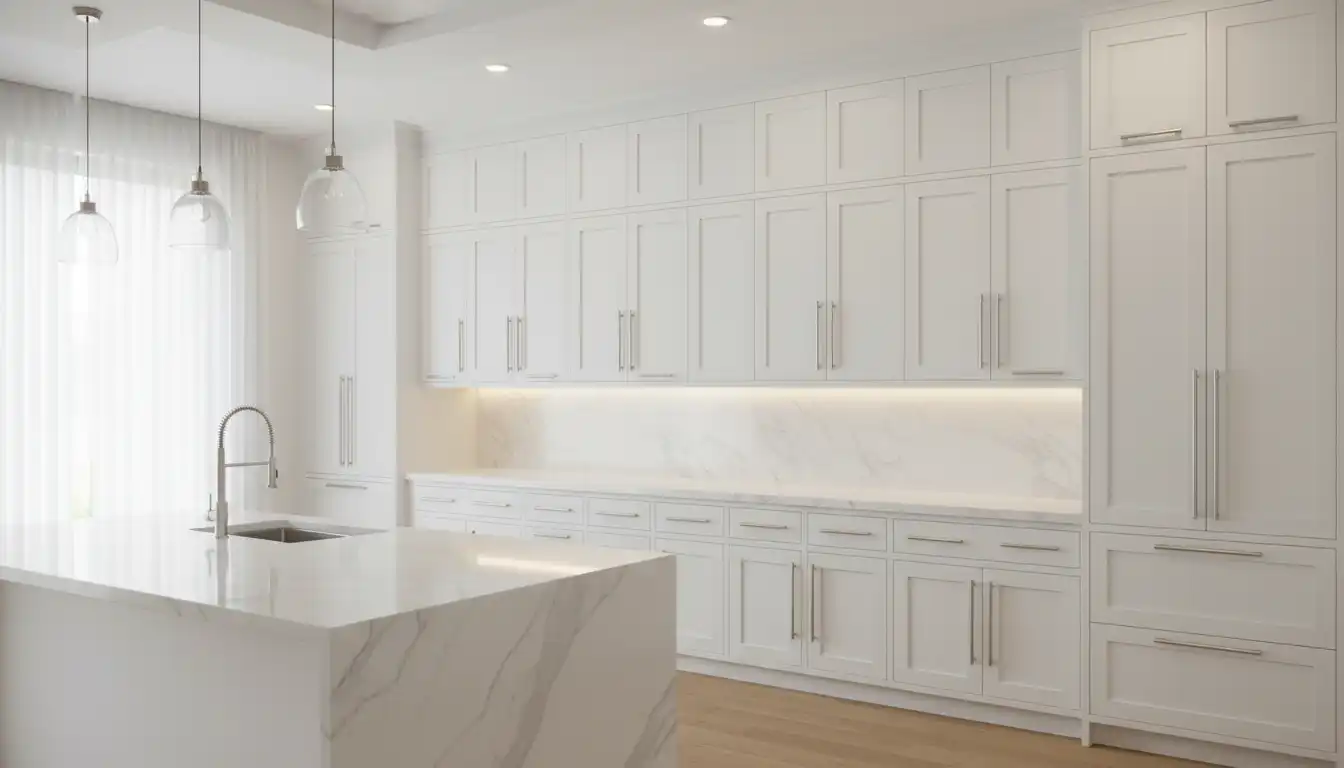
The Undeniable Advantages of Reaching for the Ceiling
Opting for taller cabinets isn’t just about aesthetics; it’s a practical upgrade with major benefits. The most obvious is the massive increase in storage capacity. That extra vertical space is perfect for stashing away items you don’t use daily, such as seasonal platters, specialty bakeware, or small appliances.
Beyond storage, this design move significantly boosts your home’s value. A kitchen with a custom, built-in look is a huge selling point. Plus, you eliminate that greasy, dust-collecting gap for good, making your kitchen cleaner and more hygienic.
A Practical Guide to Choosing the Right Cabinet Height
The ideal cabinet height is directly tied to your ceiling height. Making the right choice is crucial for achieving a balanced, professional look. An ill-fitting choice can feel just as awkward as the empty space you’re trying to eliminate.
Properly scaled cabinets create architectural harmony. They should complement the room’s proportions, not overwhelm them. This ensures the final look is intentional and polished.
Matching Cabinets to Your Ceiling Height
For standard 8-foot ceilings, 36-inch upper cabinets are common, but 42-inch upper cabinets can often work if you use a smaller crown molding. This maximizes storage without visually cramping the space. For 9-foot ceilings, 42-inch uppers with a substantial crown molding are the perfect combination for a high-end, finished appearance.
If you have 10-foot ceilings or higher, you have several excellent options. You can use very tall cabinets, like 48 inch tall upper kitchen cabinets, or opt for stacked cabinets. Stacked cabinets involve placing a shorter cabinet on top of a standard one, often with glass doors on the upper tier for a decorative touch.
| Cabinet Height | Ideal Ceiling Height | Key Benefits | Considerations |
|---|---|---|---|
| 36 Inches | 8 Feet | Standard, accessible, budget-friendly. | Leaves a gap to the ceiling. |
| 42 Inches | 9 Feet | Excellent storage, high-end look, eliminates gap. | Top shelf is hard to reach. |
| 48 Inches | 10+ Feet | Maximum storage, dramatic look. | Can be costly and overwhelming in smaller rooms. |
| Stacked Cabinets | 10+ Feet | Highly customizable, breaks up visual mass. | Most expensive option. |
Design Details That Make Taller Cabinets Shine
The success of taller cabinets lies in the details. Crown molding is non-negotiable; it’s the finishing touch that bridges the cabinet and ceiling, providing a truly built-in look. Without it, the installation will appear incomplete.
For door styles, simple designs like Shaker or slab fronts are excellent choices. They prevent the tall expanse of cabinetry from looking too busy or ornate. Furthermore, consider hardware that complements the vertical lines, such as long, elegant pulls.
The Hidden Challenges You Must Consider
While the benefits are significant, it’s important to be aware of the potential drawbacks. Taller cabinets are more expensive than standard sizes due to the extra materials required. Installation is also more complex and may require a professional to handle the heavier units safely.
The most practical challenge is accessibility. Reaching the top shelves will require a step stool. Smart organization is key: store your least-used items in these high-up spots to minimize inconvenience. For some, a rolling library ladder can even become a stylish and functional addition.
Investing in Quality for a Lasting Upgrade
Because taller cabinets are a more significant investment, choosing a quality brand is essential for ensuring they stand the test of time. Sturdy construction is critical for heavy, tall units. When researching options, it’s wise to look into specific brands and their reputations for durability.
For instance, understanding the construction and material quality is crucial. Exploring different cabinet lines, from semi-custom to fully custom, will give you a better sense of what fits your budget and quality expectations. Resources like reviews can offer insights into the long-term performance of various brands, such as looking into details about are Kith cabinets good quality or the offerings from manufacturers like B. Jorgsen & Co.
Is This Upgrade the Right Move for Your Kitchen?
Before you commit, ask yourself a few key questions. Is your ceiling height adequate to accommodate taller cabinets without making the room feel cramped? Does the additional cost fit within your renovation budget? Most importantly, do you need the extra storage to solve a real clutter problem?
Taller cabinets are an investment in both the form and function of your kitchen. For many homeowners, the trade-off of higher cost and reduced accessibility is well worth the aesthetic enhancement and massive storage gains.
Frequently Asked Questions
What are the main benefits of taller kitchen cabinets?
Taller kitchen cabinets maximize storage space by utilizing the vertical area in your kitchen, which is especially beneficial in smaller kitchens. They also create a visually appealing, seamless look that can make the kitchen appear more spacious and elegant by drawing the eye upward. This design eliminates the dust-collecting gap between standard cabinets and the ceiling.
Are there any downsides to installing taller kitchen cabinets?
Yes, there are a few drawbacks to consider. The upper shelves of taller cabinets can be difficult to access, often requiring a step stool, which can be inconvenient for frequently used items. Taller cabinets can also be more expensive than standard cabinets due to the increased materials and installation costs. In smaller kitchens, they have the potential to make the space feel cramped if not designed carefully.
What is the ideal ceiling height for taller kitchen cabinets?
Taller kitchen cabinets are most suitable for kitchens with ceiling heights of 9 feet or more, as this allows for ample space without making the room feel crowded. For standard 8-foot ceilings, 42-inch-tall wall cabinets can often extend perfectly to the ceiling. For 9-foot ceilings, you have about 54 inches of available space for upper cabinets, which can be filled with a single tall cabinet or by stacking shorter ones.
How can I make the top shelves of tall cabinets more accessible?
To improve accessibility, consider installing features like pull-out shelves or drawers within the tall cabinets. It is also practical to store infrequently used items, such as seasonal cookware or bulk pantry goods, on the highest shelves. Keeping a sturdy step stool or a rolling ladder in the kitchen can also provide safe and easy access when needed.
Do taller kitchen cabinets work in small kitchens?
Taller kitchen cabinets can be a great solution for small kitchens as they maximize vertical storage space, a precious commodity in a compact area. However, it’s important to design them carefully to avoid overwhelming the space. Using lighter colors for the cabinets and incorporating glass doors can help create a more open and airy feel.
The Final Verdict on Vertical Storage
Taller kitchen cabinets are more than just a trend; they are a strategic design solution. They tackle the pervasive problem of wasted space and kitchen clutter head-on, transforming a standard kitchen into a more functional, elegant, and valuable part of your home.
By leveraging your kitchen’s full vertical potential, you create a space that not only looks bigger and more polished but also lives better. It’s a powerful upgrade that delivers a sky-high return on style and organization.
