
Stove Opening Between Cabinets: Your #1 Guide to a Perfect Fit
The success of a kitchen remodel often hinges on a single, critical measurement: the stove opening between cabinets. Get it right, and you have a seamless, professional-looking kitchen. Get it wrong, and you face a cascade of costly and frustrating problems, from ugly gaps to serious safety hazards.
This space is more than just a gap; it is the heart of your kitchen’s functionality and design. Ensuring the perfect fit from day one is non-negotiable.
You'll Learn About
Why Your Stove Opening Is the Most Critical Kitchen Measurement
Many homeowners underestimate the importance of the rough opening for their range. It seems simple, but this single space impacts safety, aesthetics, and the usability of your entire cooking area. A poorly planned opening can create a domino effect of issues.
An opening that is too tight can prevent the stove from fitting at all, or worse, create a fire hazard by placing combustible cabinet materials too close to the heat source. An opening that is too wide leaves unsightly gaps that become traps for food debris and grease, making cleaning a nightmare.
The Difference Between Freestanding and Slide-In Ranges
The type of range you choose dictates the precise requirements for the cabinet opening. These two popular styles are not interchangeable, and understanding their differences is the first step to a flawless installation. Choosing the wrong one for your opening will ruin the built-in look.
Freestanding ranges are finished on both sides and typically feature a built-in backguard that holds the oven controls. They are designed to stand alone or slide into a 30-inch opening, with their sides remaining visible. Slide-in ranges, however, have unfinished sides and no backguard, allowing them to sit flush with the countertop for a custom, integrated appearance. They often require a small strip of countertop to be installed behind them.
How to Measure a Stove Opening Like a Professional
Accurate measurements are the foundation of a successful installation. Do not rely on a single measurement; professionals use a three-point checking system to account for imperfections in walls and cabinets. Always refer to your specific appliance’s installation manual for required dimensions.
First, measure the width. Use a tape measure to check the distance between the cabinets at the front, middle, and back of the opening. Use the smallest of these three measurements as your official width. Next, measure the height from the finished floor to the top of the countertop; this is crucial for ensuring a slide-in range sits flush.
Finally, measure the depth from the back wall to the front face of the cabinets. Be sure to account for the location of your gas line or 240V electrical outlet, as these need to be in a recessed area behind the stove, not directly behind a non-recessed part of its structure.
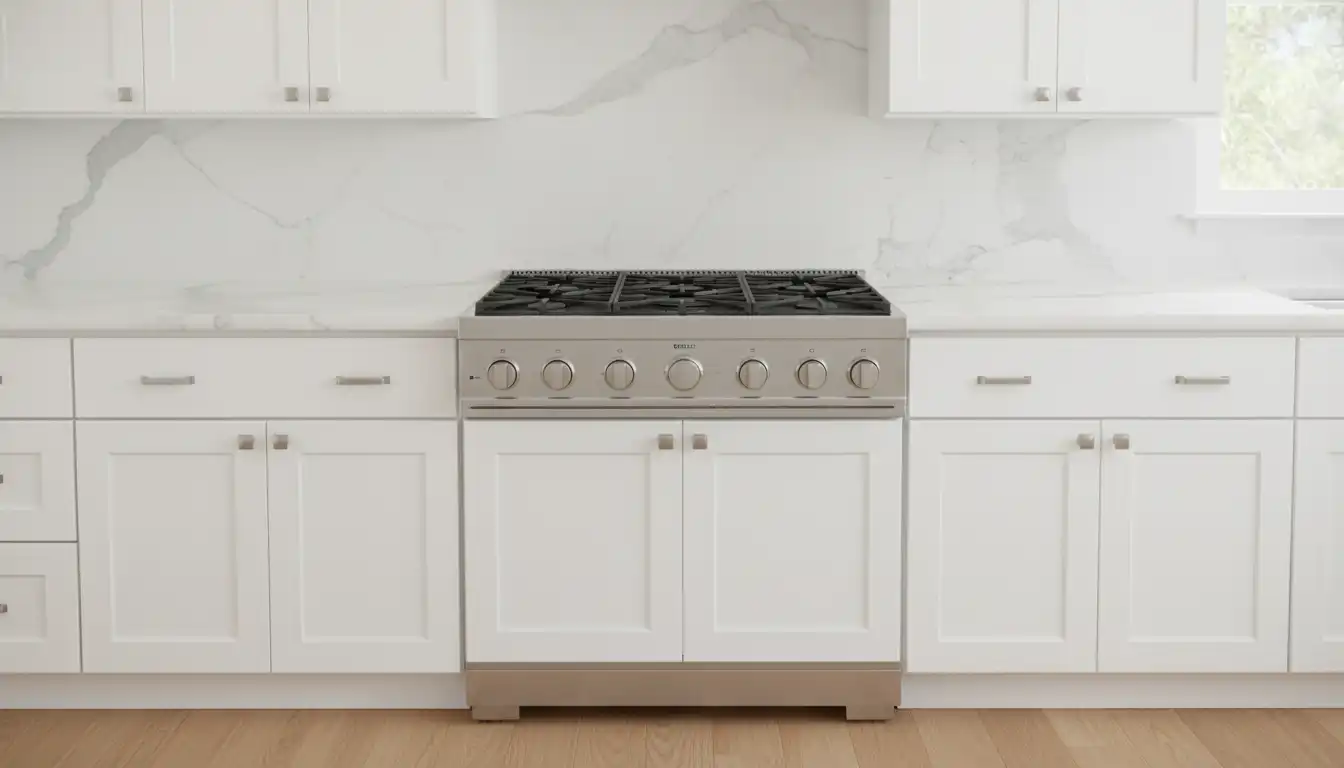
Standard Dimensions for Kitchen Ranges
While custom sizes exist, most manufacturers adhere to standard dimensions. Planning your kitchen around these common sizes ensures you will have a wide selection of replacement appliances in the future. A non-standard opening can lock you into expensive, hard-to-find models down the road.
The table below outlines the most common range widths and the typical rough opening required for a proper fit. Note that the required opening is often slightly larger than the appliance to allow for easier installation and air circulation.
| Appliance Width | Standard Rough Opening Width | Common Use Case |
|---|---|---|
| 20 inches | 20 1/4 inches | Apartments, small kitchens |
| 24 inches | 24 1/4 inches | Compact homes, accessory dwelling units |
| 30 inches | 30 1/4 inches | The most common industry standard |
| 36 inches | 36 1/4 inches | Larger kitchens, pro-style ranges |
| 48 inches | 48 1/4 inches | Luxury and commercial-style kitchens |
Solving Common Stove Opening Disasters
Even with careful planning, problems can arise. Whether you are dealing with a previous owner’s mistake or a miscalculation during a remodel, most issues have a solution. The key is to address them correctly to avoid damaging your cabinetry or countertops.
A common headache is discovering your opening is slightly too wide, leaving a noticeable gap. On the other hand, an opening that is too narrow presents a much bigger challenge, often requiring professional modification of the cabinets themselves. In severe cases, fixing the opening might even require you to understand how to remove granite countertops without damaging cabinets.
Fixing an Opening That Is Too Wide
The best solution for a wide opening is to use cabinet filler strips. These are thin pieces of wood that match your cabinet finish and can be cut to the exact size of the gap. Properly installed filler strips create a seamless, custom look.
These strips are typically installed vertically between the stove and the cabinet stile. For a professional finish, ensure the filler is flush with the cabinet face frame. This not only closes the gap but also prevents the stove from shifting side to side.
Fixing an Opening That Is Too Narrow
If your opening is too narrow, you cannot force the stove into place. This is a serious fire hazard and can damage both the appliance and your cabinets. The solution involves carefully trimming the cabinet stiles—the vertical frames on the front of the cabinets.
This is a delicate job that requires precision and the right tools, like a track saw or an oscillating multi-tool, to get a clean, straight cut. If you are not an experienced woodworker, this task is best left to a professional cabinet installer or carpenter to avoid costly mistakes.
Safety and Ventilation: The Non-Negotiable Rules
Beyond aesthetics, the stove opening is governed by strict safety codes and manufacturer requirements. These rules are in place to prevent fires and ensure proper ventilation. Ignoring these clearances can have dangerous consequences.
The National Fire Protection Association (NFPA) and appliance manufacturers provide minimum clearance requirements to combustible surfaces. This includes the distance from the cooktop to the upper cabinets and any surrounding walls. A critical consideration for ventilation is the space above the stove, which might influence your choice of an over the range microwave for 15 inch deep cabinets to ensure proper air flow.
The Hidden Importance of Level Floors and Plumb Walls
One often-overlooked factor is the condition of your kitchen’s structure. A stove, which is perfectly level, will look crooked if the floor beneath it slopes or the adjacent cabinets are not perfectly vertical (plumb). This can throw off the entire visual alignment of your kitchen.
Before installing your stove, use a long level to check the floor in the opening. If it’s not level, you will need to adjust the stove’s feet to compensate. This small step prevents a lopsided installation that can make even the most expensive kitchen look poorly built. The overall kitchen layout, including decisions like having your sink and stove on the same wall, depends on these foundational geometric alignments.
Mastering Your Stove Installation: A Final Checklist
Achieving the perfect stove fit is a matter of careful planning and precise execution. By focusing on the details, you can ensure a safe, functional, and beautiful result that elevates your entire kitchen. A flawless installation is the hallmark of a well-designed space.
Before signing off on your project, run through this final checklist. Double-check your measurements, confirm the utility locations against the appliance specifications, and verify all safety clearances. This final review will give you the confidence that your new stove is installed perfectly and will serve your home for years to come.
Frequently Asked Questions
What is the standard width for a stove opening between cabinets?
The most standard stove width is 30 inches, which fits into a 30-inch wide cutout between cabinets. While less common, 36-inch models are also widely available, and compact stoves for smaller spaces typically measure between 20 and 24 inches wide.
How much clearance is needed around a stove for safety?
It is crucial to consult your specific model’s installation manual for exact clearance requirements. Generally, a minimum of 30 inches of clearance is required between the cooktop and the bottom of an unprotected cabinet above it. For adjacent walls or cabinets, some models may be approved for zero clearance, but maintaining a small gap is often recommended to reduce exposure to heat and steam.
Should the cabinet opening be the exact width of the stove?
The cabinet opening should match the nominal width of the stove, for example, 30 inches for a 30-inch range. The actual dimensions of the stove are typically slightly smaller (e.g., 29 7/8 inches) to allow it to slide into the opening easily. This design ensures a snug fit without requiring a larger opening that would leave unsightly gaps.
Does the type of stove affect the cabinet opening?
Yes, the type of range can impact your kitchen layout. Slide-in ranges are designed to sit flush between cabinets for a built-in look and often have controls on the front. Freestanding ranges have finished sides and can be placed anywhere, including between cabinets or at the end of a counter run.
How deep should the cabinet opening be for a stove?
Standard kitchen cabinets are typically 24 inches deep, and stoves are designed with this in mind, having a depth of around 25 to 27 inches. This means the stove will protrude slightly past the front of your cabinets, which is a normal and intended part of the design. The oven door and handle account for most of this extra depth.
What is the difference between appliance dimensions and cutout dimensions?
Appliance dimensions refer to the total measurements of the stove itself, while cutout dimensions specify the size of the opening required in your cabinetry and countertop. The cutout dimensions are crucial for installation and are always slightly different from the overall appliance size to ensure a proper fit. Always refer to the manufacturer’s specifications for the precise cutout measurements before installation.
