
Stone Dust Pathway Problems? The Hidden Mistake You’re Making
A stone dust pathway seems like the perfect weekend project. It promises a charming, rustic look for your garden at a fraction of the cost of pavers or concrete. But weeks later, that picturesque path is a weedy, washed-out mess, leaving you frustrated and wondering where you went wrong.
The problem isn’t just a few stray weeds; it’s a fundamental misunderstanding of the material itself. Many homeowners treat stone dust as a simple “pour and tamp” solution, leading to pathways that fail within the first season. The real secret to a durable, beautiful stone dust path lies in preparation and technique that most guides completely overlook.
You'll Learn About
What Exactly Is Stone Dust?
Before diving into the solution, it’s crucial to understand the material. Stone dust is a byproduct of the stone crushing industry. When large stones are processed to create crushed stone of various sizes, this fine, powder-like material is what’s left over. It’s also known by several other names, including quarry dust, rock dust, and decomposed granite.
Its composition depends entirely on the type of rock being crushed, such as granite, limestone, or trap rock. The tiny, angular particles are key to its properties; they are designed to interlock tightly when compacted, creating a surprisingly stable and firm surface. This is why it’s a popular choice not only for paths but also as a leveling base for stone pavers and patios.
The Appeal and The Hidden Dangers
The allure of a stone dust pathway is undeniable. It’s significantly more affordable than many other hardscaping materials, offers a soft, natural aesthetic that blends seamlessly into a garden, and it’s permeable, allowing water to drain through it. However, these benefits come with significant drawbacks if the installation is not handled with precision.
The very fineness of the particles that allows for tight compaction also means it can retain water, turning into a muddy slurry in heavy rain. Without proper containment, it erodes easily and tracks indoors on shoes. Worst of all, that smooth surface can become a perfect seedbed for opportunistic weeds, turning your pristine path into a constant maintenance headache.
The Compaction Secret No One Talks About
Here is the critical piece of information that separates a temporary path from a permanent landscape feature: successful compaction depends entirely on achieving the optimal moisture content. Simply tamping down dry stone dust, or soaking it until it’s waterlogged, will result in a weak, unstable base. The goal is to lightly dampen the stone dust so the particles can lubricate and slide into the tightest possible configuration under pressure.
Think of it like building a sandcastle. Too little water and the sand crumbles; too much and it turns to mush. The “sweet spot” for stone dust is a state of being just moist enough to hold its shape when squeezed in your hand. Achieving this before and during compaction is the single most important factor for long-term stability and is a detail often missed in DIY tutorials.
Building the Perfect Stone Dust Pathway: A Step-by-Step Guide
Creating a pathway that lasts involves a systematic approach focused on building a stable foundation. Rushing the prep work is a guaranteed recipe for failure. Follow these steps meticulously for a professional-grade result.
Step 1: Excavation and Base Preparation
First, mark the outline of your path using landscape paint or a garden hose. Excavate the area to a depth of 4 to 6 inches. A common mistake is not digging deep enough, which leads to a shallow, weak path that is easily disturbed.
Ensure the excavated trench has a slight slope—about a quarter-inch drop per foot—to encourage water to drain away from foundations and prevent pooling. For paths on uneven ground, proper grading is essential. If you’re tackling a sloped area, understanding the principles of creating stable surfaces is vital, much like when installing stepping stones on a slope to ensure safety and prevent erosion.
Step 2: Install Geotextile Fabric
This step is non-negotiable for long-term success. Line the entire excavated trench with a high-quality, permeable geotextile landscape fabric. This fabric serves two critical purposes: it separates your pathway layers from the soil below, preventing mud from working its way up, and it provides an exceptional barrier against deep-rooted weeds.
Overlap the seams of the fabric by at least 6 inches and allow it to run up the sides of the trench. This creates a contained “tub” for your base materials, dramatically improving stability and longevity.
Step 3: Build and Compact the Gravel Sub-Base
A solid path needs a solid foundation. Fill the trench with 2 to 3 inches of ¾-inch crushed stone. This layer provides the primary structural support and, crucially, excellent drainage. Water that permeates the stone dust top layer will be able to drain away freely through this coarse gravel, preventing the freeze-thaw cycles that can heave and destroy a path in colder climates.
Spread the gravel evenly and then compact it thoroughly. For the best results, use a mechanical plate compactor, which can be rented from most home improvement stores. A hand tamper can work for smaller areas, but a plate compactor ensures a uniformly dense and stable base that is critical for the path’s integrity.
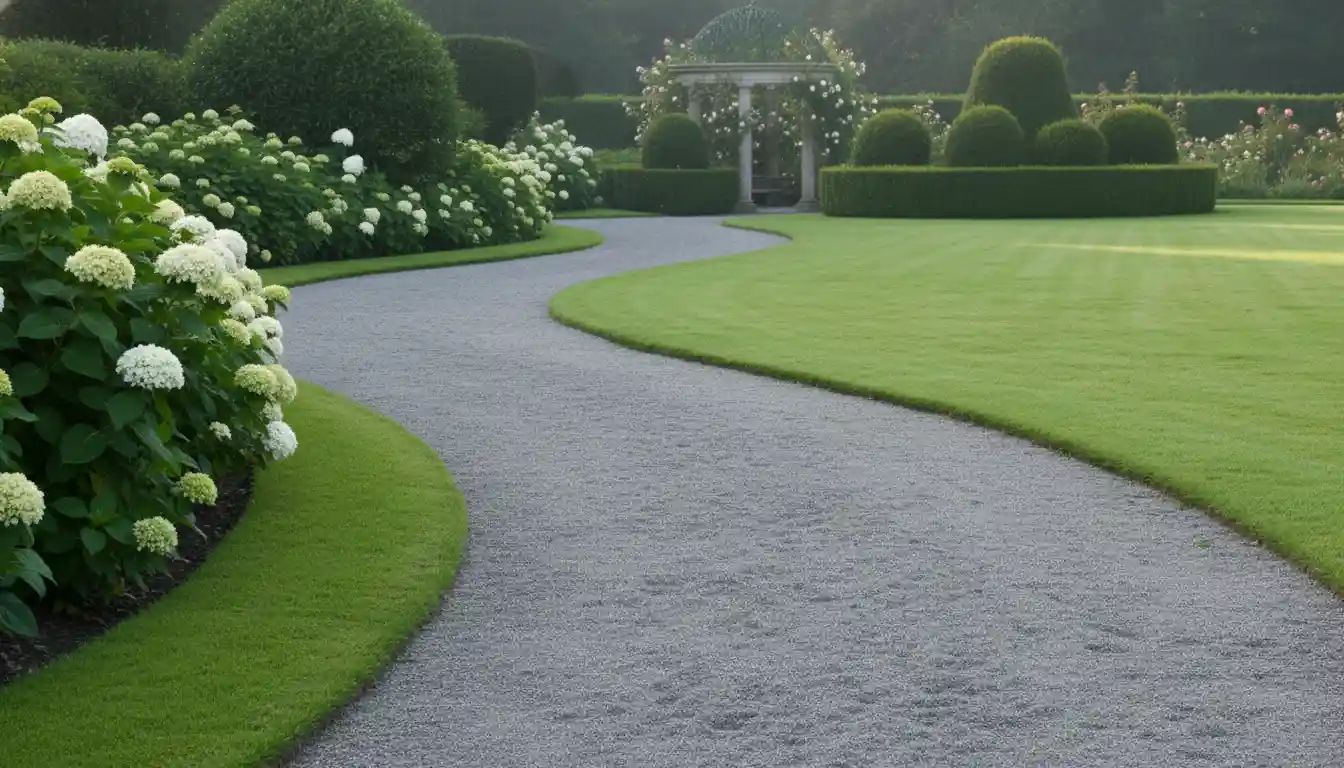
Step 4: Add and Moisten the Stone Dust
Now, add the stone dust in 2-inch layers. Do not dump it all in at once. After spreading the first layer, use a garden hose with a spray nozzle to lightly and evenly moisten the material. Your goal is that optimal moisture content—damp, not saturated.
Rake the moistened dust to ensure the moisture is distributed evenly throughout the layer. This careful hydration is the key to achieving maximum density in the final step.
Step 5: The Final Compaction
With the stone dust properly moistened, it’s time for the final, most crucial compaction. Use the plate compactor to make several passes over the entire surface. This process will lock the angular particles together, creating a hard, durable surface that rivals the stability of more expensive materials.
Add your second 2-inch layer of stone dust, repeat the moistening process, and compact it again. The final surface should be crowned slightly in the center to help shed water towards the edges. The total compacted depth of the stone dust layer should be around 2 to 3 inches.
Comparing Pathway Materials
To understand why this detailed process is so important, it helps to see how stone dust compares to other common pathway materials. Each has its own set of advantages and challenges.
| Material | Pros | Cons | Best For |
|---|---|---|---|
| Stone Dust | Affordable, natural look, permeable, compacts firmly. | Can be messy, prone to weeds/erosion if not installed correctly, poor drainage without a proper base. | Rustic garden paths, secondary walkways, paver bases. |
| Pea Gravel | Excellent drainage, variety of colors, pleasant crunch underfoot. | Shifts easily, difficult to walk on, can be a poor choice for wheeled items like wheelbarrows. | Decorative paths, drainage trenches, low-traffic areas. |
| Pavers | Extremely durable, many styles and colors, stable walking surface. | Expensive, labor-intensive installation, weeds can grow in joints. | Patios, primary walkways, driveways. |
| Concrete | Very durable, low maintenance, smooth surface. | Can crack with temperature changes, installation is best left to professionals, less natural look. | High-traffic walkways, driveways, modern landscape designs. |
Solving the Most Common Stone Dust Nightmares
Even with a perfect installation, a stone dust path requires some maintenance. Here’s how to tackle the most common issues before they become major problems.
The Weed Invasion
While the geotextile fabric will block weeds from below, seeds can still blow in and germinate on the surface. The best defense is a proactive one. Regularly sweep the path to remove organic debris that weeds can grow in. For existing weeds, a propane torch weeder is an effective, chemical-free option. Boiling water can also be used to scald and kill small, emerging weeds.
Washouts and Erosion Control
The number one defense against erosion is sturdy, permanent edging. Materials like steel, aluminum, or stone edging are essential for holding the stone dust in place. The top of your path should sit about a half-inch below the top of the edging to prevent material from spilling over during heavy rain.
Properly protecting the perimeter of your hardscaping is just as important as protecting your home’s foundation. Neglecting path edging can lead to material washout that undermines nearby structures, a reminder that foundation integrity is key, whether it’s for a path or understanding your repointing stone foundation cost.
Tracking Dust and Debris Indoors
Stone dust is messy and can easily be tracked into your home. To minimize this, create a transition zone at the entrance to your house. A small paver landing, a durable outdoor mat, or a section of larger, clean gravel can serve as a place to wipe shoes before entering.
Thinking about clean transitions from outdoor spaces can influence other home decisions as well. For example, some may worry, are carports trashy? A well-designed carport with a clean, paved transition to the home entrance can feel just as integrated and tidy as a traditional garage.
Advanced Techniques for a Flawless Finish
If you want to take your stone dust pathway to the next level of durability and low maintenance, consider using a stabilizing binder. These products are mixed in with the top layer of stone dust. When activated with water, they act as a glue, locking the particles together.
This creates a surface that is still permeable but is highly resistant to erosion, weeds, and mess. It provides the firm feel of a solid path while retaining the soft, natural appearance of stone dust. This is an excellent option for high-traffic areas or pathways on a slight incline.
A Path Built to Last
A stone dust pathway can be a beautiful and cost-effective addition to your landscape, but only if it’s built correctly. The dream of a charming garden path quickly turns into a nightmare of mud and weeds when the crucial steps of base preparation and proper compaction are ignored.
By understanding the material’s properties and committing to a methodical installation process—from a deep, well-drained sub-base to the moisture-controlled compaction of the final layers—you can create a pathway that is not only aesthetically pleasing but also incredibly durable. This is how you transform a simple weekend project into a lasting feature of your home and garden.
