
Stand Up Shower With Curtain: #1 Hack for a Luxe Look
A stand up shower is a fantastic space-saver, but it can often feel utilitarian and cramped. Many homeowners assume a glass door is the only way to achieve a high-end look, leaving the humble shower curtain as a budget afterthought.
This is a fundamental misunderstanding. The right stand up shower with curtain setup can not only prevent common issues like water leakage and mildew but can also make your bathroom feel larger, brighter, and more luxurious.
You'll Learn About
Why a Shower Curtain Isn’t Just a “Budget” Option
The choice between a shower curtain and a glass door isn’t just about cost. It’s a design decision that impacts your bathroom’s entire aesthetic, functionality, and maintenance routine. While a sleek glass door, like the popular Cardinal 10 model, offers a modern appeal, curtains provide a unique set of advantages.
The Surprising Benefits of a Curtain Over a Door
Shower curtains offer unmatched versatility. You can change the entire color scheme and mood of your bathroom in minutes for a fraction of the cost of a permanent fixture. They also enhance accessibility, making it easier to bathe children or pets without a rigid door in the way.
Furthermore, curtains eliminate the tedious task of squeegeeing glass to prevent water spots and soap scum buildup. A fabric curtain can be tossed in the washing machine, offering a simpler and more effective cleaning solution.
Common Misconceptions Debunked
The biggest myth is that shower curtains make a bathroom look cheap. This only happens with poor material choice and improper installation. A high-quality, extra-long fabric curtain hung correctly can create a sense of height and drama, rivaling the elegance of any glass door.
Another misconception is that curtains are less effective at containing water. With the right liner, weights, and setup, a shower curtain can create a perfect seal against the shower pan, keeping your bathroom floor completely dry.
The Anatomy of a Perfect Stand-Up Shower Curtain Setup
Achieving a high-end look and flawless function depends on three key components working in harmony. It’s about the curtain material, the hardware that holds it up, and the liner that does the heavy lifting.
Choosing the Right Curtain Material: Fabric vs. Vinyl
The material of your outer curtain is your first major decision. It sets the tone for the entire shower space. Your choice generally comes down to fabric for aesthetics or vinyl for pure function.
Fabric curtains, made from materials like polyester, cotton, or linen, offer a soft, luxurious feel and are available in endless patterns and colors. Vinyl curtains, typically made from PEVA or PVC, are waterproof and highly durable but can sometimes look less sophisticated.
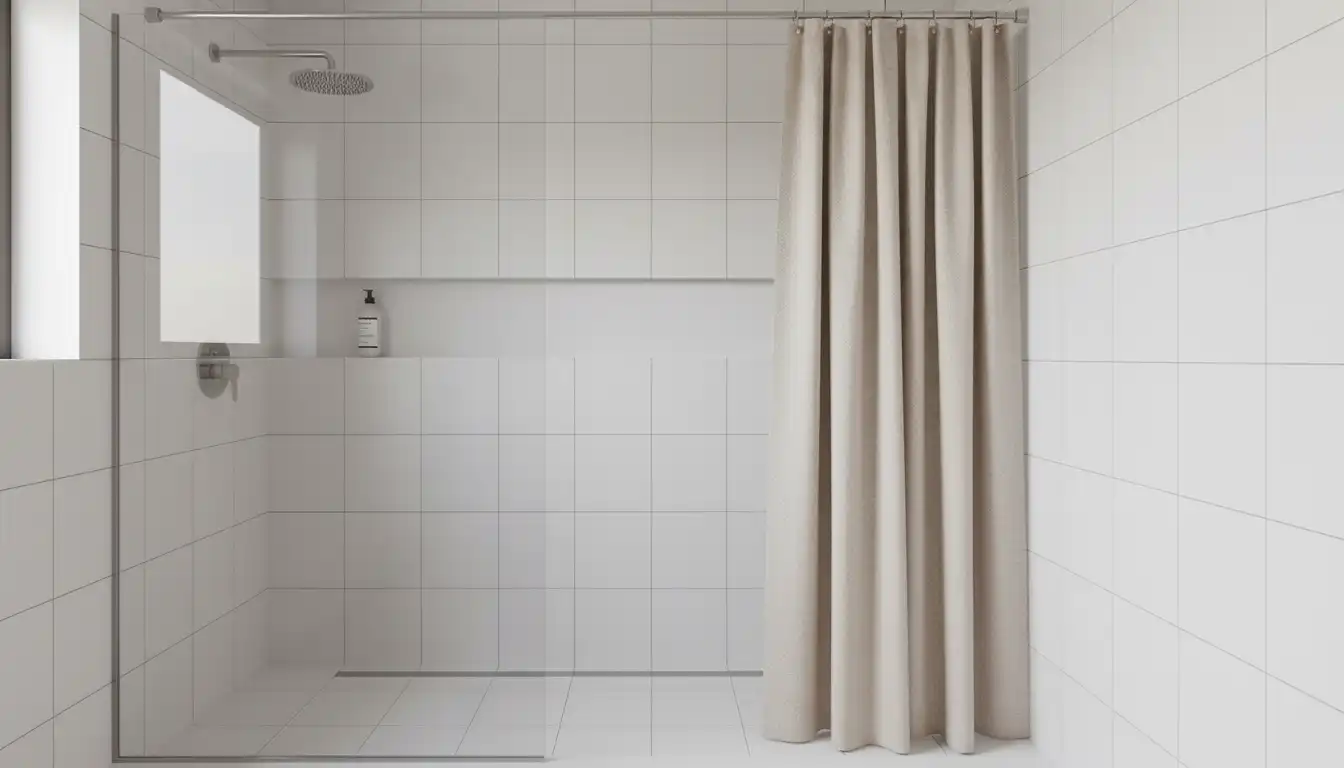
The Unsung Hero: Selecting the Perfect Shower Rod
Your shower rod does more than just hold up the curtain; it defines the space. A standard straight tension rod is functional, but upgrading can make a significant difference. A curved shower rod is a game-changer for stand-up showers, bowing outward to give you significantly more elbow room and making the stall feel less claustrophobic.
The finish of your rod is also a critical design element. A finish like a champagne bronze shower rod can add an instant touch of warmth and luxury, tying in with other fixtures in your bathroom for a cohesive, designer look.
Liner or No Liner? The Great Debate Solved
For a stand up shower, a liner is non-negotiable. While some fabric curtains are marketed as “water-resistant,” they are not waterproof. A dedicated liner is the only way to ensure water stays in the shower.
Opt for a high-quality, mildew-resistant PEVA liner. Look for one with weights or magnets at the bottom to keep it securely in place against the shower pan, forming the perfect seal against leaks.
Solving the Top 3 Stand-Up Shower Annoyances
Even with the right components, you can run into frustrating issues. Fortunately, each problem has a simple, effective solution that will perfect your shower experience.
Problem #1: The Clingy, Billowing Curtain Effect
The “curtain attack,” where the liner billows inward and sticks to you, is caused by a pressure difference created by the warm, fast-moving air from the showerhead. The easiest fix is to ensure your liner has weights or magnets at the hem. This adds enough weight to hold it straight down and prevent it from moving inward.
A curved shower rod also helps by physically positioning the curtain further away from you, giving it less opportunity to billow in your direction.
Problem #2: Water Escaping Onto the Floor
Water on the bathroom floor is a slip hazard and can cause long-term damage. This almost always happens because the liner isn’t properly positioned inside the lip of the shower pan. Always ensure the liner is tucked inside the stall’s curb before turning on the water.
If leaks persist, check that your curtain is wide enough. It should have enough slack to cover the opening completely without being pulled taut, which can create gaps at the edges.
Problem #3: The Constant Threat of Mold and Mildew
Bathrooms are humid environments, perfect for mildew growth. To combat this, promote airflow. After showering, leave the curtain partially open to allow the liner and stall to dry out completely.
Choose a machine-washable fabric liner and wash it regularly with a bit of vinegar to kill any nascent mildew spores. A high-quality, mildew-resistant liner is your best defense from the start.
Design Secrets to Make Your Shower Look Bigger and Brighter
Strategic design choices can transform a small stand up shower from a cramped box into an airy, inviting space. It’s all about creating illusions of height and light.
The Height and Width Illusion: Mounting Tricks
This is the most impactful secret for a luxury look. Mount the shower rod as high as possible, several inches above the shower stall frame and close to the ceiling. Pair this with an extra-long curtain (84 or 96 inches instead of the standard 72) that reaches from the rod to just above the floor.
This technique draws the eye upward, creating a powerful illusion of height and making the entire bathroom feel grander. It’s a classic interior design trick used for window draperies, and it works just as well for showers.
Color Psychology: Creating an Oasis
Color has a profound impact on how we perceive a space. For smaller bathrooms or stand up showers that don’t get much natural light, light and neutral colors are your best friend. Choosing the right shade is crucial; the debate over white or off white curtains highlights how even subtle differences can change a room’s entire feel.
A light-colored curtain reflects light, making the space feel brighter and more open. If your bathroom tile is already busy, opt for a solid-colored curtain to create a calming, cohesive look.
The Hidden Factor Everyone Misses: Stall and Curtain Synergy
True bathroom design mastery lies in understanding how every element works together. The shower curtain should not be chosen in isolation; it must be in synergy with the shower stall itself for a seamless and functional design.
This means considering the height of your shower pan’s curb. A very low curb requires a heavier liner with strong magnets to create a foolproof water seal. A taller, more substantial curb gives you more flexibility and is more forgiving.
Material and Hardware Comparison
Choosing the right combination of materials and hardware is essential for long-term satisfaction. This table breaks down the key differences to help you decide.
| Feature | Fabric Curtains (Polyester/Cotton) | Vinyl Curtains (PEVA/PVC) | Hardware (Rods/Hooks) |
|---|---|---|---|
| Aesthetics | High-end, soft, endless design options. | Functional, can look plasticky, limited designs. | Can be a major design element (e.g., matte black, bronze). |
| Maintenance | Machine washable for easy cleaning. | Wipe-clean, but can be prone to soap scum. | Requires occasional wiping to prevent water spots. |
| Durability | Very durable, but can stain over time. | Can become brittle and tear with age. | High-quality metal rods last for years. |
| Mildew Resistance | Requires a separate, mildew-resistant liner. | Inherently more resistant to mildew. | Rust-resistant finishes are essential. |
| Cost | Wider range, from budget to luxury. | Generally very inexpensive. | Varies widely based on style and material. |
Integrating the Curtain with Your Bathroom’s Overall Style
Finally, step back and look at the big picture. Your stand up shower with curtain is a large vertical element in your bathroom, and it must complement the overall style. A minimalist bathroom might call for a simple, waffle-weave white curtain on a sleek chrome rod.
A more traditional or transitional space could benefit from a curtain with a subtle pattern and a decorative rod in a warm metallic finish. The curtain is your opportunity to add texture, color, and personality, tying the entire room together into a cohesive and beautiful space.
