
Staining Palm Tree Trunks: The Ultimate Guide to a Flawless Finish
A majestic palm tree can be the centerpiece of a landscape, but a faded, discolored, or uneven trunk can detract from its beauty. You’ve meticulously cared for your palms, yet the trunks look weathered and old, diminishing your home’s curb appeal. This common problem leaves many homeowners wondering if there’s a safe and effective way to restore that vibrant, healthy appearance.
The issue often stems from natural causes like sun exposure, weathering from rain and irrigation, and the simple aging process. Many resort to improper solutions like house paint or traditional wood stains, which can harm or even kill the tree. The real challenge is finding a method that not only enhances the trunk’s appearance but also preserves the palm’s health.
You'll Learn About
Why Staining a Palm Trunk Isn’t Like Staining a Wooden Deck
Before attempting to stain a palm trunk, it’s crucial to understand a fundamental biological difference. Palm trees are monocots, more closely related to grasses than to traditional trees like oaks and pines, which are dicots. This distinction is not just a botanical technicality; it directly impacts how a “stain” will be absorbed and whether it’s safe for the plant.
Traditional wood stains are designed to penetrate the porous, woody xylem of dicot trees. A palm trunk, however, is not wood. It’s a fibrous mass of vascular tissue that transports water and nutrients. Using a conventional oil-based wood stain can clog these vital pathways, effectively suffocating the tree and trapping moisture, which can lead to rot and disease.
Busting the Myths: Is It Actually Safe to Stain a Palm Tree?
The short answer is yes, but with a major caveat: you cannot use standard wood stain. The term “staining” in this context refers to applying a specialty colorant specifically formulated for the unique, fibrous structure of palm trunks. These products are water-based, non-toxic, and breathable, ensuring they don’t harm the living tissue.
Applying varnishes, polyurethanes, or oil-based sealants is extremely dangerous for a palm. These products create an impermeable barrier that prevents the trunk from breathing, traps moisture, and can cause the surface to scorch in direct sunlight. Always opt for a product explicitly labeled as a palm tree colorant or stain.
Choosing the Right Product: Palm Colorant vs. Wood Stain
The success of your project hinges entirely on selecting the correct product. A specialty palm colorant is designed to adhere to the outer fibrous layers of the trunk without impeding its natural processes. These formulas are environmentally safe and will give you a natural, long-lasting finish without peeling or flaking like paint.
Avoid any product that isn’t specifically made for palms. DIY solutions like coffee grounds or tea might seem like a natural alternative, but they fade quickly, offer no protective benefits, and can attract pests. Investing in a high-quality palm colorant is the only way to guarantee both a beautiful result and a healthy tree.
| Feature | Specialty Palm Colorant | Traditional Wood Stain (Oil-Based) | Latex Paint |
|---|---|---|---|
| Base Type | Water-Based | Oil-Based | Water-Based (with polymers) |
| Breathability | High (Allows trunk to breathe) | Very Low (Clogs pores) | Low to Medium (Can trap moisture) |
| Safety for Palm | Excellent (Designed for living fibrous tissue) | Extremely Harmful (Can suffocate the tree) | Poor (Can peel, flake, and harm the tree) |
| Appearance | Natural, penetrating color | Penetrates, but can look uneven on fiber | Artificial, surface-level coating |
| Longevity | 9-12 months on average | Variable, but peels and damages trunk | Peels and flakes quickly in the sun |
| Environmental Impact | Low (Typically non-toxic and eco-friendly) | High (Contains VOCs) | Moderate |
A Step-by-Step Guide to Staining Your Palm Tree Trunk Perfectly
Achieving a professional-looking finish requires careful preparation and application. Rushing the process or skipping steps will lead to a subpar result that won’t last. Follow this detailed guide for a vibrant, healthy-looking palm trunk.
Step 1: Assess and Clean the Trunk Surface
The first step is a thorough cleaning. Do not use a high-pressure washer, as this can shred the delicate fibers of the trunk and create wounds that invite disease. Instead, use a leaf blower or a soft-bristled brush to gently remove dust, cobwebs, and any loose debris.
If you encounter stubborn dirt or algae, use a gentle solution of mild soap and water with your soft brush. It is critical to ensure your water is clean; the quality, sometimes managed by devices with specific water softener regeneration settings, can affect the final look. Rinse the trunk thoroughly with clean water and allow it to dry completely, which may take 24-48 hours depending on humidity.
Step 2: Surface Preparation and Minor Repairs
Once clean and dry, inspect the trunk for any loose fibers or old “boots” (the bases of old fronds). If your goal is a smoother appearance, you may need to perform some light pruning. Use a sterilized pruning saw or a sharp knife to carefully trim away any shaggy, dead material.
Never cut into the trunk itself. Wounds on a palm trunk do not heal like they do on a traditional tree and can create a permanent entry point for pests and diseases. For creating crisp lines, especially on diamond-cut Sylvester Palms, a utility knife can be used to gently score and remove loose fibers before staining.
Step 3: The Art of Application
The best method for applying a palm colorant is with a simple handheld or backpack sprayer. This ensures an even, consistent coat that penetrates the trunk’s texture. Shake the colorant container thoroughly before pouring it into your sprayer.
Hold the sprayer nozzle about 6-8 inches from the trunk and apply the stain in a steady, overlapping vertical motion. Focus on covering the area evenly without letting the product drip or run. The color change will be immediate, beautifully highlighting patterns like diamond cuts.
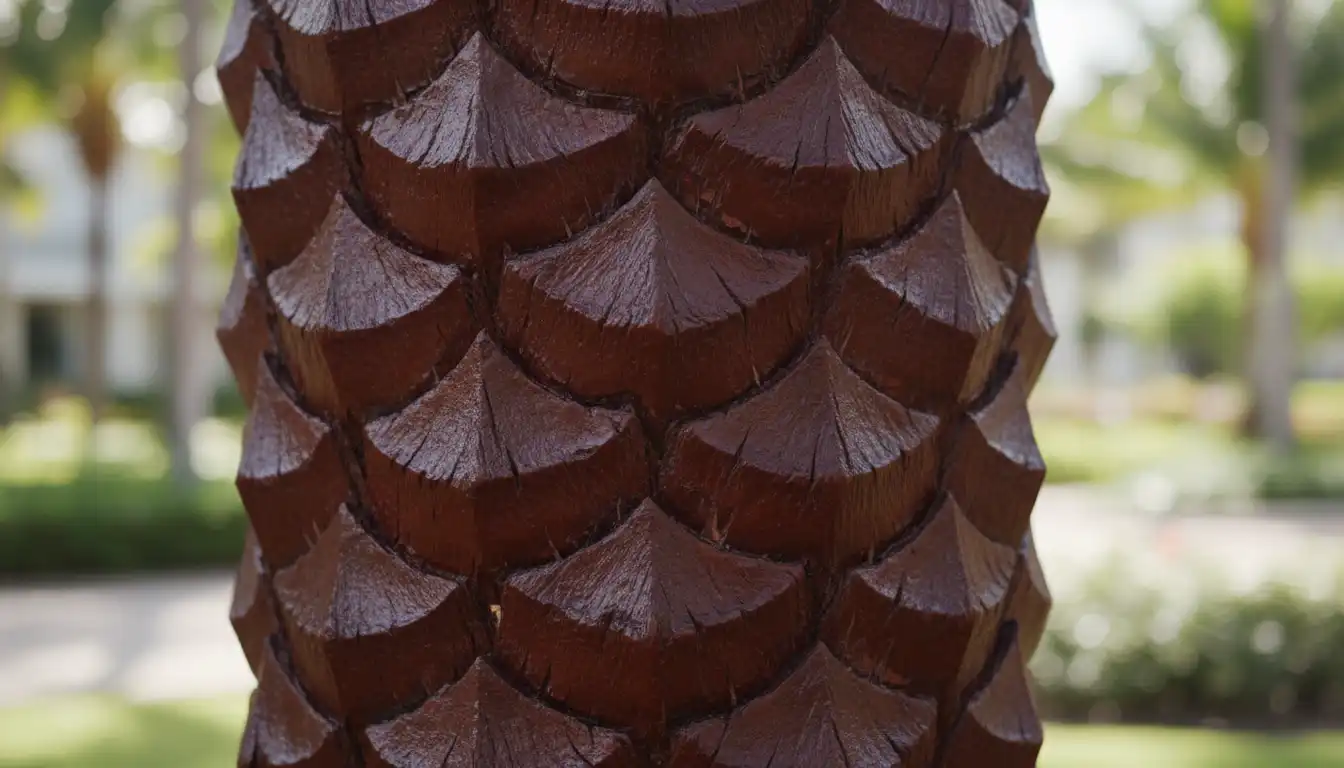
For a deeper, richer color, you can apply a second coat after the first has had a few minutes to dry. Always follow the manufacturer’s specific instructions for application and drying times. Work on a calm, dry day to prevent the spray from drifting and to ensure the best absorption.
Step 4: Sealing for Longevity (Optional but Recommended)
After the colorant has fully dried, consider applying a breathable sealant designed for palm trees. This is not the same as a wood varnish. A proper palm sealant will protect the color from UV rays and rain, extending the life of your stain and keeping it vibrant for longer.
These specialized sealants also provide a protective barrier that can help deter insect nesting in pruning crevices and prevent moisture from settling into the fibers. You can often choose between a matte finish for a natural look or a glossy finish for extra luster.
Critical Mistakes to Avoid When Staining a Palm Trunk
Many well-intentioned homeowners cause irreversible damage by making simple mistakes. Avoiding these common pitfalls is essential for the health of your palm tree and the quality of your finish.
The number one mistake is using the wrong product. As emphasized before, never use oil-based wood stains, varnishes, or polyurethane. Another critical error is improper surface prep. Applying colorant over a dirty or wet trunk will result in a blotchy, uneven finish that fails prematurely.
Finally, avoid over-pruning the trunk before staining. Aggressive cutting or “skinning” the trunk can inflict serious wounds that the palm cannot heal, leaving it vulnerable. This is as critical as basic equipment maintenance; just as you’d make sure there’s no fuel in the carburetor bowl before storing a tool, you must ensure the trunk’s core integrity is never compromised.
Long-Term Maintenance for a Lasting Vibrant Look
A properly applied palm colorant can last up to a year, but its longevity depends on factors like sun exposure and rainfall. To maintain the fresh look, plan on a light reapplication every 9-12 months or as needed.
Regularly inspect the trunk for any new fading or discoloration. A quick touch-up is much easier than a full re-staining. Keeping the base of the palm free of debris and ensuring sprinklers don’t constantly soak the trunk will also help preserve the finish.
Creative Ideas and Advanced Techniques
Staining isn’t just for restoration; it’s a design tool. You can choose colorants that enhance the natural reddish or golden tones of your palm species to match your landscape’s color palette. For example, a slightly darker stain can create a stunning contrast against light-colored home exteriors or vibrant green foliage.
For those with diamond-cut Sylvester Palms, applying the colorant immediately after a professional trim yields the most dramatic results. The fresh cuts absorb the pigment deeply, creating a bold, geometric pattern that becomes a living work of art in your garden. This level of seasonal attention is important for all aspects of home care. While you might be preparing specialized equipment like a 11528le Ariens snowblower for winter, remember that your palms also benefit from timely care to look their best.
Frequently Asked Questions About Palm Trunk Staining
Does staining the trunk attract pests?
No, using a proper, non-toxic palm colorant will not attract pests. In fact, sealing the trunk after staining can help deter them from nesting in cracks and crevices.
When is the best time of year to stain a palm trunk?
Spring is an ideal time, as the weather is typically mild and dry. Staining right after the tree has been professionally pruned will also yield the most striking visual results.
Can I stain the green fronds of the palm?
No. Palm colorants are formulated only for the fibrous trunk. Spraying the fronds can block photosynthesis and severely damage the tree’s health.
Conclusion
Restoring the grandeur of a weathered palm requires a careful balance between aesthetic enhancement and biological preservation. While the desire to revive a faded trunk is understandable, the health of the tree must always remain the priority. Moving away from suffocating paints and toward breathable, palm-specific stains or natural cleaning techniques ensures that the trunk can still “breathe” and transport vital nutrients. By choosing methods that respect the tree’s unique physiology, you protect your investment while significantly boosting your property’s curb appeal. Ultimately, a revitalized palm trunk serves as a testament to thoughtful stewardship, transforming a tired landscape into a vibrant, tropical oasis. With the right approach, your palms will once again stand as healthy, majestic pillars that anchor your outdoor sanctuary for years to come.
