
Stacked Cabinets with 10 Foot Ceilings: Your #1 Fix for Wasted Space
A kitchen with 10-foot ceilings presents a grand canvas for design. Yet, this vertical space often creates a significant and awkward problem: a vast, empty void above the upper cabinets.
This overlooked territory quickly becomes a dusty, forgotten zone that detracts from the room’s potential. The solution lies in transforming that empty space into a stunning and functional feature with stacked cabinets.
You'll Learn About
The ‘Grand Canyon’ Effect: Why That Empty Space Cheapens Your Kitchen
The gap between the top of standard cabinets and a high ceiling does more than just collect dust. It visually disconnects the cabinetry from the room’s architecture, making the kitchen feel unfinished.
This disconnect, often called the “Grand Canyon effect,” can make expensive cabinetry look builder-grade. It disrupts the vertical lines that should draw the eye upward, instead creating a horizontal stop that makes the room feel unbalanced.
Stacked Cabinets: The Ultimate Solution for Height and Harmony
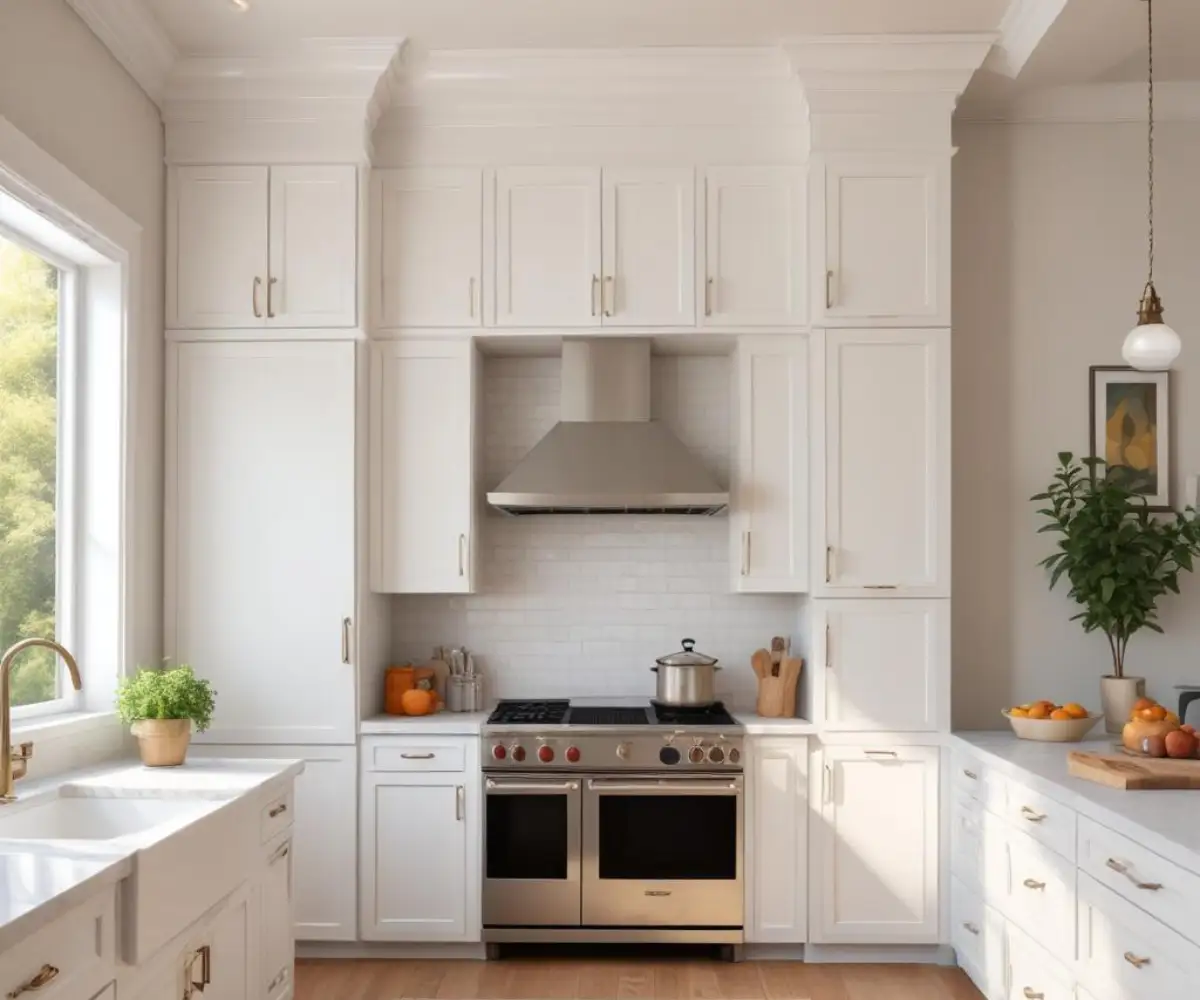
Stacked cabinets are the definitive answer to this design dilemma. This configuration involves placing a shorter cabinet, often called a transom, on top of a standard upper cabinet, creating a seamless column of storage that reaches the ceiling.
This approach masterfully solves the problem of wasted space. It provides a powerful vertical element that makes the kitchen feel taller, more integrated, and undeniably luxurious.
More Than Just Storage: The Architectural Advantage
Think of stacked cabinets as more than just extra boxes for your seasonal dishes. They are an architectural element that reshapes the entire feel of your kitchen, turning a plain wall into a sophisticated, built-in feature.
This method allows you to treat the top tier of cabinets as a functional soffit. It’s a deliberate design choice that adds character and substance, creating a custom look that feels intentional and high-end.
Designing Your Perfect Stack: Proportions Are Everything
Successfully executing a stacked cabinet design hinges on one critical factor: proportion. The relationship between the main upper cabinet and the smaller transom cabinet above it will define the entire aesthetic.
Getting these dimensions right is the difference between a harmonious, elegant kitchen and one that feels top-heavy or awkward. Careful planning is essential to achieve a balanced and visually pleasing result.
The Golden Ratio: Sizing Your Upper and Transom Cabinets
For a 10-foot (120-inch) ceiling, a typical kitchen layout includes a 36-inch high base cabinet, a 1.5-inch countertop, and an 18-inch backsplash area. This leaves approximately 64.5 inches for upper cabinets and crown molding.
The goal is to divide this space between the main upper, the transom, and the molding. Common combinations include pairing a 36-inch or 42-inch upper with a 12, 15, or 18-inch transom, with the remainder filled by molding. A 2:1 or 3:1 ratio often creates the most classic and balanced look.
| Configuration Type | Description | Pros | Cons |
|---|---|---|---|
| Stacked Cabinets (e.g., 36″ + 18″) | A standard upper cabinet with a smaller cabinet on top. The two are separated by a trim piece. | Excellent proportions, custom high-end look, flexible styling (e.g., glass on top). | Higher cost, more complex installation. |
| Single Tall Cabinet (e.g., 48″ or 54″) | One continuous cabinet with a single tall door or two doors stacked on one frame. | Sleek, seamless appearance, slightly lower cost than two separate cabinets. | Doors can be very large and heavy, potentially prone to warping over time. Can look monolithic. |
| Cabinets with Drywall Soffit | Standard cabinets installed with a framed-out drywall section built to fill the gap to the ceiling. | Lowest cost option. | Considered an outdated design. No additional storage. Creates a visual break. |
To Glass or Not to Glass? Styling Your Top Cabinets
The upper tier of your stacked cabinets offers a unique opportunity for stylistic expression. While solid doors provide concealed storage for rarely used items, glass-front doors can transform the space into a stunning display.
Clear glass is perfect for showing off beautiful dishware or heirlooms. For a softer look that hides clutter, consider using frosted, ribbed, or seeded glass, which adds texture and interest while maintaining a sense of openness.
Crown Molding: The Finishing Touch That Makes All the Difference
Crown molding is the essential final piece of the puzzle. It bridges the small gap between the top of the transom cabinet and the ceiling, creating a truly seamless, built-in look.
The style of molding can dramatically impact the final design. A simple, clean-lined molding works well in modern kitchens, while a more ornate, multi-piece crown can elevate a traditional space.
Stacked Cabinets vs. The Alternatives
While stacked cabinets are often the premier choice for 10-foot ceilings, it is wise to understand the alternatives. Each option offers a different aesthetic and functional outcome for handling the vertical space in your kitchen.
Considering these alternatives helps solidify why a stacked configuration provides such a superior balance of form and function for taller rooms.
The Single Giant: Are 48-Inch Tall Upper Kitchen Cabinets a Mistake?
One alternative to stacking is using a single, very tall cabinet. While a continuous door on 48 inch tall upper kitchen cabinets can create a clean, modern line, it comes with drawbacks.
The sheer size of the door can feel overwhelming and monolithic. More importantly, these oversized doors are heavier and more susceptible to warping over time, which can lead to alignment issues.
The Outdated Soffit: A Relic of the Past
Decades ago, the common solution was to build a drywall soffit to fill the space above cabinets. This approach is now widely considered dated and inefficient.
A soffit offers no functional storage and visually lowers the ceiling. Removing an existing soffit and replacing it with stacked cabinets is one of the most impactful upgrades you can make in a kitchen with high ceilings.
The Hidden Details: Structural and Functional Considerations
The beauty of stacked cabinets is supported by unseen details that are critical for safety and longevity. Proper installation is not just about aesthetics; it is about ensuring the structure can handle the significant weight.
These behind-the-scenes considerations are what separate a high-quality, lasting installation from one that will cause problems down the road. Never overlook these foundational steps.
The Unseen Support: Why Proper Blocking is Non-Negotiable
One of the most crucial elements that is rarely discussed is in-wall blocking. This involves adding horizontal wood reinforcements between the wall studs exactly where the cabinets will be hung.
Standard drywall is not strong enough to support the immense weight of stacked cabinets filled with dishes. Proper blocking ensures the mounting screws have a solid wood anchor, preventing sagging or catastrophic failure.
Beyond the Look: Making Your Top Cabinets Usable
The top transom cabinets are perfect for storing items you do not use every day. Think seasonal platters, holiday-themed dishes, or small appliances that are only used occasionally.
To access this storage, consider incorporating a stylish rolling library ladder for a classic look or keeping a chic, foldable step stool handy. This ensures the space is not just beautiful but also practical.
Integrating Your Design for a Flawless Finish
A truly cohesive kitchen design thinks about every detail. To maintain the clean lines established by your tall cabinets, consider how to handle smaller appliances that create countertop clutter.
Solutions like an integrated cabinet with specialized appliance garage hinges can hide your toaster and coffee maker, preserving the seamless aesthetic. Likewise, the beauty of the design should extend to its upkeep; keeping the inside of white cabinets tidy is key to a pristine kitchen.
Common Questions and Final Thoughts
When planning a project of this scale, questions are inevitable. Addressing the most common concerns can provide the clarity needed to move forward with confidence.
Stacked cabinets are an investment, but one that pays dividends in both home value and daily enjoyment.
Is This a Costly Upgrade?
Yes, stacked cabinets are more expensive than standard uppers due to the need for more materials and more complex installation. However, the immense visual impact and added storage offer a significant return on investment.
This feature elevates a kitchen from standard to luxury, which is a major selling point and a source of daily satisfaction.
Your Next Step to a Flawless High-Ceiling Kitchen
Stacked cabinets are the undisputed champion for kitchens with 10-foot ceilings. They solve the functional problem of wasted space while delivering an unmatched level of elegance and custom beauty.
By focusing on proper proportions, professional installation with structural support, and thoughtful styling, you can transform your high-ceiling kitchen into a truly breathtaking space.
