
Spanish Oak Cabinets: Unlock a Timeless Kitchen Design
Many homeowners face a common design challenge. They dream of a kitchen that feels warm, personal, and full of character, yet often end up with a space that looks generic and sterile.
The core of this problem lies in choosing cabinetry. Standard, mass-produced options can lack the soul and distinction needed to create a truly memorable room. This leads to a space that is functional but fails to inspire.
Spanish oak cabinets offer a powerful solution to this design dilemma. They bring a rich history, undeniable warmth, and a unique, sophisticated character that can transform any kitchen from mundane to magnificent.
You'll Learn About
What Truly Defines Spanish Oak Cabinets?
Spanish oak cabinets are characterized by their deep, warm tones and prominent, beautiful grain patterns. They are a cornerstone of Spanish Colonial, Mediterranean, and rustic design aesthetics, evoking a sense of history and handcrafted quality.
The “Spanish” look is less about a specific species of oak and more about the finish and style. Dark, rich stains are used to highlight the wood’s natural texture, often paired with ornate details and robust hardware. This style draws inspiration from centuries of Spanish architecture, incorporating elements that feel both substantial and elegant.
The Unmatched Allure: Why Choose Spanish Oak?
Opting for this style is an investment in both durability and timeless design. Oak is a famously strong hardwood, ensuring your cabinets can withstand the rigors of daily kitchen life for decades. This inherent strength makes them a practical and long-lasting choice.
Beyond their durability, these cabinets possess a classic aesthetic that never goes out of style. Unlike fleeting trends, the rich wood and traditional styling provide an enduring appeal that adds long-term value to your home. They provide a foundation of warmth and character that makes a kitchen feel like the true heart of the home.
The Design Dilemma: Integrating Spanish Oak Cabinets Seamlessly
The biggest challenge homeowners face is styling these bold cabinets without overwhelming the space. Their strong presence requires a thoughtful approach to surrounding materials and colors to create a balanced and harmonious design.
The key is to complement their warmth and texture with elements that either blend in or provide a pleasing contrast. This ensures the cabinets are the star of the show, but not the only feature in the room.
Complementary Colors and Materials
Pairing Spanish oak with the right materials is crucial. For countertops, consider granite with earthy tones, creamy white quartz to provide a bright contrast, or even traditional terracotta tiles for a highly authentic Mediterranean feel.
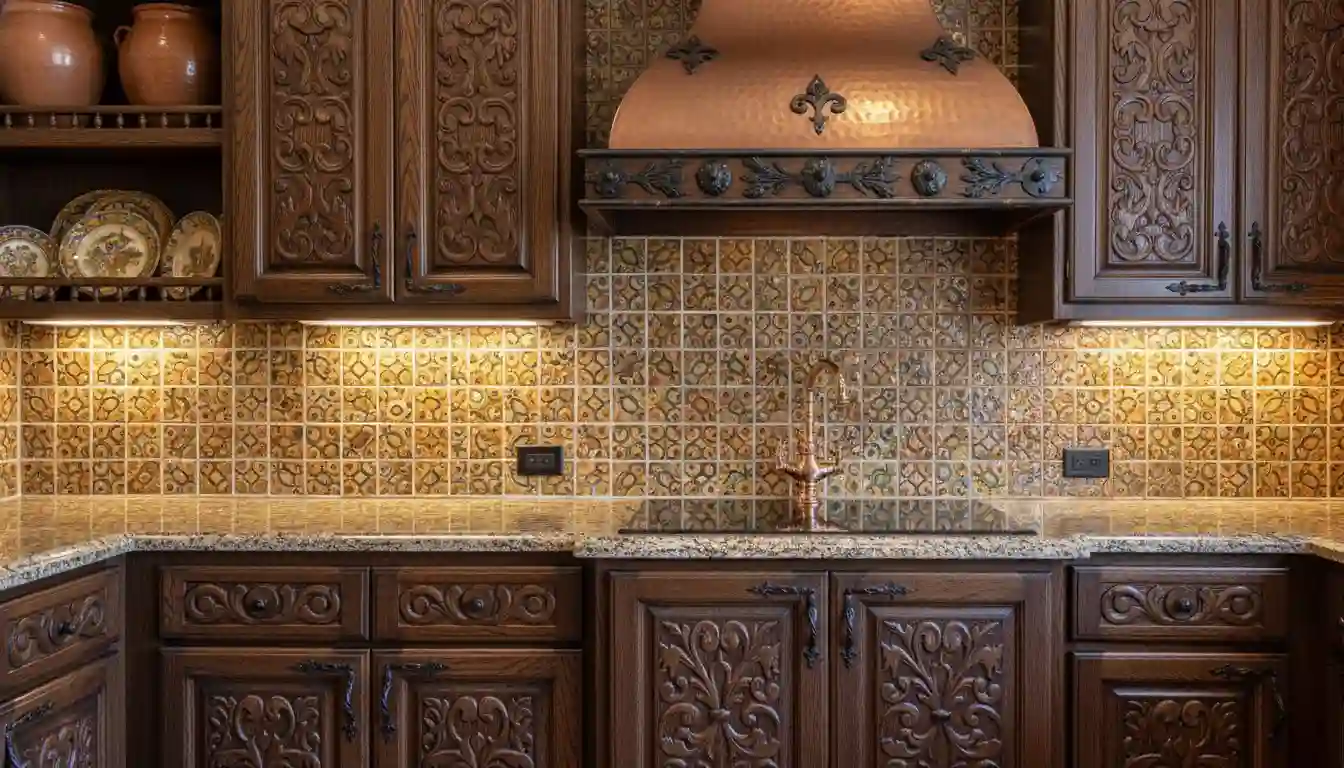
For backsplashes, hand-painted Talavera tiles can introduce vibrant color and pattern. Alternatively, travertine tiles offer a more muted, rustic elegance, while simple off-white subway tiles can create a clean backdrop that allows the cabinets to stand out.
Flooring choices like Saltillo tile, dark hardwood, or patterned ceramic tile complete the look. For wall colors, stick to warm whites, soft beiges, or consider a dramatic accent wall in a deep blue or rich terracotta to enhance the cozy, inviting atmosphere.
Hardware: The Finishing Touch
Hardware is the jewelry of your cabinetry, and for Spanish oak, it plays a vital role. The right hardware completes the aesthetic and reinforces the style. Look for materials that have a sense of history and substance.
Wrought iron is the most traditional and effective choice, offering a rustic, handcrafted feel. Oil-rubbed bronze and antiqued brass are also excellent options that provide a warm, aged patina. Choose ornate pulls, substantial knobs, and even decorative strap hinges to achieve an authentic, old-world look.
Lighting and Ambiance
Proper lighting is essential to prevent a kitchen with dark cabinets from feeling gloomy. A layered lighting plan that combines ambient, task, and accent lighting will create a warm and functional space.
Consider a wrought iron chandelier as a central feature. Wall sconces can add soft, ambient light, while under-cabinet lighting is critical for illuminating workspaces and highlighting the beautiful grain of the oak cabinets.
Sourcing and Selection: Finding Your Perfect Cabinets
Once you’ve decided on the style, the next step is finding the right cabinets. Your choice between custom, semi-custom, or stock options will depend on your budget, timeline, and the specific needs of your kitchen layout.
Understanding the differences in quality and construction will help you make an informed decision that you’ll be happy with for years to come.
Custom vs. Semi-Custom vs. Stock
Custom cabinets offer the highest level of quality and are built to your exact specifications, making them ideal for unique kitchen layouts. Semi-custom cabinets provide a good balance, offering a wide range of styles and finishes with some modification options. Stock cabinets are the most affordable but come in standard sizes and have limited design choices.
For a truly authentic Spanish oak look, custom or high-end semi-custom are often the best routes. They allow for more control over the specific stain, door style, and decorative details that define this aesthetic.
What to Look For: A Buyer’s Guide
When selecting your cabinets, pay close attention to the quality of the wood. Solid oak doors and face frames provide the best durability and appearance. The distinct patterns in red oak and walnut can be beautifully enhanced with the right stain to achieve that classic, deep finish.
Inspect the construction methods, looking for features like dovetail joints in the drawers, which indicate superior craftsmanship. Finally, ensure the finish is multi-layered and durable, as this protective coat is essential for protecting the wood and maintaining its rich color over time.
| Feature | Oak | Cherry | Maple | MDF/Laminate |
|---|---|---|---|---|
| Durability | Excellent | Very Good | Good | Fair |
| Grain Pattern | Prominent & Strong | Subtle & Fine | Very Subtle | None (Simulated) |
| Authenticity for Spanish Style | Excellent | Good | Fair | Poor |
| Cost | Mid-High | High | Mid-Range | Low |
| Maintenance | Low | Low | Low | Low |
The Nitty-Gritty: Installation and Maintenance
Proper installation and consistent maintenance are key to preserving the beauty and longevity of your Spanish oak cabinets. While some homeowners may consider a DIY approach, professional installation is typically recommended to ensure a perfect fit and finish.
Long-term care is straightforward but important. Simple, regular cleaning and attention to the kitchen environment will keep your investment looking its best.
Long-Term Care for Lasting Beauty
To clean your cabinets, use a soft cloth dampened with a mild soap and water solution. Avoid harsh chemical cleaners, as they can damage the wood’s finish. Always dry the cabinets thoroughly after cleaning.
Periodically, you can use a high-quality wood polish to restore shine and add a layer of protection. It is also critical to manage moisture in the kitchen. Promptly wipe up any spills and ensure good ventilation to prevent water damage or other issues. Protecting wood from excessive moisture is a key part of home maintenance, helping to avoid problems like mold growth in damp areas.
Beyond the Kitchen: Spanish Oak in Other Rooms
The appeal of Spanish oak extends far beyond the kitchen. Its warmth and elegance can be used to add character and architectural interest throughout your home.
In the bathroom, an oak vanity can create a rustic, spa-like atmosphere. In the living room, custom built-ins for bookcases or an entertainment center can become a stunning focal point. This style also lends itself perfectly to a sophisticated, old-world home bar, creating an inviting space for entertainment.
Avoiding Common Pitfalls with Spanish Oak Cabinets
While beautiful, this strong style does come with potential design traps. One of the biggest risks is creating a space that feels too dark and heavy. You must balance the dark wood with light-colored countertops, backsplashes, and ample lighting.
Another common mistake is clashing styles. Spanish oak does not pair well with ultra-modern or minimalist decor. It’s essential to maintain a cohesive design language, leaning into Mediterranean, rustic, or transitional aesthetics. Finally, consider your room’s scale; large, ornate cabinets can easily overpower a small kitchen. In smaller spaces, opt for simpler door styles or use the dark oak only for the lower cabinets, with a lighter color for the uppers.
The Enduring Legacy of Spanish Oak
Choosing Spanish oak cabinets is about more than just selecting a cabinet; it’s about making a statement. It’s a commitment to a style that is rich with history, character, and enduring quality.
By thoughtfully integrating them into your home’s design, you can solve the problem of a lifeless kitchen. You create a space that is not only beautiful and functional but also deeply personal and inviting for years to come.
