
Solar Cover for Freeform Pool: Your Ultimate Guide to a Perfect Fit
A freeform pool is the centerpiece of a beautiful garden, a flowing oasis that mimics natural ponds and lagoons. However, its very beauty—the elegant curves and unconventional shape—creates a significant challenge: how do you keep the water warm without astronomical energy bills? Standard rectangular solar covers simply won’t work, leaving owners frustrated with heat loss, constant water evaporation, and a shorter swim season.
This problem leads to wasted money on heating and water top-offs, not to mention more time spent cleaning out debris. The solution lies in a perfectly fitted solar cover, custom-cut for your unique pool shape. It’s a project that transforms your pool from a high-maintenance headache into an efficient, warm, and inviting retreat.
You'll Learn About
Understanding Why Your Freeform Pool Needs Protection
The primary reason your pool water gets cold, especially overnight, is evaporation. In fact, up to 75% of a pool’s heat loss occurs through this single process. As water evaporates from the surface, it takes a massive amount of thermal energy with it, leaving the remaining water significantly cooler.
Freeform pools often have a larger surface area compared to rectangular pools of the same volume, which can accelerate this heat loss. A solar cover acts as a physical barrier, drastically reducing evaporation by up to 95%. This simple layer floating on the surface is your first and best defense against heat and water loss.
The Transformative Benefits of a Well-Fitted Solar Cover
Beyond simply stopping evaporation, a solar cover offers a multitude of advantages that enhance your pool ownership experience. Harnessing free energy from the sun, the cover’s bubble-like design captures solar radiation and transfers it directly into the water. This passive heating can increase your pool’s temperature by 10-15°F, effectively extending your swimming season without extra heating costs.
Furthermore, by preventing evaporation, the cover also helps to conserve your pool chemicals, which saves money and reduces your maintenance workload. It also acts as a barrier against leaves, pollen, and other debris, meaning less time skimming and more time swimming. A well-maintained pool area enhances your home’s overall comfort and aesthetic, much like a stylishly installed ceiling fan in a covered patio can improve airflow and enjoyment.
A Buyer’s Guide: Choosing the Right Solar Cover Material
When selecting a solar cover for your freeform pool, you’ll encounter a few key choices regarding material thickness and color. The thickness is measured in mils (one-thousandth of an inch), with common options ranging from 8 to 16 mils. A thicker cover generally offers better heat retention and durability but will also be heavier and more expensive.
Color also plays a crucial role in performance. Clear covers allow the most solar energy to penetrate the water, making them the top choice for maximum heating. Standard blue covers provide a good balance of heating and algae inhibition, while darker or opaque covers excel at heat retention, making them ideal for use overnight.
Liquid Solar Covers: A Viable Alternative?
You may have also heard of liquid solar covers, a chemical solution that forms an ultra-thin, invisible layer on the water’s surface to reduce evaporation. While easier to apply, they are generally less effective than a physical bubble cover. They do not provide the same level of solar heating and can be disrupted by wind or heavy swimming, requiring frequent reapplication.
The Perfect Fit: A Step-by-Step Guide to Cutting Your Solar Cover
The most intimidating part of this process for many freeform pool owners is cutting the cover to size. But with the right approach, it’s a straightforward and rewarding task. You will need to purchase a rectangular cover that is large enough to drape over the widest and longest points of your pool.
Step 1: Gather Your Tools
You will need a pair of sharp, heavy-duty scissors or a utility knife, a permanent marker, and ideally, a helper to make the process easier.
Step 2: Lay the Cover on the Water
Unpack the solar cover and gently lay it across the pool surface, ensuring the bubble side is facing down into the water. This is critical for proper heat transfer. Smooth out any large wrinkles, but don’t worry about small folds at this stage.
Step 3: Let it Settle
Allow the cover to float on the pool for a few hours on a sunny day. The warmth will help the material relax and conform more closely to the shape of your pool, ensuring a more accurate cut.
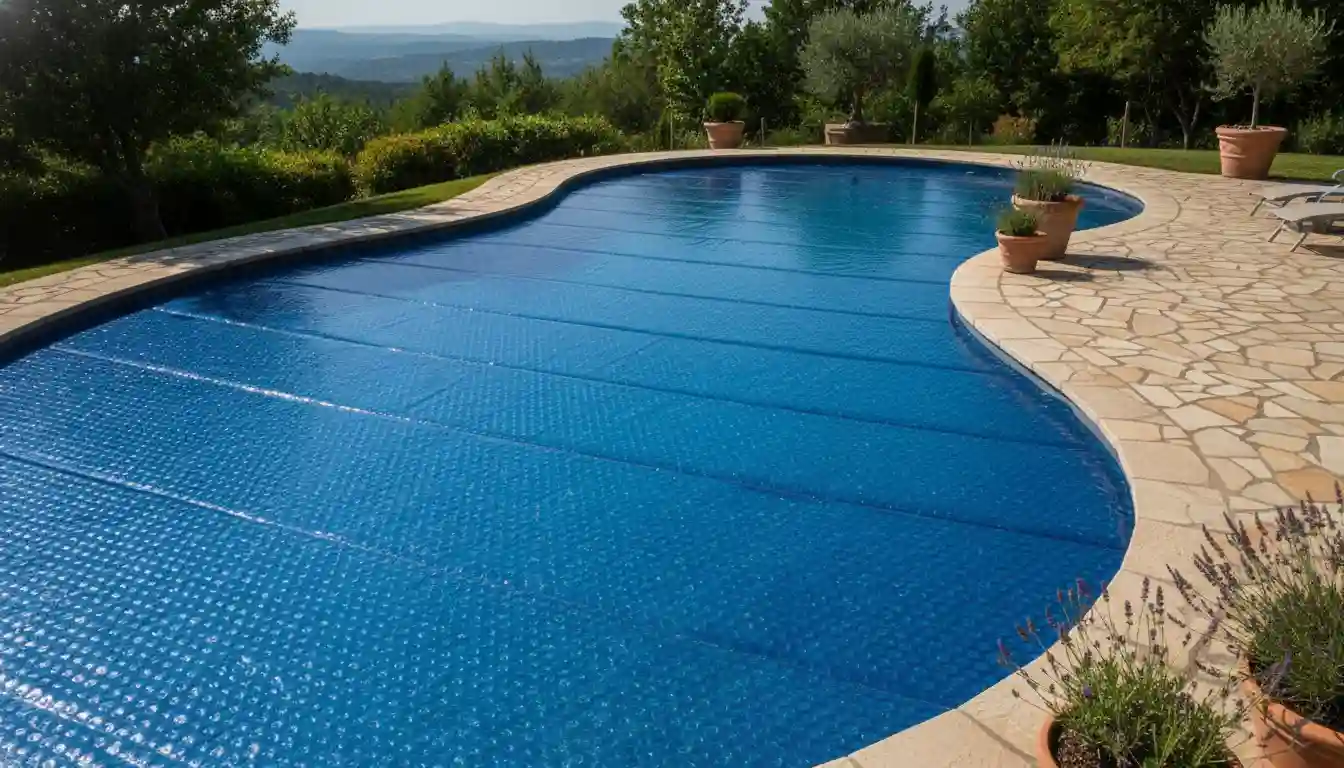
Step 4: The Precision Cut
Now for the most important part. Instead of cutting randomly, use the edge of your pool’s coping or waterline tile as your guide. Carefully begin cutting, leaving an extra inch or two of material. It’s better to trim it down in a second pass than to cut too much off initially.
For the best fit, the cover should ride slightly up the side of the pool wall, creating a seal that prevents wind from getting underneath it. For intricate curves or features like rockeries, you can use your marker to trace the shape onto the cover before making the cut.
| Cover Thickness (Mils) | Primary Benefit | Durability | Best For |
|---|---|---|---|
| 8 Mil | Most Affordable & Lightweight | Good (1-2 Seasons) | Budget-conscious owners or smaller pools. |
| 12 Mil | Balanced Performance & Durability | Better (2-3 Seasons) | The most popular choice for average residential pools. |
| 16 Mil | Maximum Heat Retention & Longevity | Best (3+ Seasons) | Pools with heaters or owners seeking the longest lifespan. |
Managing and Storing Your Custom-Cut Cover
Once your cover is perfectly trimmed, the next challenge is handling it. A solar cover reel is a highly recommended investment. Even with an irregular shape, a standard reel placed at the widest part of the pool makes deploying and removing the cover a one-person job.
When the cover is off the pool, it should never be left in direct sunlight. The focused UV rays can quickly overheat and degrade the bubble material. Always store it in the shade or use a protective white sheet over the rolled-up cover. Proper storage is key to maximizing its lifespan.
Common Mistakes to Avoid
To ensure success, steer clear of these common pitfalls. First, never buy a cover that’s too small; always measure your pool’s maximum length and width and buy the next size up. Second, always cut the cover while it’s wet and on the water for an accurate shape. Finally, remember that a solar cover is not a safety cover and must be removed completely before anyone enters the pool.
Enhancing Your Poolside Oasis
Creating a truly inviting backyard involves more than just the pool itself. The surrounding environment plays a huge role in the overall ambiance. Just as you might coordinate indoor elements, considering how you mix plantation shutters and blinds for optimal light and style, the same thought can be applied to your poolside decor. The color of your solar cover, the style of your patio furniture, and even your flooring choices contribute to a cohesive and beautiful space. When considering patio or pool house flooring, durability is key, which is why many homeowners look into options like those found in reviews of resilient flooring.
Frequently Asked Questions
How much warmer will a solar cover make my pool?
Under ideal sunny conditions, you can expect a temperature increase of 10-15°F, allowing you to swim earlier in the spring and later in the fall.
Should the bubbles on a solar cover face up or down?
Always down. The bubbles are designed to transfer solar heat into the water and act as insulators. Placing them up renders the cover ineffective.
How long does a solar cover typically last?
With proper care and storage, a quality solar cover can last anywhere from 1 to 3 seasons or more, depending on its thickness and your climate.
Final Words
A freeform pool doesn’t have to be a source of frustration and high bills. By selecting the right solar cover and taking the time to custom-fit it, you unlock a warmer, cleaner, and more efficient swimming experience. This simple weekend project pays for itself through savings on energy, water, and chemicals, transforming your beautiful pool into the relaxing oasis it was always meant to be.
