
Soapstone Backsplash Behind Range: Your Secret Weapon for a Flawless Kitchen
The wall behind your kitchen range is a battleground. It faces a daily onslaught of intense heat, splattering grease, and simmering tomato sauce bubbles. Finding a material that is not only tough enough to withstand this assault but also beautiful enough to be a focal point is one of the biggest challenges in kitchen design.
Many homeowners settle for materials that compromise on either durability or aesthetics. Ceramic tile requires scrubbing porous grout lines, stainless steel can feel cold and industrial, and some natural stones are too delicate, staining or etching upon contact with acidic foods. This leaves a frustrating gap: the need for a material that is both functionally bulletproof and visually stunning.
Enter soapstone, the unsung hero of kitchen materials. Often considered for countertops, its true potential shines when used as a full slab backsplash behind a range. It offers a unique combination of resilience and sophisticated beauty that solves the backsplash dilemma once and for all.
You'll Learn About
Why Soapstone is the Unsung Hero for Your Range Backsplash
Soapstone is a natural metamorphic rock, composed primarily of talc, which gives it a uniquely soft and smooth feel. But don’t let its softness fool you; this stone is a powerhouse of performance, especially in the high-stress environment behind a cooktop. Its inherent properties make it uniquely suited for this demanding application.
Perhaps its most critical feature is its extraordinary heat resistance. Soapstone is incredibly dense and thermally stable, which is why it has been used for centuries in fireplaces, wood stoves, and even laboratory benchtops. You can place a hot pot directly against it without any fear of cracking, scorching, or discoloration, a claim few other materials can make.
Furthermore, soapstone is completely non-porous. Unlike granite or marble, which require regular sealing to prevent stains, soapstone will not absorb liquids. Splatters of red wine, oil, or acidic lemon juice sit on the surface, waiting to be wiped away without leaving a permanent mark. This non-porous nature also makes it inherently antibacterial, promoting a more hygienic kitchen environment.
The Great Debate: Slab vs. Tile for Your Range Backsplash
When considering soapstone for your backsplash, you have two primary options: a single, solid slab or individual tiles. While soapstone tiles can create beautiful patterns like herringbone or subway, a solid slab offers distinct advantages, particularly for the area behind the range.
A solid soapstone slab provides a seamless, uninterrupted surface. This is not just a matter of aesthetics; it is a significant functional benefit. With no grout lines to scrub, cleaning is as simple as wiping down a smooth surface. Grease and food splatter have nowhere to hide, making it far easier to maintain a pristine look.
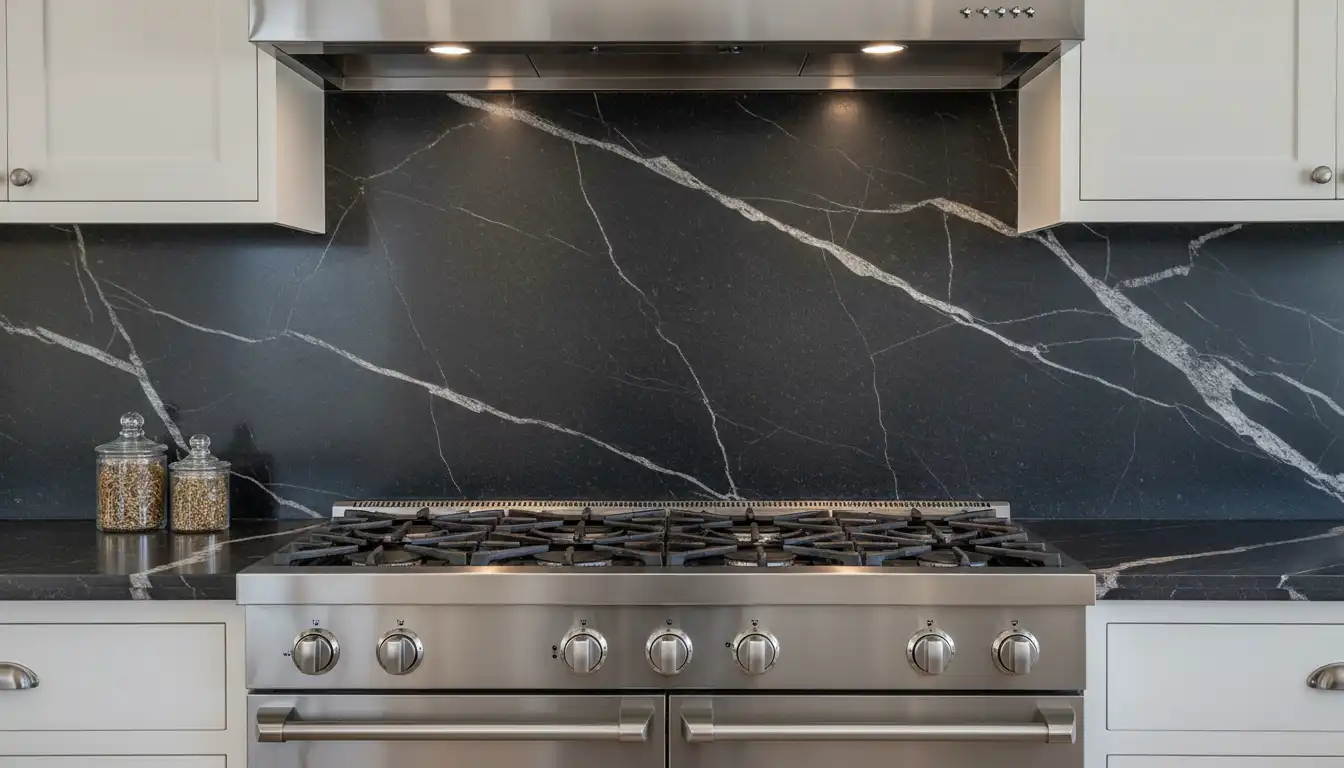
Visually, a full slab turns your backsplash into a piece of art. The natural, subtle veining of the soapstone can flow continuously up the wall, creating a dramatic and elegant focal point. This cohesive look can make a kitchen feel more luxurious and thoughtfully designed, integrating perfectly with matching soapstone countertops or providing a stunning contrast to other materials.
Understanding the Soapstone “Patina”: Scratches, Oiling, and Aging
One of the most discussed characteristics of soapstone is its “living finish.” The stone evolves over time, developing a unique patina that tells the story of your kitchen. Understanding and embracing this process is key to loving your soapstone backsplash for decades to come.
Many potential buyers are concerned about its softness, but this trait is also one of its greatest strengths. It’s a forgiving material that is more likely to dent rather than chip or crack under stress.
The Truth About Scratches and Dings
Yes, soapstone can scratch. Because of its high talc content, daily utensils or abrasive materials can leave their mark. However, these are typically superficial and incredibly easy to remedy. This is a significant advantage over other stones where a scratch is often permanent damage.
For minor scuffs, a simple application of mineral oil will often make them disappear. For a deeper scratch, a light sanding with fine-grit sandpaper followed by a dab of mineral oil will restore the surface completely. This repairability gives soapstone a longevity that few other materials can match, allowing it to look new for years.
To Oil or Not to Oil? The Ultimate Guide to Finishing
The decision to oil your soapstone is purely aesthetic. Oiling does not seal or protect the stone—it’s already non-porous—but rather accelerates the natural darkening process, deepening its color from a light gray to a rich, dark charcoal or black and making the veining pop.
If you choose to oil, the process is simple. Apply a thin coat of food-grade mineral oil with a soft cloth, let it sit for about 30 minutes, and then buff off any excess. Initially, you may need to apply it monthly, but over time, the stone will remain permanently dark, requiring only occasional touch-ups. Alternatively, you can leave the soapstone in its natural, untreated gray state and allow it to darken unevenly over time, creating a more rustic, organic patina.
Grease splatters from cooking will naturally darken the stone behind the range. Oiling the entire surface helps these spots blend in, creating a more uniform appearance. Embracing this evolution is part of the unique charm of owning soapstone.
Installation Insights: What You Must Know Before You Start
Proper installation is crucial for a soapstone backsplash, especially when dealing with a heavy, solid slab. While soapstone is easier to cut than granite, the weight and precision required for a large backsplash typically make this a job for professionals.
A key consideration that is often overlooked is the need for adequate wall support. A full soapstone slab is heavy, and the wall behind it must be structurally sound to bear the weight without issue. This is just as important as ensuring other home structures are stable; you wouldn’t want a temporary fix for a leaning fence, and you shouldn’t settle for inadequate support for your beautiful stone backsplash.
Choosing the Perfect Slab and Fabricator
Each slab of soapstone is unique, with its own distinct veining and coloration. When selecting your piece, look at the entire slab to ensure you love the pattern. A pro-tip for cost savings is to ask your stone yard about remnants. You may be able to find a piece large enough for your backsplash from a leftover countertop project at a significant discount.
Finding an experienced fabricator is paramount. Ask potential installers about their experience specifically with soapstone. They will know the best adhesives to use and how to properly cut and handle the stone to avoid stress during installation, ensuring a perfect and lasting fit.
A professional will also ensure seamless integration with other kitchen elements. For instance, the transition between the backsplash and the countertop is critical. A detail like the perfect farm sink countertop overhang shows a level of craftsmanship that elevates the entire kitchen. The same attention to detail is needed for your backsplash.
Beyond the Basics: Advanced Design and Care Strategies
A soapstone backsplash is not just a practical choice; it’s a versatile design element that can anchor your kitchen’s entire aesthetic. Its neutral, dark tones pair beautifully with a wide range of styles, from modern minimalist to rustic farmhouse.
Pairing Soapstone with Other Kitchen Finishes
The soft, matte finish of soapstone provides a stunning contrast to a variety of materials. It looks particularly striking against crisp white or warm wood cabinetry. You can also mix and match stone surfaces; a soapstone backsplash can be paired beautifully with a light-colored quartz or marble countertop to create a balanced and sophisticated look.
The dark, moody elegance of soapstone also complements metallic finishes. Brass or copper fixtures, a pot filler, or stainless steel appliances stand out against the deep charcoal background, adding a touch of warmth and luxury to the space.
A Deeper Look at Maintenance
Day-to-day cleaning of a soapstone backsplash is incredibly simple, requiring only mild soap and water. You should avoid abrasive scrubbers which can scratch the surface. Since harsh chemicals are not needed, it contributes to a healthier home environment.
It’s important to keep your kitchen running smoothly in all aspects. While soapstone simplifies cleaning, other issues can arise, like when a Bosch dishwasher smells like burning plastic, reminding us that proper maintenance across all appliances is key to a functional home. Fortunately, your soapstone backsplash will be one of the lowest-maintenance items in your kitchen.
| Maintenance Task | Frequency | Recommended Tools & Products |
|---|---|---|
| Daily Wipe-Down | As needed after cooking | Soft cloth or sponge, warm water, mild dish soap |
| Mineral Oiling (Optional) | Monthly for the first year, then as needed | Food-grade mineral oil, clean and dry cloths |
| Minor Scratch Repair | As needed | Mineral oil on a soft cloth |
| Deeper Scratch Repair | Rarely, as needed | Fine-grit sandpaper (220 grit), water, mineral oil |
| Deep Cleaning | Infrequently | Non-abrasive kitchen cleaner, soft sponge |
Your Timeless Kitchen Awaits
Choosing a soapstone backsplash behind your range is an investment in timeless beauty and unmatched functionality. It is one of the few materials that can withstand the intense heat and mess of a busy cooktop while developing a character-rich patina that only gets better with age.
By embracing its living finish and understanding its simple maintenance needs, you can create a kitchen focal point that is not only a durable workhorse but also a stunning piece of natural art. Move beyond the compromises of traditional backsplash materials and discover the enduring appeal of soapstone.
