
Silestone Calacatta Gold Review: The Brutally Honest Truth
Choosing the perfect countertop feels like navigating a minefield. You crave the breathtaking, timeless elegance of natural Calacatta Gold marble, but the horror stories of staining, etching, and constant maintenance give you nightmares. It’s the ultimate design dilemma: sacrificing beauty for practicality, or enduring a high-maintenance surface that causes daily anxiety.
This is the exact problem that sends countless homeowners searching for an alternative. They stumble upon engineered quartz, a material praised for its durability, and discover Silestone Calacatta Gold. It promises the marble look without the marble panic. But is it truly the perfect solution, or are you trading one set of problems for another? This review digs deep into the reality of living with this popular countertop.
You'll Learn About
What Exactly is Silestone Calacatta Gold?
Before diving into its performance, it’s crucial to understand what this material is. Silestone Calacatta Gold is not a natural stone quarried from the earth. It’s a high-end engineered quartz surface created by the renowned Spanish company Cosentino. The composition is roughly 90% natural quartz crystals, which are among the hardest minerals on earth, blended with resins, polymers, and pigments. This mixture is compacted under immense pressure and heat to form a dense, non-porous slab.
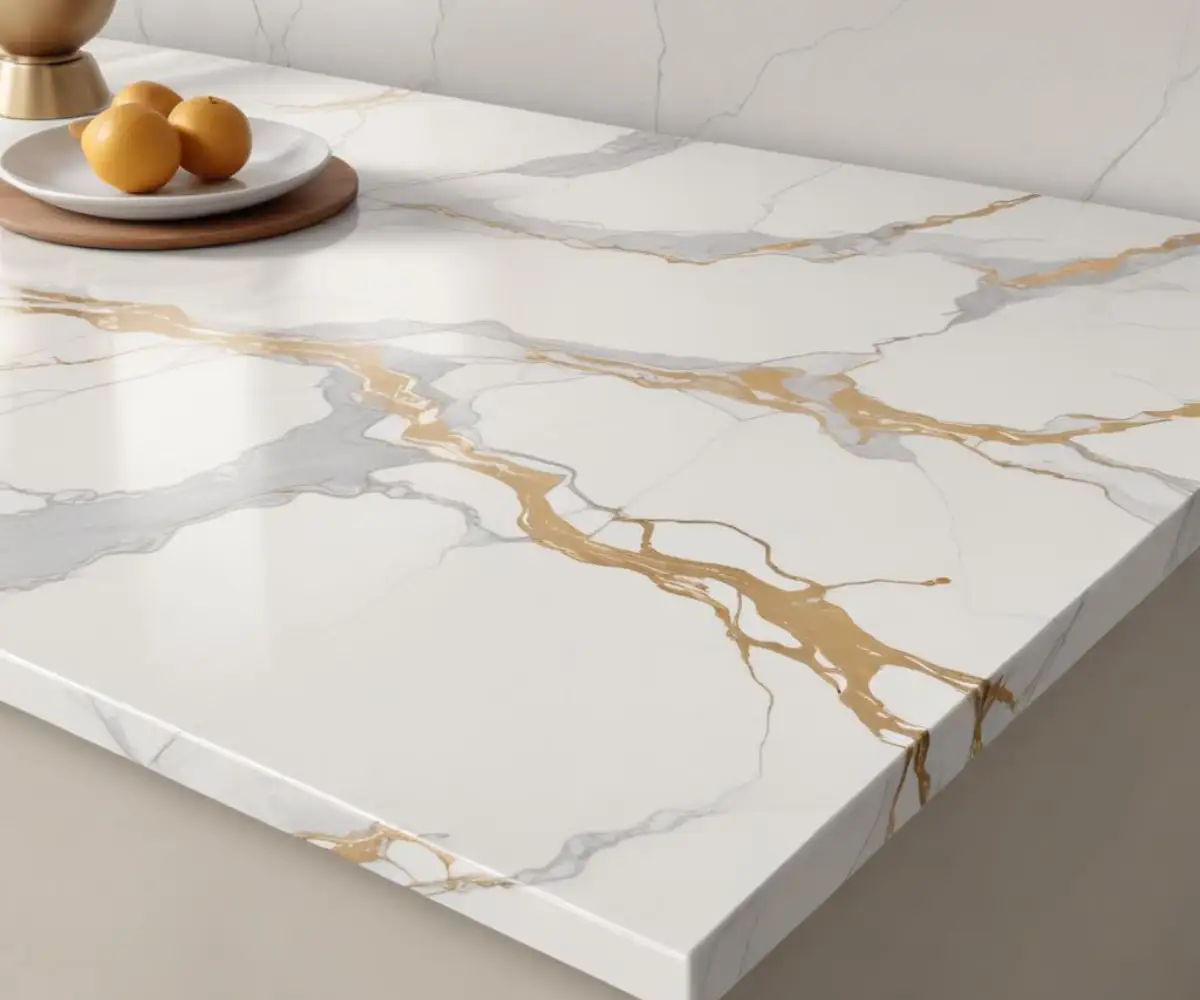
The “Calacatta Gold” design specifically mimics the prestigious Italian marble of the same name. It features a crisp, luminous white background with dramatic, thick veining in shades of grey, complemented by subtle, warm gold or caramel accents. Unlike the random and often unpredictable patterns of natural stone, Silestone offers a more consistent and controlled aesthetic, which is a key consideration for design planning.
The Rise of Sustainable Surfaces: HybriQ+ Technology
A significant evolution in Silestone’s manufacturing is the introduction of HybriQ+ technology. This innovative process marks a major shift towards sustainability in the surface industry. Products made with HybriQ+ contain a minimum of 20% recycled materials, such as glass, in their composition. Furthermore, the manufacturing process utilizes 100% renewable energy and 99% recycled water, drastically reducing the environmental footprint. This makes it a compelling choice for the eco-conscious homeowner.
Aesthetics: Does It Genuinely Look Like Marble?
The single most important question for many is whether Silestone Calacatta Gold can truly pass for its natural counterpart. The answer is nuanced. From a distance, the resemblance is remarkable. The depth of the white background and the elegant flow of the grey and gold veins capture the luxurious essence of real marble exceptionally well.
However, upon very close inspection, a discerning eye might notice subtle differences. The veining in engineered quartz, while sophisticated, can sometimes lack the unique, chaotic randomness that defines a natural stone slab. That said, Cosentino’s technology has advanced to create patterns with remarkable depth and dimension, making it one of the most realistic marble alternatives on the market. For most people, the trade-off for superior durability is more than worth it.
Finish Options: Polished vs. Suede
The choice of finish significantly impacts the final look and feel. The Polished finish offers a classic, high-gloss surface that reflects light beautifully, making a space feel brighter and larger. It’s smooth to the touch and brings out the vibrancy of the veining. The Suede finish, on the other hand, is a matte, velvety texture that provides a softer, more organic appearance with minimal glare. While luxurious, some users report that the Suede finish can be more prone to showing fingerprints and requires slightly more attention to keep looking pristine.
Real-World Performance and Durability
This is where Silestone Calacatta Gold truly distinguishes itself from natural marble. Engineered for the rigors of a busy home, its performance is its strongest selling point. Here’s how it holds up in key areas:
Stain Resistance: A Kitchen Game-Changer
Perhaps the most significant advantage is its non-porous nature. Unlike marble, which can absorb liquids and stain permanently within minutes, Silestone is highly resistant to staining. Spills from notorious culprits like red wine, coffee, tomato sauce, and oil are not a cause for panic. They remain on the surface and can be wiped away easily without a trace, offering incredible peace of mind.
Scratch and Chip Resistance
With a Mohs hardness rating of around 7 (compared to marble’s 3-5), Silestone is exceptionally durable. It stands up well to the daily wear and tear of a high-traffic kitchen. While it is highly scratch-resistant, it is not scratch-proof. Always use a cutting board to avoid dulling your knives and prevent any potential surface marks. The edges, particularly around sinks or on sharp corners, can be susceptible to chipping from heavy impacts, a common issue for all stone countertops.
Heat Tolerance: An Important Distinction
Silestone is heat-resistant, but it is not heat-proof. The resins in the material can be damaged by sudden, extreme temperature changes, a phenomenon known as thermal shock. Placing a hot pan directly from the stove or oven onto the surface can cause discoloration or even cracking. Using trivets or hot pads is absolutely essential to protect your investment and is a non-negotiable habit to adopt.
The Reality of Maintenance and Cleaning
If you’re fleeing the high-maintenance demands of marble, you’ll find relief with Silestone. Daily cleaning is incredibly simple. A soft cloth with warm water and a mild, pH-neutral soap is all that’s needed for most messes. For more stubborn spots, a non-abrasive cleaner formulated for quartz is effective.
What’s more important is what not to use. Avoid harsh chemicals like bleach, oven cleaners, or drain cleaners. Abrasive scrub pads should also be avoided as they can dull the surface over time. Unlike marble, Silestone never needs to be sealed, saving you time, money, and effort over the life of the countertop.
Cost Analysis: Is It a Worthy Investment?
Silestone Calacatta Gold is a premium product, and its price reflects that. You can expect to pay approximately $75 to $120 per square foot, including installation. While this is a significant investment, it’s important to view it in context with other materials. It is considerably more affordable than genuine, high-grade Calacatta Gold marble, which can easily exceed $180 per square foot.
The long-term value is also a key factor. With no need for sealing and its superior durability, the total cost of ownership over time is often lower than that of more delicate natural stones that require ongoing maintenance and potential repairs.
| Countertop Material | Average Cost (Per Sq. Ft. Installed) | Pros | Cons |
|---|---|---|---|
| Silestone Calacatta Gold | $75 – $120 | Highly durable, non-porous, low maintenance, stain-resistant | Not heat-proof, seams can be visible, premium price point |
| Natural Calacatta Marble | $180 – $250+ | Unique natural beauty, prestigious, heat-resistant | Porous, stains and scratches easily, requires regular sealing |
| Granite | $50 – $100 | Very durable, heat-resistant, wide variety of colors | Porous (requires sealing), can have inconsistent patterns |
| Standard Quartz (Other Brands) | $60 – $90 | Durable, low maintenance, wide range of designs | Quality and realism of marble look can vary greatly |
The Downsides: What Most Reviews Won’t Tell You
No material is perfect, and an honest review must address the potential drawbacks. Based on feedback from homeowners and fabricators, a few key issues can arise with Silestone Calacatta Gold, and they almost always revolve around one critical factor: installation.
The Seam Challenge with Bold Patterns
The most common complaint about quartz countertops, especially those with dramatic, directional veining like Calacatta Gold, is visible seams. Because the pattern flows across the slab, creating a nearly invisible join where two pieces meet is an art form. If not done by a highly skilled fabricator, you can end up with a seam where the veins don’t align, creating an abrupt and unsightly break in the pattern.
To mitigate this, it is crucial to work with a certified and experienced fabricator. Insist on discussing seam placement before they cut the stone and ask to see a digital layout of how the slabs will be joined. While you’ll still be able to feel a seam, a good fabricator can make it visually inconspicuous.
Risk of Chipping During and After Installation
While durable, the edges of quartz slabs can be vulnerable to chipping. This can happen during transport, handling, or installation if not done carefully. Some users have also reported chipping around high-traffic areas like the sink or dishwasher from accidental impacts with heavy pots and pans. Opting for a slightly rounded edge profile instead of a sharp, squared-off one can help reduce the risk of chipping.
The Make-or-Break Factor: Your Fabricator
The quality of your final countertop has less to do with the Silestone brand and more to do with the skill of the person cutting and installing it. A poor fabricator can turn a premium material into a disappointing result with bad seams, incorrect measurements, or improper support. Once your stunning countertops are in, you’ll move on to finishing touches, which often brings up questions like, do I need quarter round for vinyl flooring, to complete the look.
Before committing, vet your fabricator thoroughly. Ask to see their portfolio, specifically examples of work with veined quartz. Check their reviews and ensure they provide a clear plan for seam layout. While you might be used to troubleshooting tough equipment and dealing with Ariens Deluxe 28 SHO problems outdoors, the beauty of Silestone is its hassle-free indoor maintenance when installed correctly.
The Final Verdict: Is Silestone Calacatta Gold Worth It?
After a thorough analysis, Silestone Calacatta Gold stands out as an exceptional choice for homeowners who desire the luxurious aesthetic of marble without its inherent fragility and high maintenance. It successfully solves the problem of sacrificing beauty for practicality. Its superior durability, stain resistance, and easy care make it perfectly suited for the realities of a busy modern kitchen.
The investment is significant, but the long-term value and peace of mind it provides are compelling. Just as choosing the right window treatments, like deciding between 3 Day Blinds vs Hunter Douglas, impacts the light in your room, your countertop choice defines the space. The key to a successful outcome lies in pairing this high-quality material with a top-tier fabricator. With proper installation and basic care, Silestone Calacatta Gold will serve as a stunning and resilient centerpiece in your home for decades to come.
