
Shower Pan vs Tiles: The #1 Choice That Makes or Breaks Your Remodel
The foundation of your shower is the single most important decision you’ll make in a bathroom remodel. It’s a choice that dictates not just the look and feel of your space, but its long-term durability and your daily cleaning routine. Get it right, and you have a waterproof sanctuary; get it wrong, and you could face leaks, mold, and constant maintenance headaches.
You’re facing the classic dilemma: the sleek, modern simplicity of a shower pan versus the endless custom possibilities of a tiled shower floor. This guide will cut through the noise, expose the hidden pros and cons, and give you the clarity to choose the perfect foundation for your shower.
You'll Learn About
What is a Shower Pan? The Anatomy of a Leak-Proof Foundation
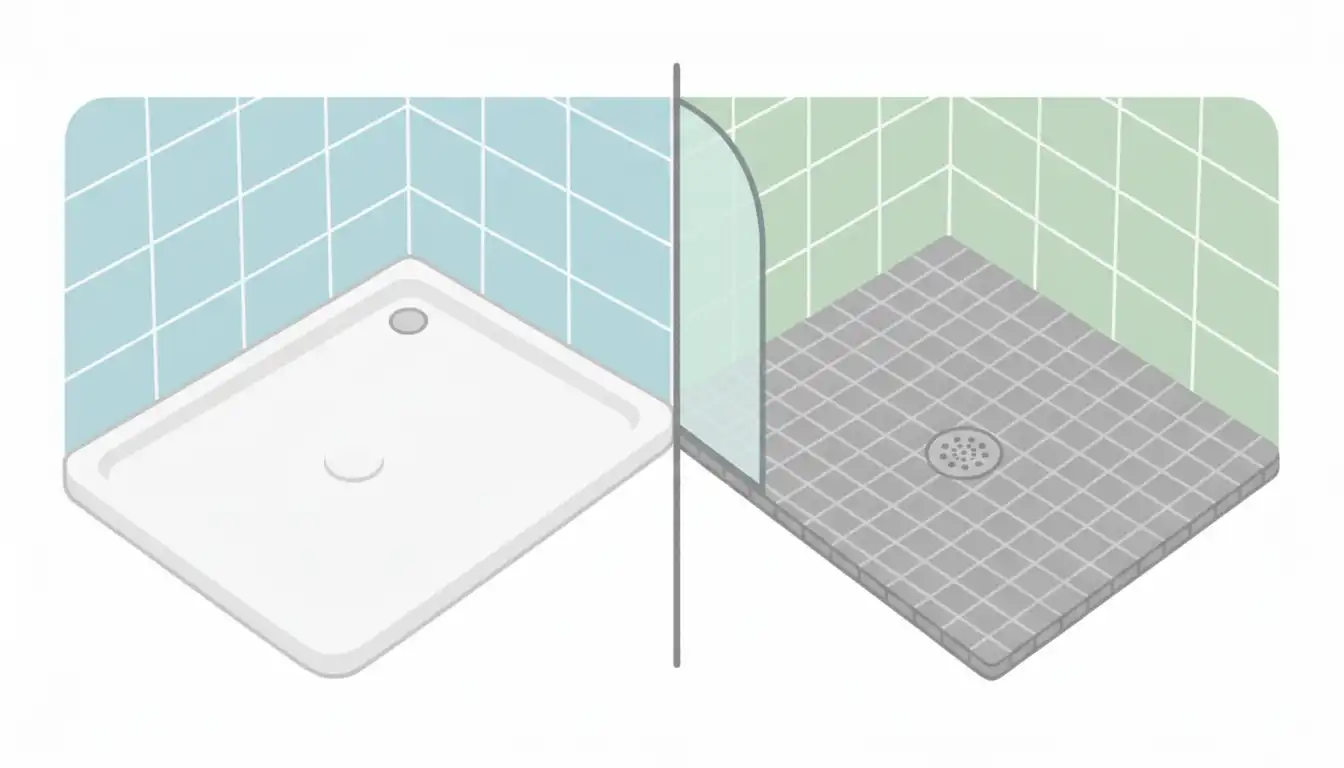
A shower pan, also known as a shower base or receptor, is a single, factory-molded, waterproof basin. It’s essentially a pre-made shower floor that is designed to be installed as one seamless unit. Its most critical feature is the pre-formed slope that guarantees water flows directly to the drain, eliminating the risk of human error during installation.
Types of Shower Pans: Beyond Basic White Plastic
The term “shower pan” often brings to mind flimsy, basic acrylic units, but the market has evolved significantly. Understanding the material is key to choosing a quality base that lasts.
Acrylic shower pans are the most common choice, valued for being lightweight, affordable, and relatively warm to the touch. They are often reinforced with fiberglass, providing a good balance of cost and durability for most homeowners.
Fiberglass pans are even more budget-friendly but can be more brittle and prone to scratching and fading over time. They are a viable option for low-traffic guest bathrooms but may not hold up as well in a primary suite.
Composite and solid surface pans represent the high end of the market. Made from a blend of resins, minerals, and pigments, these bases are incredibly durable, scratch-resistant, and feel solid and stone-like underfoot. They offer a premium, quiet, and robust foundation for your shower.
The Unspoken Benefits of a Single-Piece Design
The greatest advantage of a shower pan is its inherent waterproof integrity. With zero seams or grout lines on its surface, the number of potential failure points for water to escape is dramatically reduced. The only areas that need sealing are the perimeter and the drain connection.
This single-piece construction makes installation significantly faster and more predictable than building a custom tile base from scratch. For renovators on a tight timeline or budget, this efficiency is a game-changer.
What is a Tiled Shower Floor? The Art of Custom Construction
A tiled shower floor is a completely custom, multi-layered system built on-site. It is not simply tile stuck to the floor. A proper installation involves creating a sloped mortar bed over the subfloor, laying a waterproof membrane (like a vinyl liner or a paint-on membrane), and then setting the tile on top with specialized mortar and finishing with grout.
The Allure of Unlimited Design Freedom
The primary reason homeowners choose tile is for limitless customization. You can choose from an endless array of materials like porcelain, ceramic, or natural stone. You can select any color, pattern, or size, from tiny mosaics to large-format tiles, to create a look that is uniquely yours.
This design flexibility is essential for showers with non-standard footprints or for creating a cohesive design that flows seamlessly from the bathroom floor into the shower. This is particularly crucial for anyone planning a flawless curbless shower transition, which is best achieved with tile.
The Hidden Complexity Beneath the Surface
The beauty of a tiled floor hides a complex, high-stakes construction process. The success of the entire system hinges on two critical elements: the integrity of the waterproof membrane and the precision of the slope. An incorrectly installed membrane will leak, causing catastrophic damage that is hidden until it’s too late.
Furthermore, if the slope is not steep enough, water will pool, leading to stagnant water, mold growth, and soap scum buildup. Tiling a shower floor is widely considered a job for experienced professionals, as a single mistake can compromise the entire installation.
Head-to-Head Battle: Shower Pan vs Tiled Floor Comparison
Making the right choice requires a direct comparison of the factors that matter most: cost, installation, maintenance, and durability. While one option offers convenience, the other provides unparalleled aesthetic freedom. Seeing them side-by-side clarifies the trade-offs.
This table breaks down the core differences to help you align your priorities with the right product.
| Feature | Shower Pan | Tiled Shower Floor |
|---|---|---|
| Installation Speed | Fast (Can be set in a single day) | Slow (Requires 3-5 days for multiple layers to cure) |
| Upfront Cost | Lower to Moderate | Moderate to Very High |
| Skill Level Required | DIY-Friendly to Professional | Professional Installation Strongly Recommended |
| Waterproofing | Excellent (Inherent to the single-piece design) | Excellent (Only if installed perfectly by a skilled pro) |
| Maintenance | Very Low (No grout lines to scrub or seal) | High (Requires regular grout cleaning and periodic sealing) |
| Customization | Limited (Standard sizes and colors) | Virtually Unlimited (Any tile, pattern, or size) |
| Durability | Good to Excellent (Composites are extremely tough) | Excellent (Porcelain tile is incredibly hard-wearing) |
| Long-Term Risk | Single point of failure at drain/flange | Multiple failure points (grout, membrane, slope) |
| Feel Underfoot | Warmer, quieter, and often softer | Colder, louder, and harder |
The Cost Breakdown: Where Your Money Really Goes
Budget is often the driving force behind this decision. It’s crucial to look beyond the price tag of the materials and consider the total cost, which is heavily influenced by labor.
Analyzing the Cost of a Shower Pan
The upfront cost of a shower pan is straightforward. An acrylic base can range from $200 to $600, while a high-end composite or solid surface model might cost between $500 and $1,200 or more. Labor is where you see significant savings.
Because installation is much simpler, a plumber or contractor can often set a shower pan in a few hours. This translates to lower labor costs, typically in the $300 to $700 range, making it the more budget-conscious option overall.
Deconstructing the Cost of a Tiled Shower Floor
With a tiled floor, costs are layered. Materials include not just the tile itself ($5-$30+ per square foot) but also the mortar bed mix, waterproof membrane, thin-set adhesive, and grout. For a standard shower, these materials can easily cost $400 to $1,500.
The biggest expense is the skilled labor. Tiling a shower floor is a multi-day process involving several stages of preparation, installation, and curing. This specialized work is labor-intensive and commands a premium, often running from $1,000 to $2,500 or more for labor alone.
Maintenance and Cleaning: The Long-Term Commitment
How you spend your time after the remodel is just as important as the installation itself. The difference in maintenance between a pan and tile is stark.
The “Wipe and Go” Simplicity of a Shower Pan
A shower pan is the undisputed winner for low maintenance. Its smooth, non-porous surface has no grout lines, which are the primary breeding ground for mold and mildew. Cleaning is as simple as wiping it down with a non-abrasive cleaner.
This saves hours of scrubbing over the life of the bathroom and eliminates the recurring task of sealing grout.
The Unending War Against Grout Grime
Grout is the weak link in a tiled system. It is a cementitious, porous material that readily absorbs water, soap scum, and body oils. This creates a food source for mold and mildew, leading to discoloration and potential health concerns.
To keep a tiled floor looking pristine, you must commit to regular deep cleaning and, most importantly, periodic sealing. The debate over using a thinner or thicker grout line even impacts long-term cleaning, as wider lines can be more difficult to maintain. This ongoing effort is a significant lifestyle consideration.
The Deciding Factor You’re Not Thinking About: Your Subfloor
One of the most overlooked, yet critical, factors in this decision is the condition of your home’s subfloor. A tiled shower floor demands an absolutely rigid and stable foundation. Any bounce or flex in the subfloor will, over time, cause microscopic movements that crack grout lines and can eventually compromise the waterproof membrane.
Shower pans, particularly acrylic and fiberglass models, have a degree of inherent flexibility. They can tolerate minor imperfections or movement in the subfloor without cracking or leaking. For older homes with questionable subfloor stability, a shower pan is often the safer, more reliable long-term solution.
Aesthetics and Design Integration
Ultimately, your choice will define the visual style of your bathroom. Both options can be beautiful, but they achieve different aesthetic goals.
Creating a Seamless Look with Tile
The power of tile is its ability to create a continuous, harmonious surface. You can use the same tile on the bathroom floor and the shower floor, creating a unified and expansive feel. This approach elevates the design, making the bathroom feel larger and more luxurious.
This seamlessness is what makes elegant, zero-entry showers possible and is the cornerstone of high-end, spa-like bathroom design.
The Modern Minimalism of a Shower Pan
A shower pan excels at creating a clean, crisp, and uncluttered look. Its simple, unadorned surface provides a calming visual anchor in the bathroom. This minimalist aesthetic is incredibly versatile and pairs beautifully with dramatic wall tiles or sleek, modern shower panels.
For a truly contemporary feel, a low-profile shower pan combined with a grand, frameless shower door that extends to the ceiling can create a stunning architectural statement.
Final Verdict: Which Shower Floor is Right for You?
The best choice is not universal; it’s personal. It depends entirely on your priorities, budget, tolerance for maintenance, and design vision.
Choose a Shower Pan If…
You should opt for a shower pan if your primary concerns are budget and speed. It’s the fastest, most cost-effective, and most DIY-friendly option. It’s also the clear winner if you despise cleaning and want the lowest-maintenance shower possible. Furthermore, if you live in a home with any subfloor flex, a shower pan is the more structurally sound choice.
Choose a Tiled Shower Floor If…
You should invest in a tiled floor if custom design is your top priority. It is the only way to achieve a truly unique size, shape, or aesthetic. If you are planning a high-end, curbless, or spa-inspired bathroom and have the budget for expert professional installation, tile will deliver a superior, more integrated look. You must also be willing to commit to the regular maintenance routine that grout requires.
By weighing these factors—cost, installation, maintenance, and aesthetics—you can move forward with confidence. You can now make an informed decision that ensures your new shower is not only beautiful on day one but also a durable, stress-free part of your home for years to come.
