Shower Door Height for 9′ Ceiling: The #1 Mistake to Avoid
A bathroom with a 9-foot ceiling is a statement of luxury and spaciousness. But this grand height introduces a critical design challenge that many homeowners overlook: choosing the correct shower door height. Get it wrong, and you risk creating a space that feels awkward, disproportionate, and prone to moisture problems.
The common mistake is defaulting to a standard-height shower door, which visually “shrinks” the room and fails functionally. Conversely, going too tall without proper planning can trap steam and create a breeding ground for mold. This guide solves that problem, offering a clear path to selecting a shower door that perfectly balances aesthetics, function, and safety in your high-ceiling bathroom.
You'll Learn About
Why Standard Shower Doors Don’t Work in a 9-Foot Ceiling Bathroom
Standard shower doors typically range from 72 to 78 inches tall. While perfectly adequate for a standard 8-foot ceiling, placing one in a bathroom with a 9-foot (108-inch) ceiling creates a significant, awkward gap above the door. This visual disconnect disrupts the grand scale of the room, making an expensive feature—the high ceiling—look like an afterthought.
Functionally, a door that is too short can lead to issues with overspray, especially with modern high-mounted rainfall showerheads. More importantly, it fails to capitalize on the opportunity to create a truly stunning, floor-to-ceiling visual effect that makes high-ceiling bathrooms so desirable.
Finding the Sweet Spot: Proportional Height for a Polished Look
For a 9-foot ceiling, the goal is to select a shower door height that feels intentional and proportional. Generally, custom door heights ranging from 84 to 96 inches are ideal. This elevates the sightline and enhances the feeling of vertical space. An excellent design principle is to align the top of the shower door with other horizontal lines in the room, such as the top of a window or the bathroom door frame.
This creates a cohesive and professionally designed appearance. A frameless glass door is particularly effective, as it provides an unobstructed view from floor to near-ceiling, maximizing the open and airy feel of the room. Just as a sliding screen door that’s too short can disrupt a home’s harmony, an improperly sized shower door can undermine your entire bathroom design.
Critical Factors to Consider Before Finalizing Your Door Height
Choosing a taller door isn’t just about aesthetics; several practical considerations must be addressed to ensure longevity and a healthy bathroom environment. Overlooking these factors can lead to significant problems down the line.
Ventilation Is Non-Negotiable
Unless you are installing a dedicated steam shower, you must leave a gap between the top of the shower door and the ceiling. This space, typically between 6 and 18 inches, is crucial for allowing steam and moist air to escape the shower enclosure. Without proper ventilation, trapped humidity can lead to the growth of mold and mildew on your ceiling and walls, creating an unhealthy environment and damaging your home.
Ensure your bathroom is equipped with a high-capacity exhaust fan to effectively pull this moist air out of the room. The fan should be run during every shower and for at least 15-20 minutes afterward to ensure all humidity is removed.
Steam Showers: A Completely Different Set of Rules
If you are planning a true steam shower, the rules change entirely. A steam shower requires a full floor-to-ceiling enclosure to trap the steam effectively. These systems must include an operable transom window—a small, hinged glass panel at the top of the enclosure. This transom is kept closed during steam sessions to contain the vapor and opened afterward to allow moisture to escape and the enclosure to dry out.
Designing a steam shower is a specialized task. It requires careful planning around generator sizing, ceiling slope to manage condensation, and vapor-proof materials. Always consult with professionals experienced in steam shower installations for these projects.
Frameless vs. Framed: The Impact on Visual Height
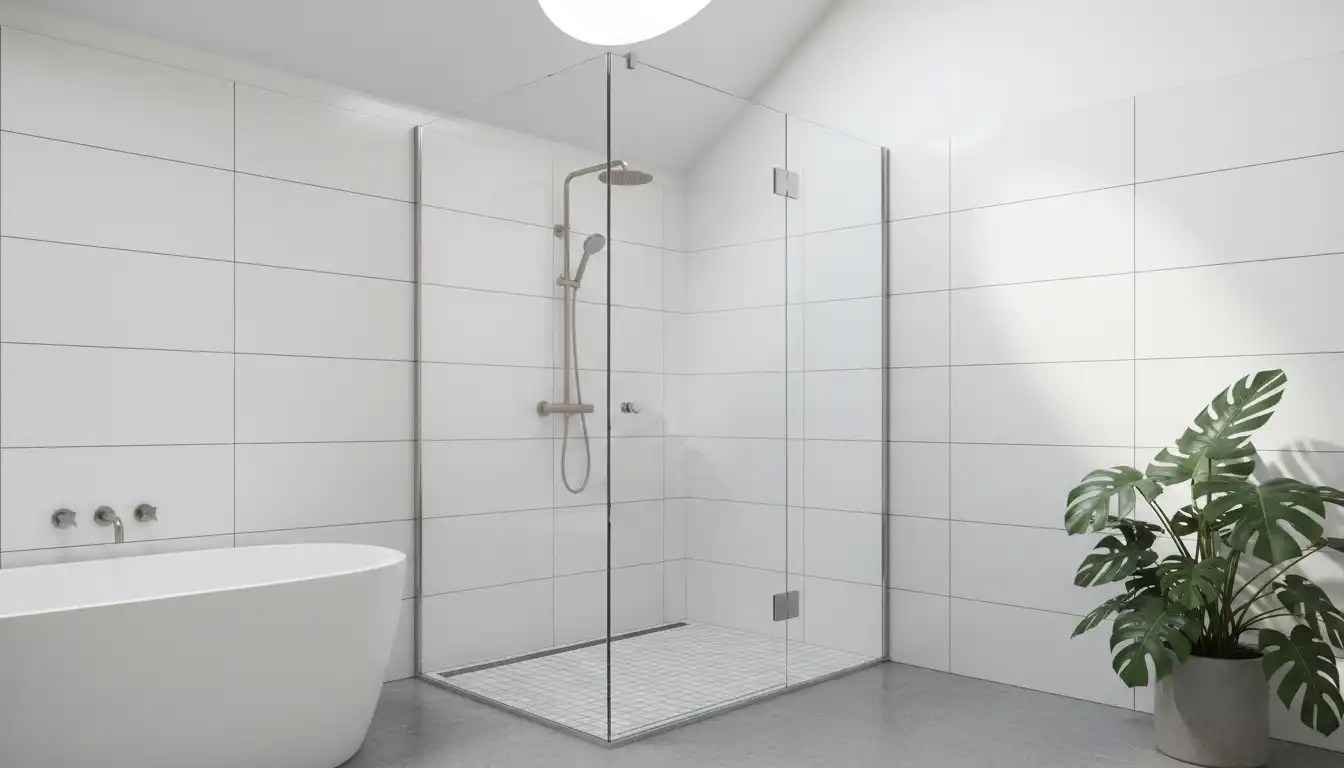
For high-ceiling bathrooms, a frameless shower door is almost always the superior choice. Frameless designs enhance the sense of openness and luxury, drawing the eye upward and making the entire space feel larger. The minimal hardware doesn’t interrupt the clean lines of the tall glass panel.
While framed doors are a more budget-friendly option, their metal borders can create a “grid” effect that visually shortens the space. If you opt for a framed door, choose the slimmest profile possible in a finish that complements your other fixtures to minimize its visual impact.
Glass Thickness and Structural Integrity
A taller shower door is a heavier shower door. Standard doors often use 3/8-inch thick tempered glass, but for heights exceeding 84-90 inches, upgrading to 1/2-inch thick glass may be necessary for stability and rigidity. This added weight puts significant stress on the wall and hardware.
It is absolutely essential that the wall supporting the door is properly reinforced. The hinges must be anchored directly into wall studs, not just drywall. Professional installers will verify this before installation, as improper support can lead to door failure, which is a serious safety hazard.
Comparing Height Options for a 9′ Ceiling
Making the final decision can be easier when you see the pros and cons laid out. This table compares common shower door height choices for a standard (non-steam) shower in a bathroom with a 9-foot ceiling.
| Door Height | Pros | Cons | Best For |
|---|---|---|---|
| 78″ (Standard Max) | – Most affordable option – Widely available |
– Looks disproportionately short – Creates a large, awkward gap – Diminishes the room’s scale |
Strictly budget-focused projects where aesthetics are a lower priority. |
| 84″ – 90″ | – Creates a strong vertical line – Visually elongates the room – Balances aesthetics and ventilation |
– Custom order required – Higher cost than standard sizes – Requires professional installation |
Most homeowners seeking a high-end, proportional look without going full height. |
| 96″ | – Dramatic, luxurious appearance – Aligns well with 8′ room doors – Maximizes the feeling of height |
– Can feel imposing – Requires heavier glass (1/2″) – Needs robust wall reinforcement |
Bathrooms aiming for a bold, grand aesthetic where the shower is a central feature. |
| 108″ (Floor-to-Ceiling) | – Creates a true steam shower enclosure – Ultimate seamless look |
– Traps moisture; requires a transom – Highest cost – Very heavy and complex to install |
Dedicated steam showers ONLY. Not recommended for standard showers due to ventilation issues. |
Budgeting for Your Tall Shower Door
It’s important to set realistic budget expectations. A taller, custom shower door will cost more than a standard-sized one. The price increases with height, glass thickness, and the complexity of the hardware required.
On average, you can expect a custom frameless door for a 9-foot ceiling to cost significantly more than an off-the-shelf model. While this may seem like a splurge, it’s an investment that pays off in the final look and feel of your luxury bathroom. The visual impact of a correctly scaled door is one of the most important elements in the room’s design.
Design Synergy: Making the Most of Vertical Space
Your tall shower door is a key player, but it works best as part of a cohesive design strategy that emphasizes verticality. Consider tiling your shower walls all the way to the 9-foot ceiling. This continuous surface draws the eye upward and prevents the wall from being awkwardly broken up.
Pairing a stunning glass enclosure with unique features can create a true masterpiece. For instance, installing exposed shower plumbing on the glass wall can become a striking industrial-chic focal point. The entire composition must be built on a solid foundation, starting with a high-quality shower base that anchors the space.
Conclusion: The Perfect Balance of Form and Function
Choosing the right shower door height for your 9-foot ceiling is a crucial decision that defines the room’s character. Avoid the common mistake of using a standard-height door, which compromises both the aesthetic and function of your luxurious space. Instead, opt for a taller, custom-height door—typically between 84 and 96 inches—that honors the room’s grand proportions.
Above all, prioritize proper ventilation by leaving an adequate gap above the door to prevent moisture issues. By balancing stunning aesthetics with practical needs for airflow and structural support, you can create a shower that is not only beautiful but also safe, durable, and a joy to use for years to come.