
Shower Controls Outside Shower: The Genius Upgrade You Need?
Imagine starting your day without the dreaded icy blast of water. You step towards your shower, but instead of reaching inside and getting a wet arm, you tap a control on the wall outside. The water begins to flow, warming to your perfect temperature before a single drop touches your skin.
This isn’t a feature from a futuristic hotel; it’s a practical and increasingly popular design choice for modern homes. Placing shower controls outside of the shower enclosure is a simple concept that completely transforms the daily routine, solving a universal annoyance with elegant efficiency.
This guide explores everything you need to know about this clever bathroom upgrade. We’ll cover the benefits, planning considerations, installation insights, and how it can elevate your home’s comfort, safety, and style.
You'll Learn About
The Core Benefits of Relocating Your Shower Controls
Moving the valve and handle outside the wet area might seem like a small change, but its impact is significant. It addresses practical issues, enhances safety, and contributes to a more refined bathroom aesthetic.
End the “Human Squeegee” Routine
The most immediate benefit is comfort. No more awkward leaning, dodging, or using your arm as a human squeegee to test the water temperature. You can turn on the shower, let it reach the ideal warmth, and then step into a perfectly prepared, comfortable stream.
This small luxury makes a big difference in starting your day on the right foot. It’s a simple change that eliminates a daily moment of discomfort and replaces it with a touch of spa-like convenience.
Enhanced Safety for the Whole Family
External controls offer a major safety advantage, particularly for households with children or elderly members. Setting the water temperature before getting in drastically reduces the risk of scalding from an unexpectedly hot stream. It provides precise control over the bathing environment.
For individuals with limited mobility, not having to reach or step into a potentially slippery area to adjust the water is a significant improvement. This design choice fosters independence and provides peace of mind for caregivers and family members alike.
Achieve a Sleek, Minimalist Aesthetic
From a design perspective, relocating the controls creates a cleaner, more uncluttered look inside the shower. The shower walls remain a seamless surface of tile or stone, uninterrupted by plumbing fixtures. This minimalist approach is highly sought after in contemporary bathroom design.
This design choice allows the focus to remain on beautiful tilework, elegant shower heads, and clean glass lines. It transforms the shower from a purely functional box into a deliberate and sophisticated design element within the room.
Promote Water and Energy Conservation
This setup can also contribute to resource conservation. By knowing exactly when the water is warm, you eliminate the habit of letting it run for extended periods while waiting for the temperature to adjust. You only step in when it’s ready, reducing overall water consumption.
This efficiency extends to energy use. Less wasted hot water means your water heater works more efficiently. For those with advanced systems, you might even wonder, can you put a timer on a tankless water heater? Combining smart controls with efficient heating is the pinnacle of a modern, eco-conscious bathroom.
Planning Your Remote Shower Control Installation
A successful installation requires careful planning. You need to consider the type of controls you want, their ideal placement, and the underlying plumbing requirements. Getting these details right is crucial for both functionality and aesthetics.
Types of External Shower Controls
The technology for shower controls has evolved significantly. You have several options ranging from simple manual valves to sophisticated smart systems that integrate with your home network.
Manual valves are the most straightforward option, with separate handles for temperature and volume. Thermostatic valves are a significant upgrade, as they maintain a precise temperature even when water pressure fluctuates elsewhere in the house. Digital and smart controls offer the ultimate in convenience, with programmable presets, remote activation via an app, and even voice commands.
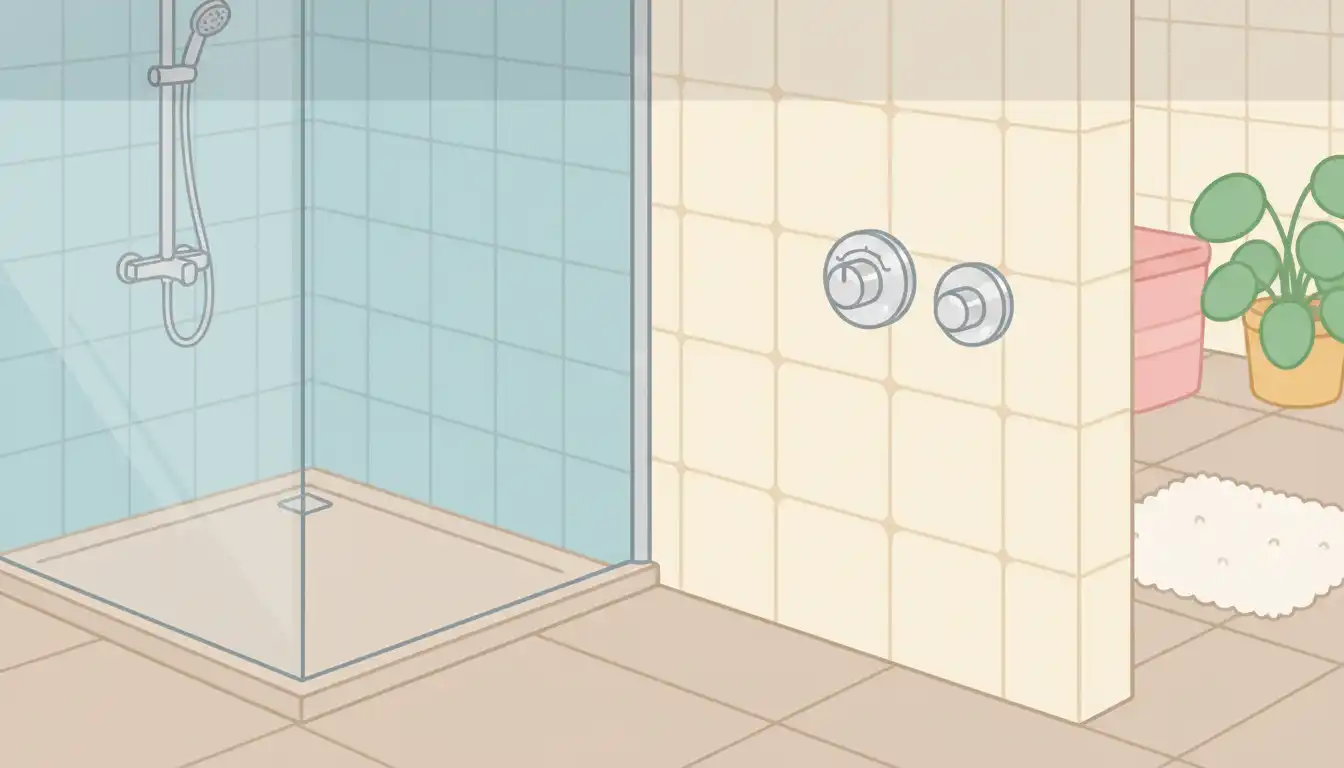
Placement is Everything: Ergonomics and Accessibility
The ideal location for your external controls is on the wall adjacent to the shower entrance, typically near the handle-side of the door. The controls should be easily reachable without having to step into the shower’s “splash zone.”
Consider the “golden zone” for height—typically between 40 and 48 inches from the finished floor. This height is comfortable for most adults to operate without bending or reaching excessively. For accessibility and ADA-compliant designs, ensure the controls can be operated with one hand and require minimal force.
Plumbing and Structural Realities
This is where the project’s complexity lies. The main shower valve must be located within the wall where the controls are mounted. This often requires rerouting hot and cold water supply lines from their original position to the new location.
The choice of valve is critical. A pressure-balancing valve is a standard, cost-effective option that prevents scalding by maintaining a consistent ratio of hot to cold water pressure. A thermostatic valve offers superior performance by controlling the actual water temperature, providing a more consistent and safer showering experience.
The wall’s structure must also be considered. There needs to be enough depth within the wall cavity to house the valve body, which can be bulky. Your plumber or contractor will need to assess the framing and ensure there are no obstructions like electrical wiring or other plumbing lines.
Comparing Shower Control Options
Choosing the right type of control depends on your budget, desired features, and installation complexity. The table below breaks down the key differences between the most common types.
| Feature | Manual Valve | Thermostatic Valve | Digital/Smart Control |
|---|---|---|---|
| Temperature Control | Manual adjustment; can fluctuate | Maintains precise, pre-set temperature | Digital precision; programmable presets |
| Installation Complexity | Standard plumbing work | Requires precise installation | Requires plumbing and electrical work |
| Typical Cost | $ (Most affordable) | $$ (Mid-range) | $$$ (Premium) |
| Key Advantage | Simplicity and reliability | Anti-scald safety and consistency | Ultimate convenience and technology |
| Best For | Budget-conscious renovations | Families with children or elderly | Tech-savvy homeowners and new builds |
The Installation Process: A Step-by-Step Overview
Installing shower controls outside the shower is not a typical DIY project. It requires professional expertise in both plumbing and construction. However, understanding the process helps you have informed conversations with your contractor.
Step 1: Design and Layout
The first phase is collaborative. You and your contractor will finalize the exact location of the shower controls and the shower head(s). They will create a plan for rerouting the water lines and confirm the structural feasibility.
Step 2: Demolition and Framing
To access the plumbing, a portion of the drywall will be removed. Your contractor may need to add or modify wall studs to create a secure mounting location for the shower valve and to accommodate the new plumbing lines.
Step 3: Rerouting Plumbing and Installing the Valve
This is the core of the project. A licensed plumber will run new hot and cold supply lines to the chosen location for the valve. The valve body will be securely installed within the wall cavity, and the pipes connecting the valve to the shower head and any other outlets (like a hand shower or tub spout) will be put in place.
Step 4: Waterproofing and Wall Finishing
Once the plumbing is tested for leaks, the wall is closed up. In a bathroom, this requires installing cement board or another suitable tile backer. All seams and screw heads are then meticulously waterproofed to prevent any future moisture damage.
Finally, the tile or wall finish is installed, and the trim kit—the visible handle and escutcheon plate—is mounted onto the valve stem. Grouting and sealing complete the process, leaving you with a seamless and fully functional setup.
Potential Drawbacks and How to Mitigate Them
While the benefits are compelling, it’s important to be aware of the potential challenges. Acknowledging these upfront allows you to plan for them and ensure your project is a complete success.
Increased Cost and Complexity
Unquestionably, this setup is more expensive than a standard shower configuration. The additional costs come from the extra labor for rerouting plumbing and the potential for more complex wall finishing. However, many homeowners view this as a worthwhile investment in daily comfort and home value.
To manage costs, get multiple quotes from qualified plumbers and contractors. Bundling this project with a larger bathroom remodel can also be more cost-effective than doing it as a standalone job.
The Risk of Accidental Activation
A common concern is whether the controls can be accidentally bumped or turned on by someone outside the shower. This is a valid point, especially in a busy family bathroom. Modern valve designs often mitigate this with firm, deliberate control handles that are not easily knocked into the “on” position.
For digital control pads, placing them slightly away from high-traffic paths can prevent accidental activation. Some smart systems even include a lock feature or require a two-step process to start the water flow.
Maintenance and Repair Access
What happens if the valve inside the wall needs to be serviced? This is a critical consideration. Most modern shower valves are designed so that the internal cartridge—the part most likely to fail—can be replaced from the front by simply removing the handle and trim plate.
For more significant issues, a professional plumber can typically access the valve without needing to tear open the entire wall. During installation, ensure your plumber uses a high-quality valve from a reputable brand to minimize the likelihood of future problems.
Smart Home Integration: The Future of Showering
Placing controls outside the shower is a gateway to a fully integrated smart bathroom. Digital and smart shower systems are designed to connect with your home’s ecosystem, offering a level of control and personalization never before possible.
Imagine using a voice command to start your shower from your bedroom. Smart systems allow you to create unique profiles for each family member, with their preferred temperature and shower head settings. You can even control water usage and set timers for a more eco-friendly home.
This level of integration can sometimes introduce new challenges, like a mysterious sound when the system is active. If you ever find yourself thinking, there’s a high-pitched noise in my apartment, it’s a reminder that modern homes are complex systems where plumbing and technology intersect.
Is This Upgrade Right for You?
Deciding to move your shower controls is a matter of balancing budget, convenience, and aesthetic goals. It is an undeniable upgrade that adds a touch of luxury and practical safety to any bathroom.
This feature is particularly valuable in master bathroom renovations, new home construction, and homes designed for aging in place. It’s an investment in your daily comfort and your home’s overall appeal. A well-designed bathroom is a key selling point, and thoughtful features like this can significantly enhance property value.
Ultimately, home improvement is about creating spaces that work better for you, whether it’s upgrading your bathroom for a more comfortable start to your day or maintaining your yard with a reliable machine like the Lawn Boy M Series. Investing in these details makes a house truly feel like a home.
