
Shallow Depth Countertop: The Genius Hack to Reclaim Your Kitchen
That cramped, frustrating feeling in your kitchen isn’t your fault. It’s a design flaw. Standard countertops, at a bulky 24 inches deep, are secretly stealing valuable floor space, making your kitchen feel smaller and more chaotic than it needs to be.
This overlooked problem creates narrow walkways, awkward appliance placements, and a constant sense of being boxed in. But there’s a simple, game-changing solution that architects and designers use to unlock a kitchen’s true potential: the shallow depth countertop.
You'll Learn About
The Problem: Standard Countertops Are Robbing You of Space
The standard 24-inch countertop depth was designed for a different era, with larger kitchens and different needs. In today’s homes, especially in apartments, galley kitchens, or older houses, this “one-size-fits-all” approach simply doesn’t work. It creates a host of issues that many homeowners just learn to live with, not realizing there’s a better way.
When every inch matters, a standard counter can be the primary obstacle to a functional layout. It forces appliances to stick out, disrupts the flow of traffic, and makes it difficult to create a comfortable, open environment. The result is a kitchen that feels perpetually cluttered and inefficient, no matter how much you organize.
Why Deeper Isn’t Always Better
Many people assume more counter space is always the answer, even considering extra-deep options. However, this often makes the problem worse. Deeper counters can make it difficult to reach upper cabinets and create “dead zones” at the back where items get lost and forgotten.
This inefficiency is compounded when dealing with modern appliances. For example, finding a shallow wall oven that integrates seamlessly can be a challenge with standard counters, leading to awkward protrusions. A truly integrated kitchen requires a thoughtful approach to depth, not just accepting the default.
The Solution: Embrace the Power of a Shallow Depth Countertop
Reducing the depth of your countertops, even by a few inches, can radically transform your kitchen. A shallow depth countertop, typically ranging from 18 to 22 inches, instantly creates more walkway space, making the room feel larger and more open. This simple change improves mobility and can solve the frustrating issue of appliances jutting out into the room.
This design strategy is particularly effective in narrow layouts where every inch is critical. By reclaiming that stolen space, you create a more ergonomic and efficient work triangle. It also opens up new design possibilities, allowing for features like a small breakfast bar or additional seating that would have been impossible with standard-depth surfaces.
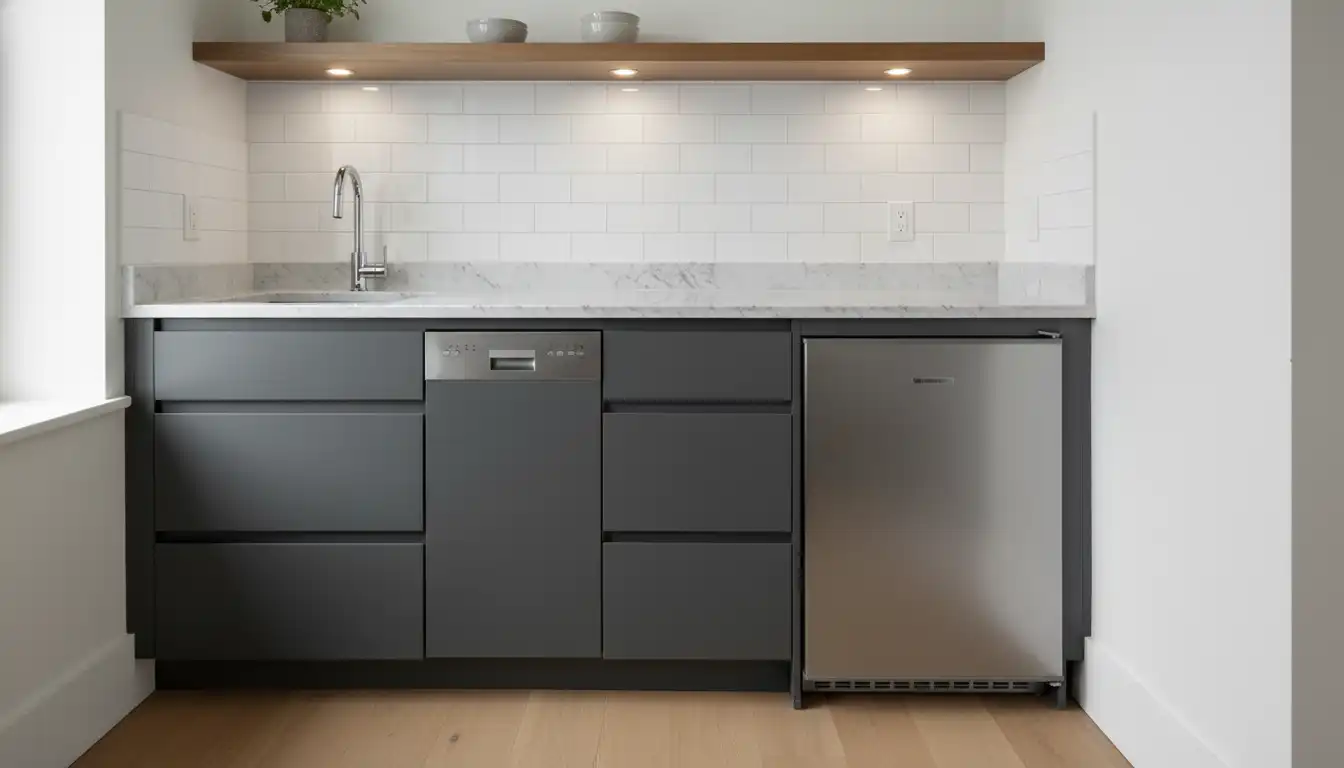
Beyond the Kitchen: Creative Uses for Shallow Surfaces
The benefits of shallow depth surfaces extend beyond the primary kitchen workspace. They are an excellent solution for creating functional zones in other areas of your home. A shallow countertop can become a stylish home office desk, a practical laundry room folding station, or an elegant console in an entryway.
In the kitchen itself, staggering countertop depths can add visual interest and functionality. A shallower section can be perfect for a coffee bar or a device charging station, keeping these activities separate from your main prep area and reducing clutter.
Choosing the Right Material for Your Shallow Depth Countertop
While the dimensions are crucial, the material you choose is equally important for both aesthetics and durability. Lighter-colored materials with a polished, glossy finish are excellent choices for small spaces as they reflect light and create an illusion of spaciousness. Thinner profile countertops also contribute to a more open and less bulky feel.
When selecting a material, consider your lifestyle and how you use your kitchen. If you’re an avid cook, heat and scratch resistance will be top priorities. For those seeking low maintenance, a non-porous surface that resists staining is ideal.
| Material | Best For | Maintenance Level | Typical Thickness |
|---|---|---|---|
| Quartz | Durability & Low Maintenance | Low | 2cm or 3cm |
| Granite | Heat Resistance & Natural Beauty | Medium (Requires Sealing) | 2cm or 3cm |
| Solid Surface | Seamless Look & Easy Repairs | Low | 1/2 inch |
| Laminate | Budget-Friendly & Variety | Low | Approx. 1.5 inches |
| Butcher Block | Warmth & Natural Feel | High (Requires Oiling) | 1.5 to 2 inches |
Integrating Appliances for a Flawless Finish
A key advantage of a thoughtfully planned kitchen is the seamless integration of appliances. With a shallow depth countertop, it becomes even more critical to select appliances that align with your streamlined design. The goal is to achieve a flush, built-in look that enhances the feeling of spaciousness.
This is where compact and counter-depth appliances shine. A top control dishwasher under countertop can be perfectly aligned with shallower cabinets. Similarly, opting for a model with a zero clearance refrigerator door ensures that you can open doors fully without them hitting adjacent walls or cabinets, a common issue in tight spaces.
Installation: The Key to a Professional Look
Proper installation is paramount to the success of your shallow depth countertop project. The process requires precision to ensure a perfect fit and a flawless finish. One of the biggest challenges is ensuring that the cabinets and sub-surfaces are perfectly level to prevent gaps, instability, or even stress fractures in the countertop material over time.
Strategic planning during the pre-installation phase is non-negotiable. This involves precise laser-guided measurements and creating an accurate template that accounts for sink and cooktop cutouts, as well as any unique angles or corners in your kitchen. It is also the time to coordinate with plumbers and electricians to ensure all fixtures will align correctly, preventing last-minute surprises and delays.
Maximizing Every Inch: Storage and Organization
While a shallow depth countertop provides more floor space, it slightly reduces your primary work surface. To compensate, it’s essential to be strategic about storage and organization to keep your new, sleeker countertops clutter-free. The key is to think vertically and utilize often-overlooked spaces.
Install floating shelves above the countertop for frequently used items like dishes, glasses, or spices. A magnetic knife strip mounted on the wall frees up an entire knife block’s worth of space. By moving items off the counter and onto the walls, you maintain a clean, open prep area that makes the entire kitchen feel larger and more organized.
Smart Solutions for a Streamlined Kitchen
In a kitchen designed for efficiency, every element should serve a purpose. Consider a roll-up drying rack that fits over the sink, which can be easily stored away when not in use. An appliance garage tucked into a corner can hide away your toaster and coffee maker, instantly reducing visual clutter.
By adopting these smart organizational habits, you’ll find that you don’t miss the extra counter depth at all. Instead, you’ll enjoy a more functional, aesthetically pleasing kitchen that is tailored to your real-world needs, not an outdated industry standard.
Frequently Asked Questions
What is a shallow depth countertop?
A shallow depth countertop is one that measures less than the standard 24 to 25.5 inches from the wall to the front edge. These countertops are often used in smaller kitchens, apartments, or galley layouts to maximize space.
What are the main benefits of a shallow depth countertop?
The primary benefit of a shallow depth countertop is its space-saving design, which can make a small kitchen feel more open and improve mobility. They are an excellent solution for narrow layouts where maximizing walkway space is a priority.
Are there any disadvantages to installing shallow depth countertops?
Yes, the main drawbacks are reduced preparation space and potential issues with standard appliance compatibility. Appliances like dishwashers and ovens are designed for standard depth counters and may stick out, creating an uneven look.
How does a shallow depth countertop compare to a standard one?
Standard kitchen countertops typically have a depth of 25 to 25.5 inches, which includes a 1 to 1.5-inch overhang from the standard 24-inch base cabinets. Shallow depth countertops are less than this standard, sometimes as narrow as 22 inches, to accommodate smaller spaces.
Are shallow depth countertops a good choice for small kitchens?
Yes, they are often an ideal choice for small or narrow kitchens. By reducing the countertop depth, you can create more floor space and prevent the kitchen from feeling cramped.
Will my standard kitchen appliances fit with a shallow depth countertop?
Standard appliances are designed to fit with 24-inch deep cabinets, so they may protrude from shallower countertops. It’s important to consider “counter-depth” appliances, which are designed to sit nearly flush with cabinetry for a more seamless, built-in look.
