
Separate Toilet Room in Master Bath: The Secret to a Happier Home?
The master bathroom should be a sanctuary—a private space to prepare for the day ahead and unwind when it’s over. But for many couples, this shared space is a source of daily friction. Clashing schedules, a lack of privacy, and the simple realities of bathroom use can turn a potential oasis into a zone of conflict and discomfort.
The core problem lies in the open-plan design. When the toilet sits in the main area, one person’s essential needs can disrupt the other’s routine. This daily dance of compromised privacy, contained odors, and noise disturbances is a common, yet often unaddressed, issue in home design.
Fortunately, there is a powerful design solution that directly tackles these problems: the separate toilet room. Also known as a water closet or toilet enclosure, this feature is more than a luxury—it’s a practical upgrade that enhances hygiene, promotes harmony, and significantly increases your home’s value.
You'll Learn About
What Exactly Is a Separate Toilet Room?
A separate toilet room, or water closet (WC), is a fully enclosed compartment within the larger master bathroom that houses only the toilet. It is separated from the vanity, shower, and tub areas by full walls and a door, creating a truly private space. This concept is a modern evolution in bathroom design, moving beyond the simple open room to offer a more functional and sophisticated layout.
This design isn’t just a trend; it’s a return to a more thoughtful approach to personal spaces. By compartmentalizing the bathroom’s functions, it allows multiple people to use the space simultaneously without infringing on each other’s comfort or privacy. From a simple, functional enclosure to a more luxurious space with upgraded lighting and ventilation, the separate toilet room is a versatile feature adaptable to various styles and budgets.
The Evolution of a Modern Necessity
Historically, toilets were kept separate from living quarters for sanitary reasons. As indoor plumbing became standard, convenience led to the all-in-one bathroom. Today, the pendulum is swinging back as homeowners recognize the immense functional and lifestyle benefits of re-separating the toilet from the main washing and grooming areas, blending modern hygiene with enhanced personal privacy.
The Undeniable Benefits of a Water Closet
Incorporating a separate room for the toilet in your master bath is one of the most impactful upgrades you can make. It solves multiple common problems at once, transforming the daily experience of a shared bathroom from frustrating to seamless. The advantages extend far beyond simple privacy, touching on hygiene, tranquility, and even the long-term value of your property.
Unmatched Privacy and Comfort
The most immediate benefit is the complete privacy it affords. It allows one partner to use the toilet while the other can simultaneously brush their teeth, apply makeup, or shower without any awkwardness. This functional separation is especially valuable for couples with different work or sleep schedules, eliminating a common source of morning and evening tension.
Superior Odor and Moisture Containment
A separate toilet room with a dedicated exhaust fan is the ultimate solution for containing odors. The door and fan work together to trap and quickly remove smells, preventing them from permeating the entire master suite. This ensures the main bathroom area remains a fresh and pleasant environment for relaxation, like soaking in the tub.
Critical Noise Reduction
The sound of a flushing toilet can be surprisingly disruptive, especially during the night or early morning. An enclosed room with a solid door provides a significant sound barrier, muffling the noise of the flush and the fan. This simple feature can be a relationship-saver for light sleepers or those whose partners are on a different schedule.
A Major Leap in Bathroom Hygiene
Every time a toilet is flushed, it creates an invisible spray known as a “toilet plume.” This aerosolized mist contains microscopic particles that can travel several feet and settle on every surface in the bathroom—including your towels and toothbrushes. A separate toilet room acts as a physical barrier, containing this plume and dramatically improving the overall hygiene of your master bath.
Boosted Resale Value and Aesthetic Appeal
From a real estate perspective, a separate water closet is a high-demand feature that signals a well-designed, luxury bathroom. It is a significant selling point that can increase your home’s market value. Aesthetically, moving the toilet out of the main sightline creates a cleaner, more spa-like, and visually appealing bathroom layout.
Key Design and Layout Considerations
Properly planning your separate toilet room is crucial for ensuring it is comfortable, functional, and compliant with building codes. Key decisions around dimensions, door style, ventilation, and lighting will make the difference between a cramped closet and a comfortable, private space. A thoughtful design balances space efficiency with user comfort.
Space Requirements and Dimensions
Building codes, such as the International Residential Code (IRC), dictate the minimum size for a toilet compartment. The standard minimum is typically 30 inches wide by 60 inches deep. This provides the legally required clearance of at least 15 inches from the toilet’s centerline to each side wall and 21 inches of clear legroom in front.
However, for greater comfort, aiming for a more generous size is recommended. A space that is 36 inches wide and 66 inches long feels much less restrictive. If you need to accommodate users with mobility aids, ADA-compliant guidelines suggest a much larger space, often around 60 by 56 inches, to allow for transfers and maneuvering.
The Importance of the Right Door
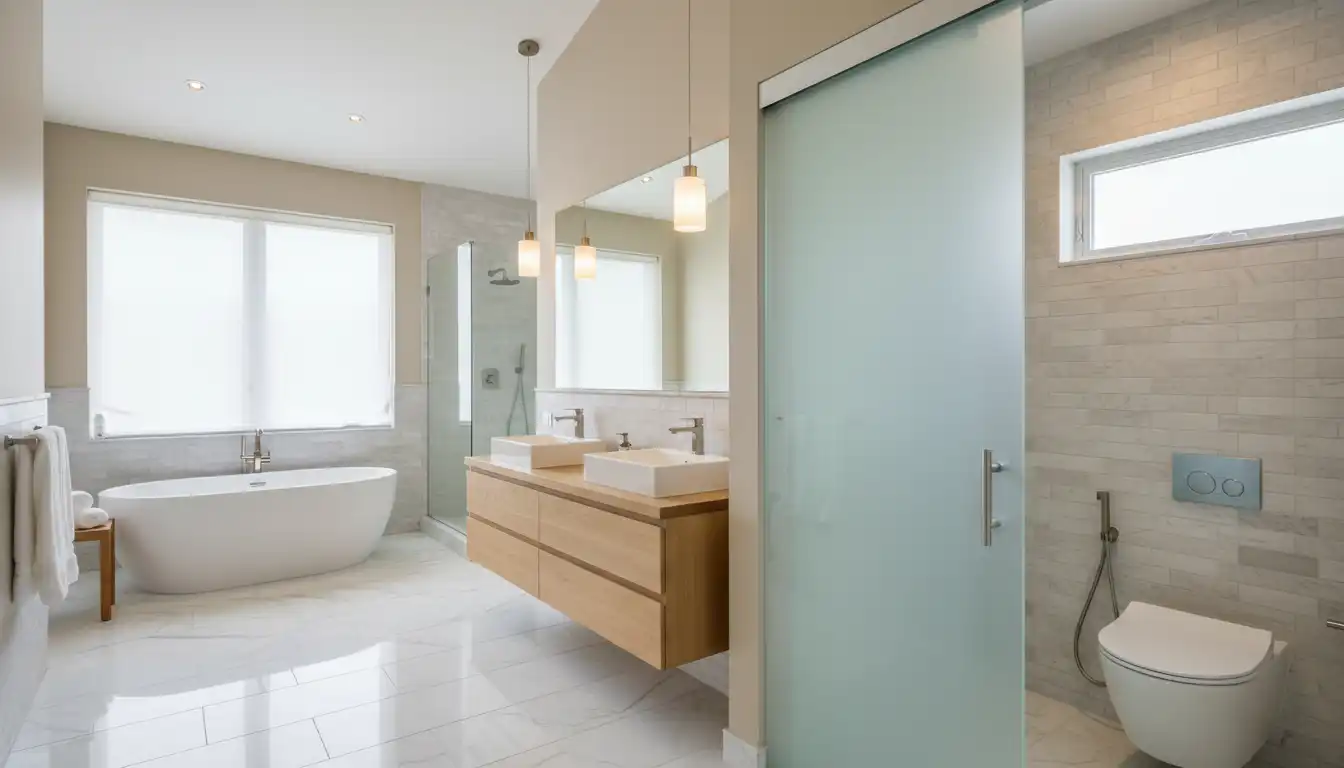
The door is a critical component that impacts both space and style. A pocket door is an excellent space-saving choice, as it slides into the wall and requires no swing clearance. A frosted glass door can enhance the feeling of spaciousness by allowing light to pass through while still maintaining privacy.
If you opt for a traditional swing door, carefully consider the swing direction. An out-swinging door is often safer in a small space, as it can be opened easily in an emergency. It also avoids conflicting with the user inside, which is a common issue with inward-swinging doors in tight quarters. The mechanics of choosing a door are crucial, much like deciding if a shower door should swing in and out for maximum safety and convenience.
Ventilation: A Non-Negotiable Element
Excellent ventilation is absolutely essential in an enclosed toilet room. A high-quality exhaust fan is not just a recommendation; it’s a requirement for moisture and odor control. The fan should be sized appropriately for the small space, with a minimum rating of 50 CFM (Cubic Feet per Minute) often recommended for enclosed toilets.
Connecting the fan to a timer switch or a humidity sensor is a smart upgrade. This ensures the fan runs for a set period after the room is vacated, thoroughly clearing the air. Proper ventilation is the key to keeping the space fresh and preventing any moisture-related issues like mold or mildew.
Lighting and Storage Solutions
Good lighting prevents the space from feeling claustrophobic. A single recessed can light, a stylish flush-mount fixture, or a wall sconce can provide ample illumination. If the room is on an exterior wall, a small, high-placed window can introduce natural light while preserving privacy.
Clever storage can make a big difference. Consider a recessed wall niche next to the toilet for holding toilet paper, a phone, or a book. This keeps essentials within reach without cluttering the limited floor space.
Making a Small Toilet Room Feel Bigger
One of the biggest challenges with a separate toilet room is the risk of it feeling small and claustrophobic. However, with strategic design choices, you can create an illusion of space and make even the most compact water closet feel comfortable and airy. The key is to focus on elements that draw the eye upward and reflect light.
Strategic Use of Tile and Color
Use large-format tiles on the floor and walls to minimize grout lines, which can make a space feel busy and small. Running wall tiles vertically can draw the eye upward, creating a sense of height. Using the same flooring as the main bathroom creates a seamless transition that visually connects and enlarges the entire area.
Light and neutral colors are your best allies. Shades of white, soft gray, or beige reflect light and make the walls recede, which helps the space feel more open. A paint finish with a slight sheen, like satin or eggshell, will also help bounce light around the room.
Visual Tricks with Doors and Ceilings
A door with a frosted glass panel is a fantastic way to borrow light from the main bathroom without sacrificing privacy. This visual connection to the larger space can significantly reduce feelings of confinement. It’s a similar principle to using a shower door that extends to the ceiling, which enhances the sense of vertical space and openness.
Painting the ceiling a shade or two lighter than the walls can also make it feel higher. This subtle trick fools the eye into perceiving more volume than is actually there, contributing to a more comfortable and less cramped experience.
| Feature | Open-Plan Toilet | Separate Toilet Room |
|---|---|---|
| Privacy | Low; bathroom cannot be used by others simultaneously. | High; allows for concurrent use of the master bathroom. |
| Hygiene | Lower; toilet plume can spread throughout the entire room. | Higher; toilet plume is contained within the enclosed space. |
| Odor Control | Poor; odors spread easily to the bedroom and bathroom. | Excellent; odors are contained and removed by a dedicated fan. |
| Noise Control | Minimal; flush and fan noises can disturb a partner. | Excellent; door and walls provide a significant sound buffer. |
| Aesthetics | Can disrupt the “spa” feel; toilet is often visible. | Improves the overall look by hiding the toilet from view. |
| Resale Value | Standard feature. | High-demand luxury feature that increases home value. |
| Cost | Lower initial construction cost. | Higher initial cost for framing, door, and extra electrical. |
Potential Drawbacks and Smart Solutions
While the benefits are significant, it’s important to consider the potential downsides of a separate toilet room. These challenges primarily revolve around space, cost, and accessibility. However, with careful planning, most of these drawbacks can be effectively addressed or mitigated.
Cost and Space Requirements
The most obvious drawback is the additional cost and space. Building a water closet involves expenses for framing, drywall, an extra door, and dedicated electrical for a light and fan. It also requires a larger overall bathroom footprint, which may not be feasible in a small-scale remodel or a compact home.
Solution: In situations where a fully enclosed room isn’t possible, a partial privacy wall can be a good compromise. This can shield the toilet from the direct line of sight from the door, offering a degree of separation without the cost and space consumption of a full room. Sometimes, rethinking the overall layout, perhaps considering a design with two doors for better traffic flow, might be a more effective use of space.
Accessibility and Safety Concerns
A standard minimum-size toilet room can pose a challenge for individuals with mobility issues. The tight space can be difficult to navigate with a walker, and nearly impossible for a wheelchair user. Furthermore, an inward-swinging door can become a safety hazard if someone falls and blocks the entrance.
Solution: If accessibility is a current or future concern, plan for wider dimensions that meet or exceed ADA guidelines. Always opt for an out-swinging door or a pocket door in a toilet enclosure. This ensures that access is never obstructed in an emergency, making the space safer for everyone.
The Feeling of Claustrophobia
For some individuals, being in a small, enclosed, and often windowless space can feel uncomfortable or claustrophobic. This is a valid concern that can detract from the user’s comfort, undermining one of the primary goals of the feature.
Solution: The design strategies for making a small room feel bigger are the perfect remedy here. Use a frosted glass door to bring in light, install bright and layered lighting, stick to a light color palette, and consider adding a large mirror on one wall to create an illusion of depth.
Conclusion: The Ultimate Upgrade for a Harmonious Home
A separate toilet room in the master bath is far more than an architectural flourish; it is a thoughtful, functional upgrade that solves many of the most common issues of a shared bathroom. It delivers unparalleled privacy, dramatically improves hygiene by containing the toilet plume, and effectively controls both odors and noise.
While it requires careful planning regarding space, cost, and accessibility, the profound benefits to daily life often far outweigh the initial investment. By allowing two people to comfortably share the master bathroom at the same time, it reduces stress, minimizes conflict, and fosters a more harmonious living environment.
Ultimately, transforming your master bathroom into a true sanctuary is about creating a space that is not only beautiful but also perfectly suited to your lifestyle. A separate toilet room is a powerful step in that direction—a practical luxury that you will appreciate every single day.
