
Schrock vs Kraftmaid: The Secret a Cabinet Dealer Won’t Tell You
Embarking on a kitchen remodel is one of the most exciting yet daunting projects for any homeowner. The sheer number of decisions can be paralyzing, but none carries more weight than choosing your cabinets. They are the foundation of your kitchen’s design, functionality, and budget, and making the wrong choice can lead to years of regret.
Two names that consistently surface in showrooms and design blogs are Schrock and Kraftmaid. Both are praised for their quality and vast selection, often leaving homeowners stuck in a cycle of analysis paralysis. The core problem isn’t just comparing door styles or color swatches; it’s the fear of investing thousands of dollars into a brand that might not live up to its promises of durability and beauty.
But what if the choice between Schrock and Kraftmaid isn’t the real decision you should be making? There’s a fundamental connection between these two brands that most comparisons overlook, a secret that reframes the entire debate. Understanding this connection is the key to navigating your options with confidence and making a truly informed decision for your home.
You'll Learn About
Understanding the Players: Who Are Schrock and Kraftmaid?
On the surface, Schrock and Kraftmaid present as distinct, competing entities. Each has its own legacy, marketing, and loyal following among designers and homeowners. To make an informed choice, it’s essential to understand the reputation each has built.
Schrock Cabinetry began its journey in 1961 in Arthur, Illinois, with a focus on handcrafted quality. Over the decades, it has cultivated a reputation for solid, dependable cabinets that offer a good balance of value and style. Schrock is often seen as a reliable, mid-range option perfect for homeowners seeking durable construction without venturing into full-custom pricing.
Kraftmaid, founded in 1969, has grown into one of the most recognized cabinet brands in North America. Known for its extensive customization options within a semi-custom framework, Kraftmaid appeals to homeowners who want a more personalized kitchen. They are widely available through big-box retailers and independent dealers, making them a highly accessible choice.
The Big Reveal: A Shared Foundation
Here is the critical piece of information that changes the entire “versus” debate: both Schrock and Kraftmaid are owned by the same parent company, MasterBrand Cabinets, Inc. This fact is not a hidden conspiracy, but its implications are profound and not often discussed. MasterBrand is one of the largest cabinet manufacturers in North America, overseeing a portfolio of several well-known brands.
This shared parentage means that behind the different brand names, there are often overlapping manufacturing processes, shared materials sourcing, and similar quality control standards. While each brand maintains distinct product lines and door styles, the foundational construction principles can be remarkably similar, especially when comparing equivalent tiers. Rather than viewing them as apples and oranges, it’s more accurate to see them as different apple varieties grown in the same orchard. This insight shifts the decision from “which brand is better?” to “which product line from the MasterBrand ecosystem best fits my specific needs and budget?”
Construction Quality: A Look Inside the Box
When you strip away the door styles and finishes, the true measure of a cabinet’s longevity lies in its construction. This is where the similarities and subtle differences between Schrock and Kraftmaid become most apparent. Since both are part of the MasterBrand family, they often offer a similar tiered approach to construction materials, allowing you to upgrade based on your budget.
Cabinet Box Construction: Plywood vs. Particleboard
The cabinet box is the unsung hero of your kitchen, providing the structural integrity for everything else. Both Schrock and Kraftmaid typically offer industrial-grade particleboard (also called furniture board) as their standard construction material. This isn’t the cheap particleboard of the past; it’s a dense, stable, and cost-effective material perfectly suitable for most applications. Its smooth surface is also ideal for veneers and laminates.
However, for those seeking superior durability and moisture resistance, both brands offer an All-Plywood Construction (APC) upgrade. Plywood is made from layers of wood veneer glued together, creating a stronger, lighter, and more water-tolerant box. While a full plywood upgrade is an option, a savvy strategy is to use it selectively. Consider upgrading only the sink base cabinet, which is most susceptible to leaks and moisture, to get the biggest benefit without breaking the budget.
Drawer and Joinery Deep Dive
You will open and close your cabinet drawers thousands of times, so their construction is paramount. Both Schrock and Kraftmaid excel here, often using high-quality components sourced from the same leading hardware manufacturers. Look for drawers with solid wood construction and dovetail joinery. Dovetail joints, where interlocking pins and tails create a strong mechanical bond, are a hallmark of high-quality cabinetry and a standard feature in the mid-to-upper tiers of both brands.
Equally important is the hardware. Both brands typically feature undermount, soft-close drawer glides in their mainstream product lines. These glides are hidden beneath the drawer box for a cleaner look and provide a smooth, quiet closing action that prevents slamming. The hinges are also crucial; look for 6-way adjustable, soft-close hinges that allow for perfect door alignment and silent operation.
The Finish Line: Durability, Colors, and Styles
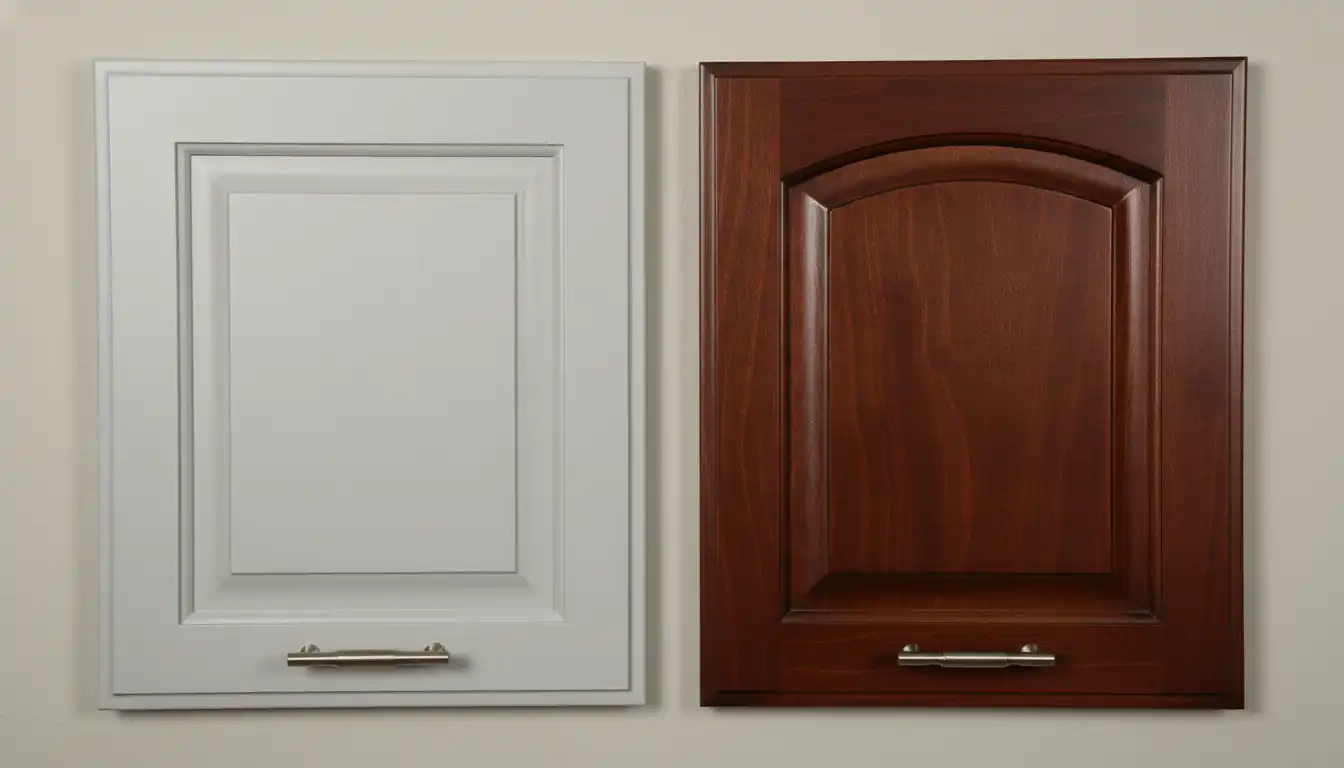
While construction provides the foundation, the finish and style are what bring your kitchen to life. This is where brands often work hardest to differentiate themselves, offering unique colors, door styles, and decorative elements. Yet, the underlying technology used to apply those finishes is often rooted in shared best practices mandated by the parent company.
Finish Quality and Application
A cabinet’s finish is its first line of defense against spills, heat, and daily wear. Both Schrock and Kraftmaid employ sophisticated, multi-step finishing processes to ensure a beautiful and durable surface. This typically includes sanding, staining or painting, and the application of a catalyzed conversion varnish topcoat. This topcoat is crucial, as it creates a hard, chemical-resistant shell that protects the wood and color beneath.
The key takeaway is that both brands offer high-quality, durable finishes that are designed to withstand the rigors of a busy kitchen. While one brand may offer a specific trendy color that the other doesn’t, the overall quality and longevity of the finishes are comparable at similar price points.
Range of Styles and Customization
Here is where you’ll find the most significant variation. Both Schrock and Kraftmaid offer an extensive catalog of door styles, from timeless shaker designs to intricate traditional profiles and sleek modern slabs. You’ll find a wide array of wood species, including maple, cherry, oak, and hickory, as well as alternative materials like MDF for painted finishes.
Kraftmaid has built its reputation on the breadth of its semi-custom options, allowing for modifications to cabinet sizes, depths, and configurations. Schrock also offers a strong selection of styles and finishes, often appealing to those who appreciate a balance of quality and value. When choosing, your decision will likely come down to which brand offers the specific door style and color combination that perfectly matches your vision. Careful planning of your space is crucial, as the right cabinet organization can transform a kitchen’s functionality. Thinking about how to arrange elements is as important in the kitchen as it is when trying to figure out how to fit 2 full beds in a room.
Comparing the Product Tiers: Not All Cabinets Are Created Equal
Perhaps the most important concept to grasp is that you are not just choosing between “Schrock” and “Kraftmaid.” You are choosing a specific product line within that brand’s portfolio. A top-tier Schrock cabinet can easily outperform an entry-level Kraftmaid cabinet, and vice versa. Understanding these tiers is essential for an accurate comparison.
Both companies offer different series or lines designed to hit various price points and feature levels. For example, Schrock has lines like Entra, Trademark, and Boutique, while Kraftmaid may offer Core and Vantage lines through different dealers. These tiers determine everything from the standard box material to the drawer construction and the range of available finishes. The table below provides a general overview of what to expect, but always confirm the specifications with your dealer for the exact line you are considering.
| Feature | Entry-Level Tiers (e.g., Schrock Entra, Kraftmaid Core) | Mid-to-Upper Tiers (e.g., Schrock Trademark/Boutique, Kraftmaid Vantage) |
|---|---|---|
| Cabinet Box Material | Standard: 3/8″ or 1/2″ Particleboard | Standard: 1/2″ Particleboard with Plywood Upgrade Options |
| Drawer Box | Varies; may be particleboard with vinyl wrap | Standard: Solid wood with dovetail joints |
| Drawer Glides | Side-mount or basic undermount glides | Standard: Full-extension, soft-close undermount glides |
| Hinges | Standard; may not be soft-close | Standard: 6-way adjustable, soft-close hinges |
| Finish Options | Limited selection of basic paints and stains | Extensive selection of paints, stains, glazes, and custom colors |
| Customization | Limited or no modifications available | Wide range of size modifications and storage solutions |
| Warranty | Limited Warranty | Limited Lifetime Warranty |
Cost vs. Value: What’s the Real Price Tag?
For most homeowners, the final decision comes down to budget. Both Schrock and Kraftmaid operate in the mid-range cabinet market, offering significant value compared to full-custom cabinetry. However, the price of a kitchen can vary dramatically based on the choices you make.
The final cost is influenced by the product line you choose, the door style, the wood species, the finish, and the number of upgrades and accessories. A painted finish on a maple door will almost always be more expensive than a stained finish on an oak door. Adding decorative moldings, glass inserts, and complex storage pull-outs will also increase the price. Seeing how costs can escalate on a big project teaches you a lesson about home maintenance in general; sometimes, tackling a small but frustrating problem like a stubborn rusted part can save you from a much larger expense down the road by showing the importance of durable, quality materials from the start.
The Overlooked Factor: Lead Times and Dealer Support
In the world of kitchen remodeling, the product itself is only half the equation. The other half is the service and support you receive from your local dealer and the reliability of the supply chain. This is an area where the MasterBrand connection has a direct impact.
Because both brands operate under the same corporate umbrella, they are subject to the same broad-stroke supply chain dynamics and manufacturing priorities. If one brand is experiencing extended lead times due to a shortage of a specific material, it is highly likely the other is as well. Therefore, choosing one over the other based on a hope for faster delivery is often a futile exercise.
The far more critical factor is the expertise of your kitchen designer and dealer. An experienced designer can guide you through the complexities of each brand’s catalog, help you maximize your budget, and create a functional, beautiful layout. They are also your primary advocate if issues arise, such as shipping damage or warranty claims. A great dealer can make a good cabinet line perform excellently, while a poor dealer can make even the best cabinets a nightmare. This principle applies to other areas of your home as well; for instance, a skilled contractor can find brilliant ways to work with and update challenging features like old 12×12 ceiling tiles, turning a perceived negative into a unique design element.
The Final Verdict: Which Cabinet Brand is Right for Your Home?
After peeling back the layers, it becomes clear that a direct “Schrock vs. Kraftmaid” battle is misleading. The two brands are more like siblings than rivals. They share the same corporate DNA, which results in comparable construction quality, hardware, and finish durability across their equivalent product tiers.
The definitive choice between them should not be based on a perceived superiority of one brand name over the other. Instead, your decision should be guided by three practical factors:
- Specific Style and Finish: Which brand offers the exact door style, wood species, and color that you have envisioned for your dream kitchen? This is the most significant differentiator.
- Product Line Features: At your specific budget, which brand’s product line offers the best set of standard features? For example, does a mid-tier Schrock line come standard with plywood ends while the comparable Kraftmaid line requires an upgrade?
- The Local Dealer: Which local kitchen designer or dealer do you feel most comfortable with? Their expertise, design skill, and customer service will have a greater impact on your project’s success than the name on the cabinet door.
Ultimately, both Schrock and Kraftmaid are capable of being the foundation of a beautiful, long-lasting kitchen. Armed with the knowledge that they stem from the same manufacturing powerhouse, you can bypass the superficial brand competition. Focus on the tangible details of the specific products offered and the quality of the professional guiding you. That is the true secret to making a confident and successful cabinet choice.
