
Santamargherita Quartz Reviews: The Unvarnished Truth Before You Buy
Choosing the right countertop is one of the most stressful decisions in a kitchen or bathroom remodel. The surface you select will dominate the room’s aesthetic and must withstand daily wear and tear for years. Making the wrong choice can lead to a cascade of problems, from disappointing durability and surprise maintenance to aesthetic regret and financial loss.
Many homeowners find themselves paralyzed by the sheer volume of options, each with its own set of claims and caveats. Natural stone like granite is beautiful but porous and requires sealing. Marble is luxurious but notoriously soft and prone to staining. This uncertainty often leads to a search for a “perfect” material—one that combines beauty, resilience, and ease of care. This is where engineered quartz, and specifically the Santamargherita brand, enters the conversation.
This article provides an in-depth, honest review of Santamargherita quartz, moving beyond the marketing claims to give you the information needed to make a confident decision. We will explore its composition, weigh its real-world pros and cons, see how it stacks up against competitors, and uncover what actual homeowners are saying. By the end, you’ll understand if this Italian-engineered stone is truly the solution to your countertop dilemma.
You'll Learn About
What Exactly is Santamargherita Quartz? A Deeper Look
Santamargherita is an Italian company with a long history in the engineered stone industry. While many brands exist, Santamargherita’s heritage is rooted in Verona, Italy, a region renowned for its stone craftsmanship. This background informs the quality and aesthetic of their products, which are engineered for both beauty and performance.
Like all quartz countertops, Santamargherita surfaces are a composite material. They are composed of approximately 90-93% natural quartz crystals, one of the hardest minerals on earth. The remaining portion consists of high-quality polymer resins and pigments that bind the quartz particles together and provide color and pattern.
This composition is what gives engineered quartz its key advantages over natural stone. The manufacturing process creates a non-porous surface that is highly resistant to staining and doesn’t require the regular sealing that granite and marble demand. The result is a consistent, durable, and low-maintenance material designed for the rigors of modern life.
The Pros: Why Homeowners Love Santamargherita Quartz
Many homeowners and designers gravitate towards Santamargherita for several compelling reasons. The brand has built a reputation on delivering a surface that is not only beautiful but exceptionally practical for everyday life. Here are the primary advantages that consistently place it at the top of consideration lists.
Unmatched Durability for Busy Kitchens
The high concentration of natural quartz makes these surfaces incredibly hard and durable. They are highly resistant to scratches, chips, and impacts, which is a major selling point for high-traffic areas like kitchens and family bathrooms. Unlike softer materials, you don’t have to worry about everyday items like knives, keys, or dropped pans causing significant damage.
This resilience ensures the countertop maintains its pristine appearance for years, even with heavy use. It provides peace of mind for families with children or anyone who enjoys a bustling, well-used kitchen space, making it a sound long-term investment.
A Spectrum of Stunning Colors and Patterns
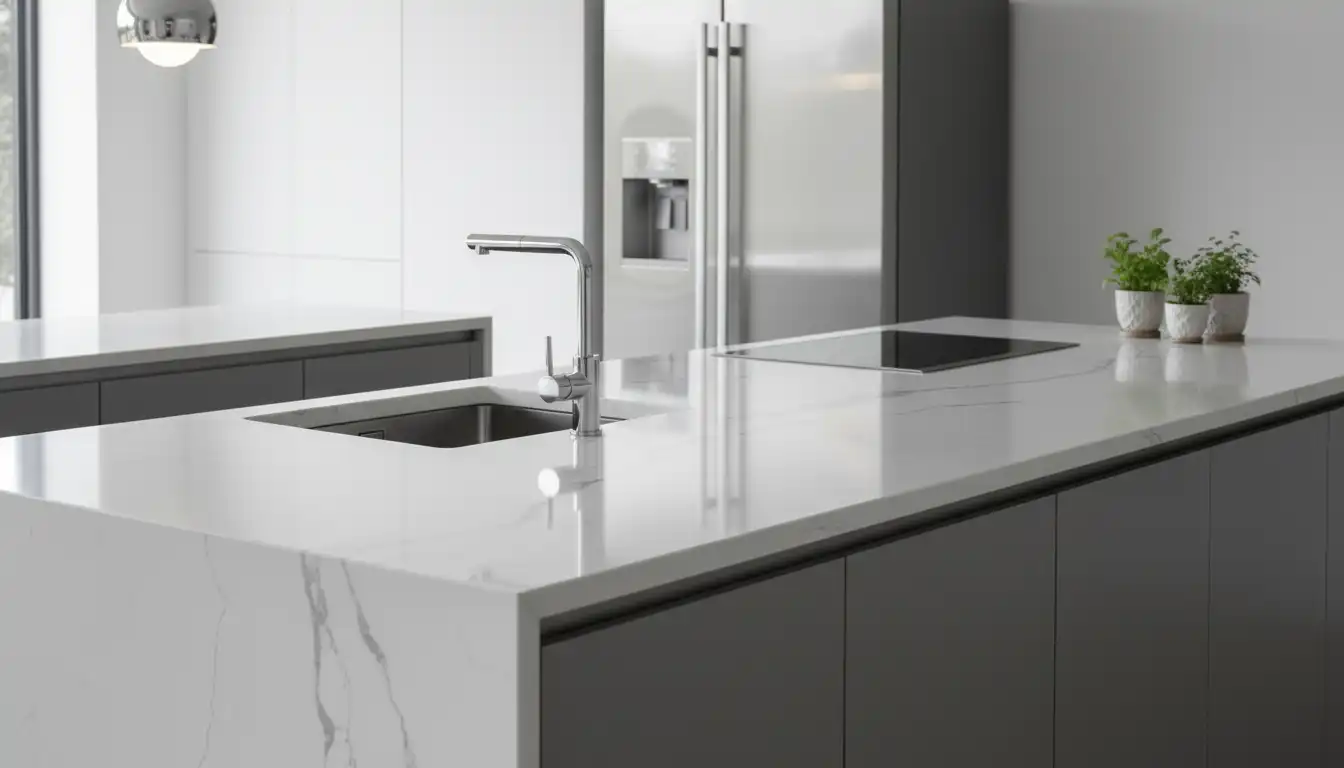
Santamargherita offers a vast and sophisticated color palette, from brilliant whites and subtle greys to bold, dramatic darks. Because it is an engineered product, the appearance of each slab is highly controlled. This results in a consistency of color and pattern that is impossible to achieve with natural stone, which can have wild variations.
This consistency is a significant advantage for designers and homeowners who want a predictable, uniform look across a large kitchen island or multiple countertop sections. Pairing the right countertop with cabinetry becomes much simpler; for instance, a classic Santamargherita white can create a stunning contrast when you’re deciding between paint options like Valspar Ultra White vs Pure White for your cabinets.
The Low-Maintenance Dream: Non-Porous and Stain-Resistant
Perhaps the most celebrated feature of Santamargherita quartz is its non-porous nature. The surface repels liquids rather than absorbing them, which makes it highly resistant to stains from common household culprits like coffee, wine, olive oil, and lemon juice. This is a stark contrast to natural stone, where a small spill can quickly become a permanent blemish if not addressed immediately.
This quality also makes the surface exceptionally hygienic, as there are no pores to harbor bacteria or mold. Cleaning is simple, requiring only a damp cloth and a mild detergent for daily maintenance, freeing you from the burden of specialized cleaners and annual sealing rituals.
The Cons: The Hidden Drawbacks You Must Consider
No material is perfect, and it is crucial to understand the limitations and potential downsides of Santamargherita quartz before making a final decision. While it excels in many areas, there are specific weaknesses that every potential buyer should be aware of. Acknowledging these drawbacks ensures your expectations are realistic and helps you avoid costly mistakes.
Understanding the Price Point
Santamargherita is a premium quartz brand, and its price reflects that. Generally, you can expect the cost to range from $50 to over $120 per square foot installed. While comparable to other high-end quartz brands and some granites, it is a significant investment and more expensive than entry-level quartz, laminate, or solid surface options.
The total project cost can easily range from $3,000 to $7,500 or more for an average-sized kitchen. It is important to budget not just for the material but also for professional fabrication and installation, which are critical for a flawless finish.
Heat Sensitivity: A Critical Weakness
While highly resistant to many forms of damage, the resins used in engineered quartz can be damaged by high heat. Placing a hot pot or pan directly from the stove or oven onto the countertop can cause thermal shock, resulting in discoloration, cracking, or burn marks. This damage is often permanent.
This is arguably the most significant practical drawback of quartz compared to natural granite. Always use trivets or hot pads to protect the surface. This simple habit is essential to preserving the beauty and integrity of your investment for the long term.
Potential for Chipping on Edges
While the surface is highly scratch-resistant, the edges and corners can be susceptible to chipping from a sharp, heavy impact. A dropped cast-iron skillet or a heavy can could potentially cause a chip along the edge of the sink or countertop. While repairs are possible, they can be difficult to blend perfectly.
Choosing a rounded edge profile, such as a bullnose or eased edge, can help minimize the risk of chipping compared to a sharp, squared-off edge. Discussing edge options with your fabricator is a wise step to enhance long-term durability.
Santamargherita vs. The Competition
When shopping for quartz, you will undoubtedly encounter other major brands like Silestone, Caesarstone, and Cambria. While all produce high-quality engineered quartz, there are subtle differences in their offerings, price points, and brand reputation that are worth considering.
Santamargherita holds its own with its strong Italian design heritage and commitment to quality. However, brands like Silestone are known for innovations like antimicrobial protection, while Cambria is lauded for its bold, natural-looking designs and American manufacturing. The best choice often comes down to which brand offers the specific color, pattern, and finish that best suits your design vision and budget.
To help clarify the differences, here is a comparative overview of the leading quartz brands.
| Feature | Santamargherita | Silestone | Caesarstone | Cambria |
|---|---|---|---|---|
| Origin | Italy | Spain | Israel | USA |
| Typical Price Range (Installed) | $50 – $120 / sq. ft. | $60 – $140 / sq. ft. | $55 – $130 / sq. ft. | $65 – $150+ / sq. ft. |
| Key Strengths | Strong design heritage, wide color selection, consistent quality. | Vast color range, multiple textures, proprietary N-Boost and HybriQ technologies. | Pioneer in the industry, known for classic and innovative designs. | Unique, bold, natural-looking designs; family-owned; lifetime warranty. |
| Unique Features | Focus on Italian aesthetics and craftsmanship. | Antimicrobial protection available on some lines. | Outdoor collection available. | Exclusive designs not found in other brands. |
| Warranty | Varies by distributor, typically 10-15 years. | 25-year transferable warranty. | Lifetime warranty. | Transferable lifetime warranty. |
Installation and Maintenance: Protecting Your Investment
The performance and longevity of your Santamargherita quartz countertop depend heavily on two factors: proper installation and correct long-term care. A flawless installation by a skilled fabricator is non-negotiable, and understanding the simple maintenance routine will keep your surface looking new for decades.
Finding the Right Fabricator is Crucial
Engineered quartz is a heavy, unwieldy material that requires specialized tools and expertise for cutting, edging, and installation. A poor fabrication job can result in uneven seams, misaligned patterns, and an improper fit that compromises both the look and durability of the countertop. Always hire a certified and reputable fabricator with experience working specifically with Santamargherita or other premium quartz brands.
The final details of an installation are what create a professional finish. This includes ensuring proper support, leveling the slabs perfectly, and sometimes incorporating custom trim work. In complex installations around columns or curved cabinets, knowing how to handle finishing materials is key, which can even involve specialized skills like learning how to bend quarter round for a seamless look.
Daily Cleaning and Long-Term Care
Santamargherita’s care routine is refreshingly simple. For daily cleaning, use a soft cloth with warm water and a mild, pH-neutral soap. After cleaning, rinse the surface with water and dry it thoroughly with a paper towel or microfiber cloth to prevent water spots and halos.
While the surface is highly stain-resistant, it’s wise to wipe up spills promptly. Avoid harsh chemicals such as bleach, oven cleaners, acetone (nail polish remover), and abrasive scouring pads, as these can dull the polished finish or damage the resin binders over time. Adhering to proper maintenance is just as critical for your kitchen surfaces as it is for exterior home components; just as you’d want to know how to caulk a gutter to a fascia board correctly to prevent water damage, using the right cleaning methods protects your countertop investment.
The Secret to Santamargherita’s Quality: The Breton Technology Factor
What truly separates premium quartz brands like Santamargherita from lower-quality alternatives is the manufacturing technology. Most top-tier manufacturers, including Santamargherita, utilize a patented system known as Bretonstone® technology. This Italian innovation is the global standard for producing the highest quality engineered stone.
The Bretonstone process involves a unique “vibrocompression under vacuum” system. Raw materials—natural quartz aggregate, pigments, and resins—are blended and then compacted in a mold under immense pressure and vibration while in a vacuum. This process removes all air pockets, resulting in an incredibly dense, compact, and non-porous slab.
This technological superiority is the reason for Santamargherita’s consistent quality, durability, and high performance. Cheaper quartz products often use less advanced pressing methods, which can result in a more porous slab with a higher resin content, making it more susceptible to staining, scratching, and heat damage. Understanding the role of Breton technology helps explain why investing in a premium brand is often worth the additional cost.
Is Santamargherita Quartz the Right Choice for Your Home?
After weighing the evidence, the decision comes down to your priorities, lifestyle, and budget. Santamargherita quartz is an excellent choice for homeowners who prioritize aesthetics, durability, and low maintenance and are willing to invest in a premium product. Its vast color selection and consistent quality make it a reliable and beautiful option for modern kitchens and bathrooms.
It is particularly well-suited for busy families or avid cooks who need a surface that can withstand daily use without demanding constant upkeep. The peace of mind that comes from its stain and scratch resistance is a significant benefit. However, it may not be the best fit for those on a tight budget or for individuals who are not diligent about using hot pads, as its vulnerability to high heat is a real consideration.
Final Verdict: Our Professional Takeaway
Santamargherita stands as a formidable contender in the premium quartz market. Its Italian roots shine through in its elegant designs, and its quality is backed by world-class manufacturing technology. It successfully solves the problem of finding a countertop that blends the beauty of natural stone with the practical resilience needed for modern living.
While the investment is significant and precautions against heat are necessary, the benefits of its durability, non-porous surface, and effortless maintenance are undeniable. For the discerning homeowner looking for a sophisticated, long-lasting, and worry-free countertop, Santamargherita quartz is a top-tier choice that delivers on its promises of turning an ordinary space into an extraordinary one.
