
Same Rug in Living & Dining Room? The #1 Design Debate Solved
You stand in the middle of your open-concept space, caught in a classic design dilemma. The living room flows into the dining room, creating a wonderfully airy feel, but also a significant decorating challenge. The question echoing in your mind is one that plagues many homeowners: should you use the same rug in the living and dining room to create a unified look?
It’s a decision fraught with uncertainty. Will matching rugs make the space feel harmonious and intentional, or will it look monotonous and uninspired? This single choice feels like it could make or break the entire aesthetic of your main living area.
The core of the problem lies in the dual function of these adjacent spaces. The living room is for relaxation and comfort, while the dining room is for entertaining and, well, dining. Their flooring needs are different, yet in an open floor plan, they are visually one. This creates a powerful tension between the need for cohesion and the desire for distinct, functional zones.
You'll Learn About
Why This Rug Decision Sparks So Much Debate
The “same rug” question isn’t just about aesthetics; it’s about the fundamental principles of interior design. On one hand, using identical rugs is a straightforward way to create visual continuity. It’s a safe choice that guarantees the color palette and style will match perfectly, eliminating the guesswork of coordinating different patterns and textures.
On the other hand, many designers argue that using different—but complementary—rugs is the key to a sophisticated, layered look. This approach allows you to define each space’s unique function and add more personality and visual interest. The fear of clashing patterns or choosing the wrong complementary colors often leads homeowners back to the “safer” option of matching rugs.
This internal conflict is why finding a definitive answer is so difficult. You’re trying to balance unity with definition, simplicity with character. The good news is, there is a right answer for your specific home, and it starts with understanding the strategic implications of your choice.
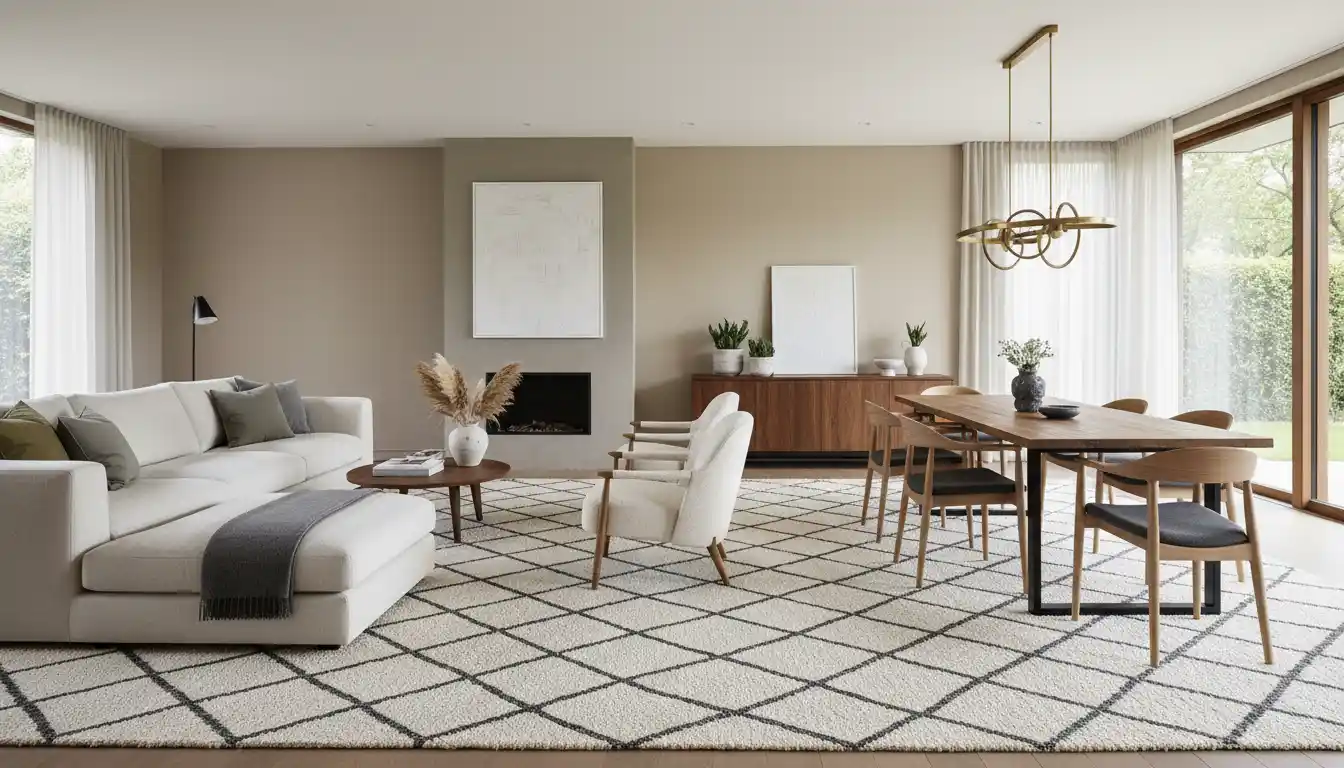
The Case for Using the Same Rug: A Bold Move for Unity
Choosing to use the exact same rug in both your living and dining areas is a powerful design statement. It confidently declares that these two distinct areas are part of a single, harmonious whole. This approach works exceptionally well in certain types of spaces and for homeowners with specific design goals.
The primary benefit of this strategy is the creation of a seamless visual flow. In an open-concept home, where sightlines are uninterrupted, matching rugs can make the entire area feel larger and more cohesive. There’s no visual “break” between the living and dining zones, which allows the eye to travel smoothly across the space.
When Matching Rugs Are the Perfect Solution
This strategy is particularly effective in smaller open-concept areas. Using different, busy patterns in a compact space can feel chaotic and make the area seem smaller. Identical rugs, especially in a neutral color or subtle pattern, can provide a calming, uncluttered foundation that enhances the sense of space.
Moreover, if you have a very specific or bold rug that you’ve fallen in love with, using it in both areas can create a stunning, high-impact look. It turns the rug into a central design feature that ties everything together. This works best when the rest of your decor—furniture, wall color, and accessories—is relatively simple, allowing the matching rugs to take center stage without overwhelming the room.
However, the success of this approach hinges on one critical factor: proper sizing. Each rug must be correctly proportioned for its designated area. A common mistake is buying two identically sized rugs, but the living room and dining room almost always have different dimension requirements. An incorrectly sized rug can disrupt the entire balance of a room, a topic further explored when considering the best size dining table for a 12×12 room, where proportion is key.
The Argument Against Matching: Embracing Coordinated Contrast
While matching rugs offer simplicity, many design experts advocate for using different but coordinated rugs. This method allows for more creative expression and helps to clearly define the separate functions of the living and dining areas. The goal here isn’t to create a jarring disconnect but to build a layered, sophisticated design story.
The key to this approach is finding a common thread that links the two rugs. This could be a shared color, a similar pattern style, or a consistent texture. For example, you might choose a rug with a large-scale geometric pattern for the living room and a simpler, solid-colored rug for the dining room that picks up one of the accent colors from the living room rug.
How to Coordinate Without Clashing
One of the most effective techniques is to vary the pattern scale. If your living room rug has a bold, dominant pattern, select a dining room rug with a more subtle, smaller-scale design. This creates visual interest without competition. The principle is similar to avoiding two different tiles in adjoining rooms that both have loud patterns; one should be the star while the other plays a supporting role.
Another powerful strategy involves inverting the color scheme. If the living room rug is navy with ivory details, consider an ivory rug with navy details for the dining room. This creates a beautiful, mirrored effect that feels intentional and professionally styled. It’s a sophisticated way to create distinction while maintaining a strong visual connection.
The Unspoken Factor: Material and Durability
Beyond color and pattern, the practical considerations of material and pile height are crucial, especially when deciding on rugs for these two very different zones. A living room rug can afford to be plusher and more luxurious, designed for bare feet and comfort. A high-pile wool or shag rug can add warmth and coziness to your seating area.
In contrast, a dining room rug needs to be all about function. It must withstand spills, crumbs, and the constant movement of chairs. A low-pile or flatweave rug made from a durable, easy-to-clean material like polypropylene, sisal, or jute is a far more practical choice. Trying to use a high-pile shag rug under a dining table is a recipe for a cleaning nightmare.
This is where the “same rug” strategy often hits a practical roadblock. Finding a single rug that is soft enough for the living room yet durable enough for the dining room is a significant challenge. This functional difference is a compelling reason to opt for two different, purpose-driven rugs that are coordinated in style.
The Hybrid Approach: A Single Rug to Rule Them All?
There is a third, less common option that can work in specific layouts: using one very large, oversized rug to anchor both the living and dining areas. This is a bold and often expensive choice, but when done correctly, it can create an incredibly unified and grand statement. It completely erases the visual boundaries between the two zones.
This strategy works best in long, rectangular open-concept spaces where the living and dining furniture can be arranged logically on a single plane. The rug must be large enough so that all the living room furniture’s front legs are on it, and the dining chairs can be pulled out from the table without their back legs coming off the rug.
The challenge here is immense. Finding a stock rug in such large dimensions can be difficult, often requiring a custom order. Furthermore, the material must be durable enough for the dining area, which might mean sacrificing some of the plushness you’d want for the living room. It’s a high-risk, high-reward strategy that requires careful planning and a significant budget.
Solution-Focused Guide: Making the Right Choice for Your Home
To move from debate to decision, you need a clear framework. The right choice depends entirely on your space, your lifestyle, and your design priorities. Here’s a step-by-step guide to help you choose the perfect rug strategy.
Step 1: Assess Your Space and Layout
First, analyze the size and shape of your open-concept area. Is it a large, expansive space or a more compact one? In smaller spaces, using the same rug can create a less cluttered, more spacious feel. In larger areas, you have more freedom to play with different but coordinated rugs to break up the visual expanse.
Consider the flow and traffic patterns. The flooring acts as a visual guide, and the direction of your flooring can influence the perceived flow of the space. This is a concept well-understood in discussions about changing tile direction between rooms, as it can either enhance or disrupt the harmony of an open plan.
Step 2: Define Your Design Goal
What are you trying to achieve? If your primary goal is a calm, serene, and perfectly unified space, matching rugs are a strong contender. If you want to create a dynamic, layered, and personality-filled home, opting for two coordinated rugs will better serve your vision.
Think about your existing furniture and decor. If your furniture is eclectic and colorful, a pair of neutral, matching rugs might be the grounding element you need. Conversely, if your furniture is more subdued, two interesting, patterned rugs can inject life and energy into the space.
Step 3: Prioritize Practicality
Be honest about your lifestyle. Do you have children or pets? Do you entertain frequently? The dining area is a high-spill zone. A beautiful, light-colored, high-pile rug that looks perfect in the living room will not survive under the dining table. This practical consideration alone may be enough to steer you toward choosing two different rugs with materials suited to each area’s function.
Your choice of rug material for the dining area is paramount. Look for performance fabrics or natural fibers known for their durability and ease of cleaning. This ensures your investment lasts and doesn’t become a source of stress.
| Rug Strategy | Pros | Cons | Best For |
|---|---|---|---|
| Same Rug in Both Areas | Creates strong visual unity; simplifies the design process; can make small spaces feel larger. | Can look monotonous; difficult to find a material suitable for both comfort and durability; sizing must be precise for each area. | Smaller open-concept spaces; minimalist or high-impact designs where the rug is a focal point. |
| Different but Coordinated Rugs | Defines distinct functional zones; adds depth and personality; allows for practical material choices for each area. | Requires more design skill to coordinate successfully; risk of clashing if not done well. | Larger open-concept spaces; homeowners who want a layered, curated look; practical for families. |
| One Oversized Rug for Both | Ultimate cohesion and a grand, seamless look; makes a bold design statement. | Can be very expensive; hard to find in standard sizes; material must be durable enough for dining, sacrificing plushness. | Long, rectangular rooms with a clear linear layout; high-budget projects seeking a dramatic effect. |
The Final Verdict: A Unified, Not Identical, Approach
After weighing the options, the most sophisticated and practical solution for the majority of homes is to use two different but masterfully coordinated rugs. This approach offers the best of both worlds: it creates a cohesive, flowing space while honoring the distinct functions of the living and dining areas.
By linking the rugs with a shared color palette, complementary patterns, or similar textures, you achieve the unity you crave without sacrificing character or practicality. You can select a plush, comfortable rug for the living room and a durable, easy-clean counterpart for the dining room. This strategy allows for a richer, more interesting design that looks intentional and thoughtfully curated.
Ultimately, the “same rug” debate isn’t about a single right or wrong answer. It’s about understanding the design principles at play and choosing the strategy that best aligns with your home’s layout, your personal style, and your day-to-day life. Armed with this knowledge, you can confidently select rugs that not only define your space but elevate it into a beautifully harmonious home.
