
Round Rug Under Square Table: The Design Secret You Need to Know
Pairing a round rug with a square table is a design choice that leaves many homeowners feeling uncertain. The conventional wisdom often suggests matching shapes for a cohesive look, leading to the assumption that this combination is a design faux pas. This hesitation is the number one reason beautiful rooms feel uninspired.
This guide will dismantle that myth. We will demonstrate how the intentional contrast between a round rug and a square table can create a dynamic, sophisticated, and visually stunning space. Following a few core principles can transform this perceived risk into your room’s greatest design asset.
You'll Learn About
Why the Round Rug and Square Table Combo Just Works
The magic of this pairing lies in the power of contrast. Interior design thrives on the interplay of different shapes, textures, and forms. A room filled with only one shape can feel monotonous and flat.
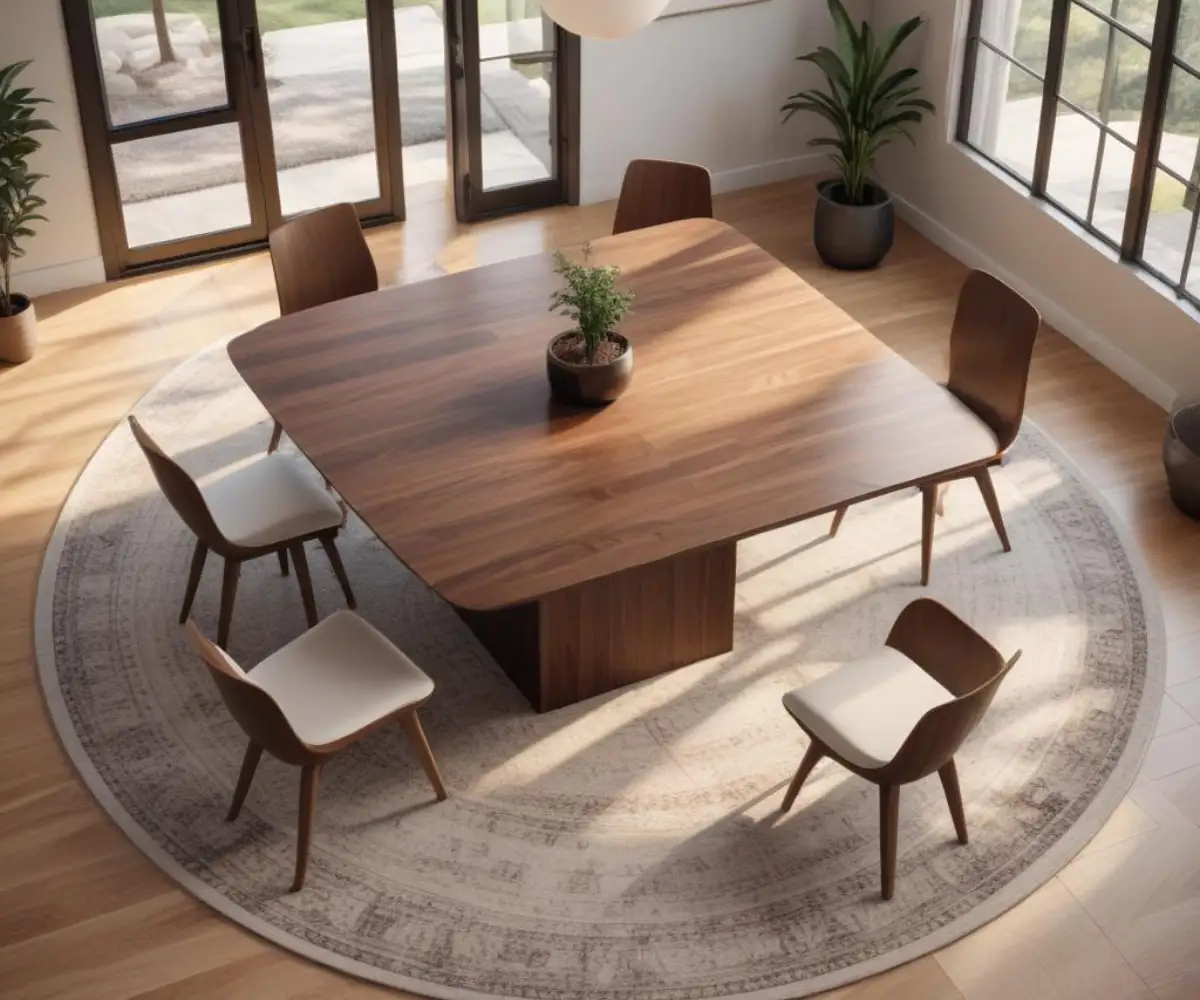
Introducing a round rug under a square table breaks up this uniformity. The soft curves of the rug beautifully juxtapose the hard, straight lines of the table, creating a dynamic tension that draws the eye and adds a layer of professional polish to the space.
Softening the Edges of Your Room
Square and rectangular rooms and furniture can create a very rigid, boxy feeling. A circular rug is the perfect antidote, introducing a sense of flow and softness. It visually disrupts the sharp angles, making the entire area feel more welcoming and organic.
This principle of balancing geometric forms is a cornerstone of compelling design. Just as designers often weigh the benefits of replacing arched windows with square frames to modernize a facade, they use curved elements indoors to soften a structured layout. The rug acts as a gentle counterpoint to the room’s inherent angularity.
Creating a Powerful Focal Point
A round rug beneath a square table doesn’t just occupy floor space; it creates a distinct zone. This combination naturally anchors the furniture, turning it into an undeniable focal point. The circle acts like a spotlight, highlighting the table and chairs as the central feature of the room.
This is especially effective in open-concept living areas or large rooms where you need to define specific functional zones, such as a dining area or a seating arrangement. The rug’s boundary clearly delineates the space’s purpose.
The Golden Rule of Sizing: Your #1 Key to Success
The single most important factor in successfully pairing a round rug with a square table is size. An incorrectly sized rug is what leads to the arrangement looking awkward and unintentional. The goal is both functional and aesthetic: the rug must be large enough to accommodate the table and its chairs comfortably.
The non-negotiable rule is that all four legs of every chair must remain on the rug, even when the chairs are pulled out for someone to sit down. This ensures a stable, comfortable experience for guests and prevents chair legs from snagging on the rug’s edge, which is both annoying and a tripping hazard.
The 24-Inch Guideline for Dining Tables
For dining tables, the industry standard is to have the rug extend at least 24 to 30 inches beyond the edge of the tabletop on all sides. This buffer provides ample room for chairs to be pulled back without slipping off the rug’s surface.
To determine your ideal rug size, first measure the length of your square table. Then, add a minimum of 48 inches (24 inches per side) to that measurement. This final number is the minimum recommended diameter for your round rug.
| Square Table Size (Length) | Minimum Round Rug Diameter | Ideal Round Rug Diameter |
|---|---|---|
| 36 inches x 36 inches | 7 feet (84 inches) | 8 feet (96 inches) |
| 48 inches x 48 inches | 8 feet (96 inches) | 9 feet (108 inches) |
| 54 inches x 54 inches | 9 feet (108 inches) | 10 feet (120 inches) |
| 60 inches x 60 inches | 10 feet (120 inches) | 12 feet (144 inches) |
| 72 inches x 72 inches | 12 feet (144 inches) | 13 feet (156 inches) |
Sizing for Coffee Tables and Seating Areas
The rules shift slightly for living room settings with a square coffee table. Here, the rug’s primary function is to unify the entire seating arrangement. It should be large enough to have at least the front legs of all surrounding sofas and chairs resting on it.
This visually connects the individual furniture pieces, creating a cohesive and inviting conversation area. A small rug that only sits under the coffee table will look like a disconnected island and make the space feel smaller.
Mastering Placement for a Flawless Finish
Once you have the right size, placement becomes the next critical step. The goal is to create a sense of balance and intention. An off-center arrangement will immediately look like a mistake, undermining the entire effect.
Your square table must be perfectly centered on the round rug. Use a tape measure to ensure the distance from the edge of the tabletop to the edge of the rug is equal on all four sides. This precise alignment is crucial for a polished, professional look.
Aligning the Unit Within the Room
After centering the table on the rug, consider the placement of the entire unit within the room. Ideally, it should be centered relative to a significant architectural feature. This could be a chandelier, a large window, or the center of a wall.
This creates a sense of order and harmony within the larger space. Stepping back to view the placement from a doorway will help you judge the overall balance before committing.
Style Synergy: Pairing Rugs and Tables Like a Pro
With size and placement handled, the final layer is style. The materials, colors, and patterns of your rug and table should complement each other. This is where you can truly express your personal style and tie the room together.
Think about the relationship between the two pieces. Do you want the rug to be a bold statement or a subtle, neutral foundation? The answer will guide your choices in texture and pattern.
Material and Texture Harmony
Contrast in texture adds warmth and depth. If you have a sleek, modern table made of glass or metal, consider a plush, high-pile wool rug to add softness. Conversely, a rustic, heavy wood table pairs beautifully with a low-pile, natural fiber rug like jute or sisal.
For dining areas, a low-pile rug is almost always the best choice for practical reasons. They are easier to clean and allow chairs to slide more smoothly. A shag rug under a dining table can be a nightmare for spills and crumbs.
Color and Pattern Coordination
If your table and chairs are a solid, neutral color, a patterned round rug can introduce energy and personality. The curves of a floral or geometric pattern on the rug can further soften the table’s hard lines. Pull one or two accent colors from the rug’s pattern to use in other decor items like curtains, art, or centerpieces.
If your room already has a lot of pattern in the wallpaper or upholstery, a solid-colored or subtly textured rug is a safer bet. This will ground the space without overwhelming it, allowing the square table to remain a key feature.
Common Mistakes to Avoid (and How to Fix Them)
Even with the best intentions, a few common pitfalls can derail this design choice. Being aware of them ahead of time is the best way to ensure a successful outcome.
The most frequent error is choosing a rug that is too small. This is often called the “postage stamp” effect, where the rug looks like a tiny island under the table. It visually shrinks the furniture and makes the entire room feel disproportionate and cramped.
The Chair Leg Dilemma
This mistake is a direct result of improper sizing. When a guest pulls their chair back and two legs fall off the rug, the chair wobbles, creating an unstable and uncomfortable seating experience. Always test your setup by pulling each chair out to a comfortable distance to ensure it remains fully on the rug.
If your current rug is too small, there is no easy fix other than replacing it. It is better to wait and save for the correct size than to live with a rug that is functionally and aesthetically wrong for the space.
Beyond the Dining Room: Applying the Principle Elsewhere
The powerful combination of a round rug and square furniture is not limited to the dining room. This design strategy can be used to create defined, stylish zones throughout your home. Its versatility makes it a valuable tool for any designer or homeowner.
In a living room, a large round rug can form the foundation for a seating area built around a square coffee table. In an entryway, a small round rug under a square accent table can create a welcoming and elegant first impression.
Defining Space in Compact Layouts
This technique is particularly effective in smaller homes or apartments where one room must serve multiple functions. In a studio, for instance, a round rug can carve out a distinct dining or living nook, making the overall layout feel more organized and intentional. Using rugs to create these zones is a genius hack for maximizing every inch of a 440 square feet apartment.
The curve of the rug can also help improve traffic flow in a tight space, as the lack of corners creates a more natural path to walk around the furniture grouping.
The Hidden Language of Shapes in Your Home
The impact of this pairing goes beyond simple aesthetics; it taps into the psychology of shapes. Different geometric forms evoke different feelings and associations. Understanding this can help you craft a space that not only looks good but feels right.
Square and rectangular shapes communicate stability, structure, and formality. They are grounding and reliable. A square table, for example, provides a sense of order and balance.
Circles and round shapes, on the other hand, suggest community, unity, and movement. They are softer, more inclusive, and promote a sense of connection. A round rug encourages flow and a feeling of togetherness.
By placing a round rug under a square table, you are creating a sophisticated blend of these two psychological cues. You are merging the stability and structure of the square with the unity and flow of the circle. The result is a balanced environment that feels both grounded and inviting, a space that is perfect for both formal dinners and relaxed family gatherings.
Your Final Checklist for a Perfect Pairing
Follow these steps to ensure your round rug and square table combination is a design success:
- Measure Your Table: Get the exact length of your square table.
- Calculate Rug Size: Add 48-60 inches to your table’s length to find your target rug diameter. This ensures a 24-30 inch border.
- Consider Chair Depth: Pull a dining chair away from the table to a comfortable position and measure how much space it needs. Ensure your calculated rug size accommodates this.
- Center the Table: Once the rug is in place, perfectly center the table on top of it. Measure to be sure.
- Align in the Room: Position the entire furniture unit so it is centered relative to a major room feature, like a window or light fixture.
- Choose Complementary Styles: Select rug materials, patterns, and colors that harmonize with your table and the overall room decor.
Do not be afraid to break from the old-fashioned rule of matching shapes. Pairing a round rug with a square table is a sophisticated design strategy that adds depth, contrast, and a custom look to any room.
By focusing on the crucial elements of size, placement, and style, you can confidently create a space that is both functional and beautiful. This intentional choice will elevate your decor from ordinary to extraordinary.
