
Round Chandelier Rectangular Table: Your Guide to This Daring Duo
You’ve found the perfect rectangular dining table. It’s the anchor of your room, a statement of clean lines and clear purpose. Now comes the lighting, and you’re drawn to the elegance of a round chandelier, but a voice of doubt creeps in. Can you really mix these two fundamental shapes? The answer is a resounding yes.
Pairing a round chandelier with a rectangular table is a sophisticated design choice that intentionally breaks from the expected. It’s a technique designers use to create visual tension and interest, softening the hard edges of a linear table and adding a touch of the unexpected. This guide will walk you through exactly how to master this combination, ensuring the result is intentional and harmonious, not accidental and awkward.
You'll Learn About
Why This “Mismatch” Works Wonders for Your Dining Space
Conventional wisdom often suggests matching shapes—a linear fixture for a linear table. While that approach is perfectly safe, it can sometimes feel predictable. Pairing a round chandelier with a rectangular table introduces a powerful design dynamic that elevates the entire room.
The circular form of the chandelier offers a beautiful contrast, breaking up the strong, straight lines of the table and chairs below. This interplay between shapes creates a sense of balance and sophistication. It’s a deliberate choice that adds a layer of curated elegance, signaling that the space was thoughtfully designed rather than simply assembled.
The Psychology of Shapes in Design
At its core, this combination is about balancing masculine and feminine energies within a space. Rectangular forms are often perceived as strong, stable, and structured. In contrast, circles and curves are seen as soft, gentle, and inclusive.
By suspending a round fixture over a rectangular table, you’re creating a harmonious dialogue between these two forces. The chandelier’s curves soften the table’s sharp angles, making the dining area feel more inviting and communal. This subtle yet powerful effect can transform the entire emotional atmosphere of the room.
Getting the Proportions Perfect: The Rules You Can’t Ignore
Making this design choice work hinges on one critical factor: proportion. The relationship between the size of your chandelier and your table is what makes the pairing look deliberate and high-end. Get it wrong, and the entire composition can feel unbalanced.
There are two key measurements to master: the chandelier’s diameter and its hanging height. These are not mere suggestions; they are the fundamental rules that ensure a successful outcome.
Rule #1: Master the Chandelier’s Diameter
The most common mistake homeowners make is choosing a chandelier that is too small for their rectangular table. A small, lonely-looking fixture will be completely overwhelmed by the table’s mass, making it feel like an afterthought. You must select a chandelier with enough visual weight to hold its own.
A widely accepted rule of thumb is to choose a round chandelier with a diameter that is between one-half to two-thirds the width of your rectangular table. This ensures the fixture is substantial enough to feel connected to the table. For instance, if your table is 42 inches wide, you should look for a chandelier with a diameter between 21 and 28 inches.
Another crucial guideline is to ensure there are at least 6 inches of clearance on either side of the chandelier to the edge of the table. This prevents the fixture from overpowering the table and allows for a comfortable sense of space. A chandelier that is wider than the table is a significant design misstep.
Rule #2: The Critical Hanging Height
Once you have the right diameter, the next step is hanging the chandelier at the correct height. This is non-negotiable for both aesthetics and functionality. Hang it too high, and the chandelier will feel disconnected from the table, floating aimlessly in the room. Hang it too low, and it will obstruct views and create a claustrophobic feeling for your guests.
The standard rule is to hang the bottom of the chandelier 30 to 36 inches above the tabletop. This range is the sweet spot that creates an intimate, well-lit atmosphere while ensuring a clear line of sight across the table. For ceilings taller than 8 feet, you can adjust this slightly higher. A good guideline is to add 3 inches of hanging height for each additional foot of ceiling height.
Placement and Centering: The Key to a Cohesive Look
Where you place the chandelier is just as important as its size and height. The fixture must be centered over the dining table, not centered in the room. This is a critical distinction that grounds the entire dining setup and creates a unified focal point.
If your dining table isn’t perfectly centered in the room, it can create a design challenge. You may find that the junction box is not where it needs to be. Resisting the urge to simply hang the light where the box is located is crucial. For information on how to handle this common issue, you may find solutions in our guide on what to do when your light fixture is not centered over the table.
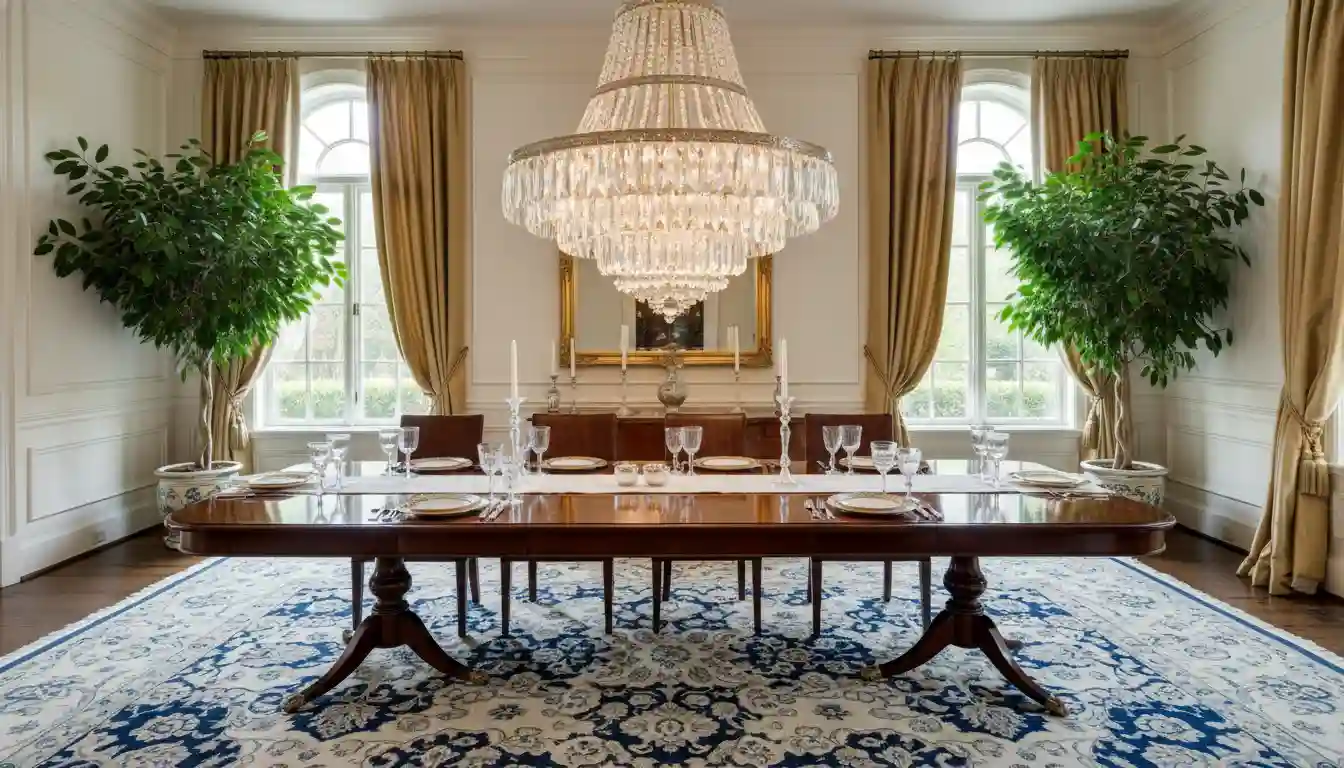
Style Synergy: Matching Your Fixture to Your Table and Decor
Beyond proportions, the style of the chandelier must complement the overall aesthetic of your room. The beauty of the round chandelier and rectangular table combination is its versatility. It works across a wide range of design styles, from modern minimalist to rustic farmhouse.
The key is to create a cohesive narrative. The materials, finish, and design of the chandelier should echo other elements in the room, whether it’s the finish on your chair legs, the hardware on a nearby sideboard, or the style of your artwork.
Modern and Contemporary Pairings
For a modern dining room, consider a sleek, minimalist round chandelier. A simple brass or black metal ring, a sputnik-style fixture, or a drum pendant can create a striking contrast with a clean-lined wooden or glass rectangular table. The simplicity of the fixture’s form allows the intentional shape contrast to take center stage.
Traditional and Farmhouse Aesthetics
In a traditional or farmhouse setting, a classic tiered candelabra-style chandelier or a fixture with elegant crystal details can soften a rustic, heavy-set rectangular table. The juxtaposition of the chandelier’s delicate, ornate features with the table’s solid, rustic presence creates a beautiful and balanced tension. A fixture with a bronze or wrought iron finish can tie the look together.
Glam and Art Deco Combinations
To create a truly glamorous dining experience, pair a bold rectangular table with a dramatic round crystal chandelier. This combination exudes luxury and sophistication. The chandelier becomes the room’s jewelry, casting a sparkling, ambient light that reflects beautifully off the table’s surface. This is a statement-making choice for those who want their dining room to feel special and grand.
Quick Reference: Chandelier Diameter Guide
Choosing the right size can feel daunting. This table provides a quick reference to help you select the ideal round chandelier diameter based on the width of your rectangular table, following the one-half to two-thirds rule.
| Rectangular Table Width | Recommended Round Chandelier Diameter (Minimum) | Recommended Round Chandelier Diameter (Maximum) |
|---|---|---|
| 36 inches | 18 inches | 24 inches |
| 40 inches | 20 inches | 27 inches |
| 42 inches | 21 inches | 28 inches |
| 48 inches | 24 inches | 32 inches |
| 54 inches | 27 inches | 36 inches |
Beyond the Dining Room: Where Else This Pairing Shines
The dynamic pairing of a round light fixture and a rectangular surface is not limited to the dining room. This design principle can be applied in other areas of the home to create a similar high-impact look. Consider a series of round pendants over a rectangular kitchen island or a large, singular round chandelier over a rectangular coffee table in a living room with high ceilings.
The same rules of proportion and placement apply. This concept is even relevant when considering other decor elements, which is why understanding how to use a round rug under a square table can provide further insight into mixing geometric shapes effectively. It’s all about creating intentional contrast to build visual interest.
The Unspoken Rule: Considering Visual Weight
While mathematical formulas for sizing are incredibly helpful, it’s also important to consider the visual weight of the chandelier. This is a more nuanced concept that refers to how heavy a fixture *feels* in a space, regardless of its actual dimensions. An airy, open-frame chandelier made of thin metal will have a lighter visual weight than a dense, crystal-laden fixture of the same diameter.
If your chandelier is visually light, you can often push the size limits and choose a fixture closer to the two-thirds or even three-quarters mark of your table’s width without it feeling overwhelming. Conversely, for a visually heavy fixture, like a solid drum chandelier or one with many intricate parts, it’s often best to stick closer to the one-half mark. Trust your eye to find the right balance for your specific room and furniture.
Common Mistakes to Avoid
Successfully executing this look means avoiding a few common pitfalls. Being aware of these potential missteps can help you navigate the process with confidence.
- Going Too Small: This is the most frequent error. A petite chandelier over a substantial rectangular table looks timid and out of proportion. When in doubt, it is almost always better to err on the side of a larger fixture.
- Ignoring Hanging Height: A chandelier that is hung too high fails to connect with the table, defeating the purpose of creating a cohesive dining vignette. Stick to the 30-36 inch rule for a grounded, intimate feel.
- Forgetting About Light Distribution: A round chandelier casts light in a circular pattern. On a very long rectangular table, this can leave the ends dimly lit. For tables longer than 84 inches, consider a larger diameter chandelier or even a pair of identical round chandeliers to ensure even illumination.
- Creating a Style Clash: While you are intentionally contrasting shapes, the styles should still be harmonious. An ultra-modern fixture paired with a very ornate, traditional table can look jarring rather than complementary unless handled by a skilled designer. Ensure there is a common thread, such as material or color, to tie the pieces together.
Navigating the spatial constraints of a dining area is a common challenge. For those working with specific room dimensions, exploring options like the best size dining table for a 12×12 room can help ensure your foundational pieces are correctly scaled before you even begin to select lighting.
Conclusion: Embrace the Bold Choice
Pairing a round chandelier with a rectangular table is a testament to confident, thoughtful design. It’s a choice that moves beyond the obvious to create a space that is layered, interesting, and personal. By focusing on the critical principles of proportion, placement, and style, you can ensure this dynamic duo works in perfect harmony.
Don’t be afraid to break from the expected. This intentional mix of shapes will not only illuminate your meals but also elevate your entire dining experience, turning the room into a true design statement that is both elegant and inviting. Trust the rules, but also trust your eye, and you will create a space you love for years to come.
