
Roof Overhang Without Posts: The Ultimate Floating Design Guide
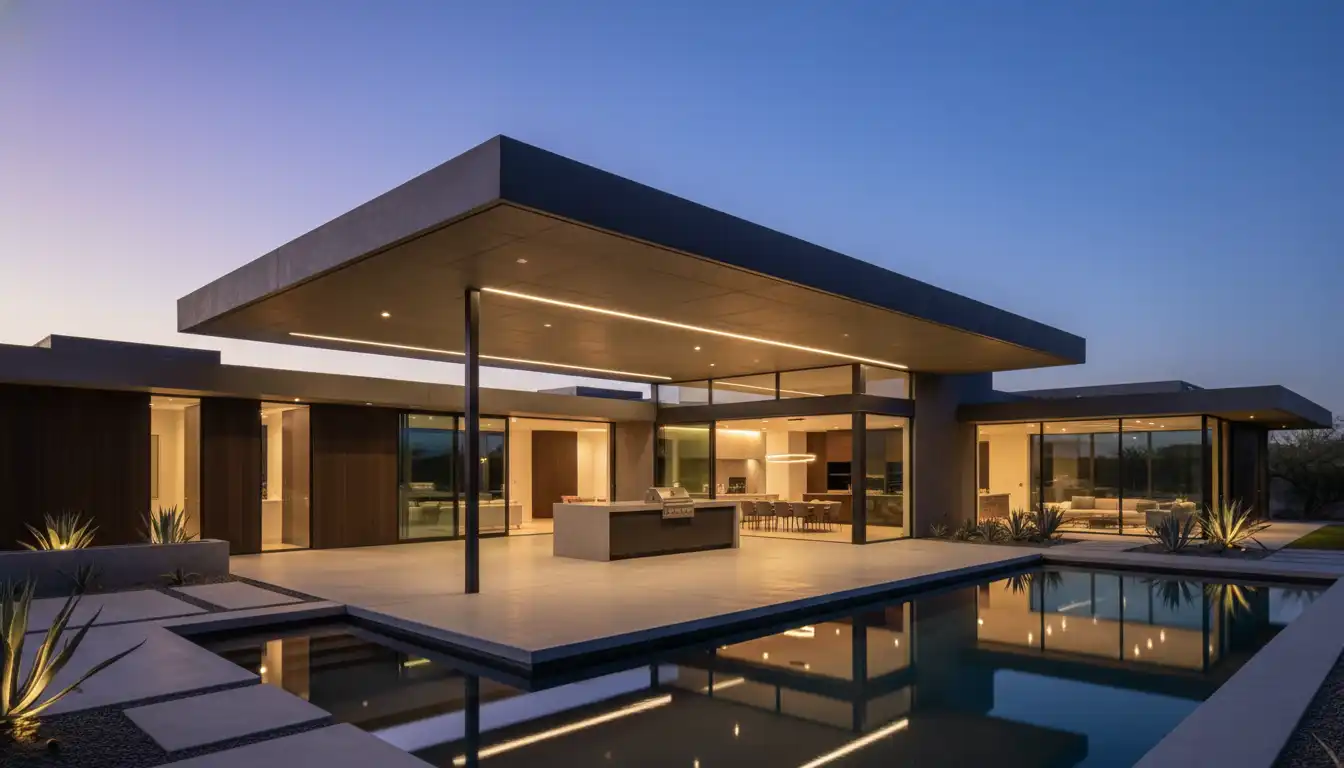
That clean, modern architectural line—a roof that extends effortlessly over a patio or entryway, seemingly floating in mid-air—is a highly sought-after feature. Homeowners desire the unobstructed views and expanded usable space that a roof overhang without posts provides. But this striking aesthetic comes with a critical challenge: ensuring absolute structural integrity.
The core problem isn’t just about achieving a look; it’s about defying gravity safely and permanently. How do you support a heavy structure that projects from a building without the visible reassurance of vertical columns? The answer lies in sophisticated engineering, smart material selection, and flawless execution.
You'll Learn About
Understanding the “Floating” Roof: The Magic of Cantilevers
A roof overhang without posts is known as a cantilevered roof. This design works by transferring all the structural loads back into the main framework of the building. Instead of pushing forces downward through posts, a cantilever creates a powerful rotational force, or bending moment, at the single point where it connects to the house.
This engineering principle requires an incredibly robust connection to the main structure. The internal framing members of the overhang are under immense stress; the top portion is pulled apart (tension) while the bottom is squeezed together (compression). Without proper design, this can lead to catastrophic failure.
Why Traditional Posts Fall Short for Modern Designs
For centuries, posts have been the go-to solution for supporting roof extensions. They are simple, effective, and easy to construct. However, they introduce visual barriers that break up sightlines and clutter outdoor living areas, interrupting the seamless indoor-outdoor flow that is a hallmark of contemporary architecture.
Achieving a modern, minimalist aesthetic often means eliminating visual noise. Posts can feel bulky and traditional, detracting from the sleek, floating effect. Removing them not only enhances the design but also maximizes the flexibility of the space underneath for furniture, walkways, and landscaping.
The Hidden Dangers: What Can Go Wrong?
Creating a large, unsupported overhang is not a DIY project or a job for an inexperienced contractor. The forces at play are significant, and any miscalculation can lead to severe consequences. An improperly designed cantilever is a serious liability.
The most immediate risk is deflection, or sagging. Even a slight droop at the end of the overhang is a clear sign of structural distress. Over time, this can worsen, leading to a complete collapse under heavy loads like snow, ice, or high winds. A sagging porch overhang is a critical warning sign that requires immediate professional assessment to prevent further damage or injury.
Beyond collapse, poor design can cause water damage. Incorrect drainage on a cantilevered roof can direct water back toward the house, compromising the facade, foundation, and structural connection point. This moisture intrusion can lead to rot, mold, and costly long-term repairs.
Engineered for Success: Key Structural Solutions
Safely achieving a post-free overhang requires robust engineering and the right materials. The structure must be meticulously planned by a qualified structural engineer who can calculate the specific loads for your climate, including snow, wind, and the weight of the materials themselves.
Cantilevered Trusses and Rafters
One common method is to use specially designed roof trusses or rafters that extend beyond the exterior wall. A general engineering rule of thumb suggests that for every foot of unsupported overhang, there should be at least two to three feet of “backspan” anchored inside the building’s structure. This long internal lever provides the necessary counterbalance to support the exterior projection safely.
These framing members are often much deeper and stronger than standard rafters. They must be securely fastened to the home’s primary structure to handle the immense tension and compression forces generated at the connection point.
The Power of Steel and Engineered Wood
For more ambitious overhangs that span greater distances, wood alone may not be sufficient. This is where high-strength materials like steel I-beams and engineered wood products come into play. These materials offer superior strength-to-weight ratios, allowing for longer, more dramatic cantilevers.
Steel I-beams can be integrated into the roof or floor system, extending out to support the overhang. They provide exceptional rigidity and can handle massive loads, making them ideal for large spans. Engineered wood, such as Glued Laminated Timber (Glulam) or Laminated Veneer Lumber (LVL), is created by bonding layers of wood together, resulting in beams that are stronger and more dimensionally stable than traditional lumber.
| Structural Method | Maximum Span Potential | Relative Cost | Key Advantage |
|---|---|---|---|
| Standard Lumber Rafters | Short (Typically < 4 feet) | Low | Cost-effective for small overhangs. |
| Engineered Wood Trusses | Moderate (Up to 12 feet) | Medium | Efficiently designed for specific load paths. |
| Glulam / LVL Beams | Long (10-20+ feet) | High | Aesthetically pleasing wood look with high strength. |
| Steel I-Beams | Very Long (20+ feet) | Very High | Maximum strength for the most dramatic spans. |
Beyond Aesthetics: The Functional Benefits of No-Post Overhangs
While the visual impact is a primary driver, roof overhangs without posts offer significant practical advantages that enhance a home’s comfort and longevity. These benefits turn a design choice into a smart, functional investment.
A well-designed overhang acts as a form of passive solar control. During the hot summer months, when the sun is high in the sky, it shades windows from direct sunlight, reducing solar heat gain and lowering air conditioning costs. In the winter, when the sun is lower, its rays can still pass under the overhang to help warm the home naturally.
Furthermore, these overhangs protect your home’s exterior. By shielding walls, windows, and doors from rain and snow, they reduce wear and tear on siding, paint, and window frames. This protection helps prevent water from seeping into the building envelope, preserving the structural integrity of your walls and foundation.
Design and Construction: A Step-by-Step Overview
Building a roof overhang without posts is a complex process that demands professional oversight from start to finish. It is not a project to be taken lightly and always requires collaboration between architects, engineers, and skilled builders.
Step 1: Professional Design and Engineering
The journey begins with a vision, but it must be immediately grounded in professional expertise. Consult with an architect and a structural engineer at the very beginning. They will work together to design an overhang that is both aesthetically pleasing and structurally sound, ensuring it complies with all local building codes and can withstand regional weather challenges like heavy snow or high winds.
Step 2: Choosing the Right Materials
Based on the engineer’s specifications, the appropriate structural materials will be selected. This decision will balance the desired span of the overhang with the budget and the home’s existing structure. The choice between oversized lumber, engineered wood, or steel is one of the most critical decisions in the process.
Step 3: Flawless Integration and Construction
The construction phase requires meticulous attention to detail. The connection point where the cantilevered structure joins the house is the single most critical area. All structural members must be properly seated, anchored, and waterproofed to ensure long-term stability and prevent moisture intrusion.
Step 4: Finishing and Functionality
Once the structure is in place, the finishing touches are applied. This includes the roofing material, soffits, fascia, and integrated drainage systems like gutters. This is also the time to consider adding functional enhancements like recessed lighting, outdoor speakers, or even ceiling fans to transform the covered area into a true outdoor living room.
Retrofitting an Overhang onto an Existing Home
Adding a dramatic, post-free overhang to an existing house is a significant architectural undertaking that requires careful planning. Unlike new construction where the cantilever can be designed into the home’s core structure, retrofitting involves tying into the existing frame, which may not have been built to handle such loads.
The process often involves opening up sections of the existing roof and walls to reinforce the framing and create a secure anchor point for the new structure. Steel beams may need to be inserted and bolted to the home’s existing joists and wall studs. This process is highly invasive and complex, making professional consultation even more critical to ensure the integrity of the original structure is not compromised.
Creating Your Perfect Outdoor Sanctuary
A roof overhang without posts does more than just protect; it defines a space. It creates a sheltered, open-air room that serves as a natural extension of your indoor living area. This new space is a blank canvas for you to design your ideal outdoor retreat.
You can furnish it with comfortable seating, an outdoor dining table, or even a weather-resistant kitchen. To enhance comfort further, consider adding features that extend its usability. Installing mosquito netting for apartment balcony or patio areas can create a bug-free zone for evening relaxation. This addition turns your beautiful architectural feature into a practical, enjoyable living space.
The clean lines of the overhang can be complemented by thoughtful landscaping and property definition. A well-maintained perimeter, perhaps defined by a classic fence, frames the view and completes the overall aesthetic. If you’re undertaking broader property improvements, tasks like learning how to shorten split rail fence rails can be part of creating a cohesive and polished look for your entire home and garden.
Final Thoughts: A Fusion of Art and Science
A roof overhang without posts is the embodiment of modern architectural ambition—a feature that is both strikingly beautiful and highly functional. It creates a sense of lightness and openness, erasing the boundaries between inside and out. However, its success hinges entirely on the invisible principles of structural engineering.
Achieving this “floating” effect is a testament to careful planning, precise calculations, and expert craftsmanship. When done correctly, it is more than just a roof; it is a permanent, valuable, and inspiring addition to your home that will provide shelter, comfort, and style for decades to come.
