
Duplicate Roof Deck on Pitched Roof: Unlock Hidden Space & Views
That sloped roof over your head holds untapped potential. For many homeowners, a pitched roof is simply a necessity, shedding rain and snow. But what if it could be more? Imagine a private outdoor oasis with stunning views, a secret garden, or an unmatched entertaining space, all sitting right on top of your house.
Transforming that angled, unused surface into a functional, beautiful roof deck is an ambitious but increasingly popular project. It solves the problem of limited yard space and unlocks a home’s vertical potential. However, this is not a weekend DIY project; it’s a complex structural and waterproofing challenge that demands meticulous planning and professional execution.
You'll Learn About
Before You Build: Critical Feasibility Checks You Can’t Ignore
Before a single board is laid, a thorough evaluation is essential to determine if a roof deck is even possible. Attempting this project without professional assessment can lead to catastrophic structural failure, severe water damage, and costly legal battles with your municipality. These initial steps are non-negotiable.
Structural Integrity: Is Your Roof Strong Enough?
A roof designed to handle snow and wind is not automatically equipped to support a deck. Your home’s existing structure is the single most important factor. A structural engineer must perform a detailed analysis to determine if the roof can bear the additional weight, known as ‘load’.
This includes the ‘dead load’ of the deck materials themselves and the ‘live load’ of people, furniture, planters, and even snow accumulation on the deck. The engineer will inspect your roof’s joists, rafters, and load-bearing walls to see if they can handle this new, concentrated stress. In most cases, significant reinforcement will be necessary to safely transfer the weight down through the structure to the foundation.
Zoning, Permits, and Building Codes: The Bureaucratic Hurdles
Navigating local regulations is a critical early step. You must contact your local building department to understand the specific rules governing rooftop structures. These can include height restrictions, setback requirements from the property line, and fire safety codes.
A building permit is almost always required for a project of this scale. The application process typically demands detailed architectural plans and a structural engineering report. Homeowners’ Associations (HOAs) often have their own strict rules, so securing their approval is also a must.
Roof Condition and Material Compatibility
The age and condition of your existing roof are crucial. It makes no sense to build a beautiful new deck on top of aging, damaged shingles that will need replacement in a few years. Any existing leaks or weak spots must be addressed first.
Furthermore, the entire roof surface under the proposed deck area will need to be replaced with a robust waterproofing membrane. Building directly on shingles is not a viable option as it will trap moisture and void warranties. This project requires a complete overhaul of the roofing system in the designated area.
Designing Your Dream Rooftop Oasis: Key Construction Methods
Once you have confirmed feasibility and secured the necessary approvals, the focus shifts to design and construction. The primary challenge is creating a perfectly level, waterproof, and durable surface on a slope. This involves specialized techniques that protect your home while providing a beautiful and functional deck.
The Sleeper System: The Foundation of Your Deck
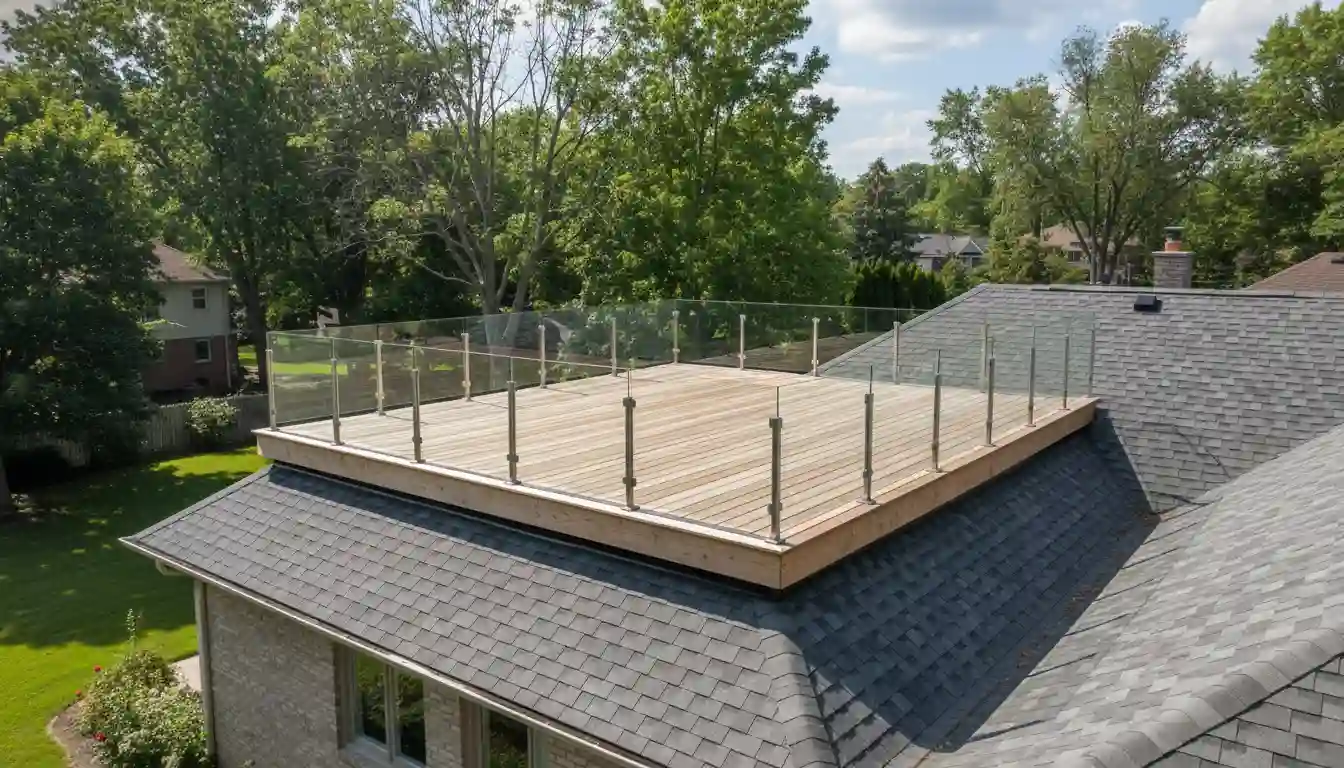
To create a level deck surface over a sloped roof, builders use a sleeper system. This is a framework of wooden joists, typically made from pressure-treated lumber, that sits on top of the waterproofed roof surface. The sleepers are cut at angles or set on adjustable pedestals to counteract the roof’s pitch, resulting in a flat and stable base for the deck boards.
Proper airflow and drainage beneath the sleepers are vital to prevent moisture buildup. The sleepers themselves should not impede the flow of water off the roof, which is why their layout and orientation are critical design considerations. This system effectively creates a floating deck that protects the underlying roof membrane.
Waterproofing: The Single Most Important Step
This is the area where failures are most common and most catastrophic. An impenetrable waterproofing barrier between the original roof sheathing and the new deck system is absolutely essential. This is not just a layer of tar paper; it requires a professional-grade, seamless membrane system.
High-quality EPDM (a synthetic rubber) or TPO (a thermoplastic single-ply) roofing membranes are the industry standard. These materials are installed on the roof sheathing, extending up any adjacent walls (parapets) to create a continuous, bathtub-like basin. All seams are heat-welded or chemically bonded to ensure a perfect seal, effectively creating a new, highly durable roof before the deck is even built on top of it.
Decking Materials: Choosing for Durability and Style
Because rooftop decks are fully exposed to the harshest elements—intense sun, driving rain, and temperature swings—material choice is key. While traditional wood is an option, it requires significant maintenance. Low-maintenance composite and PVC decking are often better long-term solutions.
These engineered materials are resistant to rot, insects, and fading, and they won’t splinter or warp. When selecting your material, consider not just the look but also the heat retention, as darker colors can become very hot in direct sun. Proper spacing between boards is also crucial to allow for drainage and ventilation.
| Decking Material | Pros | Cons | Average Cost (Material Only) |
|---|---|---|---|
| Pressure-Treated Wood | Most affordable option, readily available. | Requires annual sealing/staining, prone to splitting and warping. | $2 – $5 per sq. ft. |
| Cedar/Redwood | Naturally resistant to rot and insects, beautiful appearance. | Higher cost, requires regular maintenance to maintain color. | $6 – $15 per sq. ft. |
| Composite | Low maintenance, durable, won’t rot or splinter, wide color selection. | Higher initial cost, can get hot, some look less natural. | $8 – $20 per sq. ft. |
| PVC (Polyvinyl Chloride) | Extremely low maintenance, highly resistant to stains and fading, lightweight. | Highest initial cost, can be prone to static buildup. | $10 – $22 per sq. ft. |
The Nitty-Gritty: Essential Features for a Safe and Usable Deck
A successful roof deck is more than just a flat surface. Several key components are required by building codes to ensure it is safe, functional, and durable for years to come. These elements should be integrated into the design from the very beginning.
Railings and Safety Barriers: Beyond the Bare Minimum
Safety is the top priority. Building codes mandate specific requirements for guardrails on any elevated surface. For residential decks, railings must typically be at least 36 inches high, though some local codes require 42 inches. The spacing between balusters must be less than 4 inches to prevent small children from squeezing through.
The entire railing system must be engineered to withstand significant force, especially in areas prone to high winds. Material options range from classic wood and metal to modern cable rail and glass panel systems that offer safety without obstructing the view.
Drainage Solutions: Preventing a Waterfall in Your Living Room
While the waterproofing membrane is the primary defense against leaks, a secondary drainage system is crucial. The sleeper system is designed to allow water to flow freely underneath the deck boards, following the original pitch of the roof to gutters or scuppers. Thinking about how to add a pitch for perfect drainage is a concept that applies here, even though you are building on an existing slope.
It is vital that this path remains unobstructed. Regular cleaning to remove leaves and debris is necessary to prevent water from damming up and potentially finding a way into your home. This is especially important for homes in regions that could experience events like those requiring a post-storm recovery guide, as debris can quickly clog drainage paths.
Access and Egress: How Will You Get There?
A beautiful deck is useless if you can’t get to it easily and safely. Common access solutions include converting a window into a door from an adjacent room, installing a rooftop hatch with a ship’s ladder, or building an exterior spiral staircase. The best option depends on your home’s layout, your budget, and local building codes, which have strict requirements for egress.
Cost vs. Value: Is a Pitched Roof Deck a Smart Investment?
A roof deck on a pitched roof is a significant financial undertaking. However, it can also add substantial value to your home by creating highly desirable outdoor living space, especially in urban areas where yards are small or nonexistent. The return on investment can be considerable, both in terms of property value and quality of life.
Unpacking the Budget: What Really Drives the Cost?
The total cost can vary dramatically based on size, materials, and complexity. The biggest expenses are typically not the decking itself, but the necessary structural reinforcement and professional-grade waterproofing. Other major cost factors include fees for the structural engineer and architect, building permits, and the access point you choose (a door is more expensive than a hatch).
The ROI of a View: How a Roof Deck Boosts Home Value
In many real estate markets, a well-built rooftop deck is a major selling point. It adds usable square footage to your home and offers a luxury amenity that few other properties can match. The unique appeal of a private outdoor space with panoramic views can lead to a significant increase in your home’s resale value, often recouping a large portion of the initial investment.
Common Pitfalls and How to Expertly Avoid Them
This complex project is fraught with potential for expensive mistakes. Understanding the common pitfalls is the first step in avoiding them. Rushing the process or cutting corners will almost certainly lead to long-term problems.
The Hidden Dangers of DIY: Why a Pro is Non-Negotiable
Under no circumstances should this be a DIY project. The risks of improper structural work and failed waterproofing are far too high. A small mistake can lead to a roof collapse or chronic, hidden leaks that cause thousands of dollars in water damage and mold growth. Always hire a team of licensed and insured professionals, including a structural engineer, an architect, and an experienced roofing or deck-building contractor.
Underestimating Weight: More Than Just People and Furniture
When calculating load capacity, it’s easy to forget about ancillary items. Large planters filled with wet soil, hot tubs, outdoor kitchens, and significant snow accumulation add immense weight. Discussing your intended use with the structural engineer is crucial. For instance, the engineering needed to support a roof with a very steep 14/12 roof pitch designed for snow is different from what’s needed for a deck meant to hold a party of 20 people.
Long-Term Maintenance: Protecting Your Investment
While low-maintenance materials can reduce your workload, no deck is “no-maintenance.” Plan for regular inspections, at least twice a year and after major storms. Check the deck surface and railings for any signs of wear, and, most importantly, clear away any debris that could clog the drainage paths under the deck to ensure the longevity of your investment.
