
Roman Shades Over Blinds: Your Windows Look Unfinished? Fix It Now
You’ve installed blinds on every window. They’re functional, they offer privacy, and they get the job done. But something feels off. Your windows look bare, unfinished, and lack the warmth and personality that ties a room together. This is a common problem: while practical, standard blinds can often feel sterile and fail to add any real aesthetic value to your home.
The stark, hard lines of vinyl or wood blinds can feel impersonal and cold. They might not harmonize with your carefully chosen furniture, color palette, or the overall cozy vibe you’re aiming for. This creates a visual disconnect, leaving your windows as a purely functional element rather than a design feature.
You'll Learn About
The Core Problem: Why Blinds Alone Aren’t Enough
The issue with relying solely on blinds extends beyond simple aesthetics. Standard blinds often have functional limitations that prevent them from being a complete window treatment solution. Understanding these drawbacks is the first step toward finding a better answer.
One of the biggest issues is light leakage. Even when closed, horizontal and vertical blinds have small gaps between the slats that allow slivers of light to penetrate, preventing true darkness. Furthermore, they offer minimal insulation, allowing heat to escape in the winter and enter in the summer, which can impact your energy bills.
Unveiling the Ultimate Solution: Layering Roman Shades Over Blinds
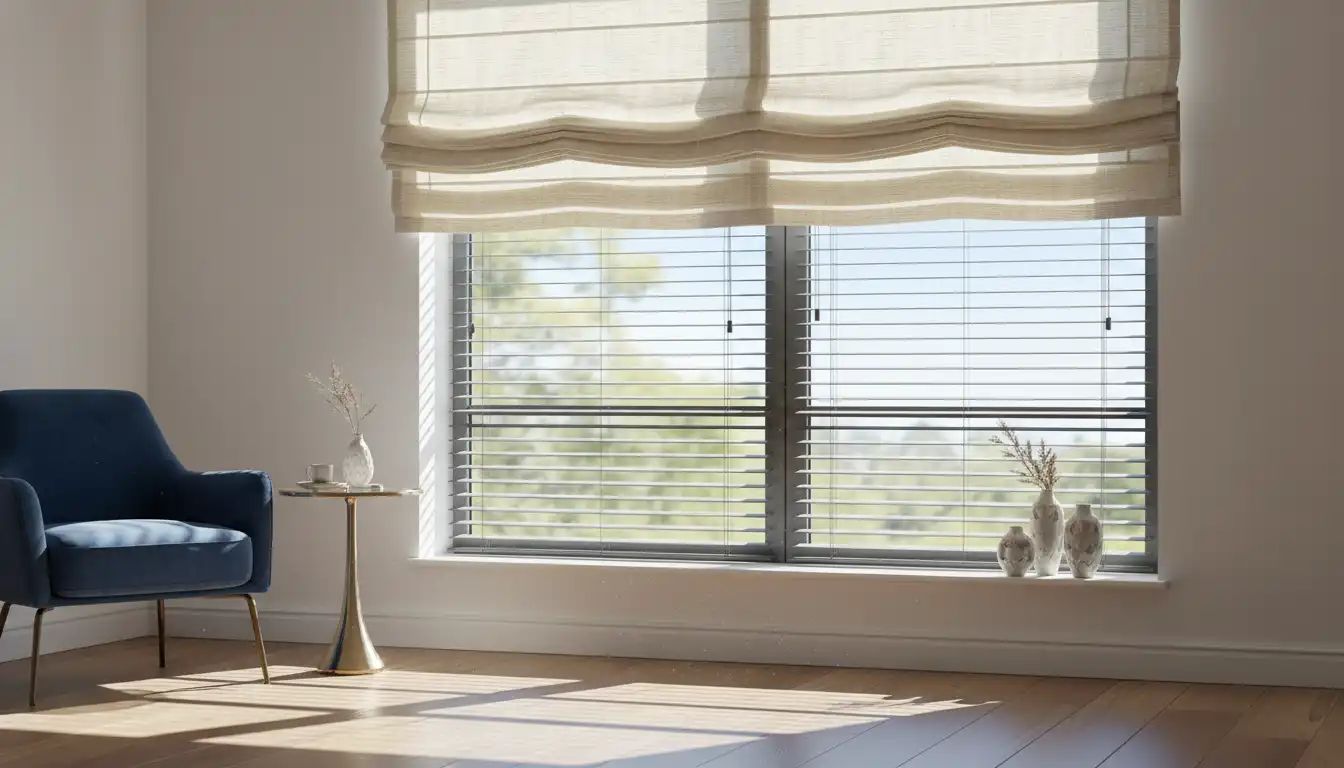
The answer is to layer your window treatments. Specifically, mounting elegant, fabric Roman shades over your existing blinds transforms your windows from a functional necessity into a stunning design statement. This combination offers the best of both worlds: the precise light management of blinds and the decorative softness of shades.
This layered approach immediately adds depth, texture, and color, solving the problem of “unfinished” windows. It introduces a soft fabric element that balances the hard lines of the blinds, creating a sophisticated, custom look that elevates the entire room. It’s a professional design secret that is both surprisingly simple and incredibly effective.
The Transformative Benefits of This Layered Approach
Combining Roman shades with blinds is more than just a style upgrade; it’s a functional powerhouse. This pairing unlocks a new level of control over your home’s environment, offering enhanced comfort and versatility.
The dual layers provide superior insulation, trapping air between the blind and the shade to help regulate indoor temperatures and potentially lower energy costs. You also gain unparalleled control over light and privacy. Use the blinds to tilt and filter harsh sunlight during the day, and lower the Roman shades at night for complete darkness and privacy.
Aesthetic Elegance and Endless Customization
The primary advantage of adding Roman shades is the immediate visual enhancement. Available in a vast array of fabrics, from lightweight linens to rich velvets, you can introduce patterns and colors that perfectly complement your decor. This layering technique makes your windows look intentionally designed and luxurious.
Whether you want to create a bold focal point with a vibrant pattern or add subtle texture with a neutral woven fabric, the options are limitless. You can even explore what Roman shades look like from the outside through our guide here, ensuring your home’s curb appeal is as polished as its interior.
Achieving Superior Light Control and Privacy
The combination of blinds and Roman shades offers a dynamic system for managing light. For instance, you can keep the Roman shades raised to enjoy the view, using only the blind slats to deflect glare. For movie nights or sleeping in, lowering a blackout Roman shade over the closed blinds creates a room-darkening effect that a single treatment cannot achieve.
This layering strategy effectively eliminates the light gaps common with blinds-only setups. The fabric shade acts as a solid barrier, ensuring that your bedroom remains dark for restful sleep and your living room is free from screen glare. This level of control makes your space more comfortable and usable at all hours.
How to Correctly Layer Roman Shades Over Your Blinds
Proper installation is key to ensuring both your blinds and Roman shades operate smoothly without interfering with each other. The most critical decision you’ll make is the mounting style for your new Roman shades, as your blinds are likely already installed.
Since your blinds are probably mounted inside the window frame (an inside mount), the Roman shade will almost always need to be an outside mount. This means the shade will be installed on the wall or trim above the window, covering the entire window frame. This approach ensures there is enough space for both treatments to function independently.
Step-by-Step Measurement Guide for Outside Mounts
Accurate measurements are non-negotiable for a professional-looking fit. You will need a steel measuring tape for the best results. Measure the area you intend to cover, not just the window opening.
First, measure the width. Determine the full width of your window, including the trim or casing, and add at least 1.5 to 3 inches to each side. This overlap is crucial for blocking light gaps and ensuring privacy. Next, measure the height. Decide where you want the top of the shade to be mounted—typically 2 to 4 inches above the window frame—and measure from that point down to where you want the shade to end, which is usually the bottom of the window sill or trim.
Choosing the Right Fabric and Style
The fabric you choose for your Roman shades will define the room’s character. For living areas, light-filtering fabrics like cotton or linen can create a warm, inviting glow. For bedrooms or media rooms, a blackout fabric is essential for blocking light and ensuring privacy.
Consider the texture and pattern as well. A solid, neutral shade can provide a calming, sophisticated backdrop, while a bold pattern can serve as a stunning focal point. Think about how the fabric will complement your existing decor and the hard material of the blinds beneath. You can even explore other shade styles, though many find that options like honeycomb shades can sometimes look dated compared to the timeless appeal of Roman shades.
Key Technical Considerations You Can’t Ignore
Beyond aesthetics, there are practical details to address. The most important is ensuring there is enough clearance, or “projection depth,” for the Roman shade to hang over the blinds without snagging or obstructing their operation.
An outside mount naturally provides this clearance, as the headrail is mounted on the wall above and outside the window frame. This placement allows the Roman shade to hang freely in front of the inside-mounted blinds. Always check the hardware specifications to confirm the projection depth before purchasing.
The Secret to a Cohesive Look: Unifying Different Sized Windows
One of the most powerful, yet rarely discussed, benefits of this layering technique is its ability to create visual harmony. If you have different height windows in the same room, mounting all the Roman shades at the same height above the frame creates a uniform sightline. This masterful trick makes the windows appear identical in size, bringing a sense of order and intention to the space.
By establishing a consistent top line for all your window treatments, you guide the eye smoothly across the room, masking architectural quirks. This creates a polished and high-end custom look that elevates your entire interior design scheme.
| Feature | Blinds Only | Roman Shades Over Blinds |
|---|---|---|
| Aesthetic Appeal | Functional, can look sterile or unfinished | Adds softness, color, texture; looks polished and custom |
| Light Control | Good, but light leaks through slats | Excellent; blinds tilt for diffusion, shade blocks all light gaps |
| Privacy | Good | Superior; dual layers ensure no visibility from outside |
| Insulation | Minimal | Greatly improved; traps air between layers to save energy |
| Customization | Limited to material and color of slats | Virtually limitless fabric choices, patterns, and styles |
| Best For | Basic light filtering and privacy needs | Complete light/privacy control and achieving a designer look |
Final Thoughts: The Smartest Upgrade for Your Windows
Stop letting your windows look like an afterthought. Layering Roman shades over your existing blinds is a transformative solution that addresses both functional needs and aesthetic desires. It’s a versatile strategy that offers enhanced light control, superior privacy, and better insulation, all while adding a crucial layer of style and warmth to your home.
This simple addition corrects the “unfinished” look of blinds alone, turning your windows into beautifully integrated design features. With careful measurement and thoughtful fabric selection, you can achieve a sophisticated, cohesive look that makes your entire home feel more complete and professionally designed.
