Rhino Flooring Reviews: The Unvarnished Truth Before You Buy
Choosing the right flooring feels like a monumental task. You’re searching for that perfect blend of stunning aesthetics, ironclad durability, and a price tag that doesn’t make you faint. Amidst the endless options, Rhino Flooring emerges as a popular contender, but what’s the real story behind the brand? This review cuts through the marketing noise to give you the unvarnished truth.
The core problem for homeowners is navigating a sea of claims to find a floor that genuinely withstands the chaos of daily life—from pet claws and kids’ toys to accidental spills and heavy furniture. This article will dissect every facet of Rhino Flooring, exploring its strengths and weaknesses to help you decide if it’s the right foundation for your home.
You'll Learn About
What Exactly Is Rhino Flooring? Beyond the Brand Name
Rhino Flooring isn’t a single type of material but a brand encompassing a range of modern flooring solutions, primarily focusing on luxury vinyl. This category includes Luxury Vinyl Tile (LVT), which mimics stone or ceramic, and Luxury Vinyl Plank (LVP), which replicates the look of hardwood. Understanding its construction is key to appreciating its performance.
At its core, Rhino vinyl flooring is built in layers. It starts with a stable backing, followed by a rigid or semi-rigid core, a high-definition design layer that provides the visual appeal, and a crucial protective top layer known as the wear layer. It is this multi-layer construction that delivers the product’s signature durability and resistance to everyday wear and tear.
The Science of the Wear Layer: Not All Vinyl Is Created Equal
The single most important component for durability is the wear layer. Rhino Flooring typically uses a robust urethane-based coating infused with hard particles like aluminum oxide. This combination creates a tough, transparent shield over the printed design, resisting scratches, scuffs, and stains with remarkable effectiveness.
Unlike older, basic vinyl that could easily tear or show marks, this advanced technology ensures the beautiful wood or stone look is preserved. The thickness of this layer is measured in mils (one-thousandth of an inch), and a thicker wear layer generally signifies a more durable, longer-lasting product suitable for high-traffic areas.
The #1 Problem: Will Rhino Flooring Withstand Real Life?
The most pressing question for any homeowner is about durability. You need a floor that can handle the unpredictable nature of a busy home without constant worry. Rhino Flooring markets itself as a tough, resilient option, but let’s break down its performance against the three biggest household culprits: scratches, water, and dents.
This is where the robust construction of luxury vinyl truly shines. The layered design is engineered specifically to tackle these common challenges, offering a practical solution for active families, pet owners, and high-traffic spaces like kitchens and hallways.
Scratch Resistance: A Pet Owner’s Dream or Nightmare?
For homes with pets, flooring is a major concern. Rhino Flooring’s strong wear layer provides excellent scratch resistance against pet claws. While no floor is completely scratch-proof, the tough top coating significantly minimizes the damage from scampering paws and claws. User reviews frequently praise its ability to maintain a clean, unscratched appearance even in multi-pet households.
Beyond pets, this resilience is vital for protecting against dragged furniture, kids’ toys, and dropped items. This feature alone makes it a compelling choice for those who want a beautiful floor without the constant stress of potential damage.
Water and Moisture: Is It Truly Waterproof?
One of the standout features of Rhino’s luxury vinyl products is their waterproof nature. The core of these planks and tiles is typically made from a stone-plastic composite (SPC) or wood-plastic composite (WPC), materials that do not swell, warp, or degrade when exposed to water. This makes Rhino an exceptional choice for moisture-prone areas.
It’s ideal for kitchens, bathrooms, laundry rooms, and basements where spills and humidity are common. Unlike laminate or hardwood, which can be ruined by water damage, Rhino Flooring offers peace of mind. A proper installation ensures a tight seal between planks, preventing water from seeping through to the subfloor. When finishing a bathroom, achieving a seamless look is key, and some homeowners even debate the need to caulk between the tub and new tile to maintain that clean, waterproof barrier.
The Dent Dilemma: Heavy Furniture and Dropped Pans
The rigidity of Rhino Flooring’s core, especially the stone-plastic composite (SPC) variety, offers substantial protection against dents. SPC cores are dense and solid, distributing the force from a dropped object or the weight of heavy furniture over a wider area. This minimizes the risk of indentations that can plague softer flooring types.
While a very heavy object dropped from a significant height could still cause damage, for everyday incidents like a dropped can of food or the legs of a sofa, Rhino Flooring holds up exceptionally well. This structural integrity ensures the floor remains smooth and unblemished for years.
Solving the Style vs. Substance Dilemma
Historically, choosing a durable floor often meant compromising on style. Homeowners were faced with options that were practical but lacked the warmth and elegance of natural materials. Rhino Flooring directly addresses this conflict by offering a vast array of designs that successfully merge high performance with sophisticated aesthetics.
The goal is no longer just to cover a subfloor but to enhance the entire design of a room. Advanced printing technology allows Rhino to create vinyl planks and tiles that are nearly indistinguishable from real hardwood, stone, and ceramic, providing substance without sacrificing an ounce of style.
The Realism Factor: How Authentic Does It Look?
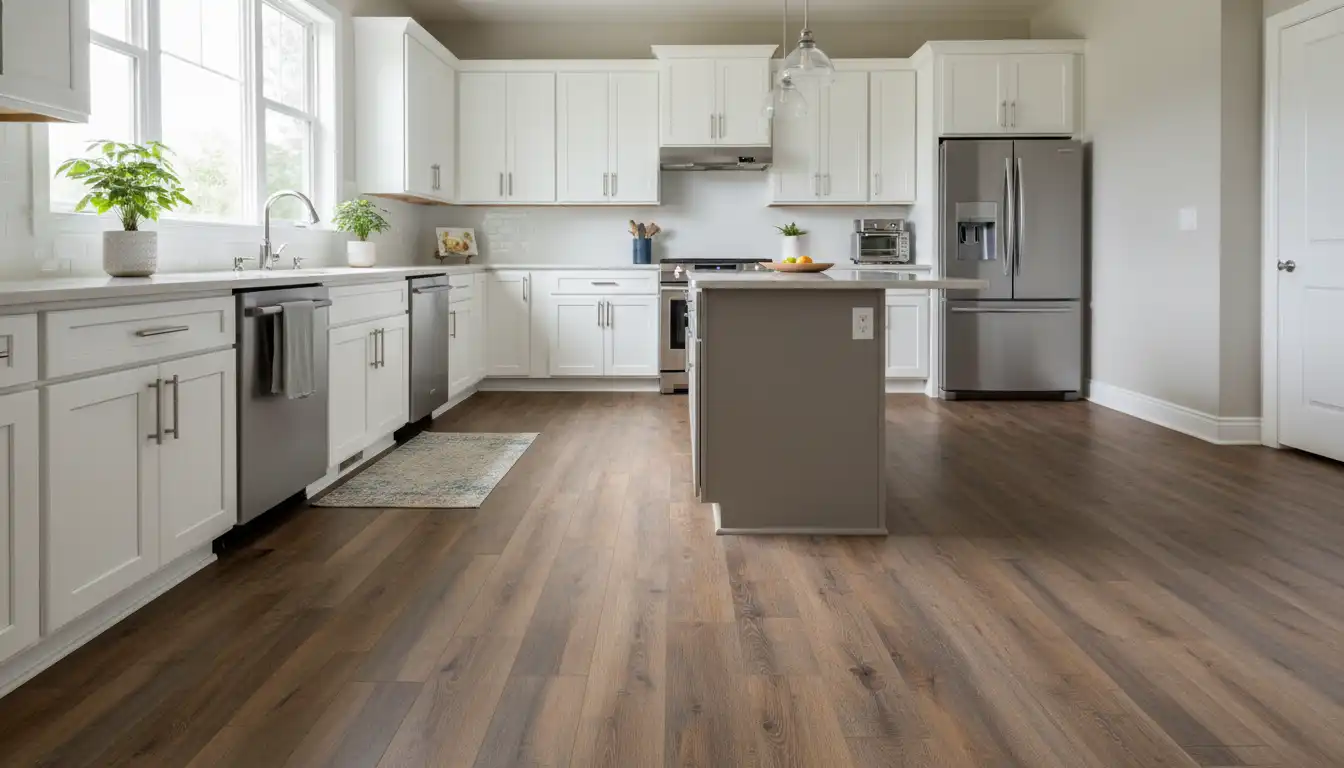
Modern manufacturing techniques have elevated vinyl flooring to a new level of realism. Rhino Flooring utilizes high-definition printing to capture the intricate grain patterns of wood and the subtle veining of natural stone. Many collections also feature “Embossed in Register” (EIR) technology, where the surface texture is precisely aligned with the printed visual pattern. This means you can feel the grain of the “wood” or the texture of the “stone,” adding a crucial layer of authenticity.
This attention to detail eliminates the flat, artificial look of older vinyl. When installed, it can be genuinely difficult for guests to tell that it’s not a natural material, allowing you to achieve a high-end look on a practical budget.
Installation and Its Impact on a Flawless Finish
Even the highest quality flooring can look subpar with a poor installation. Rhino Flooring is designed to be user-friendly, with most plank products featuring a click-lock system. This allows the planks to fit together securely and seamlessly without the need for messy adhesives, making it a popular choice for DIY enthusiasts.
However, the foundation is everything. A successful installation requires a clean, level, and dry subfloor. Rushing this preparation is one of the biggest mistakes. Taking the time to ensure the subfloor is perfect will prevent issues like gapping, buckling, or an uneven feel underfoot, guaranteeing a professional and long-lasting finish.
The Financial Question: Is Rhino Flooring a Smart Investment?
For any home renovation project, the budget is a primary consideration. Flooring is a significant investment, and it’s important to understand not just the initial cost but the long-term value. Rhino Flooring is positioned as an affordable yet high-quality alternative to traditional materials like hardwood and stone.
Its price point, combined with its durability and low maintenance requirements, makes it a very attractive option. When evaluating the cost, it’s helpful to compare it directly with other popular flooring types to see where it provides the most value.
| Flooring Type | Average Cost (Material & Install) | Durability | Water Resistance | Maintenance |
|---|---|---|---|---|
| Rhino Vinyl Plank | $4 – $8 per sq. ft. | High | Excellent (Waterproof) | Low |
| Hardwood | $10 – $20 per sq. ft. | Medium (Scratches easily) | Poor | High |
| Laminate | $3 – $7 per sq. ft. | Medium | Poor to Fair | Low |
| Carpet | $3 – $8 per sq. ft. | Low (Stains easily) | Poor | High |
Uncovering Hidden Costs: Beyond the Price Per Square Foot
When budgeting for new floors, the price per square foot of the material is just the starting point. It’s crucial to factor in additional expenses to avoid surprises. These can include the cost of underlayment, floor preparation materials like leveling compounds, delivery fees, and the removal and disposal of your old flooring.
Furthermore, while DIY installation can save on labor, you may need to purchase or rent specialized tools. This is a common theme in home upgrades; for instance, many people wonder why The Shade Store is so expensive, and the answer often lies in the all-inclusive service, quality, and installation that is bundled into the final price.
Long-Term Value and Resale
While solid hardwood is often seen as the gold standard for adding resale value, high-quality, modern vinyl flooring is increasingly viewed favorably by homebuyers. Its waterproof and highly durable nature is a major selling point, especially for families with children or pets. A brand new, stylish, and low-maintenance floor can be a significant factor in making a home feel move-in ready.
Because Rhino Flooring resists wear and damage so effectively, it will likely still look new when it comes time to sell your home. This excellent condition can contribute positively to your home’s overall appeal and market value.
The Unspoken Challenge: Noise and Comfort
When researching flooring, durability and appearance dominate the conversation. However, the underfoot feel and acoustic properties of a floor are just as crucial to your daily comfort and quality of life. A floor that is noisy, hard, or cold can detract from the sense of comfort in your home.
This is an area where different types of flooring—and even different types of Rhino Flooring—can vary significantly. The material composition of the core and the use of an underlayment play a huge role in determining how a floor sounds and feels.
Underfoot Feel: Rigid Core vs. Cushioned Vinyl
Rhino offers products with different core technologies that affect comfort. Floors with an SPC (Stone Plastic Composite) core are incredibly rigid and durable but can feel harder underfoot. In contrast, WPC (Wood Plastic Composite) cores contain a foaming agent that makes them slightly softer and more comfortable to stand on for long periods.
Many Rhino products also come with a pre-attached underpad. This thin layer of foam or cork not only simplifies installation but also adds a bit of cushioning and helps to insulate the floor from a cold concrete subfloor, enhancing overall comfort.
Acoustic Performance and Sound Dampening
Hard-surface floors can be noisy, amplifying the sound of footsteps, dropped items, and pet claws. The density of the flooring material and the presence of an underlayment are key to managing this impact noise. A quality underlayment acts as a shock absorber, deadening vibrations before they can travel through the floor to the rooms below.
For homeowners especially concerned with sound transmission between floors, investing in a high-performance acoustic underlayment is wise. While standard underpads help, those seeking more robust solutions might explore a Sonopan alternative or other dedicated soundproofing materials to create a truly quiet and peaceful home environment.
Rhino Flooring Reviews: What Real Homeowners Are Saying
To get a truly balanced perspective, it’s essential to look beyond marketing materials and examine the experiences of actual customers. Synthesizing reviews from various online forums, retail sites, and community discussions reveals consistent themes regarding both the advantages and disadvantages of Rhino Flooring.
Overall, the feedback is largely positive, particularly concerning the product’s core strengths. However, some common complaints also emerge, which often point back to issues with installation or mismatched expectations.
The Pros: What Users Love
The most frequently cited benefit in user reviews is the combination of durability and ease of maintenance. Homeowners consistently praise how well Rhino Flooring holds up to pets and children, resisting scratches and cleaning up easily. The waterproof feature is another major highlight, with many users expressing relief at not having to worry about spills in the kitchen or bathroom.
Many DIY installers also comment on the straightforward installation process, thanks to the click-lock design. The authentic appearance is another point of satisfaction, with users often stating that their new floors look just like real wood but without the associated upkeep.
The Cons: Common Complaints and How to Avoid Them
Negative reviews, though less common, tend to focus on a few key areas. Some users have reported issues with planks not locking together perfectly, leading to small gaps. This problem almost always stems from an uneven subfloor, highlighting the critical importance of proper preparation. If the subfloor isn’t perfectly flat, the locking mechanisms can be stressed and may not engage correctly.
Another occasional complaint is that the pattern on the planks can appear repetitive. To avoid this, it is crucial to purchase about 10% extra flooring and mix planks from several different boxes during installation. This ensures a more natural, varied look and prevents noticeable pattern repeats.
Our Final Verdict: Is Rhino Flooring the Right Choice for Your Home?
After a thorough review of its construction, performance, and real-world feedback, it’s clear that Rhino Flooring offers a compelling solution for the modern homeowner. It successfully balances the demands for durability, style, and affordability, making it a strong contender in the competitive flooring market.
It stands out as a practical, high-performance product that solves many of the common problems associated with other flooring types. Its waterproof and scratch-resistant properties, in particular, make it an excellent choice for a wide range of applications.
Who It’s For, and Who Should Reconsider
Rhino Flooring is an ideal choice for busy families, pet owners, and anyone looking for a low-maintenance, worry-free floor for any room in the house. It excels in high-traffic areas and moisture-prone spaces like kitchens, bathrooms, and basements. If you want the look of hardwood or stone without the high cost and demanding upkeep, this is one of the best options available.
However, if your primary goal is to maximize the resale value of a luxury home, traditional solid hardwood may still hold a slight edge in perceived prestige. Additionally, for those who prefer the natural, organic feel of real wood underfoot and are willing to invest in its maintenance, nothing can truly replace the genuine article. Ultimately, Rhino Flooring delivers exceptional value and performance, making it a smart and stylish investment for the vast majority of homes.