Replace Gas Logs with Glass: A Stunning Fireplace Makeover
That old set of ceramic logs in your gas fireplace has served you well. It’s provided warmth and a traditional aesthetic for years. But lately, you’ve been looking at it and thinking it feels dated, dusty, and uninspired.
You want something modern, clean, and captivating that transforms your hearth into a true centerpiece. This is the moment many homeowners decide to replace gas fireplace logs with glass, a simple upgrade that delivers a spectacular visual and functional payoff.
This comprehensive guide will walk you through every step of this transformative project. We’ll cover everything from the dazzling benefits of fire glass to the critical safety checks and the detailed installation process that will bring new life to your living space.
You'll Learn About
Why Fire Glass is the Modern Choice for Your Fireplace
Swapping out faux logs for shimmering fire glass is more than just an aesthetic choice; it’s a complete upgrade to your fireplace’s performance and ambiance. The benefits are compelling, making it easy to see why this trend has become a staple in modern home design.
Fire glass consists of specially tempered glass designed to withstand extreme temperatures without melting, cracking, or discoloring. Unlike regular glass, which would shatter dangerously, fire glass is built for safety and longevity. It doesn’t produce smoke, soot, or toxic fumes, offering a clean and low-maintenance alternative to logs. One of the most significant advantages is its ability to radiate heat more effectively than ceramic logs, potentially increasing your fireplace’s heat output by a noticeable margin.
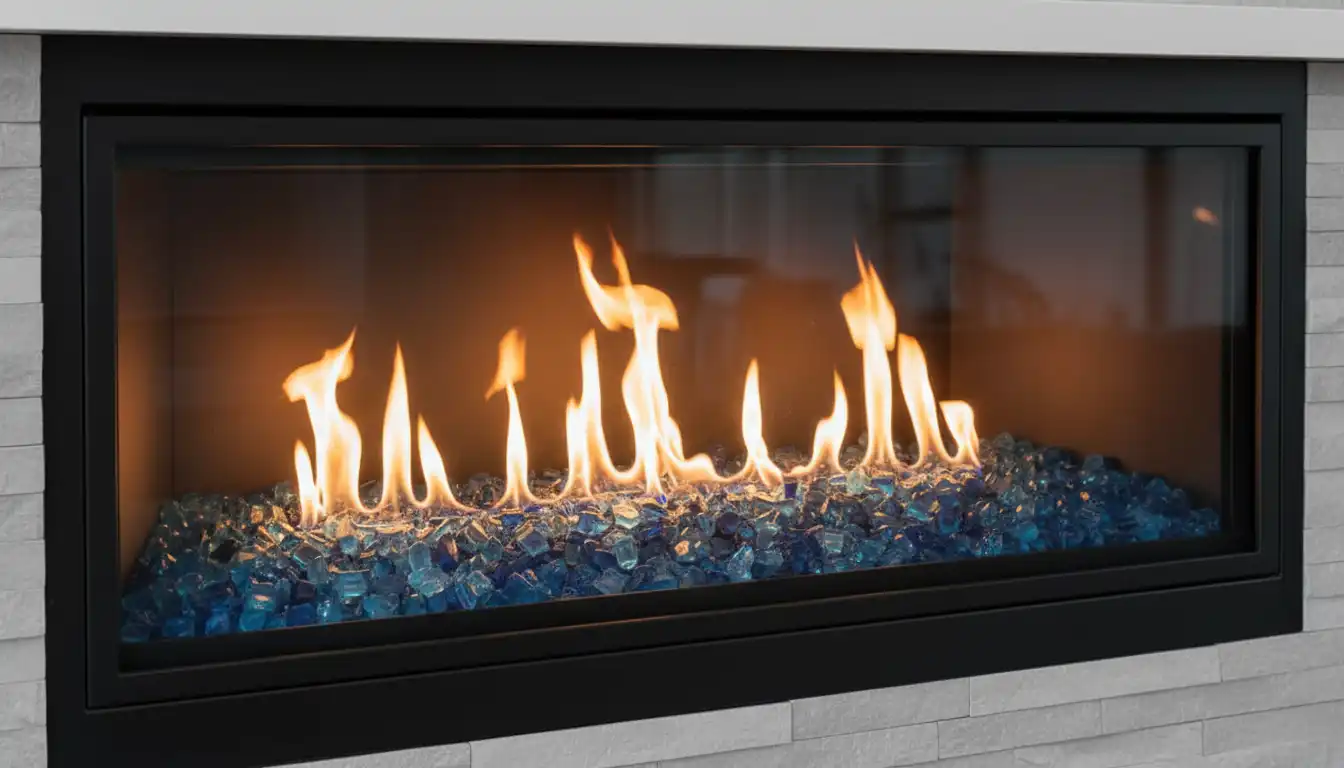
The visual appeal is undeniable. The flames dance and flicker through the translucent gems, creating a mesmerizing liquid-fire effect. With a vast array of colors, shapes, and sizes available, you can customize the look to perfectly match your home’s decor, from cool blues and greens to warm ambers and bold blacks.
Is Your Fireplace Ready for a Fire Glass Conversion?
Before you get caught up in choosing colors, the most important step is to determine if your fireplace is compatible with fire glass. This is a critical safety consideration that you must not overlook. Not all gas fireplaces are created equal, and using fire glass in an incompatible unit can be hazardous.
The primary factor is your fireplace’s ventilation system. Fire glass is almost exclusively intended for fully vented gas fireplaces. These units have a chimney or flue that directs all combustion byproducts safely outside your home. In a vented system, the fire glass allows for a beautiful, clean burn.
Conversely, vent-free or ventless fireplaces are generally NOT compatible with fire glass. These systems are precision-engineered to burn extremely clean, with specific log placements that ensure complete combustion. Altering this setup by adding fire glass can disrupt the airflow and flame pattern, leading to incomplete combustion, which produces soot and, more dangerously, carbon monoxide. Always consult your fireplace manufacturer’s manual or a certified professional to confirm your unit’s compatibility.
The Burner Matters More Than You Think
You cannot simply pour fire glass over the existing burner that was designed for your ceramic logs. Log burners are designed to create flames that lick up and around the shape of the logs. Fire glass requires a specific type of burner, typically a pan-style or H-style burner, designed to hold the glass and distribute the gas evenly across the media bed.
Using the wrong burner can lead to gas pooling beneath the glass, which can cause dangerous flare-ups or small, contained explosions when the gas ignites. Investing in a proper fire glass burner kit is essential for a safe and effective conversion.
Choosing the Perfect Fire Glass for Your Home
Once you’ve confirmed your fireplace is a vented model and you have the correct burner, the fun begins. Selecting the right fire glass is key to achieving your desired look and feel. The options can be broken down into three main categories: size, color, and finish.
Understanding Fire Glass Size
The size of the glass pieces directly impacts the flame’s appearance and even the sound of your fireplace. This is a detail many guides overlook but can make a significant difference in your satisfaction.
- Small (1/4 inch): This is the most common size. It creates a smooth, almost liquid-like bed of glass. The flames tend to cover the surface more uniformly, creating a fuller look.
- Medium (1/2 inch): A slightly larger size provides more texture and depth. It allows more space between the pieces, which can make the flames “dance” more actively and create a more dynamic visual.
- Large (3/4 inch or more): Larger pieces create a bold, chunky look. The flames will weave between the large gaps, creating a more dramatic and less uniform flame pattern. Uniquely, larger pieces often produce a soft, pleasant crackling sound as they heat and cool, mimicking a wood fire.
Consider the scale of your firebox. While you’re making aesthetic upgrades, you might also be thinking about the fireplace’s position. A project like raising a fireplace can dramatically change the room’s focal point.
Color and Finish: Setting the Mood
The color of your fire glass will define the ambiance of the room when the fireplace is both on and off. Reflective finishes have a mirrored coating on one side, which adds sparkle and enhances the flame’s brightness. Non-reflective or classic glass offers a more subdued, contemporary look.
Think about the feeling you want to evoke. Cool colors like cobalt blue or evergreen can create a serene, modern vibe. Warm tones such as amber or copper can make the space feel cozier and more traditional. Black fire glass provides a dramatic, sleek backdrop that makes the yellow and orange flames pop.
Head-to-Head: Fire Logs vs. Fire Glass
To help you make an informed decision, here’s a direct comparison of the two fireplace media options.
| Feature | Ceramic Logs | Fire Glass |
|---|---|---|
| Aesthetics | Traditional, rustic, mimics a real wood fire. | Modern, clean, customizable with many colors and finishes. |
| Heat Output | Absorbs some heat, provides moderate radiant warmth. | Excellent heat radiator, can increase warmth felt in the room. |
| Maintenance | Can accumulate soot and dust; requires careful cleaning. | Very low maintenance; can be rinsed with water and mild soap if needed. |
| Lifespan | Can degrade, crack, or discolor over many years of use. | Extremely durable; will not burn, melt, or lose its color. |
| Cost | Generally lower initial cost for a basic set. | Higher initial cost, but is a one-time purchase. |
Your Step-by-Step Guide to Replacing Logs with Glass
This project is achievable for a handy homeowner. Follow these steps carefully for a safe and successful installation.
1. Safety First: Shut Off the Gas
This is the most important step. Locate the gas valve for your fireplace, which is often a key-operated valve on the floor or wall nearby. Turn the key fully to the “Off” position. If you are unsure how to do this or can’t find the valve, call a professional. For easier access, you may need to know about fireplace gas valve cover plate removal.
2. Remove the Old Components
Carefully lift the old ceramic logs and the metal grate they sat on out of the firebox. Also, remove any lava rock, sand, or embers that may be on the firebox floor. Be gentle to avoid creating too much dust.
3. Clean the Firebox Thoroughly
With everything removed, give your firebox a deep clean. Use a shop vacuum to remove all dust, soot, and debris. A wire brush can help scrub away any stubborn residue. A clean firebox provides a better foundation for your new fire glass.
4. Install the New Burner
If you’ve purchased a new burner pan system, now is the time to install it. Follow the manufacturer’s instructions precisely. This typically involves connecting the new burner to the existing gas line using a flexible gas connector.
5. Pour and Arrange the Fire Glass
Pour the fire glass into the burner pan and firebox floor. The goal is to cover the burner components completely, with the glass reaching a depth of about 1 to 2 inches above the burner. Do not pack the glass down; keep it loose to allow gas to flow through it easily.
6. The Moment of Truth: Testing Your New Fireplace
Double-check that all connections are secure. Slowly turn the gas supply back on. Light the fireplace according to its instructions. The flames should ignite smoothly across the surface of the glass. It may take a few minutes for the flame pattern to fully establish itself.
Common Mistakes to Avoid
A successful conversion also means knowing what not to do. Avoiding these common pitfalls will ensure your safety and the longevity of your fireplace.
Never Use Improper Materials
Only use glass that is specifically sold as “fire glass.” It has been tempered and treated to withstand high heat. Using any other type of glass or material is extremely dangerous. Similarly, you must never use foreign materials as filler. A question that sometimes comes up is, “can you use play sand in a gas fireplace?” The answer is an emphatic no, as it can clog the burner and create a safety hazard.
Don’t Overfill the Firebox
Piling the glass too high can smother the flame. Too much glass over the burner can obstruct the flow of gas, leading to incomplete combustion and sooting. If you notice an uneven flame on your gas fireplace, an overfilled media bed could be the cause.
Ignoring Airflow Dynamics
A detail that elevates your installation from good to great is understanding airflow. The arrangement of your fire glass affects how oxygen mixes with the gas. If flames appear lazy and yellow or produce black soot, it’s a sign of poor airflow. Try gently shifting the glass to create more channels for air to reach the flames, which will result in a cleaner, more vibrant, and more efficient fire.
A Transformed Space Awaits
Replacing your old gas logs with brilliant fire glass is more than a simple update—it’s a transformation. It’s a project that brings a fresh, modern elegance to your home, enhances heat output, and provides a stunning, mesmerizing focal point for countless cozy evenings.
By prioritizing safety, choosing the right materials, and following the installation steps carefully, you can confidently give your fireplace the spectacular makeover it deserves. Enjoy the warmth, beauty, and modern sophistication of your new fire glass fireplace.