Red Orange Insect Eggs Found in Your Garden? A Complete Guide
There’s a moment in every gardener’s journey that brings a mix of curiosity and alarm: discovering a mysterious cluster of brightly colored eggs clinging to a leaf. When those eggs are a vibrant red or orange, the questions multiply. Are these the promise of beneficial predators, or are they the prelude to a devastating pest infestation?
This guide is designed to turn that moment of uncertainty into an opportunity for informed action. We will explore the common culprits behind these colorful discoveries, helping you distinguish between your garden’s allies and its enemies. Understanding what you’re looking at is the first, most crucial step in fostering a healthy, balanced garden ecosystem.
You'll Learn About
Unmasking the Culprits: Identifying Red Orange Insect Eggs
The first step to a proper response is accurate identification. The color, shape, size, and placement of the eggs offer vital clues to their origin. Many insects use the underside of leaves as a nursery, protecting their future offspring from weather and predators. Let’s examine the usual suspects.
The Good Guys: Beneficial Insects
Discovering eggs from beneficial insects is like finding a treasure. These are the garden’s security team, working tirelessly to control pest populations. It’s essential to recognize and protect them.
Ladybugs (Lady Beetles) are perhaps the most celebrated garden heroes. Their eggs are a welcome sight, signaling a future army of aphid-eaters. Look for small, spindle-shaped eggs, typically bright yellow to a vibrant orange-red. They are laid in tight clusters of 10 to 50, often strategically placed on the undersides of leaves right near aphid colonies, ensuring the larvae have an immediate food source upon hatching.
Assassin Bugs are another formidable predator in the garden. Their eggs are quite distinct, often barrel-shaped and laid in tight, geometric clusters. While some species lay brown or gray eggs, many have a reddish or orange hue. Finding these means you have a natural defense system against a wide array of pests, from caterpillars to beetles.
The Bad Guys: Common Garden Pests
On the other end of the spectrum are the pest insects whose eggs signal impending trouble. Early identification and removal can save your plants from significant damage.
Squash Bugs are a notorious pest for anyone growing cucurbits like squash, pumpkins, and melons. Their eggs are typically bronze to a deep reddish-orange and are laid in distinctive, neat clusters, often in the crooks of leaf veins on the underside of the foliage. If left to hatch, the nymphs will pierce the plant’s leaves and suck out the sap, causing leaves to wilt, blacken, and die.
The Colorado Potato Beetle is a major threat to nightshade crops, including potatoes, tomatoes, peppers, and eggplants. The females lay bright yellowish-orange, oval-shaped eggs in clusters of 10-30 on the undersides of leaves. The larvae that emerge are voracious feeders and can defoliate an entire plant in a short amount of time if the population is high.
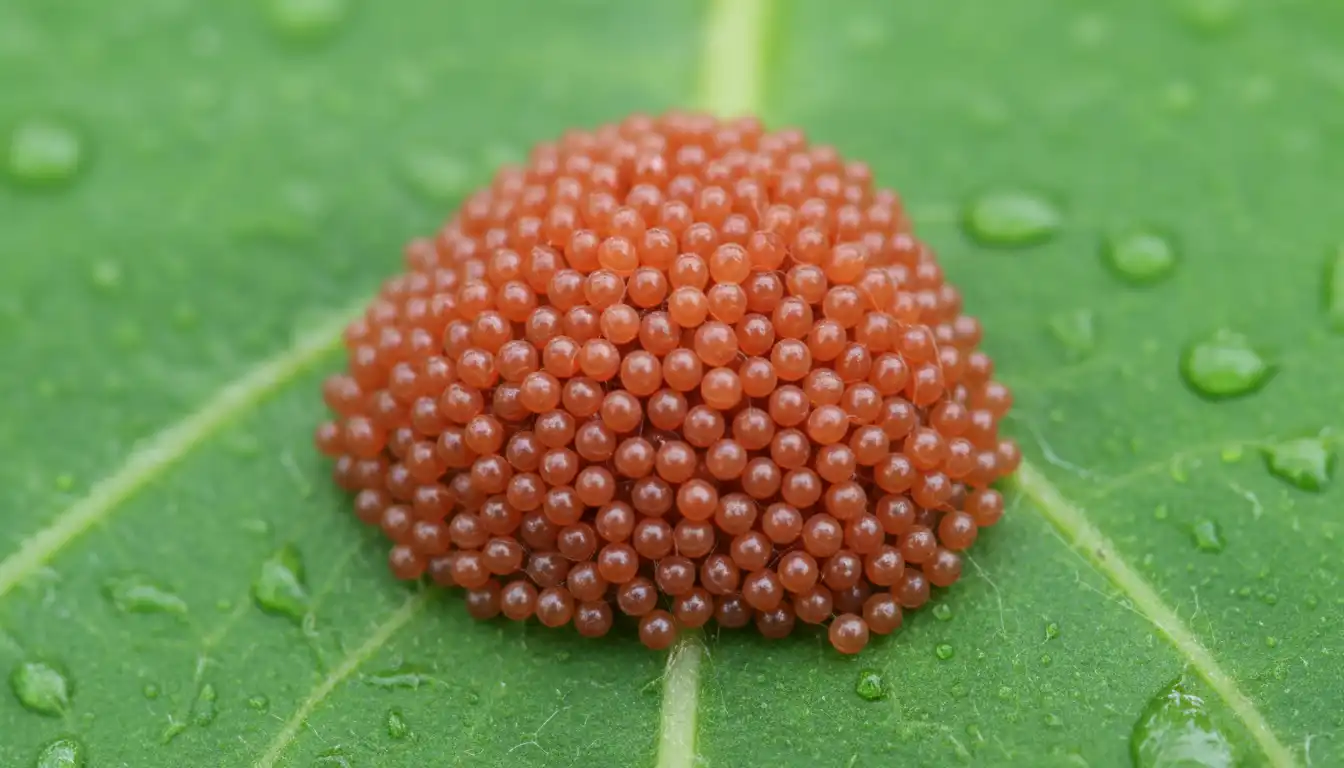
Harlequin Bugs, a type of stink bug, are a serious pest for cruciferous vegetables like cabbage, broccoli, and kale. Their eggs are highly unique, resembling tiny white or pale gray barrels with black rings or markings, sometimes appearing reddish. They are laid in neat, distinctive rows of about 12 eggs, making them look almost like tiny striped beads.
The Deceivers: Mites and Fungi
Sometimes, what appears to be insect eggs is something else entirely. This misidentification can lead to unnecessary or incorrect treatments. It’s crucial to look closely before you act.
Spider Mites, for instance, are not insects but arachnids. They are incredibly tiny, and their eggs are often spherical and can be clear, yellow, or even reddish. You’ll typically find them on the undersides of leaves, often accompanied by fine, silky webbing. An infestation can cause stippling on leaves and reduce a plant’s vigor.
Certain types of Rust Fungus can also mimic the appearance of eggs. These fungal diseases produce tiny, raised pustules called uredinia, which are often bright orange or reddish-brown. On close inspection, you’ll see they are powdery spore masses rather than distinct, individual eggs. These typically appear scattered across the leaf surface rather than in a structured cluster.
Your Action Plan: What to Do About Red Orange Eggs
Once you have a good idea of what you’re dealing with, you can formulate a plan. The most important rule is: do not destroy eggs you cannot positively identify. Eradicating a cluster of ladybug eggs by mistake removes a powerful natural pest control resource from your garden.
Nurturing the Beneficials: A Gardener’s Best Allies
If you’ve identified the eggs of ladybugs or assassin bugs, your job is simple: protect them. Avoid spraying any pesticides, even organic ones, in the immediate vicinity. Mark the leaf with a loose piece of string or a small garden clip so you can check back on their progress.
To encourage these helpful predators to stay in your garden after they hatch, ensure there’s a source of water and a diversity of flowering plants that provide nectar and pollen. A healthy, diverse garden is an invitation for beneficial insects to make their home. This kind of integrated pest management creates a resilient and self-regulating garden ecosystem.
Managing Pest Eggs: Safe and Effective Removal
If you’ve confirmed the eggs belong to a pest like the squash bug or Colorado potato beetle, swift action is necessary. Fortunately, managing eggs is far easier than controlling a mobile population of hatched insects.
Manual removal is often the most effective and targeted method. For sturdy leaves, you can simply scrape the eggs off with a fingernail or a small tool and drop them into a jar of soapy water. Another popular and highly effective technique is to use a piece of strong tape, like duct tape; press it over the egg cluster to lift them cleanly from the leaf surface. Then, fold the tape over on itself to seal the eggs inside and dispose of it.
For larger infestations, organic horticultural oils such as neem oil can be used. These oils work by smothering the eggs, preventing them from hatching. Always follow the product instructions carefully and spray in the early morning or evening to avoid harming pollinators and to prevent leaf scorch.
| Insect Type | Egg Appearance | Typical Location | Friend or Foe? |
|---|---|---|---|
| Ladybug | Yellow to orange-red, spindle-shaped, in clusters | Underside of leaves, near aphids | Friend (Beneficial) |
| Assassin Bug | Reddish or orange, barrel-shaped, in tight clusters | Leaves, stems | Friend (Beneficial) |
| Squash Bug | Bronze to reddish-orange, oval, in neat clusters | Underside of squash/pumpkin leaves | Foe (Pest) |
| Colorado Potato Beetle | Bright orange-yellow, oval, in clusters of 10-30 | Underside of potato/tomato leaves | Foe (Pest) |
| Harlequin Bug | Barrel-shaped, black & white/reddish rings, in rows | Underside of cabbage family leaves | Foe (Pest) |
Prevention is Better Than Cure: Keeping Pests at Bay
A proactive approach is the cornerstone of organic pest management. Creating a garden environment that is inhospitable to pests will save you a great deal of trouble down the line. A healthy garden is your first and best line of defense.
Garden Hygiene and Health
Many pests overwinter in garden debris. A thorough fall cleanup is critical, especially in beds where you had problems with pests like squash bugs. Removing dead vines and tilling the soil can expose overwintering adults and disrupt their life cycle.
Crop rotation is another key strategy. Avoid planting the same crop family in the same spot year after year. For example, moving your potatoes and tomatoes to a different bed each season makes it harder for Colorado potato beetles that emerge from the soil to find their preferred food source. Maintaining healthy, fertile soil also grows stronger plants that are better able to withstand some pest pressure. Strong plant health is crucial, whether you are trying to avoid pests or dealing with issues like small apricots on your fruit trees.
Strategic Planting and Physical Barriers
Companion planting can be an effective deterrent. Planting aromatic herbs like mint, dill, or chives around your vegetables can confuse pests and make it harder for them to locate their target host plants. Nasturtiums are often used as a “trap crop” for aphids, luring them away from more valuable plants.
For certain high-value crops, physical barriers are an excellent preventative measure. Using floating row covers over your squash plants early in the season can prevent adult squash bugs from ever reaching the plants to lay their eggs. You will need to remove the covers once the plants begin to flower to allow for pollination, but this initial protection gives them a crucial head start.
Beyond Red and Orange: A World of Insect Eggs
While red and orange eggs are certainly eye-catching, they are just one part of the complex world of insects in your garden. You may encounter eggs of all different colors and shapes. Each discovery is an opportunity to learn more about the intricate web of life you are cultivating.
For example, discovering round yellow eggs in garden soil might point toward slugs, snails, or certain types of beetles, presenting a different set of challenges and solutions. Similarly, understanding the entire lifecycle of a pest, from egg to adult, is essential for effective management. This is particularly true for insects like the four-lined plant bug, whose nymphs and adults cause distinct types of damage that need to be addressed at different stages.
Conclusion: Become a Garden Detective
The discovery of red-orange insect eggs should not be a cause for panic, but rather a call to observation. By taking the time to identify what you have found, you empower yourself to make intelligent, targeted decisions that benefit the health of your garden. You learn to distinguish ally from enemy and to intervene only when necessary.
This careful, observant approach is the heart of successful gardening. It moves you from simply growing plants to cultivating a vibrant, balanced, and resilient ecosystem. Every cluster of eggs tells a story, and learning to read them makes you a more effective and connected gardener.