Real Novice to Home Pro: The #1 Secret to Start Any Project
You see the flawless home renovations on TV. You scroll through stunning garden transformations online. A voice inside you says, “I want that,” but it’s quickly silenced by a much louder one: “But where would I even start?”
This is the paralyzing dilemma of the real novice. It’s not just about lacking skills; it’s about an overwhelming fear of making a costly, irreversible mistake, leaving you frozen in a state of inaction.
You'll Learn About
The Overwhelm is Real: Why Being a “Real Novice” is So Hard
The journey from homeowner to hands-on enthusiast is fraught with mental roadblocks. For the true beginner, every potential project feels like a mountain, surrounded by a fog of confusing advice and technical jargon.
This hesitation is completely normal. It’s a direct result of two powerful fears that every novice faces.
The Fear of the “Permanent Mistake”
The single biggest hurdle for any beginner is the fear of messing up permanently. What if you drill into a pipe? What if you choose a paint color that looks terrible? What if the plants you pick die in a week?
This fear can be so intense that it prevents you from even picking up a tool. The potential for failure feels more real than the possibility of success, so the safest option seems to be doing nothing at all.
Information Overload and “Expert” Advice
A quick search for any project yields a tidal wave of conflicting information. One expert says to use a certain type of screw, another insists it’s the worst possible choice. This “analysis paralysis” makes it impossible to create a clear plan.
When you don’t have a foundation of basic knowledge, you can’t tell good advice from bad. This uncertainty makes every decision feel like a gamble, further cementing the fear of making a mistake.
The Foundational Mindset Shift: From Novice to Navigator
The secret to overcoming this paralysis isn’t to magically gain experience overnight. It’s to fundamentally change how you approach the concept of a “project.” You must shift your thinking from achieving a perfect outcome to embracing a process of learning.
This mindset is your most important tool, more critical than any drill or saw in your collection.
Embrace the “Good Enough” Principle
Your first projects will not be perfect, and that is okay. The goal is not a magazine-worthy result on your first try; the goal is completion. A planter box that’s slightly crooked but holds plants is a massive victory.
Give yourself permission to make small errors. Most DIY mistakes are fixable and serve as powerful learning experiences. A “good enough” finished project is infinitely better than a “perfect” project that never gets started.
The Power of One: Focus on a Single, Small Victory
Looking at a long list of desired home improvements is a recipe for overwhelm. The solution is to shrink your focus. Choose one, small, low-risk task and see it through to completion.
This could be as simple as properly cleaning your garden tools or touching up scuffed paint on a single wall. Completing a small task builds momentum and, more importantly, confidence. It proves to your brain that you are capable of improving your space.
Your “Real Novice” Essential Toolkit: What You Actually Need
Forget the giant, expensive toolsets you see advertised. A real novice needs a small, curated collection of quality basics that can handle 90% of beginner tasks. Investing in a few good tools is far better than owning a hundred cheap ones.
Your initial toolkit should be divided into two categories: essential home tools and foundational garden tools.
The Non-Negotiable Home Kit
This is the core set of tools that every homeowner should have, regardless of their DIY ambitions. These items will help you with basic assembly, repairs, and your first simple projects. Thinking about bigger projects like a kitchen remodel is a different league, where professional advice, like that found in a detailed Miele Speed Oven Review, becomes crucial for understanding appliance integration.
| Tool | Primary Purpose | Pro Tip for Novices |
|---|---|---|
| 16oz Claw Hammer | Driving and removing nails | Choose one with a comfortable, anti-vibration grip. Your hands will thank you. |
| Multi-Bit Ratcheting Screwdriver | Driving various screw types | This single tool replaces a dozen individual screwdrivers. Look for one with bit storage in the handle. |
| 16′ Tape Measure | Accurate measuring | A wider tape (1″ or more) is easier to extend without buckling. |
| Utility Knife | Cutting boxes, drywall, etc. | Always use a sharp blade for cleaner cuts and improved safety. Retract the blade when not in use. |
| Level (9″ Torpedo) | Ensuring things are straight | Magnetic versions are incredibly useful for hands-free work on metal surfaces. |
| Needle-Nose Pliers | Gripping small items, bending wire | Essential for electrical work and getting into tight spaces where fingers can’t reach. |
| Cordless Drill/Driver | Drilling holes, driving screws | This will be your most-used power tool. An 18V or 20V model is a great starting point. |
The Foundational Garden Kit
Gardening requires its own set of specialized tools. As with the home kit, focus on quality over quantity. A few well-made tools will make your entry into gardening a pleasure rather than a chore.
For a novice, the basics include a sturdy trowel for digging, bypass pruners for clean cuts on living plants, a garden fork for breaking up soil, and a durable pair of gloves to protect your hands. A watering can or a quality hose with an adjustable nozzle is also essential for keeping your new plants healthy.
Your First 3 “Can’t-Fail” Projects to Build Momentum
The best way to build confidence is through action. These three projects have been specifically chosen for a real novice. They are low-cost, require minimal tools, and provide a tangible, satisfying result that will fuel your desire to tackle more.
Project 1: The Perfect Herb Garden in a Pot
This project teaches the basics of plant care without the commitment of a full garden bed. Choose a medium-sized pot with drainage holes, buy high-quality potting mix, and select 2-3 young herb plants from a local nursery, like basil, mint, or rosemary.
The simple act of keeping a few plants alive and thriving on your windowsill or patio is a huge confidence booster. You’ll learn about watering, sunlight needs, and the joy of harvesting something you’ve grown yourself.
Project 2: Master the Art of a Flawless Paint Touch-Up
Scuffs and marks on walls and trim are unavoidable, but they are also incredibly easy to fix. This small project teaches you the basics of paint prep and application, which are foundational skills for any larger painting job.
Properly clean the scuffed area, lightly sand if necessary, and apply a thin, even coat of your matching paint with a small brush or mini-roller. The key is feathering the edges to blend the new paint with the old. The instant gratification of making a scuff disappear is immense.
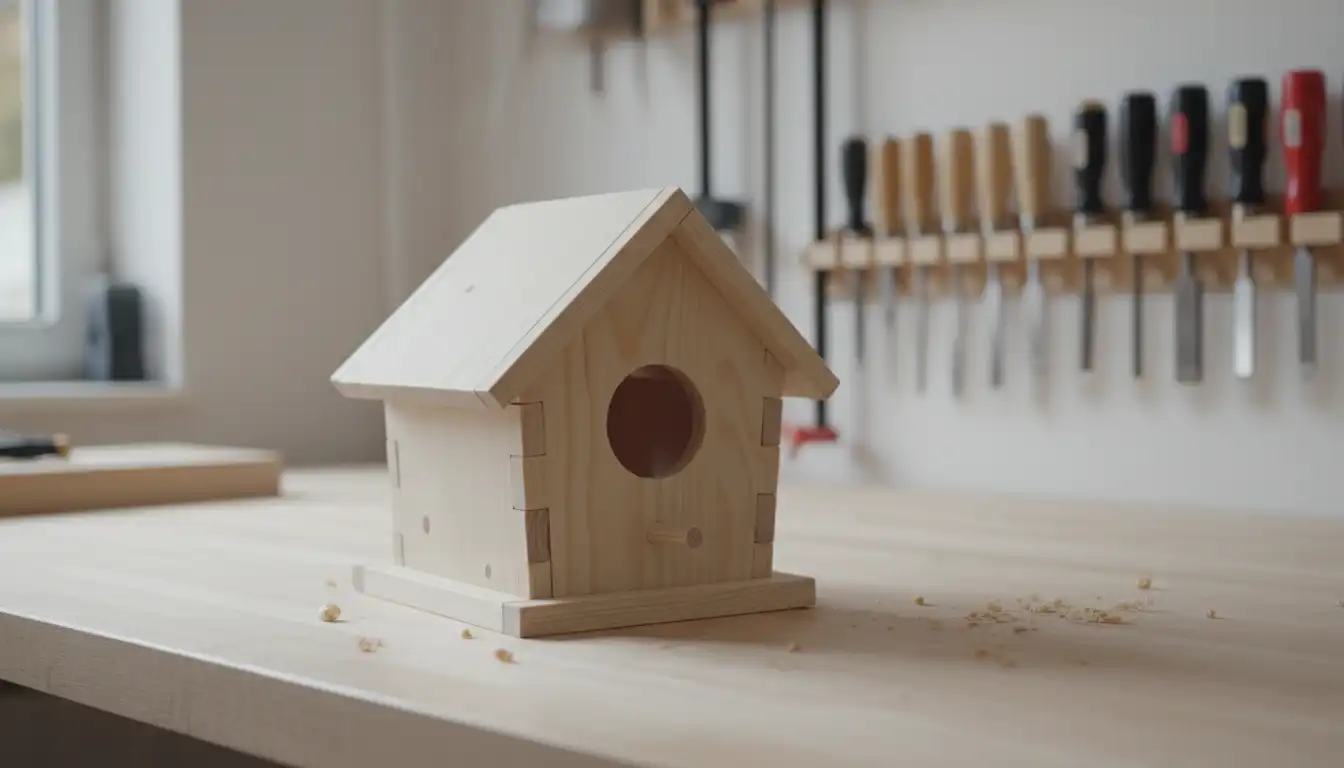
Project 3: Build a Simple Birdhouse (And Actually Finish It)
Building something from scratch can seem intimidating, but a simple birdhouse kit is the perfect entry point. These kits come with pre-cut wood pieces and all the necessary hardware, removing the need for complex measurements and cuts.
Your only job is assembly. This project allows you to get comfortable using a screwdriver or a cordless drill. The satisfaction of creating a three-dimensional object that can be used and enjoyed is a powerful motivator.
Beyond the Basics: When to Call a Pro vs. When to DIY
As you gain confidence, your project ambitions will grow. However, a crucial part of becoming a smart homeowner is knowing your limits. Recognizing when a project is beyond your skill level is not a sign of failure; it’s a sign of wisdom.
Tasks involving complex plumbing, structural changes, or extensive electrical work are usually best left to licensed professionals. The risk of costly damage or serious injury outweighs the potential savings of doing it yourself.
Understanding the True Cost of DIY: Time vs. Money
Every project has two costs: the financial cost of materials and the time cost of your labor. Before starting, honestly assess how much time you can realistically dedicate. A seemingly simple project like installing a new screen door can become a major headache if you don’t account for the learning curve. Considering a product like the Genius Retractable Screen Door from Costco might seem straightforward, but installation time can vary greatly for a novice.
Sometimes, paying a professional is the more “cost-effective” option when it frees up your valuable time for other priorities.
Navigating Product Reviews and “Brutal Truths”
As you plan more complex projects, you’ll rely heavily on product reviews. When evaluating big-ticket items, such as kitchen components, it’s vital to seek out comprehensive feedback. For instance, in-depth reviews like one for B. Jorgsen & Co cabinets can reveal the unvarnished truth about quality and installation challenges.
Look for patterns in reviews rather than focusing on single outlier opinions. A balanced view, considering both positive and negative feedback, will give you the most realistic picture of what to expect and help you make informed decisions, transforming you from a real novice into a truly savvy homeowner.
Conclusion
The transition from paralysis to progress begins with a single, manageable task. Realize that every expert was once a novice, and the “flawless” results you see online are the end products of many small, messy steps. By shifting your focus from the daunting final vision to a low-risk starter project, you build the confidence and muscle memory needed for larger renovations.
Failure is rarely irreversible; it is simply a lesson in craftsmanship. Embrace the learning curve, accept that mistakes are part of the blueprint, and trust that your home will grow alongside your skills. The only truly permanent error is never starting at all.