
Ready Seal vs TWP: The Ultimate Deck Stain Showdown
You’ve invested thousands in a beautiful wooden deck, a classic cedar fence, or charming wood siding. Now comes the most critical decision to protect that investment: choosing the right stain. Staring at the shelves, two names consistently rise to the top: Ready Seal and TWP. Both are revered oil-based, semi-transparent stains, but the choice paralyzes many homeowners, leading to confusion and, often, inaction—which is the worst choice of all.
This decision is about more than just color; it’s about longevity, ease of use, and the long-term health of your wood. Making the wrong choice can lead to premature graying, peeling, and costly stripping and re-staining down the line. This guide will eliminate the confusion by breaking down the core differences between Ready Seal and TWP, empowering you to make the perfect choice for your home and garden project.
You'll Learn About
Deep Dive: What Truly Sets Ready Seal and TWP Apart?
At their core, both Ready Seal and TWP are penetrating oil-based stains designed to protect wood from the inside out, rather than forming a film on the surface like paint. This is crucial for avoiding the cracking and peeling associated with film-forming finishes. However, the secret to their different behaviors lies in the specific oils and formulations they use.
Ready Seal’s formula is famously built around paraffinic oils. This gives it a thinner, non-drying consistency that allows it to penetrate deep into wood fibers. Its “goof-proof” reputation comes from the fact that it doesn’t leave laps, runs, or streaks, as the slow-drying nature allows the stain to even itself out. TWP (Total Wood Preservative), particularly the popular 100 and 1500 series, is a full-curing oil-based stain. It contains a unique blend of oils, resins, and EPA-registered preservatives that not only protect against water and UV rays but also actively resist mildew, wood rot, and decay.
Ready Seal vs. TWP: A Head-to-Head Comparison
Choosing between these two top-tier products depends entirely on your project needs, your climate, and your skill level. Let’s break down the critical factors side-by-side to see which stain comes out on top for your specific situation.
Application Process: Ease of Use for the DIYer
For the DIY enthusiast, the application process is often the deciding factor. Ready Seal is widely considered the most user-friendly stain on the market. Its thin consistency and slow-drying oils make it incredibly forgiving. You can spray, roll, or brush it on, and it won’t leave unsightly lap marks, even for a beginner. This makes it an excellent choice for large projects or for those new to staining.
TWP, while still manageable for a DIYer, requires a bit more technique. Because it’s a curing stain, it’s crucial to apply it evenly and avoid over-application. Leaving excess TWP on the surface can result in a shiny, sticky finish that fails to cure properly. The “wet-on-wet” application recommended for porous woods, where a second coat is applied within 30 minutes of the first, requires a confident and efficient approach.
Appearance and Finish: The Final Look
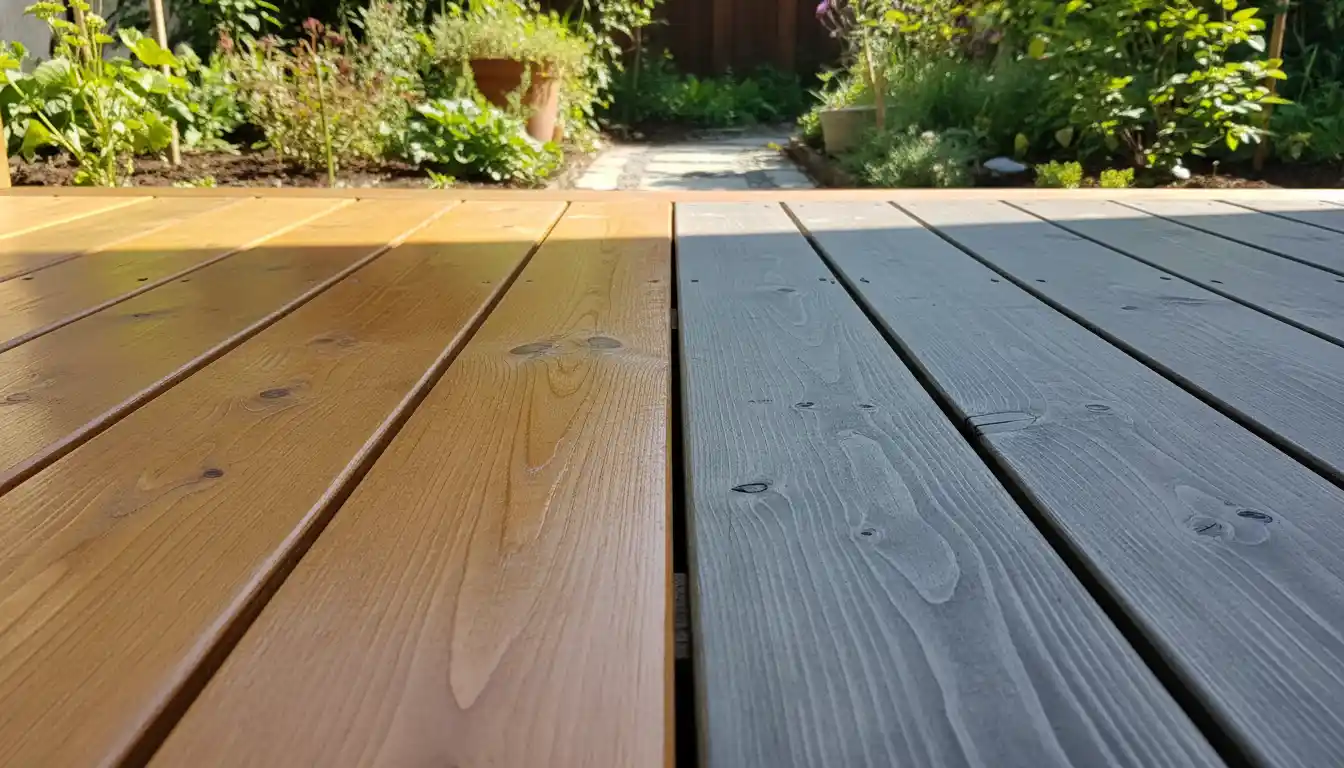
Your deck or fence is a major part of your home’s aesthetic, so the final finish is paramount. Ready Seal penetrates deeply and leaves a very flat, matte finish that beautifully highlights the natural wood grain. One important thing to note is that the color you see when you open the can is not the final color; Ready Seal takes up to 14 days to fully cure and reach its true, intended shade.
TWP also enhances the wood grain but typically provides a richer, more saturated color with a subtle sheen right after application. It offers a wide array of tones, allowing for more precise color matching to your home’s exterior. The finish is consistent and highly valued for its ability to make wood look vibrant and new.
Durability and Longevity: How Long Will It Last?
Here is where the differences become stark. TWP is formulated for maximum durability. Its EPA-registered preservatives and robust UV absorbers provide exceptional protection against the elements. Most surfaces stained with TWP will last 2-3 years on horizontal surfaces (like deck floors) and 3-5 years on vertical surfaces (like fences and siding) before a maintenance coat is needed.
Ready Seal, while offering good water and UV protection, is known to fade faster, especially on sun-drenched horizontal surfaces. Expect to apply a maintenance coat every 1-2 years on decks and every 2-3 years on fences. While re-application is simple, the frequency is higher than with TWP.
Maintenance and Re-application: The Long-Term Commitment
Both products excel in ease of maintenance, which is a significant advantage over film-forming stains. Neither Ready Seal nor TWP requires sanding or stripping for a maintenance coat. The process for both is straightforward: clean the wood surface with a quality wood cleaner, let it dry completely, and apply a fresh coat of stain.
Because Ready Seal penetrates without forming a film, re-application is as simple as the initial one. TWP’s maintenance is also simple, as the penetrating formula doesn’t peel or flake, allowing for a hassle-free clean and re-coat.
VOC Compliance and Environmental Considerations
Volatile Organic Compounds (VOCs) are regulated solvents that can be harmful to the environment. This is a critical factor, as some stains cannot be sold in certain states. TWP addresses this with two main product lines: the TWP 100 Series for states with less stringent regulations, and the TWP 1500 Series, which is a low-VOC formula compliant in all 50 states, including California. Ready Seal is also a low-VOC formula, making it available for purchase nationwide.
Cost Comparison: Upfront vs. Long-Term Value
On a per-gallon basis, Ready Seal is often slightly less expensive than TWP. However, its coverage rate can be lower, meaning you might need to buy more of it. Experienced users report that porous, older wood can absorb Ready Seal at a rate of only 125-150 square feet per gallon.
TWP’s coverage is typically around 150-300 square feet per gallon. When you factor in the longer lifespan of TWP, its long-term value often surpasses Ready Seal, as you’ll be buying and applying stain less frequently.
| Feature | Ready Seal | TWP (Total Wood Preservative) |
|---|---|---|
| Application Ease | Extremely easy; “goof-proof” with no laps or runs. | Requires more technique; risk of shiny spots if over-applied. |
| Final Finish | Flat, matte finish. Takes up to 14 days to cure to its final color. | Rich, saturated color with a subtle sheen. |
| Durability | Good; typically requires recoating every 1-2 years on decks. | Excellent; lasts 2-3 years on decks. Contains EPA-registered preservatives. |
| Maintenance | Simple clean and re-coat. No sanding or stripping required. | Simple clean and re-coat. No sanding or stripping required. |
| VOC Compliance | Low-VOC formula, available in all 50 states. | Two versions: 100 Series (standard VOC) and 1500 Series (low VOC for all 50 states). |
| Primary Formulation | Paraffinic oil-based, non-drying, deep-penetrating. | Curing oil-based with specialized resins and mildewcides. |
Which Stain Is Right for You? Making the Final Decision
The best stain is not a one-size-fits-all answer. It’s about matching the product’s strengths to your specific needs and project realities.
Choose Ready Seal If…
- You are a DIY beginner. Its foolproof application is its greatest strength, ensuring a professional-looking finish without stress.
- You prioritize ease of application above all else. If you want a product that you simply can’t mess up, this is your choice.
- You prefer a completely flat, matte finish that gives the wood a very natural, weathered look over time.
Choose TWP If…
- You want maximum durability and longevity. If you live in a harsh climate with intense sun or heavy snow, TWP’s superior protection is worth it.
- You have some staining experience. You are confident in your ability to apply an even coat and avoid puddles.
- You want to fight mildew and rot. The EPA-registered preservatives in TWP offer an extra layer of protection that Ready Seal lacks.
The Overlooked Factor: Wood Preparation
No stain, no matter how expensive or advanced, can succeed on a poorly prepared surface. Proper prep is 90% of a successful staining project. Neglecting this step is the fastest way to a complete failure that resembles a bad flooring job—peeling, uneven, and frustrating.
For both Ready Seal and TWP, the wood must be impeccably clean and, most importantly, completely dry. Use a quality deck cleaner to remove dirt and mildew, followed by a wood brightener to open up the wood’s pores and neutralize the pH. Allow the wood to dry for at least 48 hours in good weather, and use a moisture meter to ensure the content is below 15% before staining. Just as you’d meticulously research pebble fina reviews before resurfacing a pool, you must commit to the prep work for your wood.
Pro Tips for a Flawless Finish (That Most People Ignore)
Beyond the basic instructions, a few expert techniques can elevate your project from good to great.
- Don’t Stain in Direct Sunlight. Hot sun can cause any stain to dry too quickly on the surface before it has a chance to penetrate, leading to premature failure. Plan your work for an overcast day or during the cooler parts of the morning and evening.
- Always Back-Brush. Even when spraying, it’s wise to go over the sprayed area with a quality brush or stain pad. This ensures the stain is worked deep into the wood grain for maximum penetration and an even finish.
- Check the Weather. Plan your project around a clear forecast. You need at least 24-48 hours of dry weather after application for the stain to set properly.
- Apply as Much as the Wood Will Take. For a penetrating stain, the goal is to saturate the wood. For porous wood, this may mean applying a second “wet-on-wet” coat. However, once the wood stops absorbing the oil, stop applying. Any excess that sits on the surface is wasted and can cause issues.
Navigating the world of home improvement products can be challenging. Unlike sorting through confusing claims that can feel like a renewal by andersen scam, choosing between Ready Seal and TWP is a win-win situation. It is simply a matter of matching a quality product to your specific goals.
The Final Verdict: Ready Seal vs. TWP
There is no single “winner” in the Ready Seal vs. TWP debate. The superior product is the one that aligns with your priorities. Ready Seal is the champion of user-friendliness, offering a stress-free application that guarantees a beautiful, even finish for any skill level. Its trade-off is a shorter lifespan and more frequent maintenance.
TWP is the professional’s choice for maximum durability. It provides robust, long-lasting protection against all that nature can throw at it, making it the better long-term value proposition. The trade-off is an application process that demands more care and technique. By understanding these core differences and honestly assessing your own needs, you can confidently select the perfect stain to protect and beautify your outdoor space for years to come.
