
Range Hood Between Cabinets: Your #1 Installation Guide
You have the perfect kitchen layout, the cabinets are pristine, but one crucial element remains: the range hood. Fitting a ventilation hood perfectly between cabinets is more than an aesthetic choice; it’s a critical decision for your home’s air quality and the longevity of your kitchen. The wrong choice leads to lingering odors, grease-covered cabinets, and a kitchen that feels stuffy and unclean.
The core problem is achieving a seamless, built-in look without sacrificing the powerful performance needed to keep your kitchen fresh. A poorly chosen or installed hood can look like an afterthought and fail to capture smoke and steam effectively. This guide provides the expert insights you need to select and install the perfect range hood between your cabinets for a flawless, professional finish.
You'll Learn About
Why a Range Hood Between Cabinets is a Non-Negotiable Kitchen Asset
A dedicated range hood is an essential appliance for any serious home cook. Its primary function is to drastically improve your indoor air quality by capturing grease, smoke, steam, and odors directly at the source. This prevents them from settling on your cabinets, walls, and furniture, making your cleaning routine significantly easier.
Beyond cleanliness, proper ventilation protects your cabinetry from the damaging effects of moisture and heat, which can cause wood to warp and finishes to peel over time. It also provides brilliant task lighting over your cooktop, enhancing safety and precision while you cook. Ultimately, a well-integrated range hood elevates both the function and value of your kitchen.
The Anatomy of a Perfect Fit: Sizing Your Range Hood Correctly
The most common mistake homeowners make is choosing the wrong size range hood. An improperly sized hood will not only look awkward but will also fail to provide adequate ventilation coverage. Follow these three critical measurements for a perfect fit.
Width: This is the most important measurement. The golden rule is that your range hood must be at least as wide as your cooktop. For maximum effectiveness, choosing a hood that is 3 to 6 inches wider than your cooktop (1.5 to 3 inches on each side) will create a larger capture area for smoke and steam.
Depth: Your range hood should be deep enough to cover the rear burners and at least halfway over the front burners. Most under-cabinet hoods have a standard depth of around 18 to 22 inches, which is sufficient for most standard cooktops. This ensures that vapors from all burners are effectively captured.
Mounting Height: Installing the hood at the correct height is crucial for both safety and performance. Most manufacturers recommend a height of 24 to 30 inches above the cooking surface. Mounting it too low can be a fire hazard and obstruct your view, while mounting it too high significantly reduces its ability to capture cooking fumes.
Under-Cabinet vs. Wall-Mount vs. Insert: Choosing Your Champion
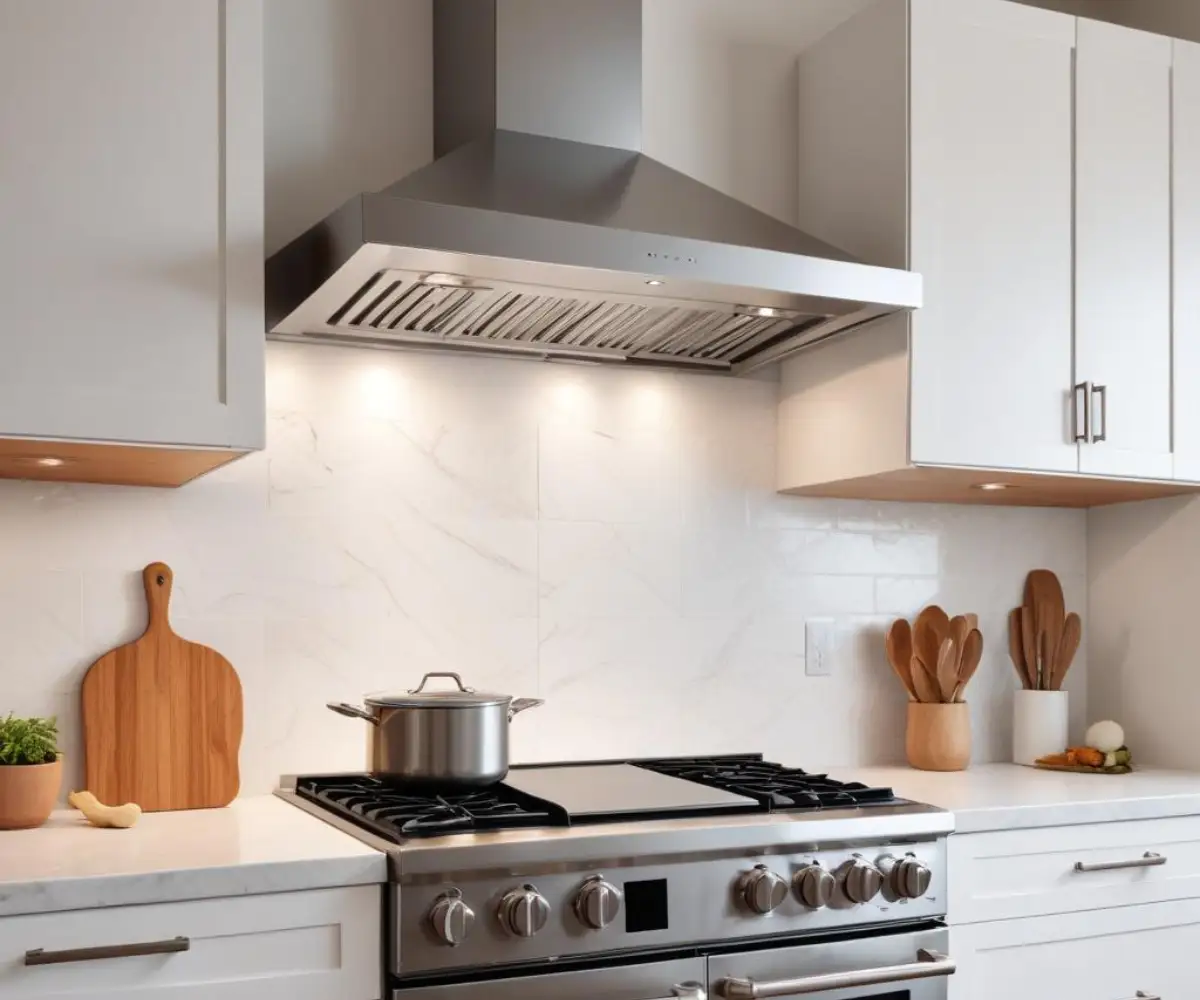
When installing a range hood between cabinets, you generally have three excellent options. The best choice depends on your kitchen layout, budget, and desired aesthetic. An under-cabinet model is a popular and straightforward choice, often prized for its easy installation.
| Feature | Under-Cabinet Hood | Wall-Mount Hood | Range Hood Insert (Liner) |
|---|---|---|---|
| Installation | Easiest; mounts directly to the cabinet above. | Moderate; mounts to the wall, may require removing a cabinet. | Most Complex; requires a custom cabinet enclosure. |
| Aesthetics | Sleek and integrated, blends in with cabinetry. | Creates a bold, chimney-style focal point. | Completely seamless and hidden within custom cabinetry. |
| Cost | Generally the most affordable option. | Mid-to-high range, depending on design. | Highest cost due to the need for custom cabinet work. |
| Best For | Smaller kitchens and preserving cabinet space. | Kitchens with open wall space above the range. | Achieving a high-end, fully custom kitchen design. |
For those seeking a completely integrated look, a range hood insert allows for custom designs, such as a beautiful quartz range hood enclosure that matches your countertops. While brands vary, be sure to check out Elica range hood reviews for high-quality options across all types.
The Great Debate: Ducted vs. Ductless Range Hoods
Your next major decision is how your range hood will handle the air it captures. This choice depends heavily on your home’s construction and your ability to install ductwork that leads to the outside.
Ducted (Vented) range hoods are the superior choice for performance. They physically remove smoke, moisture, and odors from your home by expelling them outside through a duct. This is the most effective way to ensure clean kitchen air. Ducting can be routed through an exterior wall or up through the ceiling and roof.
Ductless (Recirculating) range hoods are a versatile alternative. These hoods pull air through a series of filters (typically mesh for grease and charcoal for odors) and then recirculate the cleaned air back into the kitchen. While not as effective at removing heat and humidity, they are an excellent solution for apartments, condos, or homes where installing ductwork is impossible.
Installation Secrets: A Step-by-Step Professional Walkthrough
While hiring a professional is always recommended for electrical and ductwork, a confident DIYer can often handle the mounting of an under-cabinet hood. The process involves careful measurement and securing the unit properly.
First, you must prepare the space. This includes turning off the power at the circuit breaker, marking the exact placement for screws and any necessary cutouts for the duct and electrical wiring on the underside of the cabinet. A template is often included with the range hood to ensure precision.
Next, the hood is mounted. With the help of a partner or a cabinet jack, lift the hood into place and secure it to the cabinet with the provided screws. Finally, the electrical wiring is connected, and if you are installing a ducted model, the ductwork must be attached and sealed with foil tape to prevent air leaks.
Beyond the Basics: Advanced Features to Consider
Modern range hoods come with a variety of features that can enhance your cooking experience. Understanding these will help you choose a model that is not only effective but also a pleasure to use.
CFM (Cubic Feet per Minute) measures the fan’s power. A general rule for gas cooktops is to have 1 CFM of ventilation for every 100 BTUs of your stove’s total output. For electric cooktops, a simple calculation is to multiply the kitchen’s square footage by 1.5. Higher CFM ratings are better for clearing air quickly but may also be louder.
Noise Level (Sones) is another critical factor. A quiet range hood makes for a more pleasant kitchen environment. Look for models with a sone rating of 3 or less on the lowest setting for quiet operation.
Common Mistakes to Avoid for a Flawless Finish
Even a high-quality range hood will underperform if installed incorrectly. The most frequent error is improper ducting. Using flexible ducting instead of rigid ductwork, making too many sharp turns, or using a duct that is too small will all restrict airflow and reduce performance.
Another critical mistake is ignoring the need for makeup air. In modern, tightly sealed homes, a powerful range hood can create negative air pressure, which can be dangerous. This happens when the hood expels more air than can naturally enter the home.
Is Your Powerful Range Hood Secretly Harming Your Home?
When a powerful range hood (typically over 400 CFM) runs, it pushes a large volume of air outside. In a well-sealed home, this can create a vacuum effect, known as negative pressure. The house will then try to “breathe” by pulling air in from wherever it can.
This can lead to dangerous backdrafting, where toxic combustion gases from other appliances like your furnace or water heater are pulled back into your home instead of venting outside. A Makeup Air System (MAS) is a dedicated vent that opens to allow fresh outside air into the home whenever the range hood is operating, balancing the pressure and preventing backdrafting.
A range hood installed between cabinets is a powerful tool for maintaining a clean, fresh, and safe kitchen. By carefully considering the size, type, and ventilation method, you can select a unit that not only looks stunning but also performs flawlessly. Proper installation is the key to unlocking its full potential, ensuring your kitchen remains a welcoming heart of the home for years to come.
The Final Word: Elevating Your Kitchen’s Atmosphere
Choosing and installing the perfect range hood between your cabinets is the final, essential step in perfecting your kitchen. This decision moves beyond aesthetics and becomes a strategic investment in air quality, cleanliness, and the value of your home.
A well-selected and properly sized hood ensures that grease, smoke, and odors are efficiently captured and removed at the source, preventing them from settling on your beautiful cabinets and ceilings.
Critical Takeaways for a Pristine Kitchen:
-
Prioritize Performance: Never compromise on the required CFM (Cubic Feet per Minute) rating for your cooking style. A powerful, quiet blower is the heart of effective ventilation.
-
Aesthetic Integration: Whether you choose a seamless, integrated insert hidden within custom cabinetry or a sleek, visible chimney hood, the final look must complement your kitchen’s design language.
-
Longevity: Correct venting prevents moisture and grease build-up, significantly extending the lifespan of your cabinetry and appliances.
By carefully calculating the required size and prioritizing quality, you ensure that your range hood isn’t just a fixture, but a highly functional appliance that keeps your perfect kitchen pristine, fresh, and welcoming for years to come.
