
Quartzite Water Stains? The #1 Myth Ruining Your Countertop
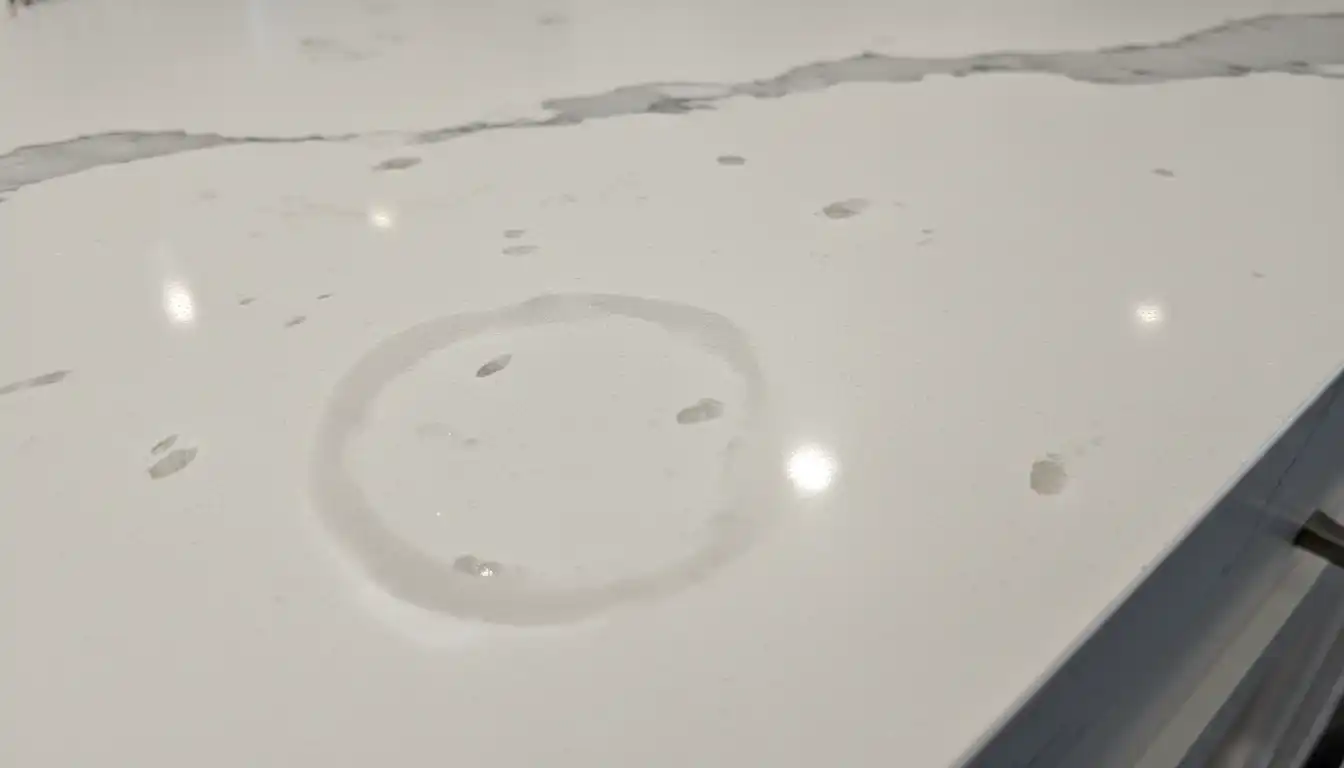
You chose quartzite for its legendary durability and marble-like beauty. It was sold as the indestructible, bulletproof option for a busy kitchen—a natural stone that resists scratches, heat, and stains. Yet now you see it: a faint, dark ring where a glass sat, or shadowy spots near the sink that won’t wipe away. It’s a frustrating and confusing problem that leaves many homeowners questioning their investment.
The anxiety is understandable. Was the stone faulty? Was it installed improperly? The truth is, the issue often stems from a fundamental misunderstanding of what quartzite is and how it behaves. The belief that all quartzite is completely non-porous is the single biggest myth that leads to issues with water stains.
You'll Learn About
The Great Deception: Why Your “Bulletproof” Quartzite Has Marks
Before you can solve the problem, it’s crucial to understand what you’re actually seeing on your countertop. Most marks that homeowners call “water stains” fall into one of three categories: temporary water absorption, mineral deposits, or etching. Each has a different cause and requires a different solution.
Is It a True Stain or Just a “Wet Look”?
Because quartzite is a natural stone, its density can vary. Some types are incredibly dense, while others are more porous and can absorb liquids. When water penetrates the surface of a porous quartzite, it darkens the stone, creating a “wet look” that appears as a stain. The good news is that these marks are often temporary; as the water evaporates, the spot will typically disappear on its own, though this can take hours or even days. This is the most common type of water mark and usually indicates the stone’s sealer is wearing thin.
The Real Culprit: Etching vs. Staining
Many so-called stains are not stains at all, but rather etches. A stain happens when a substance absorbs into the stone’s pores, causing discoloration. An etch, however, is physical damage to the stone’s surface caused by a chemical reaction with acidic substances. This reaction corrodes the stone and dulls the finish, creating a lighter-colored, rough-feeling spot. Common household items like lemon juice, vinegar, and some harsh cleaners can cause etching. Although true quartzite is highly resistant to etching, some slabs mislabeled as quartzite are actually marble, which is very susceptible to it.
The Porosity Problem: Not All Quartzite Is Created Equal
Here lies the most critical, yet often undiscussed, aspect of quartzite. This natural stone exists on a spectrum of porosity. A variety like Taj Mahal quartzite is known for being extremely dense and non-porous, making it highly resistant to staining. On the other hand, some beautiful white quartzites, such as certain types of Winter Storm quartzite, can be surprisingly porous. This variation is why some homeowners have zero issues, while others are constantly battling water spots. The porosity of your specific slab, more than anything else, dictates its vulnerability to water stains and how diligent you must be with sealing.
Your Action Plan to Banish Water Marks for Good
Once you understand the nature of the mark, you can take targeted action. Trying to scrub an etch or using harsh chemicals on an absorbed water spot can make the problem worse. Follow this structured approach for safe and effective removal.
Step 1: Identify the Type of Mark
First, diagnose the spot. Run your finger over the area—is it rough or smooth? Observe its color. This simple examination will guide your treatment plan. Use the table below to quickly identify what you’re dealing with.
| Mark Type | Appearance | How It Feels | Primary Cause |
|---|---|---|---|
| Absorbed Water | A dark spot, often the shape of a spill or puddle. | Smooth, no change in texture. | Water penetrating a porous stone with a weak sealer. |
| Hard Water/Mineral Deposits | Chalky white film or rings, especially around faucets. | Slightly rough or crusty. Can often be scraped off. | Minerals (calcium, magnesium) left behind after water evaporates. |
| Etching | A dull, whitish, or lighter-colored spot. | Slightly rough to the touch compared to the polished surface. | Acidic liquids damaging the stone’s surface. |
Step 2: Effective & Safe Removal Techniques
With the mark identified, you can now apply the correct remedy. Always start with the gentlest method first and test any cleaning solution on an inconspicuous area.
For Absorbed Water (Dark Spots)
Patience is key. Most of these dark spots will fade on their own as the stone dries. To speed up the process, you can increase air circulation with a fan. If the stain is persistent, a poultice can be used to draw the moisture out. Create a thick paste of baking soda and water, apply it to the stain, cover it with plastic wrap, and tape the edges. Let it sit for 24 hours before removing the paste and wiping the area clean. This may need to be repeated.
For Mineral Deposits (Hard Water Stains)
These surface-level deposits can often be removed mechanically. Start by gently scrubbing the area with a non-abrasive pad and a pH-neutral stone cleaner. For more stubborn buildup, a plastic scraper or razor blade held at a low angle can be used carefully to lift the deposits. Never use vinegar or lemon juice, as their acidity can etch the stone and damage the sealer, worsening the problem over time.
For Minor Etching (Dull Spots)
Unfortunately, etching is physical damage, meaning it can’t be “cleaned” away. For very light etches, a polishing compound specifically formulated for natural stone may restore some of the shine. However, for significant etching, the surface needs to be professionally honed and re-polished by a stone restoration specialist. This is not a DIY job.
The Ultimate Defense: A Proactive Sealing Strategy
Removing stains is reactive; preventing them is proactive. The single most important step in protecting your quartzite from water stains is maintaining a robust seal. Sealer is your countertop’s invisible shield.
The Sealer Misconception: It’s a Shield, Not a Force Field
A high-quality impregnating sealer works by penetrating the stone’s pores and filling them, which helps to repel liquids. It makes the stone stain-resistant, not stain-proof. This means it buys you valuable time to clean up spills before they can soak in, but it won’t protect the stone indefinitely if liquids are left to sit.
The Water Test: How to Know When to Reseal
Not sure if your sealer is still working? Perform this simple test. Puddle a small amount of water on the surface of your countertop and wait about 15-20 minutes. If the water beads up, your sealer is in good shape. If the water starts to soak into the stone and creates a dark spot, it’s time to reseal immediately.
Daily Habits for a Flawless Quartzite Countertop
The best defense is built on good daily habits. Integrating these simple practices into your routine will dramatically reduce the risk of water stains and other damage, keeping your countertops looking pristine for years.
Wipe spills immediately. This is the golden rule. Don’t let any liquid, even water, sit on the surface for extended periods. This simple habit prevents most issues before they can start.
Use pH-neutral cleaners. Clean your countertops daily with a soft cloth, warm water, and a drop of gentle, pH-neutral soap or a cleaner specifically designed for natural stone. Avoid abrasive cleaners and common household products like vinegar, bleach, or ammonia, which can strip the sealer and harm the stone.
Protect the surface. Use coasters for all glasses, trivets for hot pans, and cutting boards for food prep. Preventing contact is always easier than treating a stain. This level of care ensures a pristine surface, much like the attention required for a perfect groutless tile finish where every detail matters for longevity.
Enjoying Your Quartzite, Worry-Free
Quartzite is an exceptional countertop material, offering unparalleled hardness and unique, natural beauty. While it is incredibly durable, it is not invincible. The key to a long and happy relationship with your quartzite is understanding its specific properties—especially its porosity—and committing to proper care.
By busting the myth that all quartzite is impervious to everything, you can adopt the right mindset. With a robust sealing schedule, gentle daily cleaning habits, and the knowledge to tackle any marks that appear, you can confidently maintain the stunning beauty of your countertop and ensure it remains the centerpiece of your home for a lifetime.
