
Quartz Range Hood: 5 Secrets They Won’t Tell You Before You Buy
The quest for a flawless, high-end kitchen often leads to one breathtaking feature: the quartz range hood. It’s a statement piece, a seamless extension of your countertops and backsplash that promises a clean, monolithic, and utterly luxurious aesthetic.
But behind the pristine images on social media lies a complex reality. Homeowners are often so captivated by the beauty that they overlook the significant challenges and costs involved, leading to budget blowouts, installation nightmares, and even long-term regret.
This guide reveals the critical secrets you need to know before committing to this stunning, yet demanding, kitchen upgrade. We will explore the hidden pitfalls and provide a clear roadmap to achieving this high-end look without the common frustrations.
You'll Learn About
Why This Look is Dominating High-End Kitchen Design
The surge in popularity for quartz-wrapped range hoods isn’t just a fleeting trend. It represents a fundamental shift in kitchen design towards integrated, seamless surfaces that create a sense of calm and cohesion.
By cladding the range hood in the same material as the countertops, you eliminate visual clutter. This creates a powerful, unified design statement that makes the entire kitchen feel more expansive and thoughtfully planned.
This design choice elevates the kitchen from a purely functional space to a true showpiece. It’s a detail that signals luxury and bespoke craftsmanship, setting a home apart.
The Hidden Challenges: What Your Designer Might Not Emphasize
While the visual payoff is immense, the practical and financial hurdles can be significant. Understanding these challenges upfront is the key to a successful project and avoiding costly surprises down the road.
Sticker Shock: Deconstructing the True Cost of a Quartz Hood
The number one surprise for most homeowners is the final price tag. A custom quartz range hood is not a budget-friendly feature; it is a significant investment that goes far beyond the cost of a standard stainless steel unit.
The total cost is a sum of several parts: premium quartz slabs (you may need more than one), expert fabrication (the labor for precise mitered edges is intensive), a high-quality ventilation insert, and specialized installation. Expect the final cost to run into thousands, often rivaling the price of high-end appliances.
It’s crucial to get a detailed, itemized quote that breaks down each of these components. This prevents misunderstandings and ensures you have a clear picture of the total financial commitment.
The Weight Problem: Is Your Kitchen Structure Ready?
A quartz range hood is incredibly heavy. We’re talking about hundreds of pounds of solid stone that needs to be securely anchored to your wall, directly above your primary cooking space.
Standard drywall and wood studs are often insufficient to carry this load safely. Special structural reinforcement is not optional—it is a mandatory safety requirement. This typically involves adding steel bracing or, at a minimum, substantial wood blocking inside the wall, tied directly to the house’s frame.
Before you even order the quartz, you must have a structural assessment. A failure to properly support the hood can lead to catastrophic failure, causing extensive damage to your home and posing a serious safety risk.
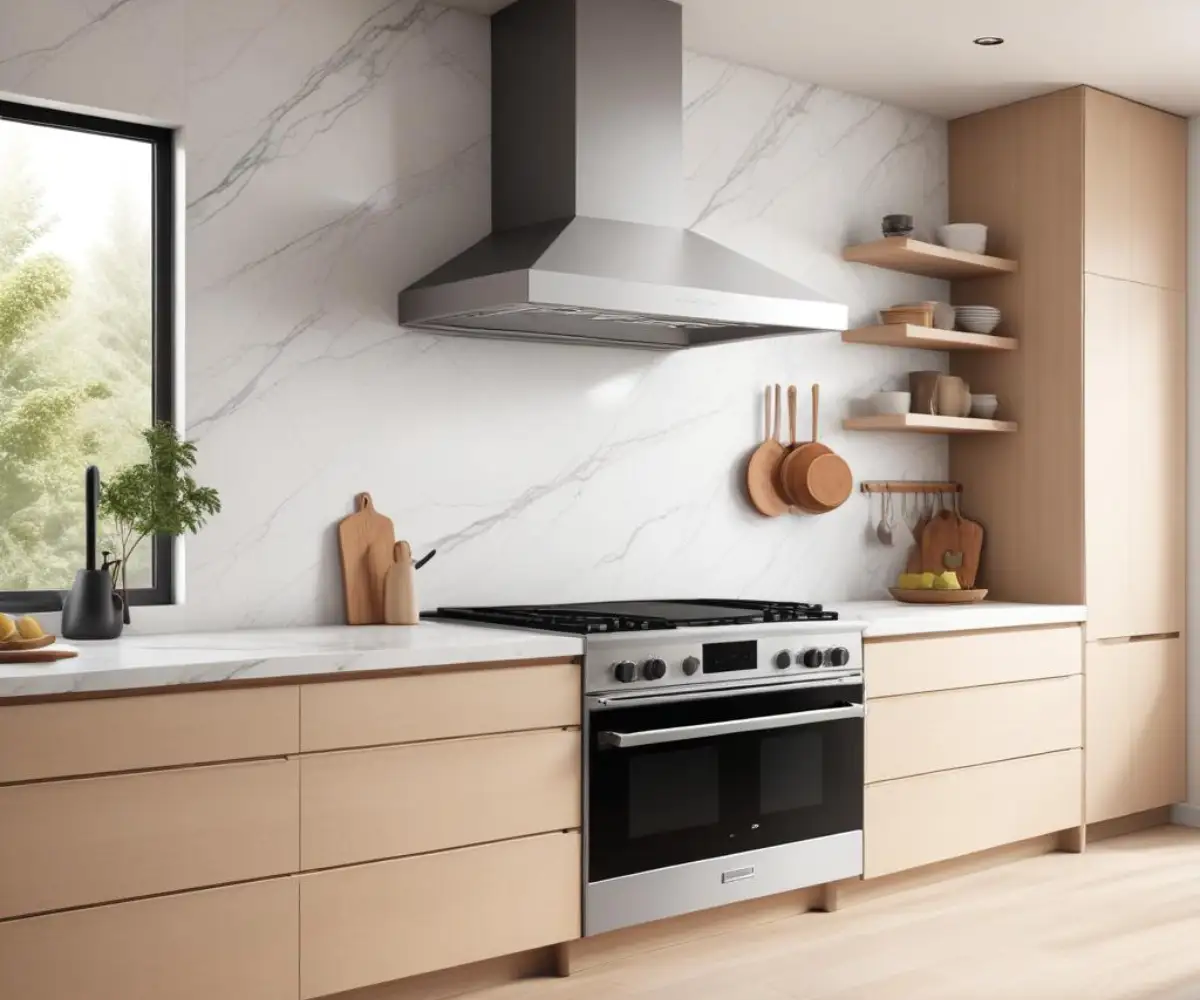
Heat, Stains, and Seams: The Durability Question
While engineered quartz is known for its durability, its application as a range hood presents unique challenges. Proximity to high heat from professional-style ranges can be a concern for some lower-quality quartz brands, potentially leading to discoloration or thermal shock over time.
Another critical factor is the fabrication quality. A quartz hood is essentially a box constructed from multiple pieces of stone. The visibility of the seams at the corners is entirely dependent on the skill of your fabricator. Poorly executed seams can ruin the entire seamless look and collect grease and grime.
You must discuss seam placement and finishing with your fabricator. A master craftsman can create nearly invisible seams that ensure both beauty and longevity.
The Smart Buyer’s Guide to a Flawless Quartz Hood
Navigating the complexities of a quartz range hood project requires careful planning and the right team. Following these steps will put you on the path to a stunning and successful installation.
Step 1: Choose the Right Quartz Slab and Design
Not all quartz is created equal. Start by selecting slabs from reputable brands known for their quality and consistency. Consider “jumbo” slabs to minimize the number of required seams, especially for larger hoods.
The pattern of the quartz is also a strategic choice. A slab with subtle, multi-directional veining can help camouflage seams more effectively than a solid color or a linear pattern. Always view the full slab in person before purchasing.
Think about the shape of the hood itself. Simple, boxy designs are easier and less expensive to fabricate. More complex tapered or curved designs require more intricate cuts and significantly more labor, driving up the cost.
Step 2: Hire a Master Fabricator, Not a General Contractor
This cannot be overstated: your project will succeed or fail based on the skill of your stone fabricator. This is not a job for a typical countertop installer. You need a specialist with documented experience in building complex, miter-edged structures like waterfall islands and range hoods.
Ask for a portfolio of their previous range hood projects. Speak to their references. A true master will be proud to showcase their work and will understand the structural and aesthetic nuances required for a perfect result.
A great fabricator will also be a valuable partner in the design process, advising on the best construction methods and helping you avoid potential design flaws before they become expensive problems.
Step 3: Select a Powerful and Quiet Ventilation Insert
The quartz is merely the beautiful shell; the real work is done by the ventilation insert inside. Skimping on the insert will render your beautiful hood ineffective. You need a unit with sufficient CFM (Cubic Feet per Minute) to handle the output of your cooktop.
Look for inserts with durable stainless steel baffle filters, which are more effective at capturing grease and are dishwasher safe. Also, pay close attention to the sone (sound) rating to ensure it operates quietly. Choosing a powerful insert from a luxury brand can make all the difference. When considering high-end options, a detailed comparison of brands like Jenn-Air and Monogram can help you decide.
Ensure the insert you choose is fully compatible with your custom hood’s dimensions. Your fabricator will need the exact specifications of the insert before they can begin building the quartz enclosure.
Step 4: Plan for Structural Support from Day One
Structural planning must happen at the very beginning of your kitchen remodel or build. Properly planning the structural elements from the beginning of a build can prevent costly retrofitting and is a key part of managing your overall budget, much like understanding how to keep property taxes low when building a new house.
Work with your contractor to open the wall and install the necessary blocking or steel supports before any drywall goes up. This early-stage planning is far less expensive and disruptive than trying to add reinforcement later.
This is also the time to run the electrical wiring for the hood’s fan and lighting, as well as the ductwork that will vent to the outside. Meticulous planning at this stage ensures a smooth and secure installation.
Comparing Range Hood Cladding Materials
To put the choice into context, it’s helpful to see how a quartz hood compares to other popular custom hood materials.
| Material | Aesthetics | Average Cost | Maintenance | Durability |
|---|---|---|---|---|
| Quartz | Seamless, monolithic, high-end | Very High | Easy to clean, non-porous | Very High |
| Drywall/Plaster | Blends with walls, minimalist | Low to Medium | Difficult to clean grease, can stain | Low (susceptible to dings/cracks) |
| Wood | Traditional, warm, customizable | Medium to High | Requires careful cleaning to avoid damaging finish | Medium (can warp or discolor with heat/steam) |
| Metal (Copper, Zinc) | Statement piece, industrial or classic | High | Can require polishing, will develop a patina | Very High |
Design and Aesthetics: Making It Work for Your Kitchen
Once you’ve sorted out the technical aspects, you can focus on the design. A quartz hood offers several aesthetic avenues to explore.
To Match or To Contrast?
The most popular approach is to wrap the hood in the same quartz as the countertops and backsplash. This creates the coveted seamless look, where surfaces flow into one another without interruption.
However, an equally bold choice is to use a contrasting slab for the hood. Imagine crisp white cabinetry and countertops with a dramatic, dark gray or black quartz hood as a focal point. This can create a stunning centerpiece, especially in a larger kitchen.
Proportionality and Kitchen Scale
The size and shape of your hood must be in harmony with the rest of your kitchen. A towering, monolithic hood can be a spectacular feature in a room with high ceilings and ample space.
However, in a more compact kitchen, that same design can feel oppressive and overwhelming. The scale of the hood must be proportional to your kitchen; a massive hood can overwhelm a small space, just as a 10ft kitchen island requires a large room to feel balanced. Work with your designer to create a scaled drawing to ensure the proportions are correct before committing.
Long-Term Care: Keeping Your Investment Pristine
One of the best features of quartz is its low maintenance. To clean the hood, simply use a soft cloth with warm water and a mild, pH-neutral soap. Avoid abrasive cleaners or scouring pads, as they can dull the polished surface over time.
For stubborn grease, a dab of dish soap on a microfiber cloth is usually sufficient. Wipe it down regularly to prevent the buildup of airborne cooking oils, which can be harder to remove if left for long periods.
The Unspoken Benefit: A Major Boost in Home Value
While the upfront cost is high, a well-executed quartz range hood is a feature that significantly contributes to your home’s resale value. It’s an unambiguous signal of a high-quality, custom-designed kitchen.
Potential buyers immediately recognize it as a luxury upgrade that they won’t find in a standard home. In a competitive real estate market, this type of standout feature can make your property more memorable and desirable, positioning it as a premium offering.
Is a Quartz Range Hood the Right Choice For You?
A quartz range hood is more than just an appliance cover; it’s a major architectural element. It offers an unparalleled level of aesthetic cohesion and luxury but demands a significant investment in budget, planning, and professional expertise.
It is not a feature to be undertaken lightly. However, for homeowners who are prepared for the process and cost, the reward is a breathtaking kitchen centerpiece that is durable, timeless, and a true testament to custom design.
If you value seamless design and are prepared to invest in the right materials and talent, a quartz range hood can be the single most impactful feature in your new kitchen. Make sure you partner with experts, plan for the structural needs, and you will create a space that is both stunningly beautiful and exceptionally functional.
