
The PVC Hoop House Calculator You Can’t Build Without
The dream of harvesting fresh vegetables in the middle of winter or getting a head start on spring planting is a powerful motivator for any gardener. A PVC hoop house offers an affordable and accessible path to achieving that year-round gardening dream. However, this dream can quickly turn into a frustrating pile of bent pipes and torn plastic without a crucial first step: accurate calculation.
Many eager DIY builders rush into the project, only to find they’ve purchased the wrong length of PVC, too little plastic sheeting, or created a structure that collapses under the first strong wind. The core problem isn’t the building process itself, but the lack of precise planning. This guide serves as your comprehensive PVC hoop house calculator, ensuring you buy the right materials in the right quantities for a sturdy, efficient, and long-lasting structure.
You'll Learn About
Why Guessing Your Numbers Is a Recipe for Disaster
Treating your hoop house build like a rough estimate is a critical mistake. Every calculation has a direct impact on the final outcome. Precision is non-negotiable for several key reasons.
First, structural integrity is paramount. Accurate calculations for hoop length and spacing ensure your greenhouse can withstand wind and snow loads. Second, it’s about cost efficiency; buying the exact amount of greenhouse plastic and hardware prevents wasted money. Finally, it saves you immense time and frustration by eliminating repeat trips to the hardware store.
Step 1: Define Your Hoop House Dimensions
Before any math can be done, you must decide on the fundamental size of your structure. These three measurements will dictate every subsequent calculation. Think carefully about your available space, gardening goals, and local climate.
Width, Length, and Height
The width is the most important decision you will make, as it directly influences the height and the arc of your PVC hoops. Common DIY widths range from 10 to 14 feet. The length can be more flexible, determined by the size of your garden plot. The desired center height will be a result of the width and the length of your PVC pipes.
Step 2: Calculating the PVC Hoops (The Structure’s Skeleton)
The hoops, or ribs, are the backbone of your greenhouse. Calculating their length and quantity correctly is the heart of the project. Get this right, and you are well on your way to a successful build.
Calculating PVC Pipe Length Per Hoop
The length of the PVC pipe needed for a single hoop determines the arc and height of your structure. A reliable formula to estimate the required pipe length is to multiply your desired hoop house width by 1.6. For example, a 12-foot wide hoop house would require a PVC pipe length of approximately 19.2 feet (12 x 1.6).
For those seeking greater precision, the calculation is based on the formula for the circumference of a semi-circle. You can use an online arc length calculator for the most accurate measurement, but the 1.6 multiplier is an excellent and tested rule of thumb for initial planning. Always buy slightly longer pipes than you calculate; you can trim them, but you can’t add length.
Choosing the Right PVC Pipe
Not all PVC is created equal. For hoop houses, you must use Schedule 40 PVC at a minimum. It offers the necessary rigidity to support the structure. For larger structures or areas with significant snowfall, upgrading to Schedule 80 is a wise investment. The most common diameters used are 1-inch and 1.5-inch pipe.
Determining Hoop Spacing and Quantity
Hoop spacing is critical for strength. A standard spacing is 4 feet between each hoop. However, if you live in an area with heavy snow or high winds, reducing this spacing to 2 or 3 feet will add significant stability. To calculate the number of hoops needed, use this formula: `(Hoop House Length / Hoop Spacing) + 1`.
For a 20-foot long house with 4-foot spacing, you would need 6 hoops (20 / 4 = 5, then + 1 for the end). The total PVC needed for hoops would be the number of hoops multiplied by the length of each pipe.
Step 3: Calculating the Ridgeline, Base, and Anchors
With the hoops calculated, the next step is to determine the materials needed for the supporting structure. These elements provide the longitudinal stability that ties all the hoops together, creating a rigid and durable frame.
The Essential Ridgeline Support
A ridgeline, also known as a purlin, is a pipe that runs along the top of the hoop house, connecting the peak of each hoop. This is an absolutely essential component for preventing racking and collapse. The calculation is simple: its length is equal to the total length of your hoop house.
Building a Solid Foundation with Baseboards
A wooden baseboard provides a solid anchor point for your hoops and a surface to attach the greenhouse plastic. Pressure-treated 2×6 lumber is an excellent choice. To calculate the amount of wood needed, you are simply building a rectangle: `(Length x 2) + (Width x 2)`.
Ground Anchors for Ultimate Stability
Your hoop house must be securely fastened to the ground. The most common method is to drive rebar stakes into the ground, sliding the ends of the PVC hoops over them. You will need two pieces of rebar for each hoop. A recommended length for each rebar stake is 2 to 4 feet, with half driven into the ground.
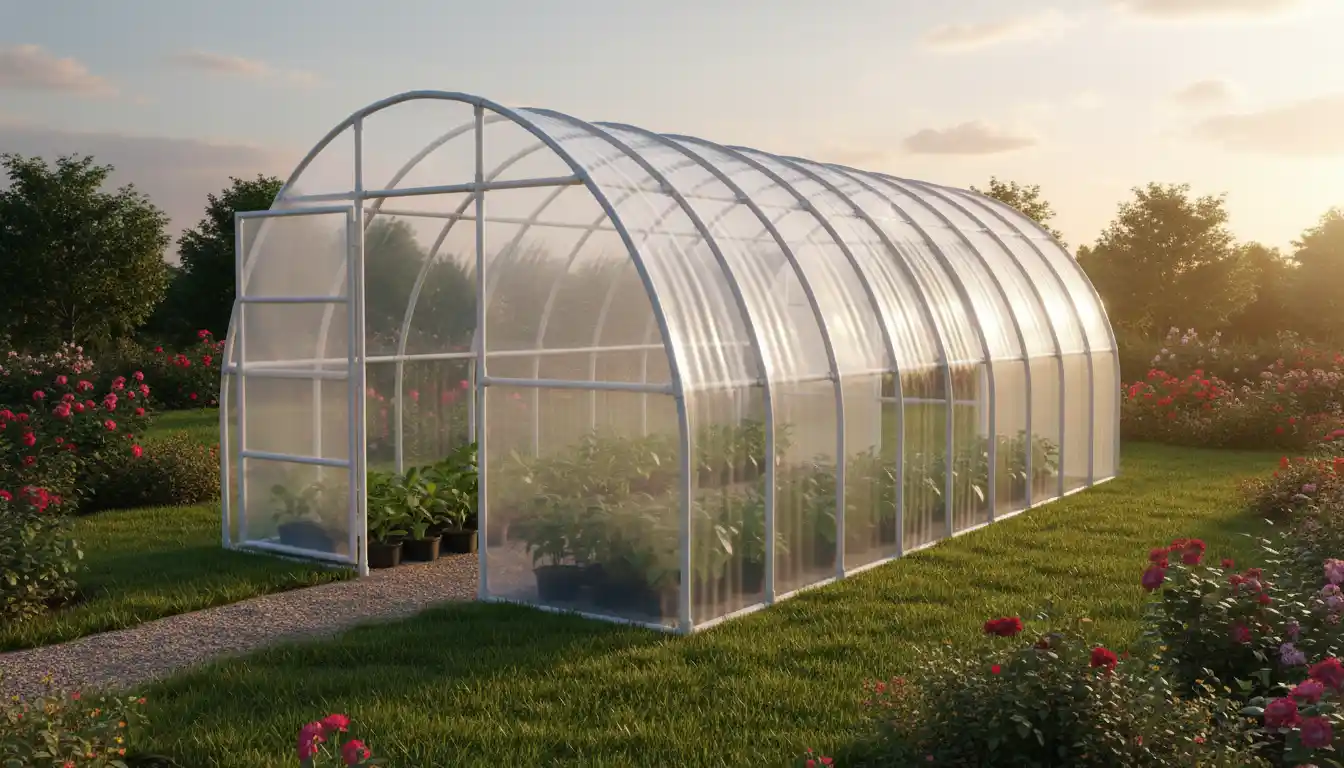
Step 4: The Greenhouse Plastic Calculation (Measure Twice, Cut Once)
Miscalculating the plastic sheeting is one of the most costly mistakes in a DIY hoop house build. It’s crucial to purchase a single, continuous piece for the main body of the structure to ensure a proper seal and maximum strength. Do not try to patch smaller pieces together.
Calculating the Main Cover Size
To determine the size of your main plastic sheet, you need two measurements. The required width of the plastic is the full length of one of your PVC hoops, from ground to ground, plus at least two extra feet for anchoring. The required length of the plastic is the total length of your hoop house, plus at least four extra feet to cover the end walls before they are installed.
For example, if your PVC hoops are 19 feet long and your structure is 20 feet long, you should purchase a sheet of plastic that is at least 21 feet wide and 24 feet long.
Calculating the End Wall Plastic
The end walls will be framed and covered separately. You will need two pieces of plastic, each large enough to cover the arched end of your hoop house. Purchase two rough squares of plastic that are wider and taller than your hoop house dimensions (e.g., if your house is 12 feet wide and 7 feet high, get two pieces that are at least 14′ x 9′). The excess will be trimmed away after installation.
Choosing the Right Greenhouse Film
Do not use standard plastic sheeting from a hardware store. It will break down in the sun within a single season. You must invest in 6-mil, UV-stabilized greenhouse film. This specialty plastic is designed to last for 4-6 years in direct sunlight and provides better light diffusion for your plants.
| Material | Calculation Formula | Example (12’W x 20’L x 7’H) | Notes |
|---|---|---|---|
| PVC Hoops (1.5″ Sch 40) | (Length / Spacing + 1) * (Width * 1.6) | (20/4 + 1) * (12 * 1.6) = 6 * 19.2′ = 115.2′ total | Buy in standard 10′ or 20′ lengths and connect. |
| PVC Ridgeline (1.5″ Sch 40) | Total Hoop House Length | 20′ | Connect standard lengths if needed. |
| Baseboards (2×6″ PT Wood) | (Length * 2) + (Width * 2) | (20′ * 2) + (12′ * 2) = 64′ total | Ensures a square and stable foundation. |
| Rebar Anchors (1/2″) | (Number of Hoops) * 2 | 6 * 2 = 12 pieces | Use 2-4′ lengths for secure anchoring. |
| Greenhouse Film (6-mil UV) | (Hoop Length + 2′) W x (Structure Length + 4′) L | (19.2′ + 2′) W x (20′ + 4′) L = 21.2’W x 24’L sheet | Always order one continuous piece for the main cover. |
| Wiggle Wire Channel | Perimeter of Baseboards + Door Frame | ~64′ + 18′ = 82′ | A professional system for securing plastic. |
Step 5: Calculating Hardware and Finishing Touches
The small details are what elevate a good hoop house to a great one. These components provide security, longevity, and functionality. Don’t overlook them in your calculations.
Connectors, Screws, and Fasteners
You will need various PVC connectors, such as 4-way tees to connect your hoops to the ridgeline. You’ll also need self-tapping screws to secure the PVC to these fittings and to attach clamps to the baseboards. The exact quantity will depend on your specific design, but it’s wise to buy more than you think you will need.
Wiggle Wire and Lock Channel
For a truly secure and professional finish, use wiggle wire and lock channel to attach your plastic to the baseboards. This system creates a continuous, tight seal that won’t tear the plastic and allows for easy replacement. You will need enough channel to cover the entire perimeter of your hoop house base and around your door frame.
Ventilation and Doors
Proper ventilation is not optional; it’s essential for plant health. Factor in a door for one end wall. For your end wall, you’ll frame a door for access. While many build a simple PVC and plastic door, you could also adapt a pre-made screen door, much like the popular Costco Genius screen door, for easy summer ventilation. Consider roll-up sides for larger structures, which requires additional hardware.
Pro-Tips and Common Mistakes to Avoid
Building on the experience of countless DIY gardeners can help you avoid common pitfalls. A well-built structure requires not just good calculations, but also smart techniques. Incorporating these tips will add years to the life of your hoop house.
Add Cross-Bracing for Strength
In windy locations, add diagonal cross-bracing at the corners of your hoop house, running from the baseboard on one hoop to the top of the next. This simple addition dramatically increases stiffness and wind resistance. It prevents the structure from twisting or leaning.
To boost winter performance, consider insulating the north wall to block harsh winds and retain heat. While commercial insulation is an option, understanding the insulating properties of everyday materials, like the surprising R-value of newspaper, can inspire creative, low-cost solutions for enhanced frost protection.
Paint Your PVC Pipes
Untreated PVC can become brittle over time due to UV exposure. A simple coat of standard exterior latex house paint (do not use oil-based) can significantly extend the life of your frame. This simple step, often overlooked, protects the plasticizer in the PVC from leeching out, which is a primary cause of failure.
Secure Your Foundation Properly
Your baseboards are the foundation of the entire structure. Ensure they are level and square before you begin attaching the hoops. For a more permanent structure, you might consider small concrete footings for the corners. Making sure every part of the foundation is solid, similar to how a detailed Versabond vs. Mapei comparison guides tiling projects, is key to long-term durability.
Your Blueprint for Success
A PVC hoop house is more than just a garden accessory; it’s an investment in your passion for growing. By moving beyond estimation and embracing precise calculation, you transform the project from a gamble into a guaranteed success. You now have the formulas and knowledge to act as your own PVC hoop house calculator.
Plan your dimensions, calculate each component meticulously, and invest in the right materials. The result will be a robust, efficient, and highly productive greenhouse that will serve you for many seasons to come. You are now ready to build the garden of your dreams.
