
Pure Convection vs Convection Bake: The Hidden Truth About Your Oven
You followed the recipe perfectly. You preheated the oven, set the timer, and hoped for the best. Yet, the results are disappointing: a roasted chicken with pale, flabby skin on one side and burnt spots on the other, or a batch of cookies where the top tray is scorched while the bottom one is still doughy. This common kitchen frustration often boils down to not understanding the powerful, yet confusing, settings on your own oven.
Many ovens today boast “convection” capabilities, but not all convection is created equal. The subtle difference between “Pure Convection” and “Convection Bake” is one of the most misunderstood concepts in home cooking, and using the wrong one can be the secret culprit behind your culinary mishaps. This guide will demystify these settings, revealing the core differences and empowering you to use your oven to its full, glorious potential for consistently perfect results.
You'll Learn About
First, What Is Convection Cooking?
Before diving into the variations, it’s essential to understand the basic principle. A conventional oven cooks with radiant heat, typically from heating elements at the top and bottom. This process can be slow and often results in “hot spots”—areas in the oven that are significantly hotter than others, leading to uneven cooking.
Convection cooking introduces a fan into the equation. This fan circulates the hot air throughout the oven cavity, eliminating hot spots and surrounding the food with even, consistent heat. This fundamental change leads to several key benefits: food cooks about 25% faster, browning is more uniform, and you can often cook on multiple racks at once with reliable results.
The Great Debate: Convection Bake vs. Pure Convection
Here is where the confusion begins for most people. While both settings use a fan, the source of the heat is entirely different, which dramatically changes how your food cooks. Understanding this distinction is the key to mastering your appliance.
What is Convection Bake?
Think of Convection Bake as a hybrid system. It uses the traditional heating elements at the top and bottom of the oven—just like a regular bake setting—but adds the fan to circulate the air that these elements have heated. The heat is still primarily radiating from the top and bottom, but the fan helps distribute it more evenly than a conventional oven would.
This setting is an improvement over standard baking but is not the most powerful or even form of convection. It’s best suited for dishes that benefit from strong bottom heat, like a pizza needing a crisp crust, while also getting some of the browning benefits of air circulation.
What is Pure Convection? (Also Known as True or European Convection)
Pure Convection is the game-changer. In this mode, the top and bottom heating elements are often turned off completely. Instead, a third heating element is located directly behind or around the convection fan itself. This system heats the air as it’s being circulated, creating a stream of consistently hot air that cooks the food from all sides simultaneously.
This method provides the most even and efficient cooking environment. It’s the secret to achieving that perfectly golden-brown, crispy skin on a roast turkey and is the only way to get truly consistent results when baking on multiple racks. If a recipe calls specifically for convection, it is likely assuming you are using this “true” convection setting for optimal results.
Side-by-Side Showdown: The Ultimate Comparison Table
To make the differences crystal clear, here’s a direct comparison of how each mode functions and what it means for your cooking.
| Feature | Convection Bake | Pure/True Convection |
|---|---|---|
| Heating Mechanism | Standard top and bottom elements are activated, assisted by a fan. | A third heating element behind the fan is activated; top and bottom elements are usually off. |
| Heat Source | Radiant heat from top and bottom, circulated by a fan. | Heated air blown directly from the fan at the back of the oven. |
| Best For | Pies, pizzas, casseroles, and single-rack items needing a crispy bottom. | Roasting meats, multi-rack baking (cookies), roasted vegetables, dehydrating. |
| Cooking Evenness | Good, but can still have minor hot spots. Better than conventional. | Excellent. The most even and consistent heating method. |
| Multi-Rack Performance | Fair. Rotation of pans may still be needed for perfect results. | Superior. Ideal for baking multiple sheets of cookies or appetizers at once. |
| Potential Downsides | Can sometimes dry out the tops of delicate baked goods before the center is cooked. | Not ideal for delicate items like soufflés or custards that can be disturbed by moving air. |
When to Use Which Setting: A Practical Guide for Home Chefs
Knowing the mechanics is one thing; applying it to your daily cooking is another. Here is a straightforward guide to choosing the right setting for your favorite dishes.
Choose Convection Bake for:
- Pies and Pastries: The strong bottom heat helps set the crust and prevent sogginess, while the fan ensures the top becomes golden brown.
- Pizzas and Flatbreads: This setting delivers the intense bottom heat needed for a crispy crust that can stand up to toppings.
- Casseroles and Lasagna: It helps cook the dense center thoroughly without letting the top burn too quickly.
Choose Pure Convection for:
- Roasting Meats and Poultry: This is the absolute best setting for achieving crispy, crackling skin and a juicy, tender interior on everything from a whole chicken to a large beef roast.
- Multi-Rack Baking: Its main strength is baking three racks of cookies, appetizers, or scones at once with incredibly even results. No more rotating pans halfway through.
- Roasted Vegetables: It creates beautifully caramelized and crispy vegetables—think broccoli, potatoes, and Brussels sprouts—in less time.
When to Stick with Your Conventional Oven Setting (No Fan)
- Delicate Bakes: The moving air from a convection fan can be too harsh for custards, cheesecakes, soufflés, and delicate cakes, causing them to set unevenly or collapse.
- Quick Breads and Some Cakes: Certain batters need the initial, gentle rise provided by the steady heat of a conventional oven. A convection fan can sometimes cause a crust to form too early, inhibiting the rise.
The Hidden Truth: Is Your “Convection” Oven Lying to You?
Here is a crucial piece of information that appliance manufacturers don’t always make clear: many ovens labeled “Convection” only have the “Convection Bake” feature. The inclusion of a third heating element for “Pure/True Convection” is often a premium feature reserved for higher-end models.
This discrepancy is a major source of frustration for home cooks who expect perfect multi-rack baking but find their results are still uneven. They blame their recipe or their skills, when in fact, their oven simply lacks the technology to deliver on that promise. High-performance ranges from brands like those in a Dacor vs Thermador comparison almost always feature true convection as a cornerstone of their design.
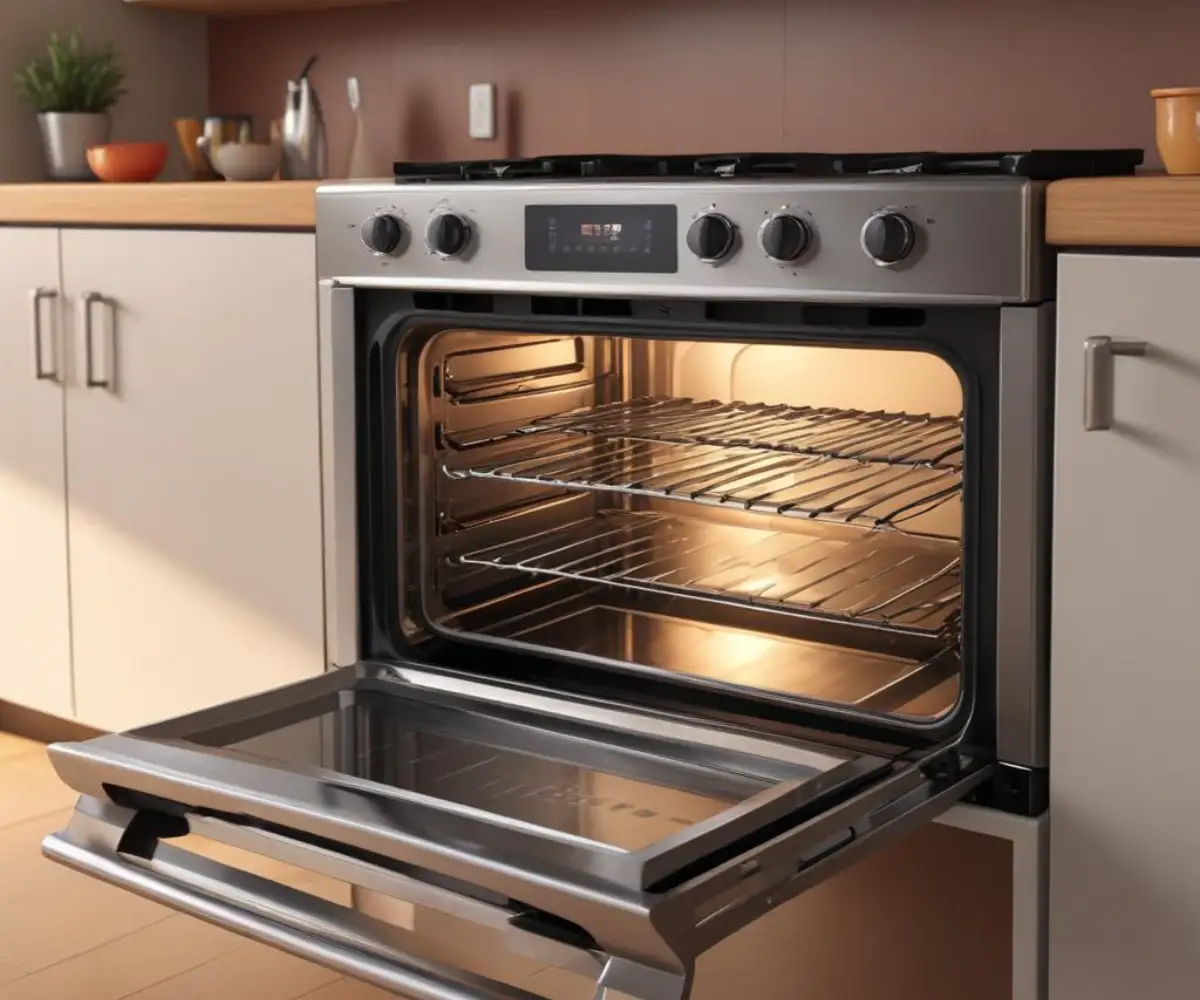
To find out what your oven truly has, check the back interior wall. If you can see a heating element coil looping around the fan, you have Pure/True Convection. If you only see a fan, you likely have the standard Convection Bake.
Pro Tips for Mastering Your Convection Oven
Regardless of which system you have, following a few key rules will dramatically improve your results and help you cook with confidence.
Tip 1: Adjust Your Time and Temperature
The golden rule for converting any traditional recipe to convection is simple: reduce the recipe’s recommended temperature by 25°F (about 15°C). Because the circulating air transfers heat more efficiently, this lower temperature will cook the food in roughly the same amount of time.
Alternatively, you can keep the temperature the same and reduce the cooking time by about 25%. It’s always a good idea to check for doneness early until you get a feel for your specific oven.
Tip 2: Use the Right Cookware
Airflow is everything in a convection oven. To maximize its effectiveness, use pans with low sides, like baking sheets and shallow roasting pans. High-sided dishes can block the circulating air, creating a “shadow” and negating the benefits of convection.
When you want to cook like the pros, investing in pro-style equipment can make a difference. Considering a new range? See how brands stack up in our Forno vs Thor showdown to learn more about the features that elevate your cooking.
Tip 3: Don’t Overcrowd the Oven
Even though Pure Convection excels at multi-rack cooking, you still need to give the air room to move. Leave at least an inch of space between pans and between the pans and the oven walls. Overcrowding will lead to uneven cooking and steaming instead of roasting.
Is Pure Convection Worth the Upgrade?
If you are in the market for a new oven, the question of whether to invest in a Pure/True Convection model is a significant one. For serious home bakers who frequently make large batches of cookies, or for those who love to host and roast large cuts of meat, the answer is a resounding yes. The consistency and efficiency it provides are unmatched.
For those who cook more casually or primarily make dishes like casseroles and single-sheet meals, a standard Convection Bake oven may be perfectly sufficient. When looking at full kitchen packages, such as those detailed in our Smeg 48 Range Reviews, consider how this single feature impacts the overall value and your cooking style.
Conclusion: The Final Verdict
The battle of Pure Convection vs. Convection Bake isn’t about one being definitively “better” than the other; it’s about using the right tool for the right job. Convection Bake is your go-to for dishes needing a solid, crispy base, while Pure Convection is the master of evenness, perfect for roasting and multi-rack baking.
By understanding the fundamental difference—where the heat comes from—you can finally take control of your oven. No more guesswork, no more uneven results. You now have the knowledge to select the perfect setting every time, transforming your kitchen frustrations into culinary triumphs.
