Peggy Martin Rose in Container: Unlock Constant Blooms Now
Growing the legendary Peggy Martin rose in a container seems like a paradox. Gardeners cherish this climbing rose for its astonishing vigor and profusion of blooms, yet these very traits present the ultimate challenge for container gardening. The fear of constrained roots, nutrient deficiencies, and a plant that quickly overwhelms its space causes many to abandon the idea altogether.
This common problem stems from a misunderstanding of what this resilient rose truly needs to thrive in a contained environment. Without the correct strategy, potted Peggy Martin roses often lead to disappointment, showing stunted growth, yellowing leaves, and sparse flowers. The solution lies in a dedicated approach that respects the plant’s powerful growth habit while providing everything it needs within the confines of a pot.
Successfully cultivating a Peggy Martin rose in a container is not just possible; it can be spectacularly rewarding. It allows gardeners with limited space, such as those with patios, balconies, or small yards, to enjoy one of the most beloved, disease-resistant roses available. With the right knowledge, you can create a stunning vertical display of pink blossoms that becomes the envy of the neighborhood.
You'll Learn About
Decoding the Challenge: Why Containers Test a Peggy Martin’s Vigor
The core of the problem is the Peggy Martin’s sheer force of life. This is a rose that can easily grow 15 feet or more, a testament to its robust root system. In a garden bed, these roots can spread wide and deep, searching for water and nutrients to fuel the massive floral display.
A container, by its nature, is a restrictive environment. The limited soil volume means it dries out much faster than garden soil, nutrients are depleted with every watering, and the roots can quickly become a dense, tangled mass—a condition known as being “root-bound.” This state suffocates the plant, hindering its ability to absorb the essentials for survival and blooming.
The Root of the Issue: Space, Water, and Nutrients
In a pot, the delicate balance of moisture, aeration, and nutrition is much harder to maintain. Overwatering can lead to root rot in a pot with poor drainage, a swift end for any rose. Underwatering, an easy mistake during hot summer days, stresses the plant, causing leaves to drop and halting flower production entirely.
Furthermore, the constant need for water also leaches essential nutrients from the potting mix. What was once a rich growing medium can become inert and barren in a single season. Without a strategic feeding plan, a container-grown Peggy Martin will invariably falter, unable to sustain its growth and deliver the cascade of blooms it’s famous for.
The Blueprint for Success: Your Step-by-Step Container Guide
Transforming a container into a perfect home for a Peggy Martin rose requires a thoughtful, multi-faceted approach. It begins with the container itself and extends through soil composition, watering discipline, and ongoing care. By mastering these elements, you provide the foundation for a healthy, thriving plant.
Step 1: Selecting the Ultimate Container
This is the most critical decision you will make. Do not underestimate the size needed. A minimum of a 20 to 25-gallon container is essential to accommodate the root system for a few years. A larger pot, such as a half-whiskey barrel, is even better, as it provides more stability and a greater reservoir of soil and moisture.
Material choice also matters. Terracotta is classic but porous, meaning it dries out very quickly in sun and wind. Glazed ceramic or thick plastic pots retain moisture more effectively. Whatever you choose, uncompromised drainage is non-negotiable. The pot must have multiple, large drainage holes. If not, you must drill them yourself before planting.
Step 2: Engineering the Perfect Soil Mix
Bagged potting soil straight from the store is not enough for a heavy feeder like a climbing rose. You must create a custom blend that provides structure, moisture retention, and long-term fertility. This recipe ensures your rose has the best possible start.
For a superior container mix, combine: 50% high-quality, sterile potting mix, 30% aged compost or well-rotted manure, and 20% perlite or small pine bark fines. The potting mix forms the base, the compost provides vital organic matter and nutrients, and the perlite ensures the mix remains light and well-aerated, preventing compaction and allowing roots to breathe. Before planting, incorporate a slow-release granular rose fertilizer into this mix to build in a foundation of nutrition.
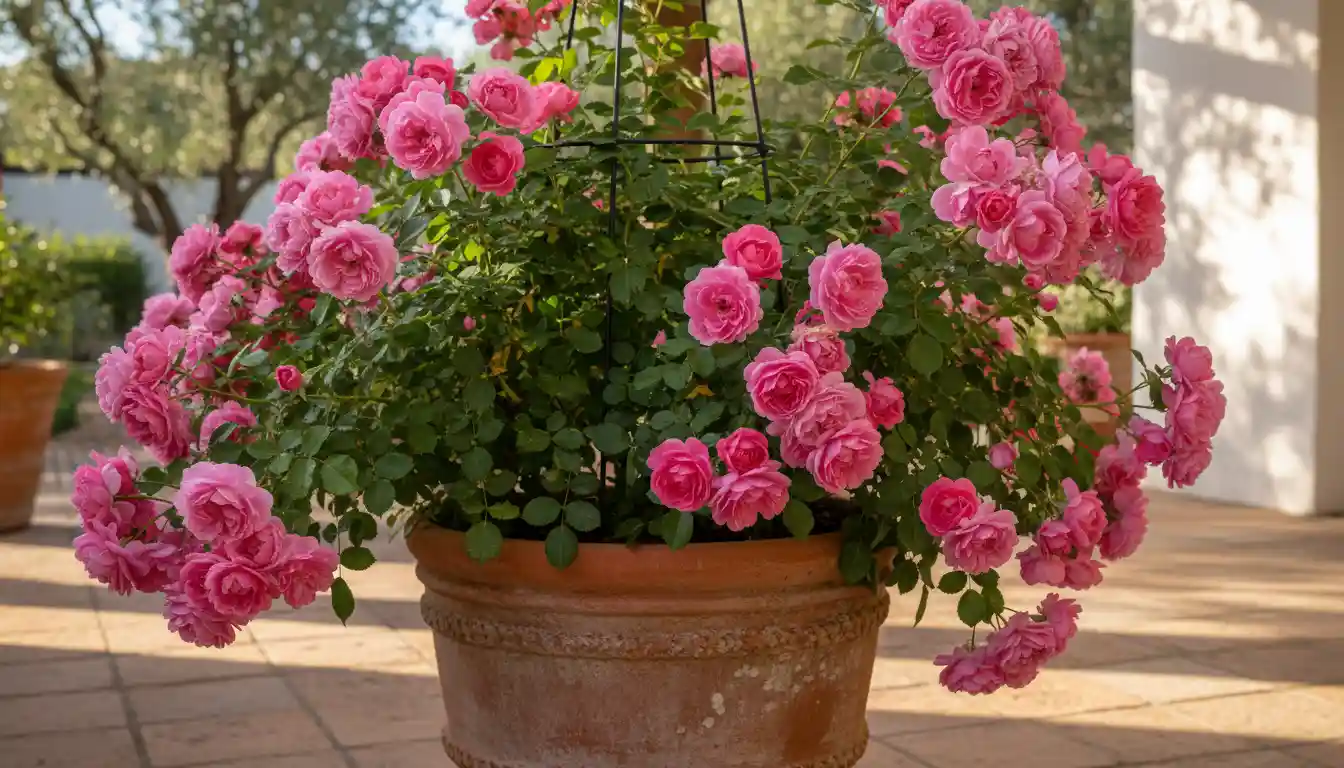
Step 3: Planting and Positioning for Peak Performance
When you’re ready to plant, begin by covering the drainage holes with a piece of mesh screen or broken pottery to prevent soil from washing out. Fill the container part-way with your custom soil mix, creating a mound in the center. Gently remove the rose from its nursery pot, inspect the roots, and lightly tease apart any that are circling the bottom.
Set the rose on the mound of soil, ensuring the bud union (the swollen area where the rose is grafted to the rootstock) is about one to two inches above the final soil line. Backfill the pot with the remaining soil mix, firming it gently to eliminate air pockets. Water thoroughly until water runs freely from the drainage holes. Finally, place the container in a location that receives at least six to eight hours of direct sunlight per day.
Mastering Long-Term Care: Watering, Feeding, and Support
Once planted, your focus shifts to the ongoing maintenance that will keep your Peggy Martin healthy and productive. Consistency is key. A container-grown plant is entirely dependent on you for its survival.
Watering Wisdom for Potted Roses
The golden rule of watering a container rose is to check the soil first. Do not water on a fixed schedule. Instead, insert your finger two inches into the soil. If it feels dry, it’s time to water. When you do water, do so deeply and thoroughly, allowing the water to soak the entire root ball and flow out of the bottom.
This “drench and dry” method encourages deep root growth and prevents the dual dangers of rot from constantly soggy soil and stress from drought. During the peak of summer, you may need to water daily, but always let the soil be your guide. Ensuring proper drainage is a fundamental concept in home and garden care, much like understanding when you can use flexible PVC for a shower drain in a plumbing project; getting the basics right prevents major problems later.
A Strategic Fertilizing Schedule
Container roses are heavy feeders. The nutrients in the initial potting mix will be exhausted within a couple of months. To fuel continuous growth and blooming, you must implement a regular feeding schedule throughout the growing season.
Begin applying a balanced liquid fertilizer formulated for roses every two to three weeks, starting when new growth appears in the spring. Continue this routine until late summer. Supplementing with organic amendments like fish emulsion or kelp meal can provide essential micronutrients. Stop fertilizing about six weeks before your first expected frost to allow the plant to harden off for winter.
Here is a sample feeding schedule to guide you:
| Time of Year | Fertilizer Type | Application Frequency | Notes |
|---|---|---|---|
| Early Spring (New Growth) | Slow-Release Granular Rose Food | Once, mixed into top layer of soil | Provides a baseline of nutrition for the season’s start. |
| Mid-Spring to Late Summer | Balanced Liquid Rose Fertilizer | Every 2-3 Weeks | Dilute according to package directions. Apply to moist soil. |
| Monthly (Optional) | Liquid Kelp or Fish Emulsion | Once per month | Provides micronutrients and improves soil health. |
| Early Fall (6-8 weeks before frost) | No Fertilizer | Cease all feeding | Allows the plant to prepare for winter dormancy. |
Providing Sturdy Support
Even in a container, a Peggy Martin is a climber. It needs a sturdy structure to support its long, graceful canes. An obelisk, a fan trellis inserted into the pot, or a nearby fence or wall are all excellent options. As the canes grow, gently tie them to the support using soft plant ties or strips of cloth.
Training the main canes in a more horizontal or fan-like pattern will encourage the growth of more lateral shoots. These lateral shoots are where the majority of the flowers will form. This simple training technique is the secret to achieving a plant that is completely covered in blooms from top to bottom.
Pruning and Overwintering a Potted Peggy Martin
Proper pruning and winter protection are the final pieces of the puzzle. These advanced techniques will ensure your rose remains a manageable size, produces the maximum number of flowers, and survives the cold months to thrive again next year.
Pruning for Size and Blooms
The Peggy Martin rose blooms on old wood, meaning the flower buds for spring are formed on the canes produced the previous summer. Therefore, the main structural pruning should be done immediately after the first major spring flush of blooms. At this time, you can cut back some of the longest canes to maintain a desirable size and shape.
Throughout the season, you can lightly trim any wayward shoots to keep the plant tidy. In late winter or early spring, before new growth begins, inspect the plant for any dead, damaged, or crossing canes and remove them. This “housekeeping” pruning improves air circulation and directs the plant’s energy toward healthy, productive growth.
Overwintering Strategies for Container Roses
Roses planted in the ground benefit from the earth’s insulation. In a container, the roots are exposed to ambient air temperature on all sides, making them much more vulnerable to freezing. In zones 7 and warmer, simply moving the pot to a more sheltered location, such as against a house wall, may be sufficient.
In colder climates (Zone 6 and below), more significant protection is required. The best method is to move the pot into an unheated but protected space like a garage, shed, or basement once the rose has gone dormant. Water it sparingly, perhaps once a month, just to keep the soil from completely drying out. Move the pot back outdoors in the spring after the danger of a hard freeze has passed.
Troubleshooting Common Container Issues
Even with the best care, you may encounter issues. Identifying them early is key to keeping your plant healthy. If you are just starting your journey, finding a quality plant is the first step; this guide to finding the Peggy Martin rose at Lowe’s can be a helpful resource.
Yellowing Leaves (Chlorosis)
Yellow leaves, especially when the veins remain green, often signal a nutrient deficiency, typically iron or magnesium. This is common in containers due to nutrient leaching. Ensure you are following a consistent fertilizing schedule. An application of a chelated iron product or a tablespoon of Epsom salts (magnesium sulfate) dissolved in a gallon of water can often correct the problem quickly.
Pest and Disease Management
The Peggy Martin rose is famously disease-resistant, but in the stressed environment of a container, it can occasionally fall prey to pests like aphids or spider mites. Good air circulation is the best defense. If pests appear, a strong spray of water from a hose can often dislodge them. For more persistent infestations, insecticidal soap is a safe and effective option.
By following this comprehensive guide, you can confidently solve the puzzle of growing a magnificent Peggy Martin rose in a container. It requires more diligence than planting in the ground, but the reward—a breathtaking, contained cascade of pink flowers—is a prize well worth the effort. Taking care of your garden investments is as important as choosing quality items for your home, like finding white dishes that don’t scratch to ensure longevity and beauty in your kitchen.
Final Word
Success with a container-grown Peggy Martin rose hinges on providing a foundation that can sustain its renowned stamina. By selecting a large, well-draining vessel—ideally 20 gallons or more—and using a high-quality, nutrient-dense potting mix, you create a controlled environment where this “survivor rose” can truly flourish.
The secret lies in rigorous maintenance: consistent deep watering and a regular feeding schedule are non-negotiable to support its massive bloom cycles. When paired with a sturdy trellis for vertical support, you transform a sprawling climber into a breathtaking architectural feature for your patio or balcony. Ultimately, with the right balance of root space and localized care, you can enjoy the legendary beauty and resilience of the Peggy Martin rose, even in the most limited spaces.