
Unlock Any Paint Color: Your Ultimate Formula Converter Guide
You found it. The absolute perfect color for your living room accent wall, proudly displayed in a glossy magazine or a friend’s newly renovated kitchen. There’s just one problem: it’s from a paint brand your local store doesn’t carry, and you’re left holding a useless color name and code.
This frustrating scenario is the start of a common DIY headache. You search online for a “paint color formula converter,” hoping for a simple tool to translate that secret recipe from one brand to another. Unfortunately, you quickly discover it’s not that simple.
The truth is, a direct, universal paint color formula converter doesn’t exist for public use. Each paint brand uses its own proprietary bases and colorants, making a simple one-to-one translation impossible. But don’t despair—this guide will demystify the process and give you the professional strategies needed to get a perfect match every time.
You'll Learn About
Why a Direct Paint Formula “Conversion” Is a Myth
Think of a paint formula as a unique recipe. While two chefs can make a chocolate cake, they won’t use the exact same ingredients or measurements. The same is true for paint brands; their “ingredients” are fundamentally different, which is why you can’t just plug a Sherwin-Williams formula into a Behr machine.
A paint formula has two primary components: the base and the colorants. Understanding these is the first step to cracking the code. Both elements are unique to each manufacturer, making cross-brand formula replication a complex challenge.
The Critical Role of Base Paint
Before any color is added, it starts with a base paint. Bases come in different sheens like matte, eggshell, and semi-gloss, and also in various tint levels, such as white, light, medium, and deep. A formula designed for a deep base, which is less opaque, will produce a completely different color if used in a white base.
The chemical makeup of the base itself also varies significantly between brands. These differences in binders and fillers affect how the paint accepts colorants and reflects light, ultimately influencing the final perceived color on your wall.
The Science of Colorants
Colorants are the concentrated pigments added to the base to create the final hue. A typical formula might include drops of Black (BK), Yellow Oxide (YL), and Magenta (MG). However, Brand A’s “Yellow Oxide” may have a different tinting strength and undertone than Brand B’s “Yellow Oxide.”
This is why simply knowing the amount of each colorant isn’t enough. The specific properties of those colorants are a closely guarded secret, making a direct formula translation between brands an exercise in futility.
Your Actionable Guide to Perfect Color Matching
Since an online converter is off the table, you need a new strategy. The solution lies in professional color matching, which uses technology and human expertise to replicate a color’s appearance, not its formula. This is how you can confidently walk into any paint store and get the exact color you want.
Step 1: The Gold Standard—A Physical Sample
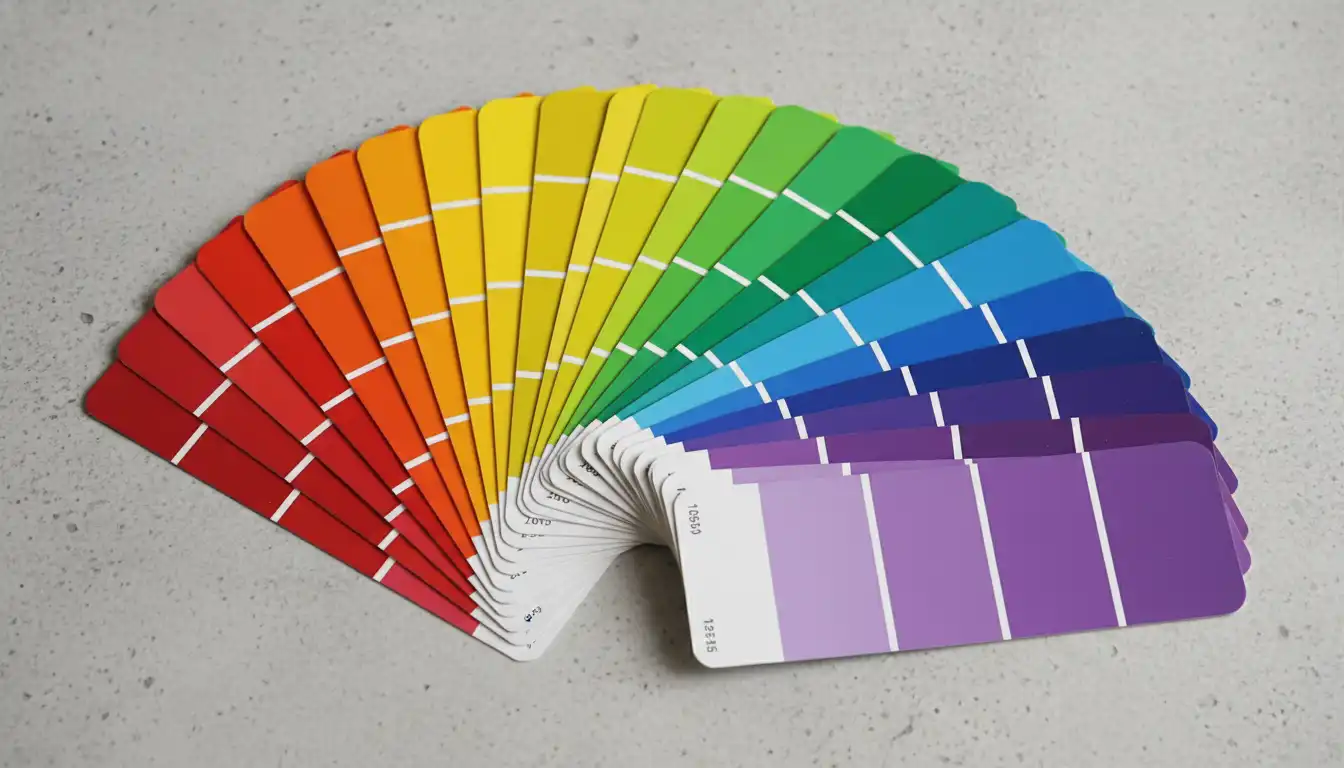
Forget relying on your phone screen or a printed picture. Digital screens are not color-calibrated and will never accurately represent a paint color. Your single most important tool is a high-quality, physical sample of the color you want to match.
The best sample is a paint swatch or chip from the original brand. If you don’t have that, carefully cut a one-inch square of paint from an inconspicuous area of the wall. This physical sample is what the paint store’s technology needs to deliver an accurate result.
Step 2: Leverage the Power of the Spectrophotometer
Every major paint store is equipped with a high-tech tool called a spectrophotometer. This device is the closest thing to a magic wand in the world of color matching. It analyzes your physical sample by shining a controlled light source onto it and measuring the exact wavelengths of light that are reflected.
The machine then translates this data into a unique color signature. It searches its own brand’s database to find the closest existing color or generates a brand-new formula using its own base and colorants to replicate the scanned color as precisely as possible.
Step 3: Test, Test, and Test Again
Even with advanced technology, a perfect match isn’t guaranteed on the first try. One of the most critical but often-skipped steps is to buy a sample pot of the newly matched color. Paint a small section on your wall, let it dry completely, and observe it throughout the day.
This is crucial because of a phenomenon called metamerism. Two colors might look identical under the fluorescent lights of a store but appear noticeably different in the natural daylight or warm lamplight of your home. Testing a sample in the actual room is the only way to be certain the match is perfect.
Step 4: Decode the Formula for Deeper Understanding
While you can’t use one brand’s formula at another store, understanding how to read it provides valuable insight. A paint label will list colorant codes and the amount added. The measurements are often in ounces (OZ) and fractions like 1/48th or 1/128th of an ounce.
This knowledge helps you understand a color’s undertones. For instance, a formula for a seemingly simple gray might contain a surprising amount of blue or green colorant, explaining why it looks cool on the wall. This table breaks down common codes you might see on a formula sticker.
| Colorant Code | Common Name | Color Family |
|---|---|---|
| AX | Yellow Oxide | Yellow/Brown |
| B | Lamp Black | Black |
| C | Yellow Iron Oxide | Yellow/Brown |
| D | Phthalo Green | Green |
| E | Phthalo Blue | Blue |
| F | Red Iron Oxide | Red/Brown |
| KX | White | White (Titanium Dioxide) |
| L | Raw Umber | Brown |
| R | Organic Red | Red |
| V | Magenta | Violet/Red |
Common DIY Pitfalls and How to Avoid Them
Achieving a flawless paint match requires attention to detail. Many DIY projects are derailed by simple mistakes that are easy to avoid. Getting the details wrong with paint can be just as frustrating as installing a new appliance only to find your cooktop not flush with countertop.
Forgetting to Match the Sheen
Color and sheen are inseparable. A color mixed in an eggshell finish can look completely different from the same color in a semi-gloss. Glossier finishes reflect more light, often making colors appear lighter and more saturated. When getting a match, you must use the same sheen as the original paint for an invisible touch-up.
Ignoring the Impact of Light
The type of light in your room dramatically alters color perception. Natural daylight, warm incandescent bulbs, and cool LED lights will all make a paint color look different. This is why testing your paint sample in the intended room, at various times of day, is a non-negotiable step for any painter who wants professional results.
Trusting a Digital “Match”
Many websites and apps claim to find equivalent colors between brands. While these can be a good starting point for finding visually similar hues, they are not true matches. They simply pull the closest color from another brand’s pre-existing library, which may have completely different undertones that become obvious once on the wall.
The Secret Weapon: The Experienced Paint Professional
In an age of automation, the most valuable tool is often the human eye. An experienced paint technician at your local store has mixed thousands of colors and can often spot nuances that a machine might miss. They understand how their brand’s colorants behave and can make manual adjustments to the formula to nail a tricky match.
Don’t be afraid to ask for their help. Provide them with your physical sample and explain your goal. A seasoned professional can often tweak a computer-generated formula by adding a “touch more red” or a “hint of umber” to achieve a level of accuracy that technology alone cannot.
Conclusion: From Formula Confusion to Color Confidence
While a magic “paint color formula converter” remains a myth, you are now equipped with a far more powerful tool: knowledge. The key to unlocking any color from any brand isn’t about converting a formula; it’s about accurately replicating a color’s appearance.
By using a physical sample, leveraging the spectrophotometer at a paint store, and always testing a sample in your home, you can break free from the limitations of brand loyalty. Embrace this professional process, and you will gain the confidence to tackle any painting project with precision and skill.
